

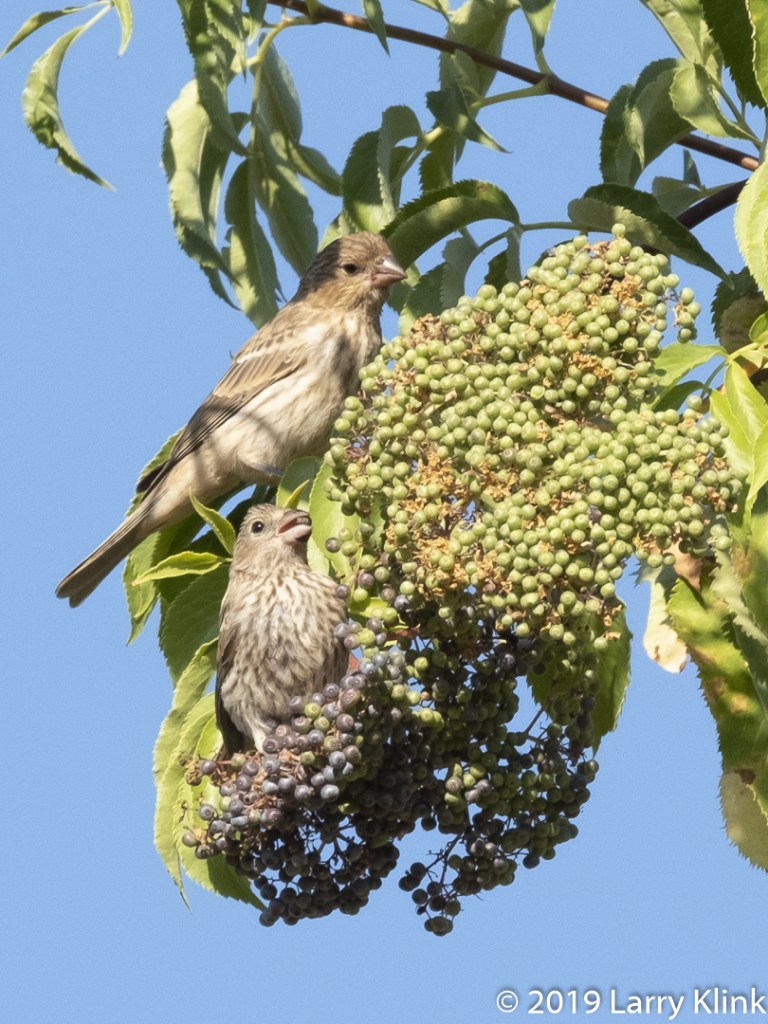
Effie Yeaw Nature Center, Sacramento, CA; JUL 2019
The Blue Elderberry (Sambucus nigra ssp. caerulea), also known as the Mexican Elderberry, or Tapiro is a deciduous shrub or small tree, growing to as tall as 30 feet. It is native from Oregon to Baja and into western Texas. It has cream or yellow flowers in the spring and purple berries in the fall. Its berries are one of the most important sources of food for birds in California. [i] It was also an important source of food and medicine for the Native Americans and early European settlers who inhabited this region.
In the book “Seaweed, Salmon and Manzanita Cider”, Rhonda Robles of the Ajachmem, explains that the elderberry was well known to her ancestors. The elderberries are said to be helpful for bronchitis, sore throats, coughs, asthma, colds, and constipation. They also induce perspiration to break a fever. She also states that recent research has found that elderberries stimulate and build up the resistance of the immune system, and they also directly inhibit the influenza virus. In addition, elderberries are loaded with minerals, antioxidants, and vitamin C. Indeed, elderberry products can be found in the cold and flu section of pharmacies and other stores.
The book “Living Wild” has recipes for champagne and wine made from the elderberry flower and syrup and pancakes made from the berries.
We must be careful however in using elderberries. They must be dried or cooked before eaten. Never eat elderberries raw. They contain a cyanide-inducing glycoside. Eating a sufficient quantity of these cyanide-inducing glycosides can cause a toxic buildup of cyanide in the body and make you ill.
Birds, however, like elderberries a lot and don’t appear to get sick when they eat them raw. Over the course of the season, I was able to photograph several birds enjoying elderberry fruit.
[i] California Native Plant Society, https://calscape.org/Sambucus-nigra-ssp.-caerulea-(Blue-Elderberry)
Note: Please click on caption to see images at higher resolution.

Lake Natomas, American River Parkway, Orangevale, CA

Effie Yeaw Nature Center, Sacramento, CA; JUL 2019

Effie Yeaw Nature Center, Sacramento, CA; JUL 2019
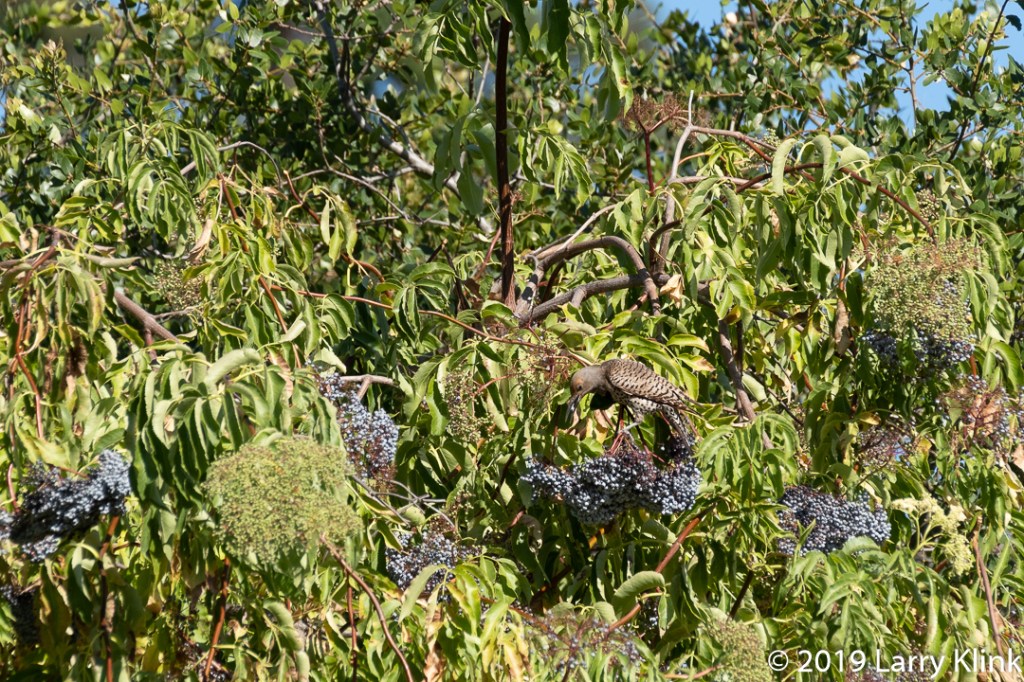
Effie Yeaw Nature Center, Sacramento, CA; JUN 2019
These and other images are available to purchase on my website: www.earthwatcher.us or by contacting larry.klink@earthwatcher.us.
Errata: In my original post, I misidentified the Phainopepla as an Oak Titmouse
 Earthwatcher
Beautiful photos! And very interesting information on the elderberries! Very cute birds 😊
LikeLike
I did misidentify one bird. The oak timouse is actually a Phainopepla.
LikeLike