The Rookery

Great Blue Heron (Ardea Herodias) in the Rookery
American River Parkway, Folsom, CA; APR 2019

In our area, we have a few rookeries; communal nesting areas for herons, egrets and cormorants. There are other birds that nest in rookeries but I am not aware of any I our area.

Rookeries are interesting. The two I see most often are in a small cluster of tall trees along side of a river. The birds nest high above the ground. Each bird tends to their own nest. But the colonies can contain two dozen or more nests. The herons, egrets and cormorants will even nest in the same tree. Many believe protection drives their desire to nest communally.  More roommates make it easier to spot and chase away predators.

I visited both rookeries last week and it appears to me that the birds are sitting on eggs. If I am right, we should have babies soon.  So, I’ll keep checking back and when I can, post pictures. I can’t get close to the nets; I am about 75 yards away. So, I won’t be able to photograph the chicks until they are big enough to pop their heads above the sides of the nest.

Here are a few rookery images. Take note of the male Double-crested Cormorant. He is displaying his orange patch and the crest of feathers on his head. For me, its rare to see the crests displayed.

Double-crested Cormorant (Phalacrocorax auritus) on the Nest
American River Parkway, Folsom, CA; APR 2019
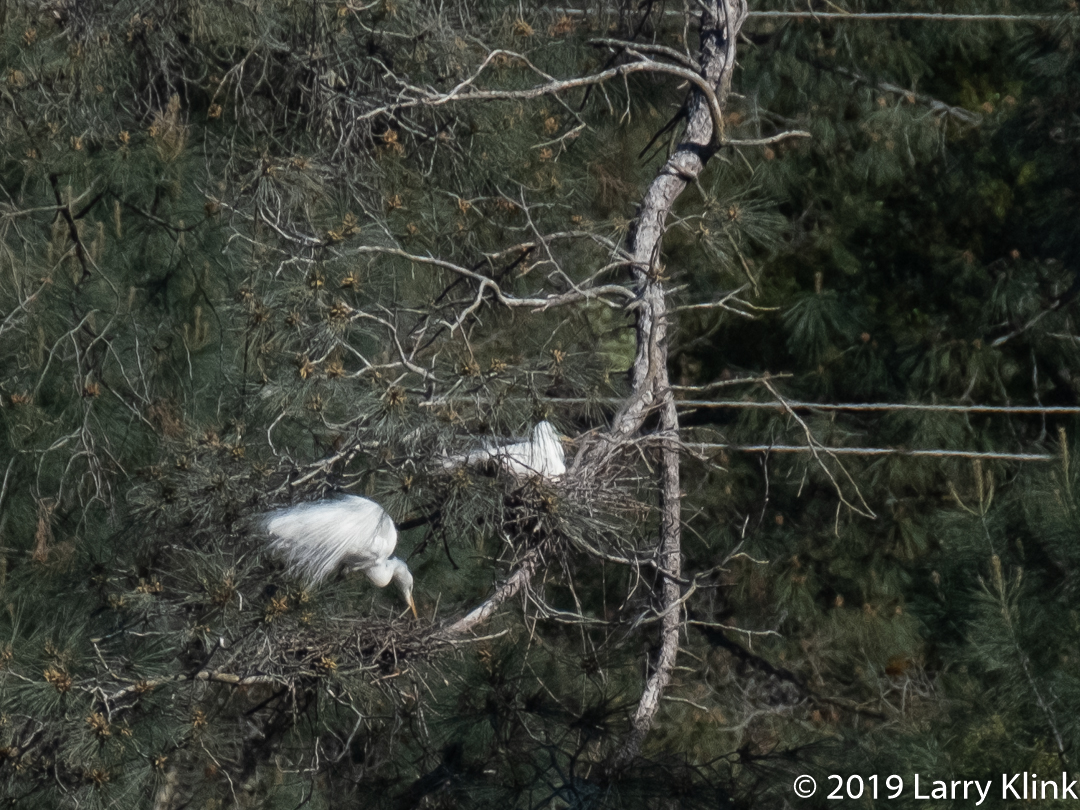
Great Egrets (Ardea alba) on the Nest
American River Parkway, Folsom, CA; APR 2019

A Predator and Some Prey

Coyote (Canis latrans);
Effie Yeaw Nature Center, Sacramento, CA; FEB 2019

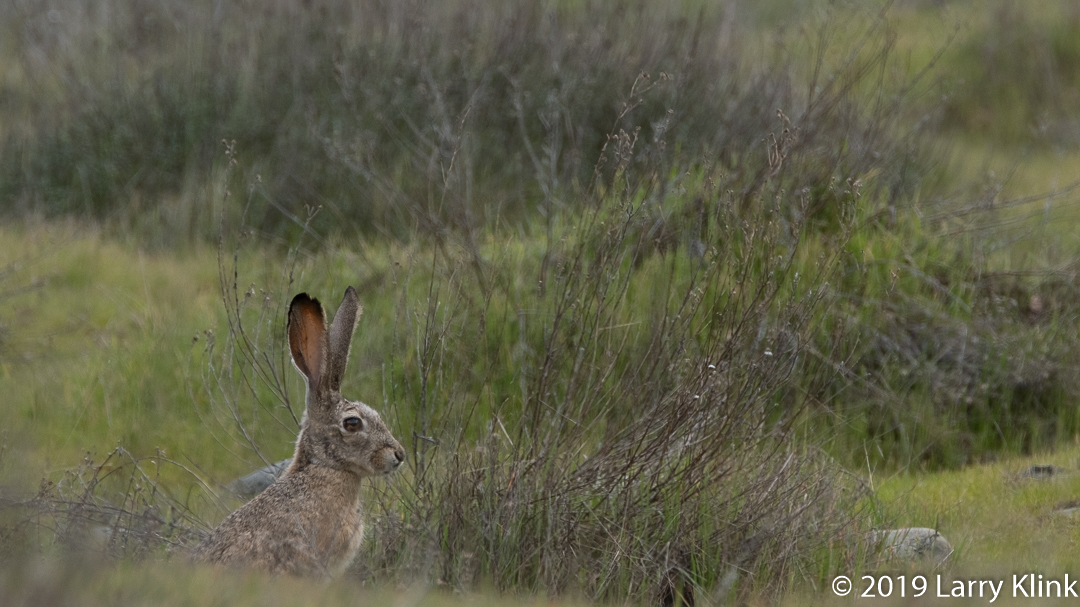
Here are images of a some animals that I’ve taken over the last few weeks; the Coyote, the Black-tailed Jackrabbit and the California Ground Squirrel.

Take notice of the coyote. His eyes face front. That is a trait of predators. The ground squirrel and the jackrabbit need to keep their eyes open for predators while they forage, so their eyes are on the side. Remember the adage:  “Eyes in the front, the animal hunts. Eyes on the side, the animal hides.”

Please click on caption to see image at higher resolution.


Black-tailed Jackrabbit (Lepus californicus);
Effie Yeaw Nature Center, Sacramento, CA; FEB 2019
California Ground Squirrel (Otospermophilus beecheyi);
Effie Yeaw Nature Center, Sacramento, CA; APR 2019

These and other images are available to purchase on my website: www.earthwatcher.us or by contacting larry.klink@earthwatcher.us.

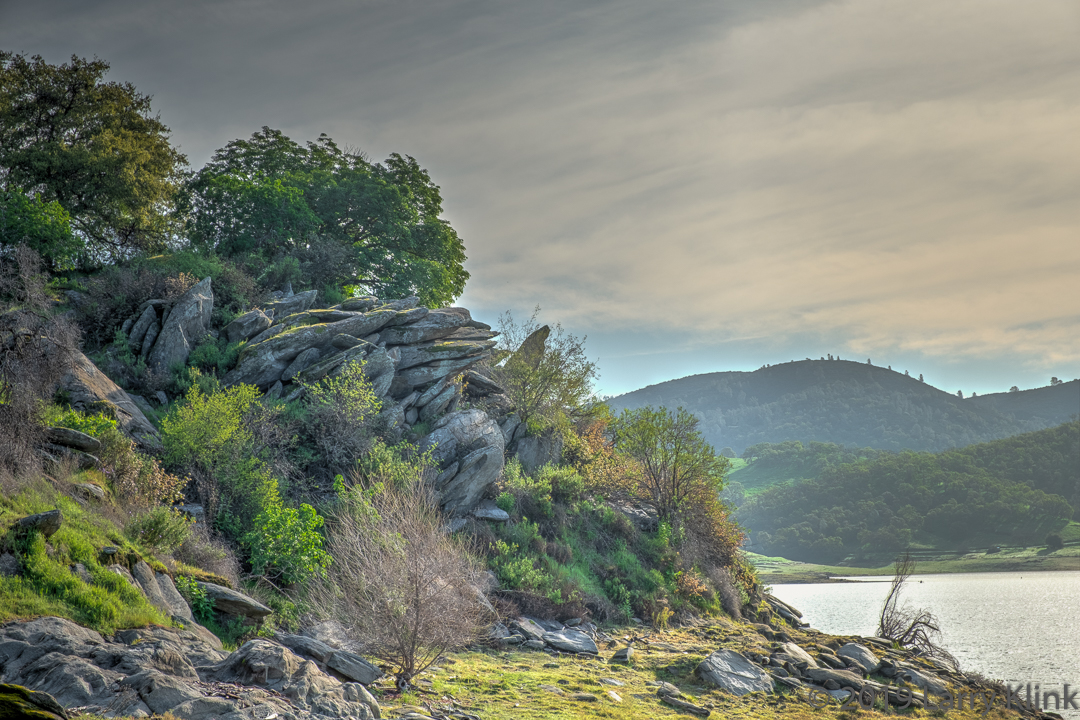
An Early Morning at Folsom Lake

Early Morning at Folsom Lake; Doton’s Point,
Folsom Lake State Recreation Area, Folsom, CA; MAR 2019

This past week, we had a morning where the rain clouds were breaking up in the early morning. I chose that day to explore Doton’s Point trail at Folsom Lake Recreation Area; a trail that was new to me. The grasses and other plants were displaying their spring green. The early morning sun helped saturate the colors. Spring was at its finest. I went with the expectation that I might see some different birds. Instead, I discovered that it was time for some landscapes.

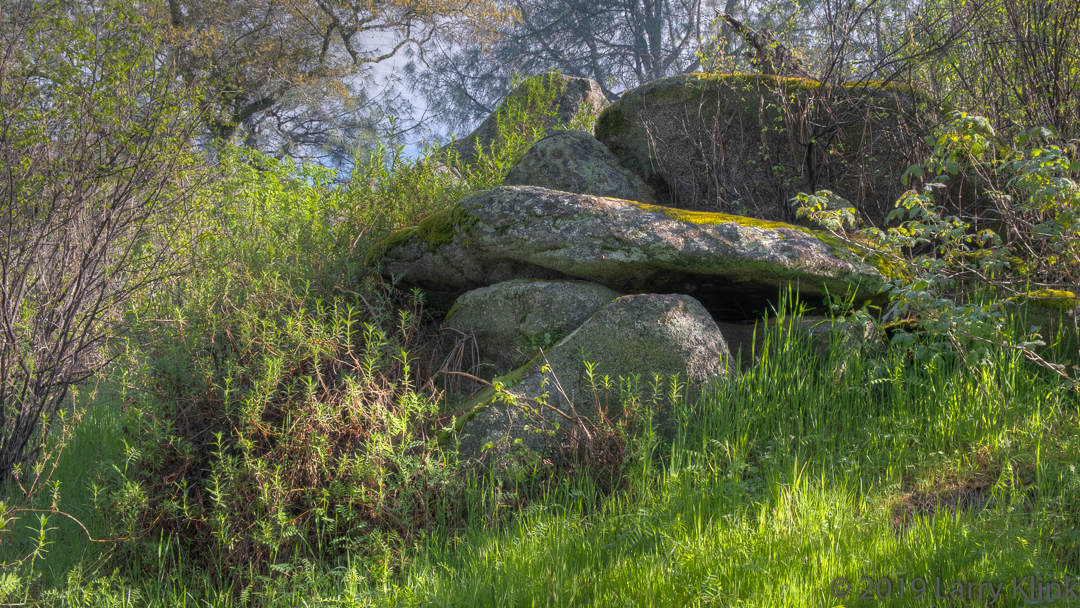
The beautiful rocks in this image are granite. The area around this portion of Folsom Lake is called Granite Bay because of the abundance of granite in the area. Like the Sierra Nevada mountains, this area sets on a pluton, a large blob of magma that cooled slowly underground to form granite then was uplifted and exposed.

Please click on caption to see image at higher resolution.

Early Morning at Folsom Lake – P2;
Doton’s Point, Folsom Lake State Recreation Area, Folsom, CA; MAR 2019

These and other images are available to purchase on my website, www.earthwatcher.us or by contacting larry.klink@earthwatcher.us.

Accipiters

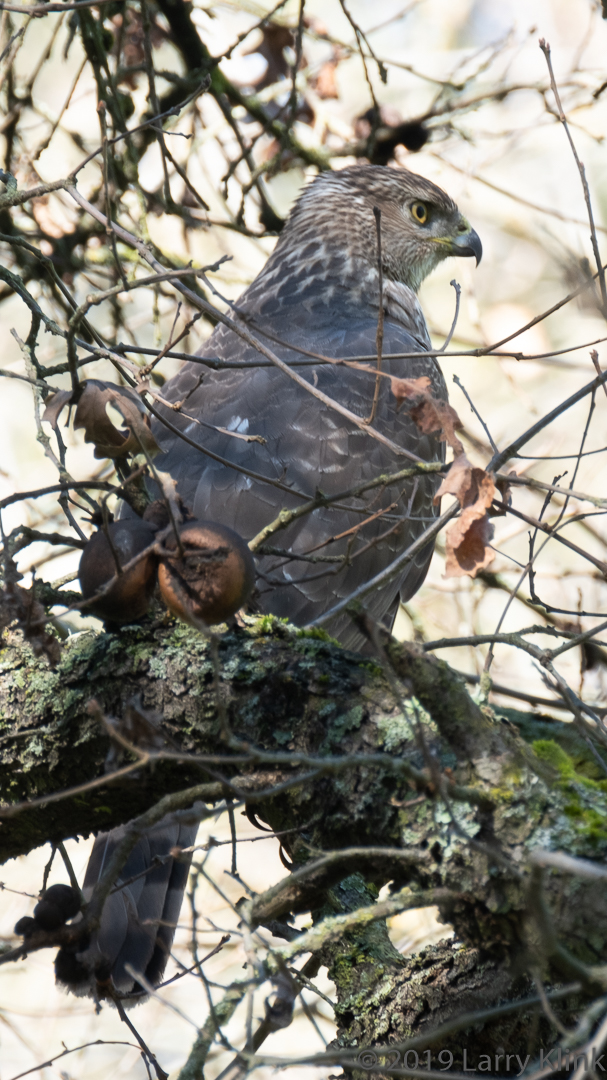
Sharp-shinned Hawk, Effie Yeaw Nature Center, Carmichael, CA; MAR 2019

There are 2 major classifications of hawks. Buteos and Accipiters. Buteos are the familiar Red-tailed, Red-shouldered Hawks along with numerous others.The Accipiters are generally smaller, with shorter wings. This makes them more maneuverable; a skill needed because they live in more wooded areas and prefer to eat other birds. I’ve included images of 2 accipiters; the Coopers Hawk and the Sharp-shinned hawk.

Please click on caption to see images at higher resolution.

Cooper’s Hawk, William Pond Park, Sacramento, CA; FEB 2016

These and other images are available for purchase on my website: www.earthwatcher.us or by contacting larry.klink@earthwatcher.us

Ravens

Pair of Common Ravens (Corvus corax); Yosemite National Park; MAR 2019

On our trip to Yosemite last week, a pair of ravens were foraging among the trees outside our hotel room.  They were totally unfazed by me as I followed them around.

It was an interesting day to shoot ravens. Everyone knows ravens are black. But black just means that its feathers absorb all frequencies of color and reflect none back. Like some other birds, the raven’s feathers can refract or bend light, allowing their feathers to appear other colors. When the birds were in bright light, they were their bright, familiar, black. But, when they were in lower light, depending upon how they positioned themselves, their wing and tail feathers appeared blue. In one other instance, the light hit the raven’s ruff under his chin and made it look brown.

Is it a raven or is it a crow. If its big and bulky and it makes a croaking sound, its probably a raven. If its smaller and makes the familiar caw, its probably a crow. But, sometimes its not so simple. I am collecting images to put together a simple but more complete illustrated guide.

Please click on caption to image at a larger size.

Common Raven (Corvus corax); Yosemite National Park; MAR 2019

These and other images are available for purchase at my website, www.earthwatcher.us or by contacting larry.klink@earthwatcher.us.

A Golden Waterfall

Upper Yosemite Falls, Yosemite National Park; MAR 2019

Last week, we took a trip to Yosemite National Park. We were a bit late in the season. We were looking for snow, but almost all of the snow was gone from the valley floor. There was some clinging to the nooks on the cliff side. It was sunny when we arrived but, as the golden hour approached, the skies became cloud covered and we got rain. Just being in Yosemite when there are few people is a real treat, so walking around in the rain was enjoyable even though photography opportunities were few. Little did we know the treat that would await us in the morning.

We dutifully got up and out ½ hour before sunrise – about an hour before the sun would start to light up the valley walls. While planning the trip, I learned we would have clear skies in the morning and that the sun would be in a good position to light Yosemite Falls. Yosemite falls is often shaded during the golden hours for photography. We found the position from which I wanted to shoot and set up. It was then we got our first surprise – snow had fallen on the cliffsides on either side of the waterfall. There was even a dead tree that was partially snow covered that I could get into the frame.

I set up my composition and waited in the cold. After a period of time that seemed interminable, golden sunlight began to penetrate the valley. Watching the sun light the mountain tops and valley walls is one of my favorite experiences; I never grow tired of it. We watched and enjoyed. I would shoot from time to time. But, I really wanted more light on the water fall. When the light broke, I got a treat I hadn’t expected. The sun began giving the water and the mist a golden glow. I watched and I shot as the different sections would glow. We stayed through the entire show.

I’ve included 2 of the images I got that morning. I hope you enjoy them.

Please click on caption to see these images at higher resolution.

Upper Yosemite Falls at Sunrise; Yosemite National Park; MAR 2019

These and other images are available for purchase at my website, www.earthwatcher.us or by contacting larry.klink@earthwatcher.us.

A Winter Morning in the Gettysburg National Military Park

Confederate Rifles in Winter;
Gettysburg National Military Park, Gettysburg, PA; FEB 2019

A few weeks ago, we visited family in the Gettysburg, PA area.  While there, we were treated to some snow and very cold weather. On one early, sunny, morning we drove along Confederate Ave. The street. On Seminary Ridge, overlooks open meadows ringed with farms. The ridge top is where Confederate troops set up their artillery and was the starting point for many Confederate troop assaults. On July 3rd, 1863, it was the site of Pickett’s charge against the troops of Union General George C. Meade.

On this early morning, the guns laid quiet. Sunlight glistened on the icy snow while frost gave trees, weeds and other objects a silvery glow. Though snow adds a burden to our efforts to maintain a normal life and we grow tired of it after a time, a morning like this makes you slow down and appreciate the beauty that nature bestows in winter.

Please click on caption to see images at higher resolution.

Frosty Winter Morning;
Gettysburg National Military Park, Gettysburg, PA; FEB 2019
Parot Rifle in Winter;
Gettysburg National Military Park, Gettysburg, PA; FEB 2019

Note: These and other images are available for purchase on my website: www.earthwatcher.us or by contacting larry.klink@earthwatcher.us.

#Photography #Photographie #PhotosOfTheDay #Fujifilm #fujifilmusa #fujifeed #gnmp #gettysburg # civilwar #nationalpark #artillary #fieldartillary #parotrifle #rifle #winter #snow #landscape #ig_landscape #landscapelover #landscapehunter

Some North American Deer

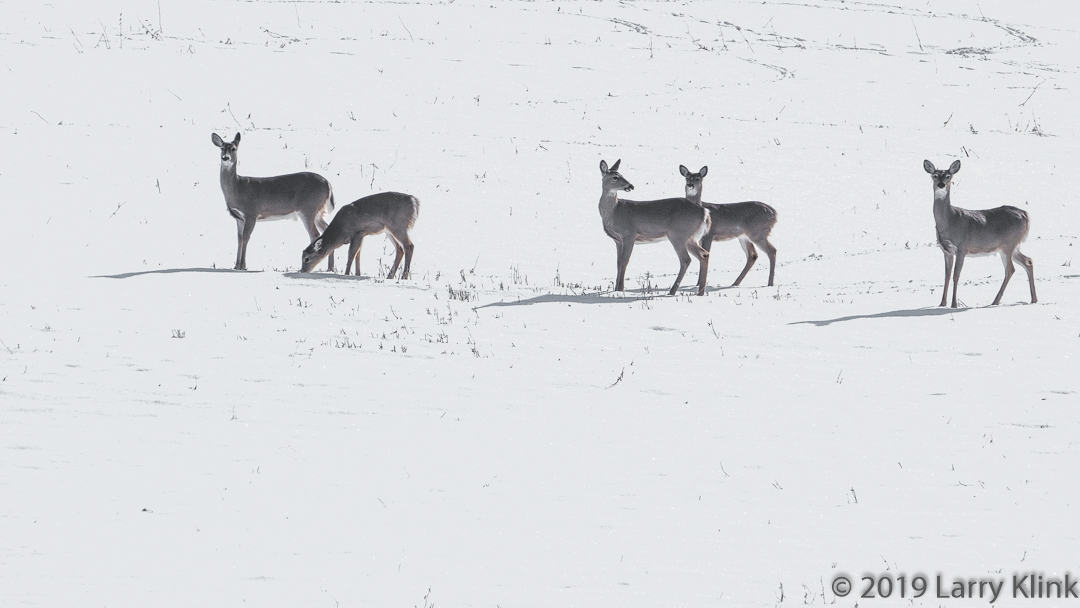
White-tailed Deer (Odocoileus virginianus) browsing in the Snow,
Along Rt 30 near Everett, PA; FEB 2019

Here are some images of deer I recently photographed.

The White-tailed deer were spotted in rural southwestern Pennsylvania (US) grazing through some new fallen snow.

The Black-tailed Mule Deer was taken at the Effie Yeaw Nature Center here in Sacramento. I suppose he was taking a break after the rut. He’ll soon drop his antlers and begin growing them anew.

By the way, if you are ever in the Sacramento area, you should pay a visit to the Effie Yeaw Nature Center. You are almost guaranteed to see deer, wild turkeys and many birds. I occasionally see a jack rabbit and coyotes also.

Black-tailed Mule Deer (Odocoileus hemionus) Buck In Winter,
Effie Yeaw Nature Center, Sacramento, CA; JAN 2019

Please click on caption to see image at higher resolution.

These and otehr images are available to purchase on my website: www.earthwatcher.us or by contacting larry.klink@earthwatcher.us.

Some Small and Pretty Birds

Yellow-rumped Warbler, Audobon Group (Dendroica Coronata)
Effie Yeaw Nature Center, Sacramento, CA; NOV 2018;

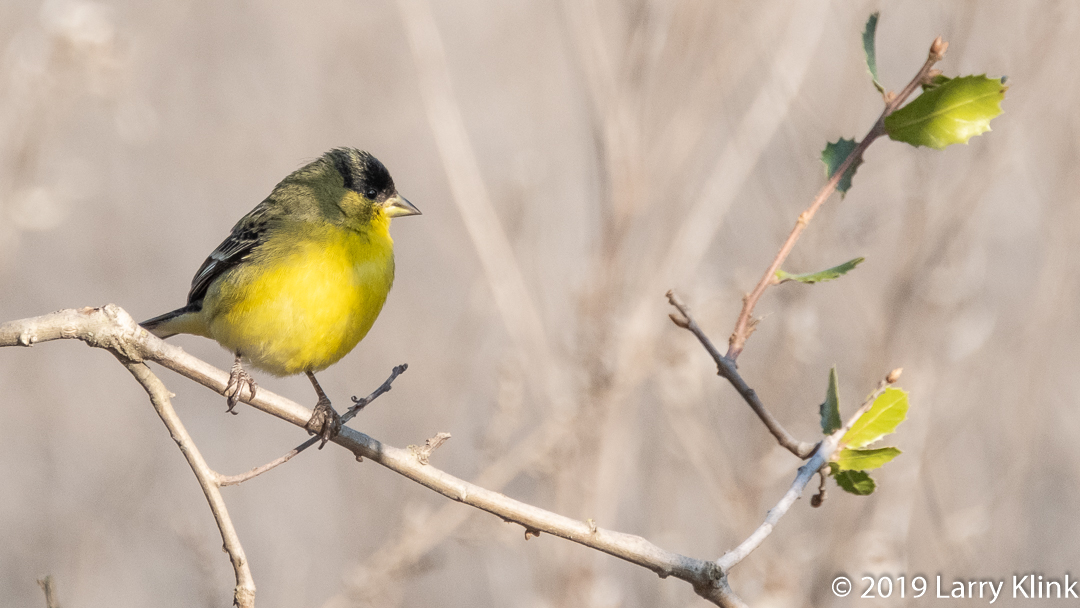
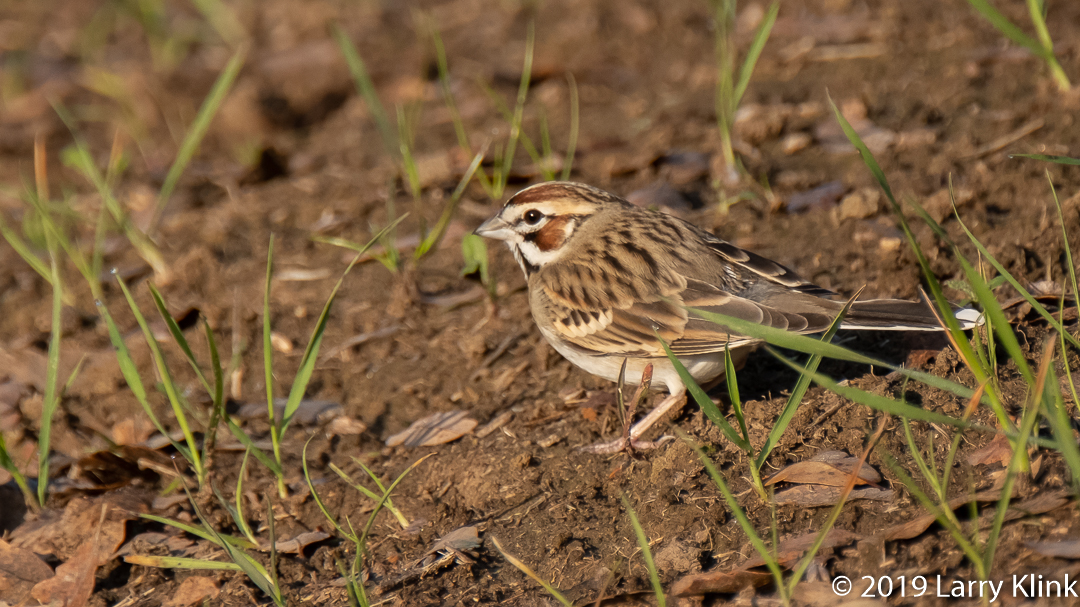
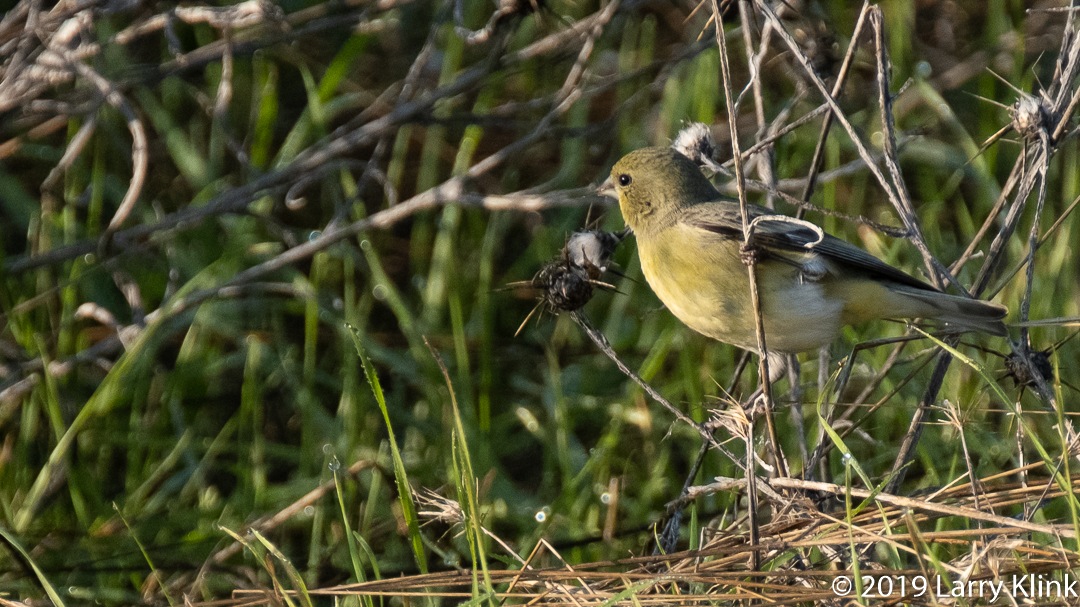
Here are a few pretty, small birds we see around the Sacramento area.

Note: Please click on caption to see image at higher resolution.

American Goldfinch (Carduelis tristis),
Sailor Bar, Fair Oaks, CA; JAN 2019
Lark Sparrow (Chondestes grammacus);
Sailor Bar, Fair Oaks, CA; JAN 2019
Female Lesser Goldfinch (Spinus psaltria)
Sailor Bar, Fair Oaks, CA; JAN 2019

These and other images are available for purchase on my website, www.earthwatcher.us or by contacting larry.klink@earthwatcher.us.