
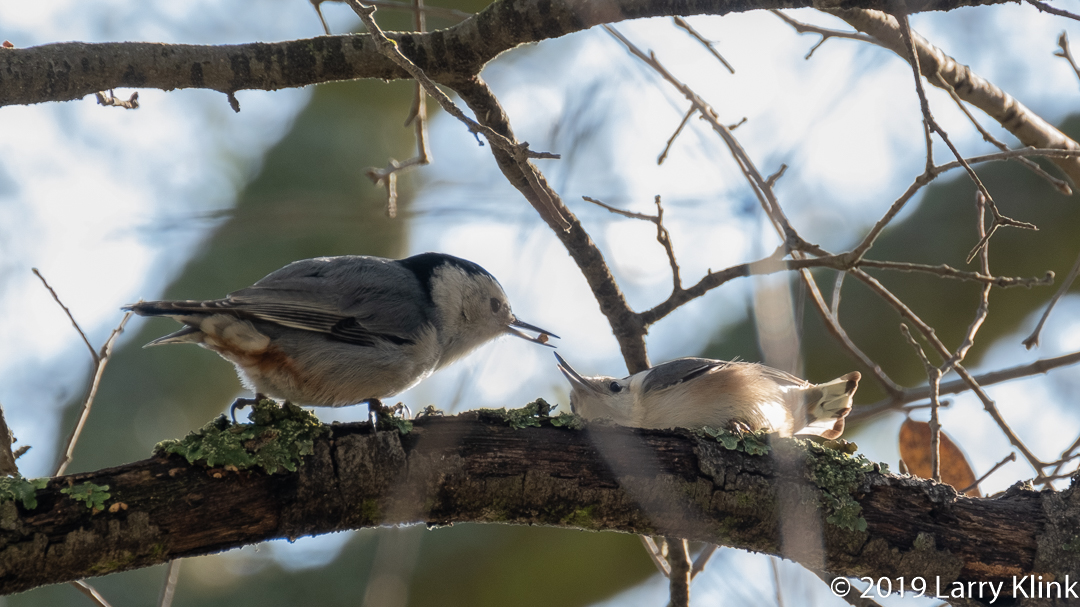
Effie Yeaw Nature Center, Sacramento, CA; FEB 2019
Please click on caption to see image at higher resolution

Please click on caption to see image at higher resolution
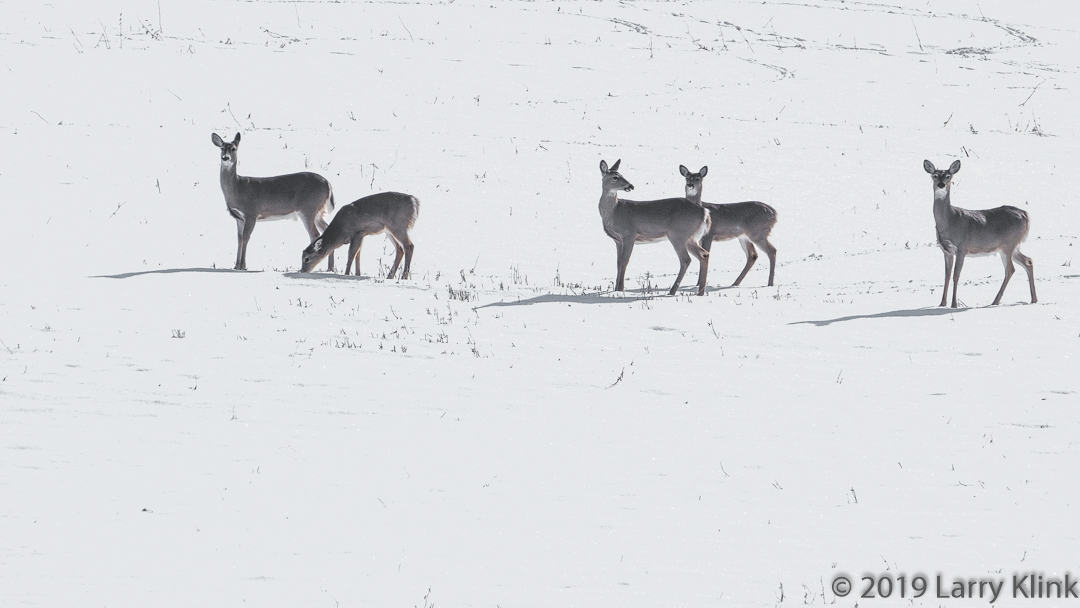
Here are some images of deer I recently photographed.
The White-tailed deer were spotted in rural southwestern Pennsylvania (US) grazing through some new fallen snow.
The Black-tailed Mule Deer was taken at the Effie Yeaw Nature Center here in Sacramento. I suppose he was taking a break after the rut. He’ll soon drop his antlers and begin growing them anew.
By the way, if you are ever in the Sacramento area, you should pay a visit to the Effie Yeaw Nature Center. You are almost guaranteed to see deer, wild turkeys and many birds. I occasionally see a jack rabbit and coyotes also.

Please click on caption to see image at higher resolution.
These and otehr images are available to purchase on my website: www.earthwatcher.us or by contacting larry.klink@earthwatcher.us.

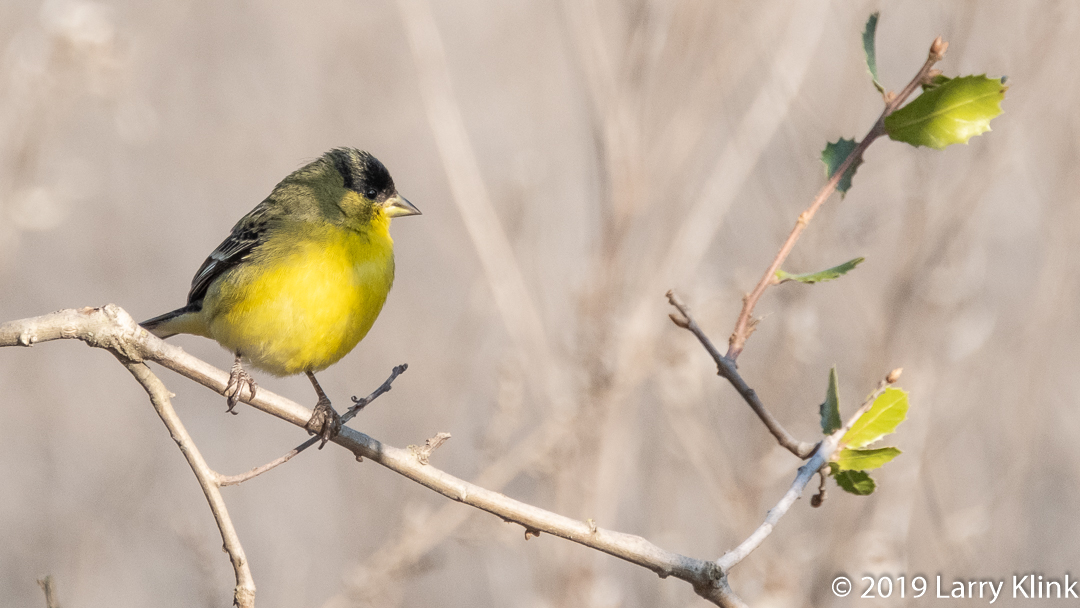
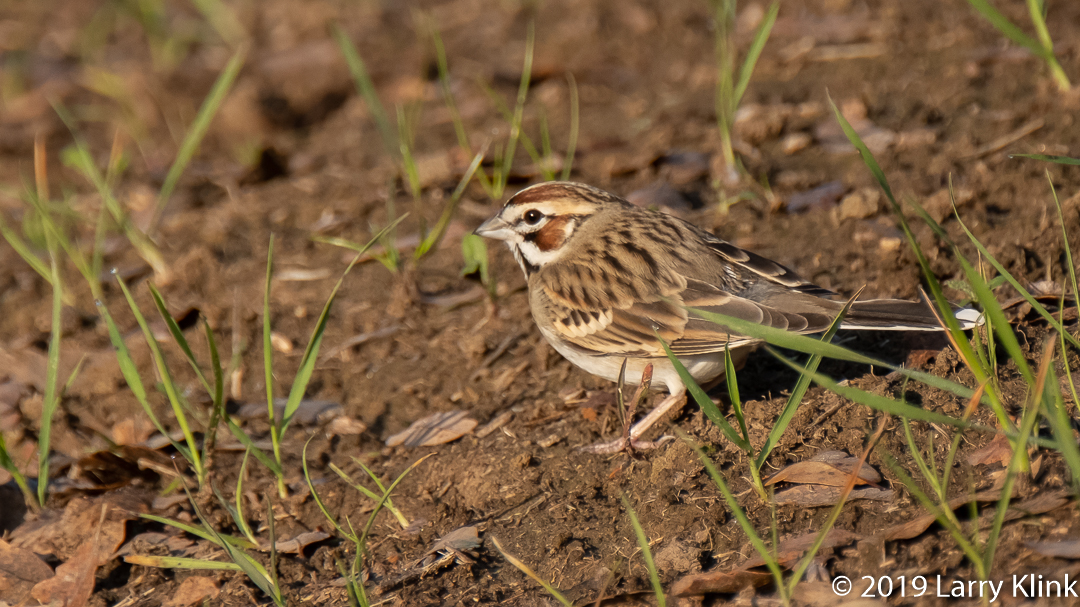
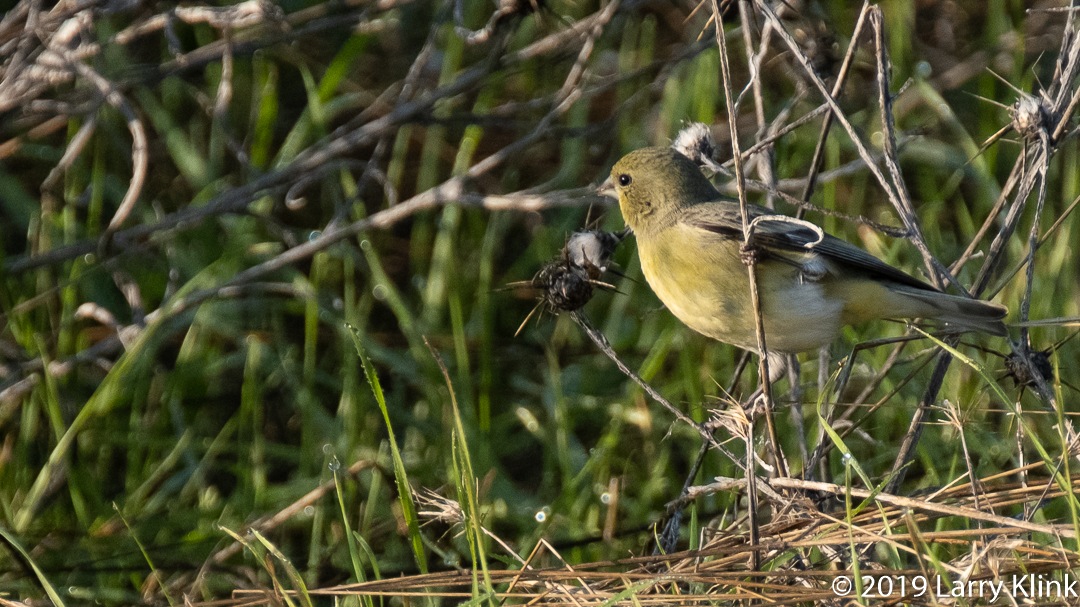
Here are a few pretty, small birds we see around the Sacramento area.
Note: Please click on caption to see image at higher resolution.
These and other images are available for purchase on my website, www.earthwatcher.us or by contacting larry.klink@earthwatcher.us.
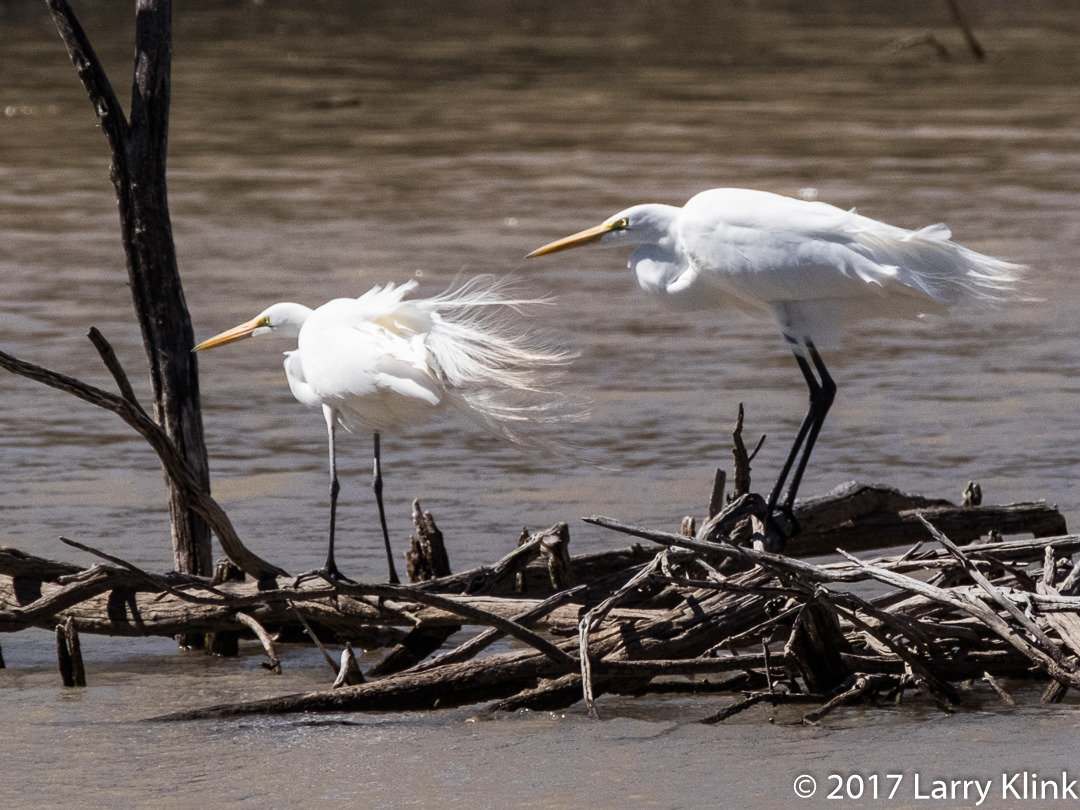
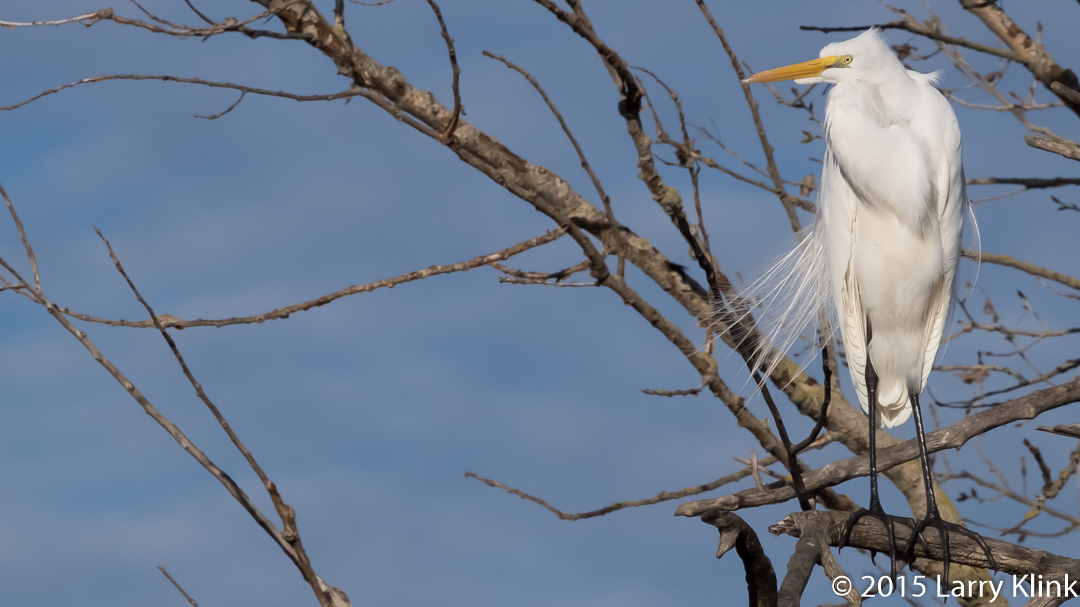
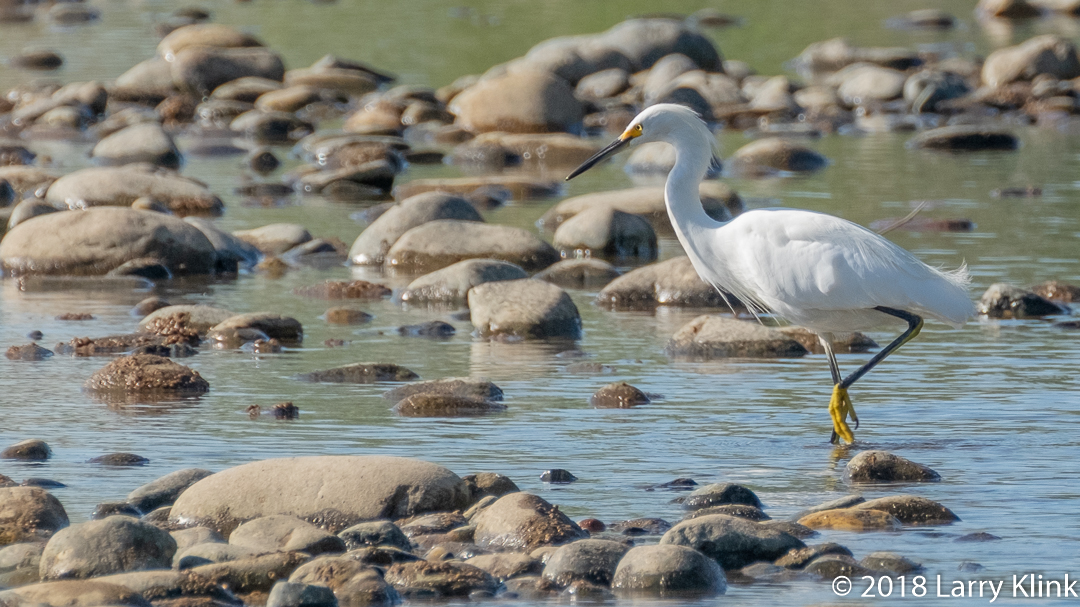
There are about 12 members of the family Ardeidae; birds we know as Herons, Egrets, and Bitterns, that are found in North America. For the most part, if it is white, it is an Egret. But, there are exceptions. There is a Reddish Egret that has a rusty brown head and neck with a gray body; they live mostly along the Gulf Coast as well as Florida’s Atlantic Coast. There is a white morph of the Great Blue Heron and is difficult to distinguish from an Egret. What I see mostly are the Great Egret and the Snowy Egret. Occasionally I see Cattle Egrets. In this post, I also included a Little Egret. Its range is mostly, Europe, Africa and Asia but sometimes visits the east coast of the North America.
The Great Egret is a big guy. He has black legs and a yellow bill. The Snowy Egret is substantially smaller; it has a black bill with black legs and yellow-green colored feet. The Little Egret looks a lot like the snowy but the eye mask is a bit different color. The breeding male Cattle Egret has a brown head with a brown patch at the base of its neck and breast, and has some red on its legs. Otherwise, they are all white.
Most egrets forage along water like lakes and rivers and even irrigation ditches, looking for insects, small invertebrates, and small fish. The Cattle Egret forages in meadows and pasturelands.
By the way, I often try to give a simple explanation to help you recognize a bird. Mostly it has to do with coloration. But, coloration can vary between males and females and male coloration is often different during breeding season than at other times of the year. Juveniles are often colored differently. Color can also vary by region. My tips will get you in the ballpark but don’t get frustrated if things don’t look quite right. I get confused all the time and must search the books to be sure.
Please click on caption to see image at higher resolution.
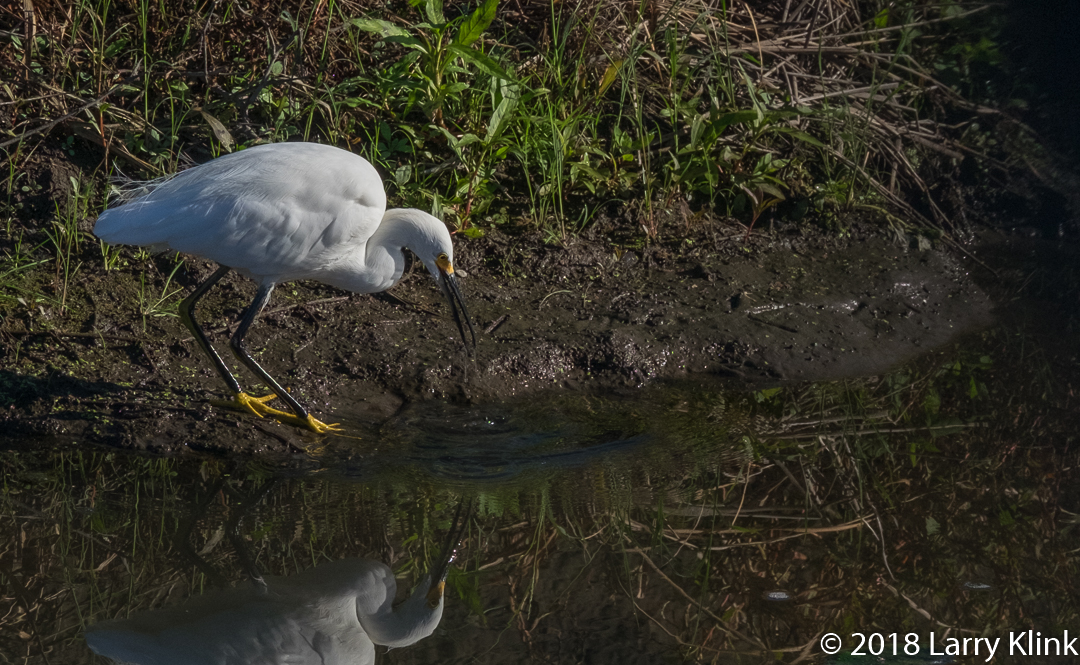
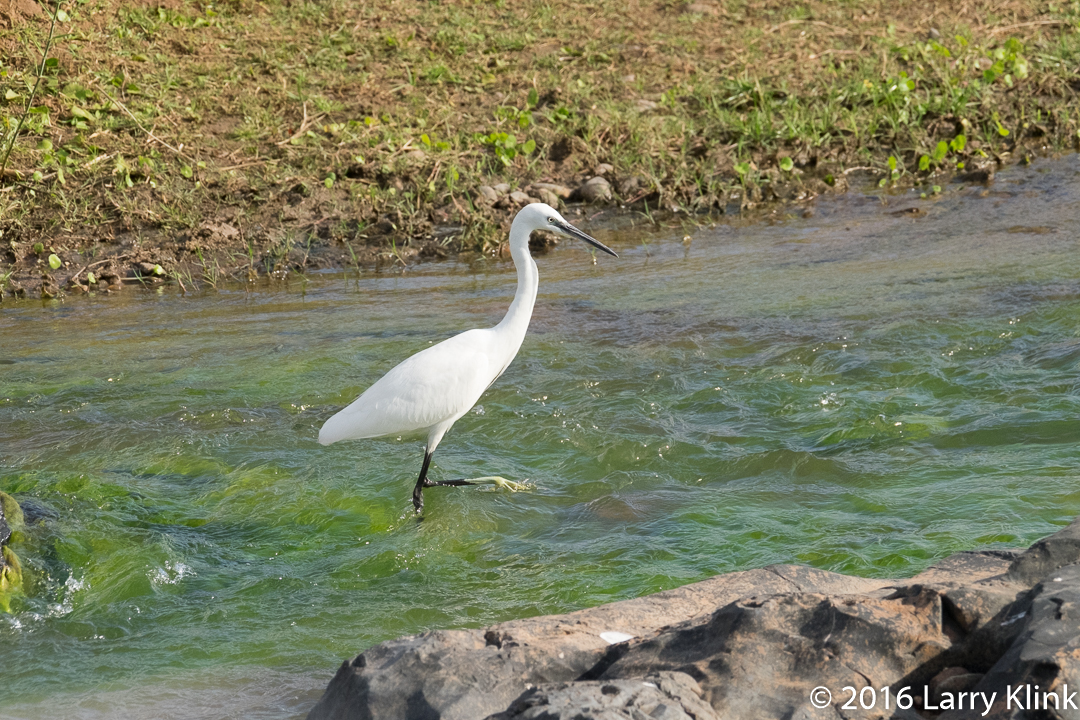
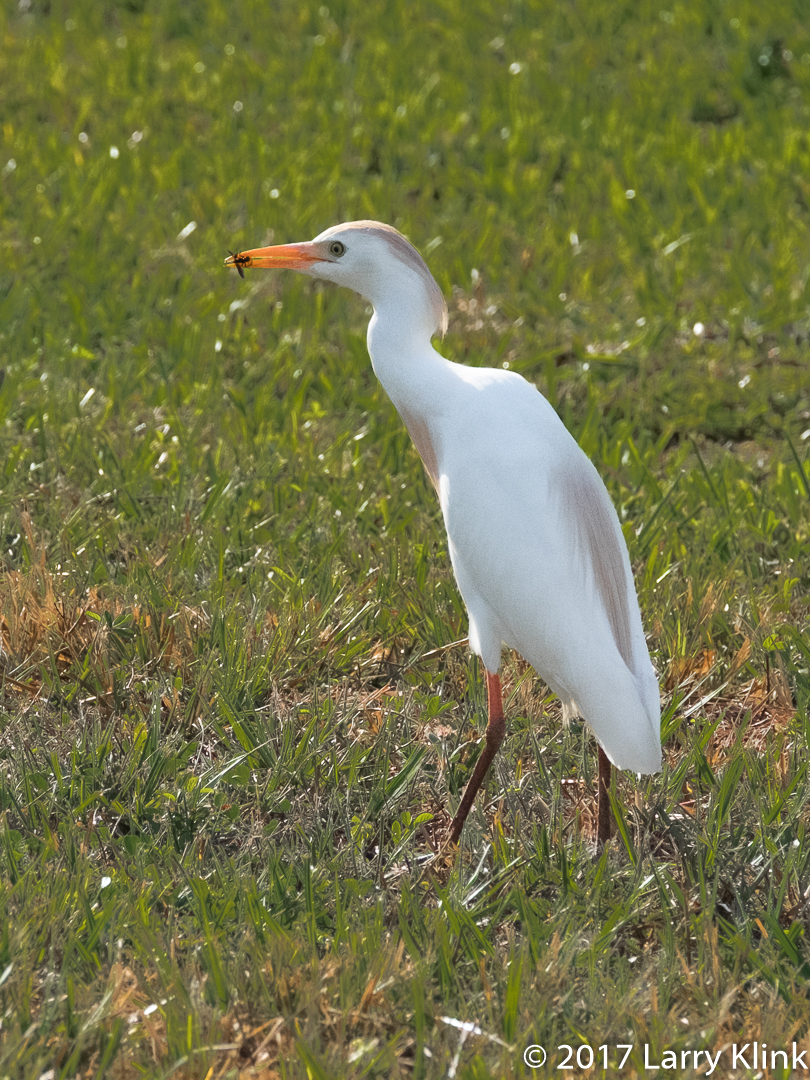
These and other images are available to purchase at my website: www.earthwatcher.us or by contacting larry.klink@earthwatcher.us
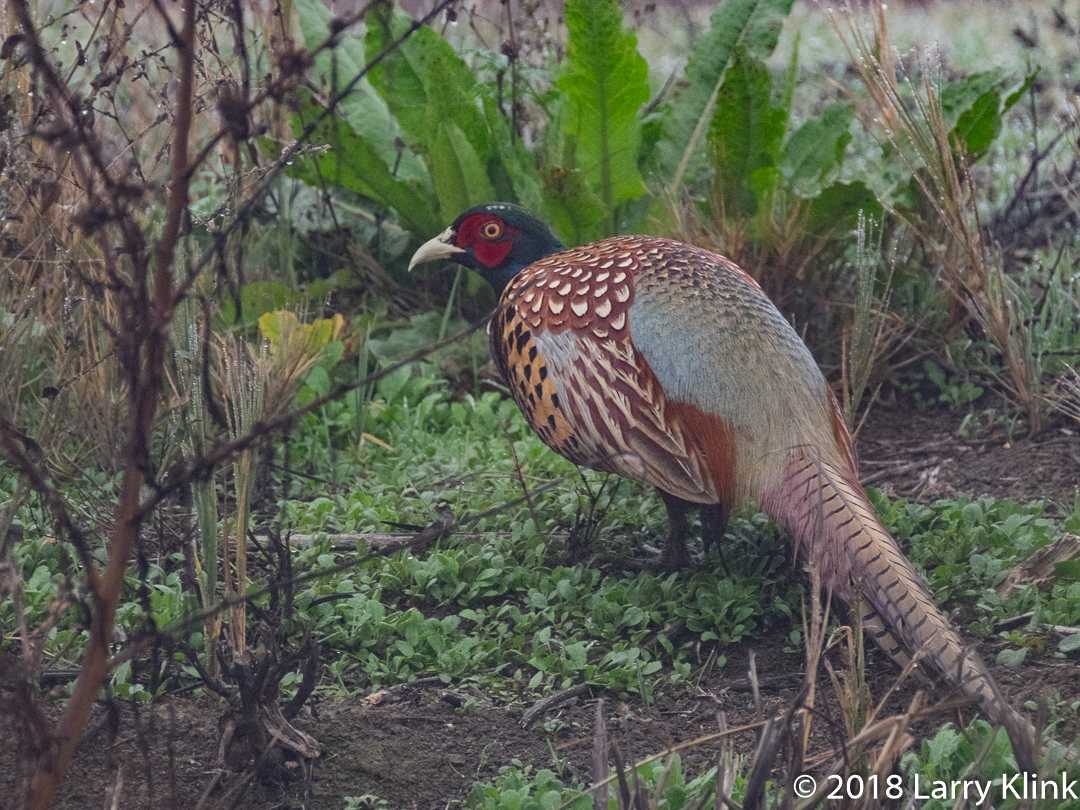
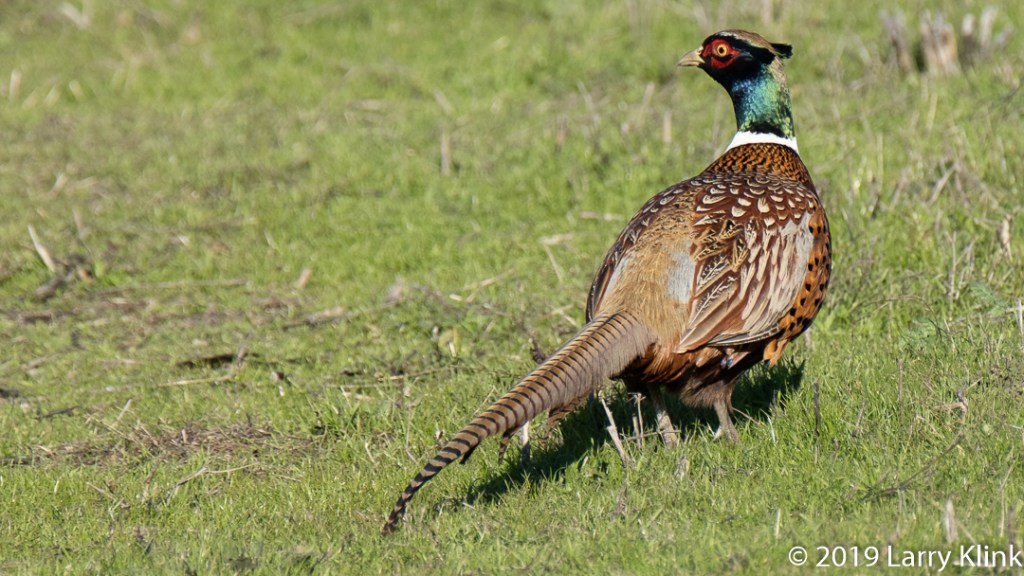
Growing up in western Pennsylvania, I would see the Ring-necked Pheasant occasionally. I always considered it a special treat because they are so beautiful. But, for several decades I never saw any; though I thought about them from time to time. I’ve been fortunate, however, to have had 3 sightings in the past 2 years. I am very happy to be able to share them with you.
These birds like to live and forage in tall vegetation, so they aren’t easy to see. But, sometimes, you can see them as they cross over open spaces. They are omnivorous.
Please click on caption to see these images at higher resolution

Note: These and other images are available for purchase at my website: www.earthwatcher.us or by contacting larry.klink@earthwatcher.us

The Nuttal’s Woodpecker is a small woodpecker who lives only in California’s Oak Woodlands. Interestingly, though they live in oak woodlands, they don’t eat acorns. Instead they eat insects from the oak and other trees.
Please click on caption to see image in higher resolution

These and other image are available for purchase on my website, www.earthwatcher.us or by contacting larry.klink@earthwatcher.us

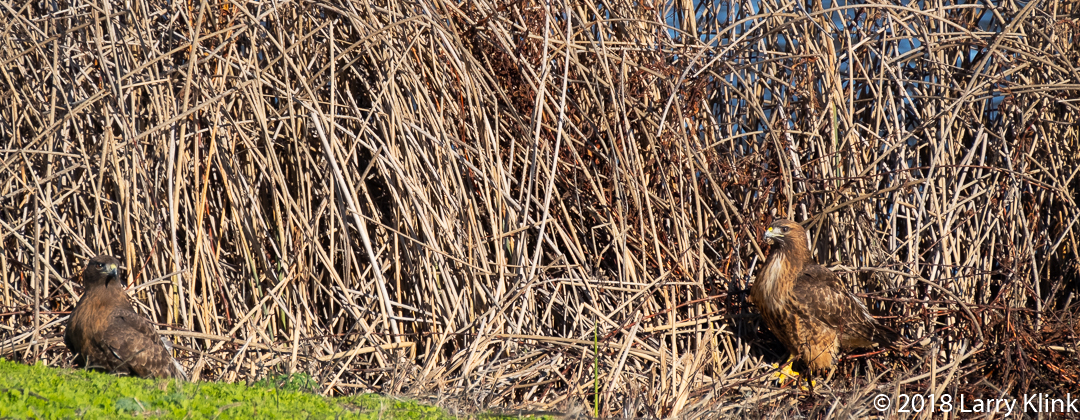
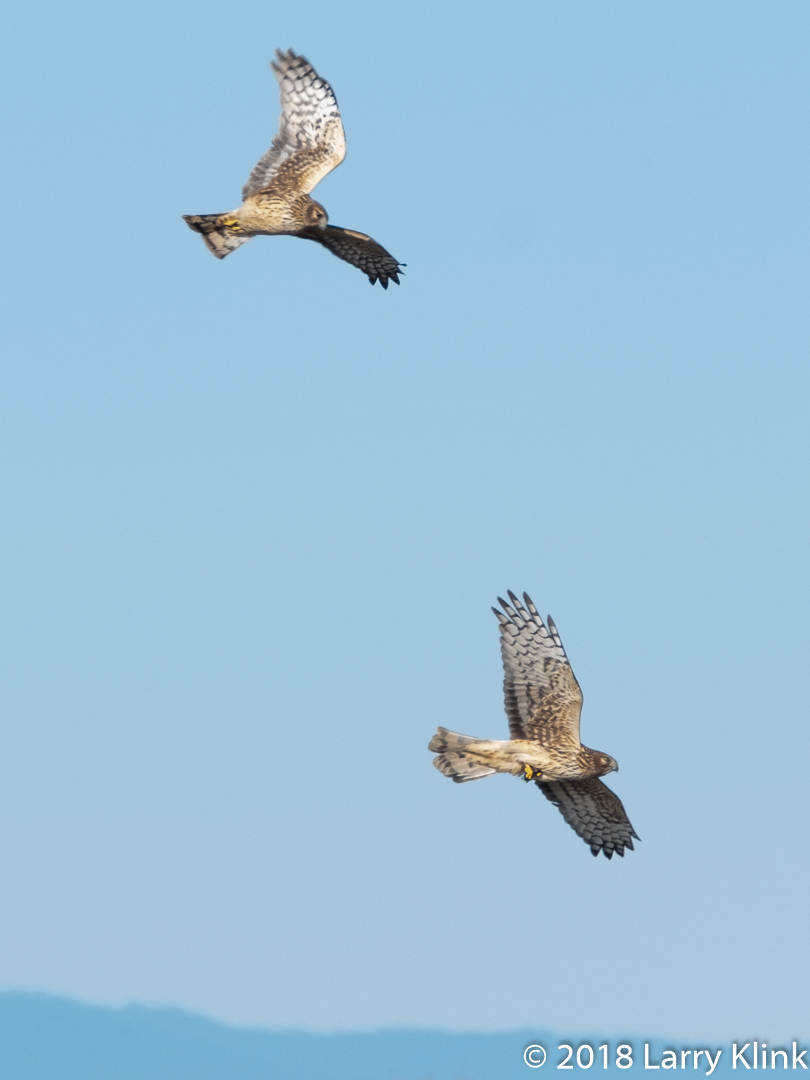
Returning from a recent trip to the Seattle area, we stopped at the Sacramento National Wildlife Refuge. The visitor center and restrooms were closed but the government shutdown didn’t affect the birds. This stop turned out to be very productive. It was a great day for raptors. The star was a juvenile Bald Eagle on a kill. But we saw Ferruginous Hawks, Northern Harriers, Rough Legged Hawks, a Cooper’s Hawk and a Red-shouldered hawk also. This is feast time for the raptors at Sacramento NWR because of the large numbers of waterfowl that spend the winter months there.
I didn’t share images of the Rough-legged haws because I only got a rear quarter shot and it didn’t show enough to make the shot interesting. I’ve shared other Cooper’s Hawks and Red-shouldered Hawks in the recent past, so I didn’t include them. But, I hope you enjoy what I shared.
Note: Please click on caption to see image in higher resolution.

Note: These and other images are available for purchase at my website: www.earthwatcher.us or by contacting larry.klink@earthwatcher.us.
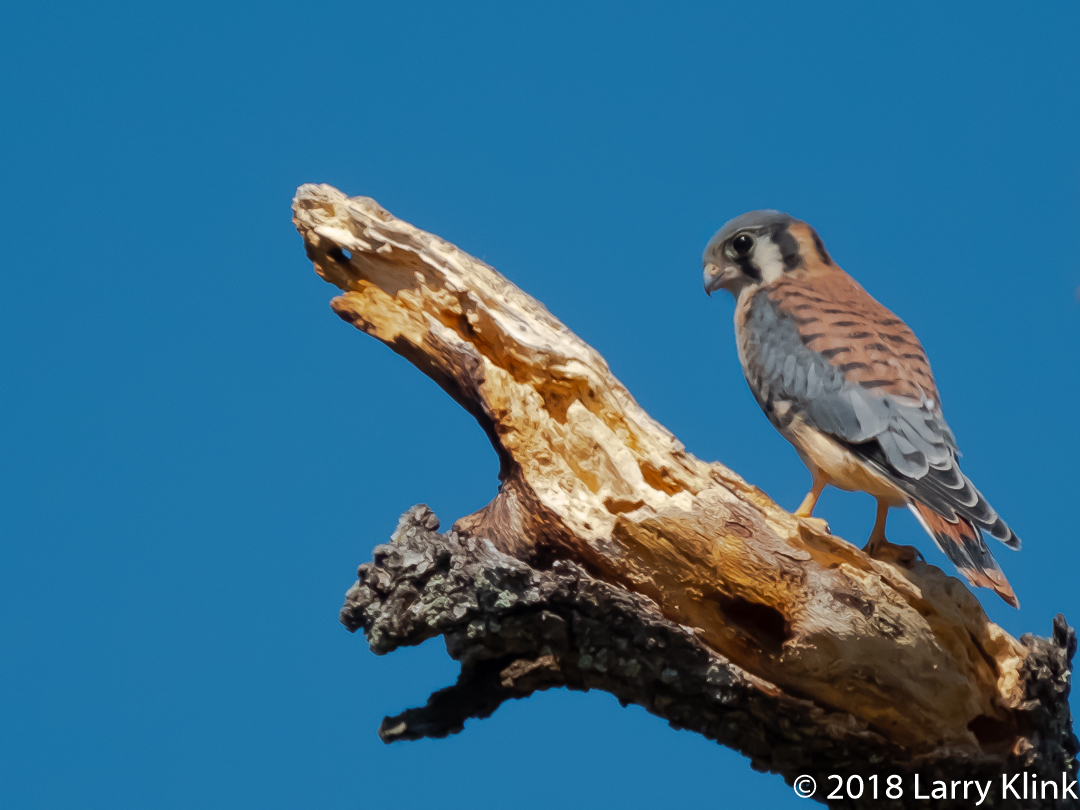
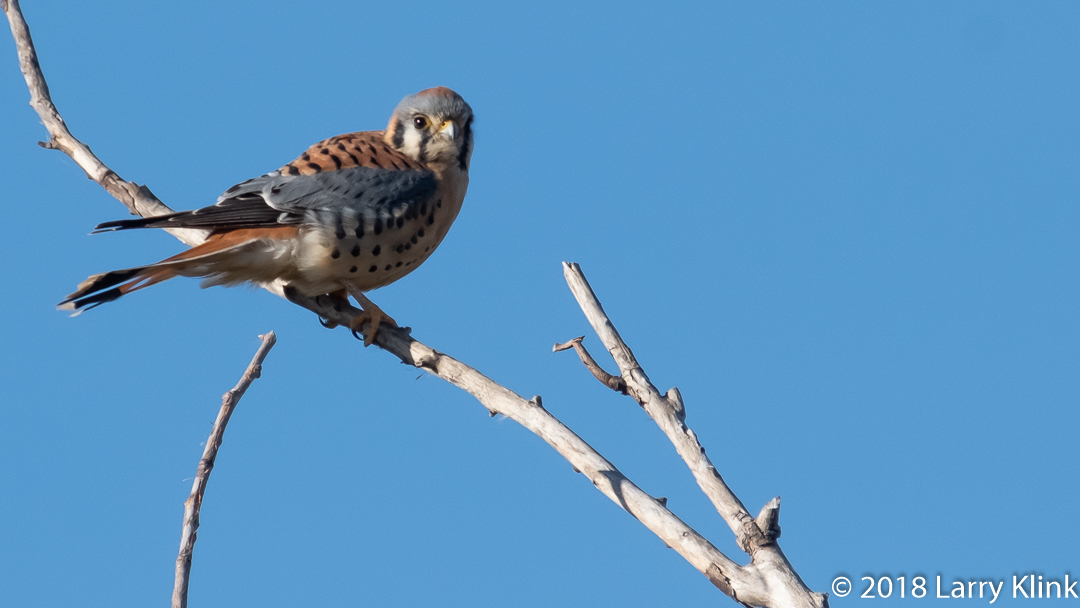
The American Kestrel is a small raptor; about the size of a robin. As you travel through rural, agricultural areas or open meadows, you might notice a small bird on a wire or pole. As you notice it, you may think: just another gray bird. But, if you slow down, you may be surprised by a beautiful little multi-colored bird. This small falcon eats lizards, insects and small birds. One of its hunting behaviors is fascinating to watch. It, will hover, flapping its wings, then dive down to capture its prey.
Note: Click on caption to see image at higher resolution.
These and other images are available to purchase on my website: www.earthwatcher.us or by contacting larry.klink@earthwatcher.us.
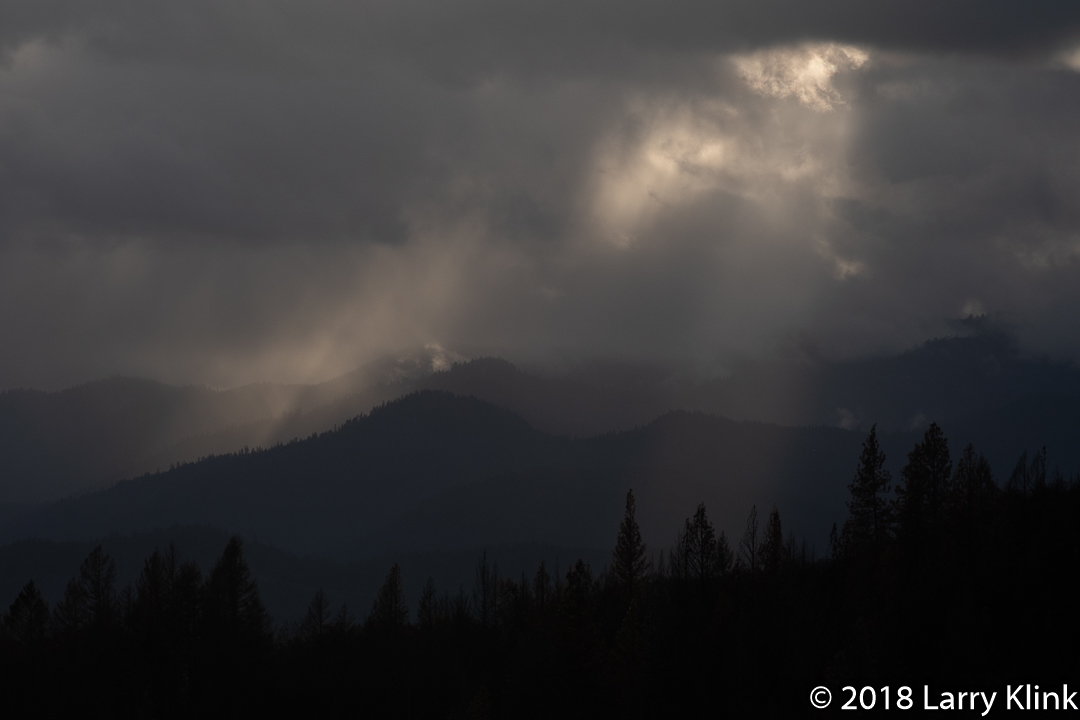
The drive between Redding, CA and Roseburg, OR. on Interstate 5, takes you through some beautiful mountain scenery. Between Redding and the Oregon border, Mt Lassen and Mt Shasta, 2 Cascade volcanoes can be seen. The mountains of California and Oregon’s coastal range line both sides of the highway. Because the area is so close to the Pacific ocean, the area is often blanketed in a layer of stratus clouds and fog. But, don’t think of it as dismal. In the morning and evening, the sun often pushes through the clouds casting spotlights, replete with crepuscular rays, that play on the ridge tops and valleys creating magical landscapes.
Returning from Seattle, we saw many such vignettes. One spot made me break the rules and pull off to photograph it. Fortunately, this spot gave us room to get off safely. I hope you’ll agree this image was worth it.
Regards,
Larry
Note: To see image at higher resolution, please click on caption.
Note: This and other images are available to purchase on my website: www.earthwatcher.us or by contacting larry@earthwatcher.us.
Over the past couple of months, I have been doing some birding in the area around home. Late fall and winter bring some birds migrating to warmer climates to join those that stay year around. Here are a few that live in the area most or all of the year.
Please click on caption to see image at higher resolution.
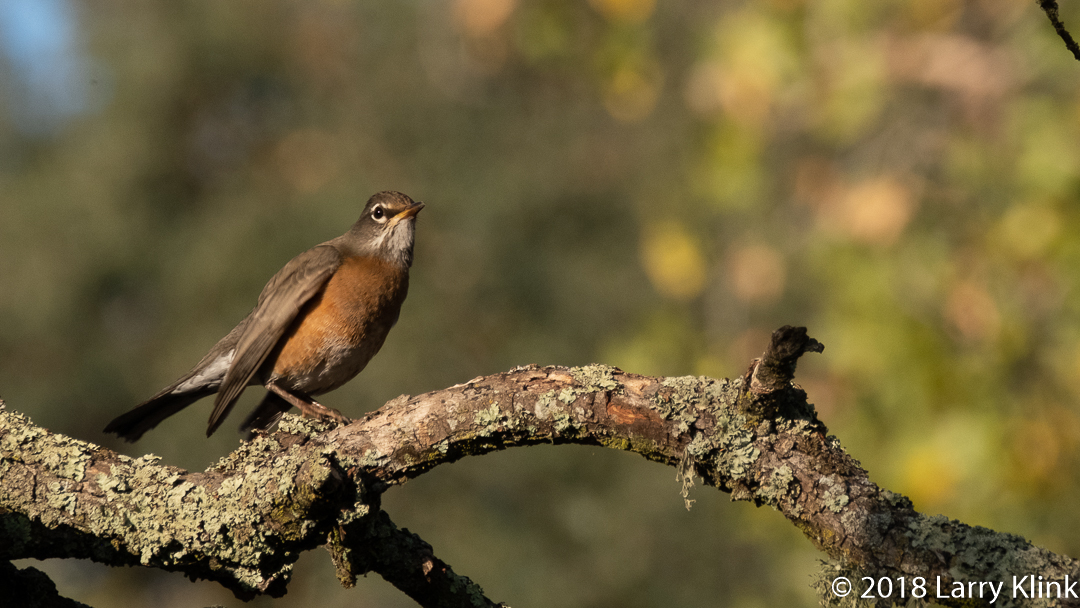
The American Robin stays around all year, but I never see them in large numbers like I have seen them in other areas. They are a beautiful bird with a pretty song. They are very easy to spot; they hunt for worms and other insects on the ground in open areas.

The black phoebe is a flycatcher. They like to live near the water, You can see them perched on trees, hunting for insects or arthropods. When they spot something take it while in the air or diving upon their prey while it is on the ground.
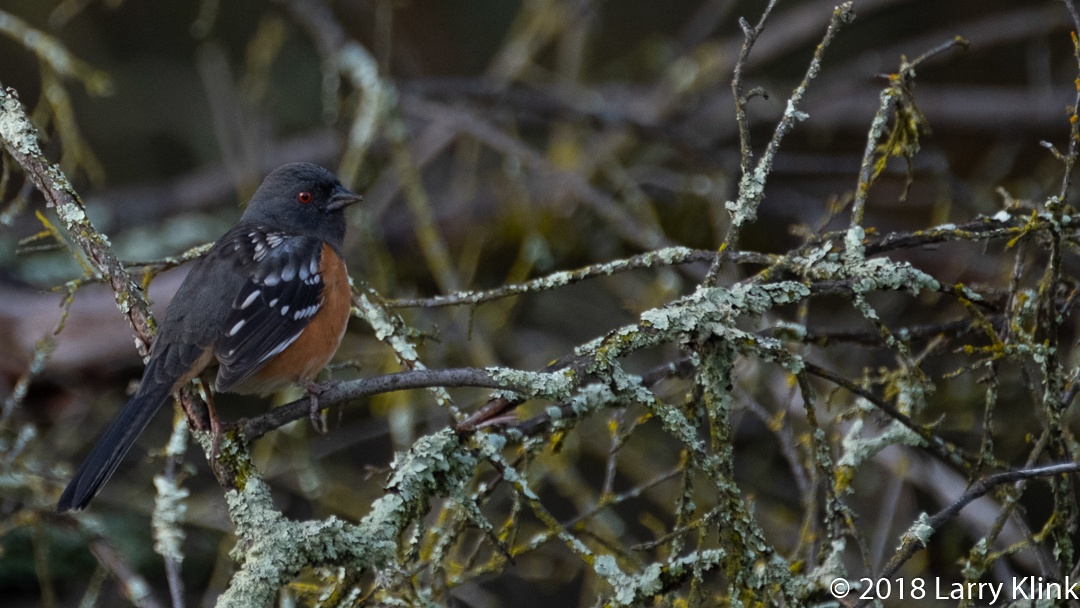
The spotted towhee likes to hide in the underbrush and eat insects. Look for fluttering in the brush pile and watch carefully you just might catch a glimpse of one.
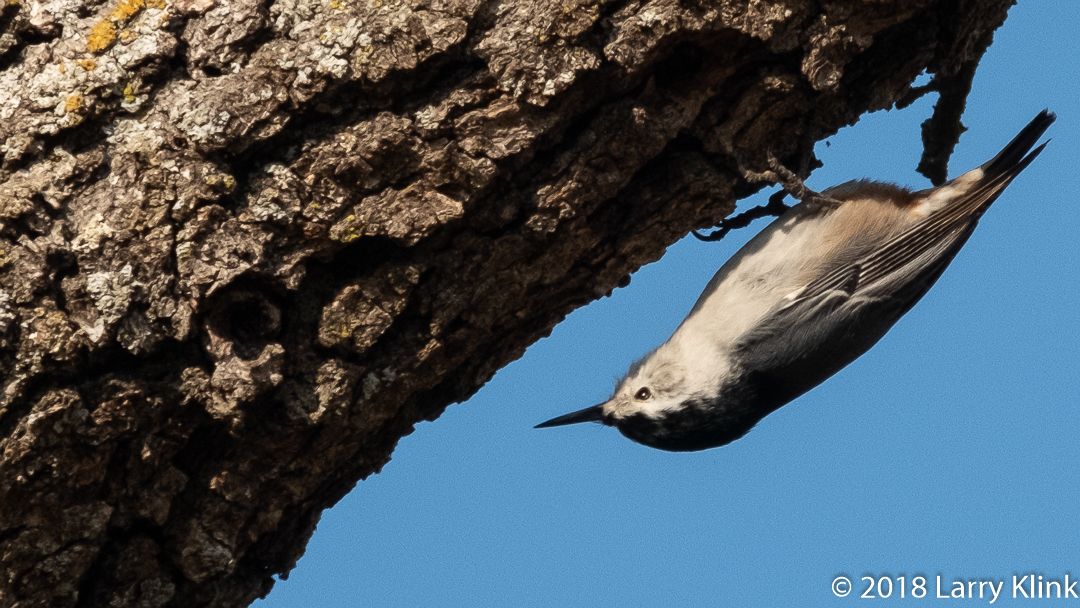
The white breasted nuthatch can be seen scampering up, down and around tree branches and trunks in search of food. They are fun to watch as they move quickly while searching and descend headfirst when going downward. They primarily eat insects but do also eat nuts.
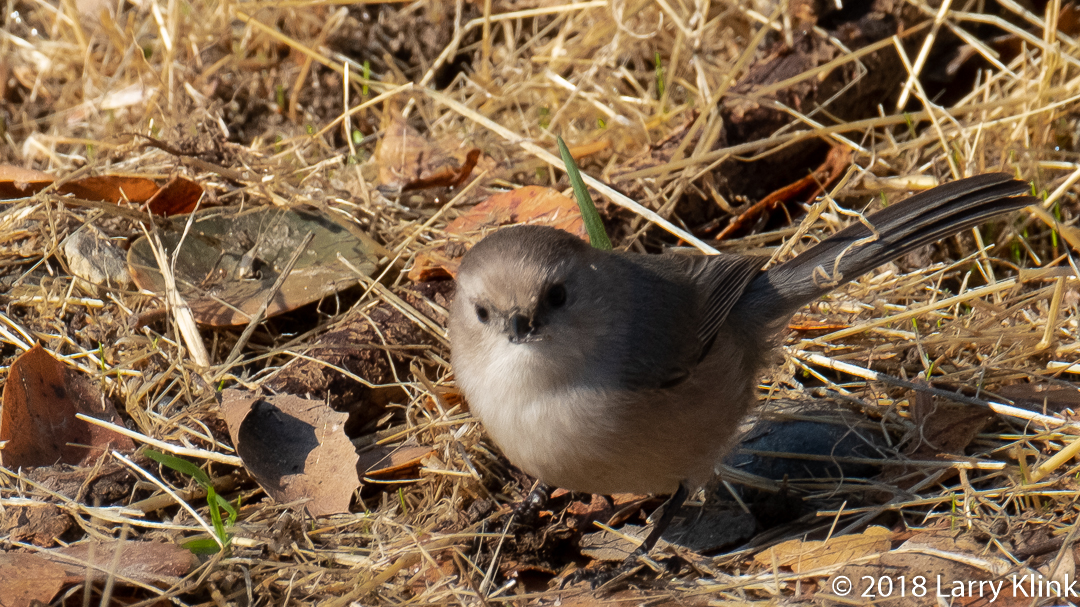
The bushtit is a tiny bird mostly found in small flocks. They fly from tree to tree staying only a very short time. They primarily dine on small insects and spiders.
Note: these and other images are available to purchase at my website: www.earthwatcher.us or by contacting larry.klink@earthwatcher.us.
 Earthwatcher