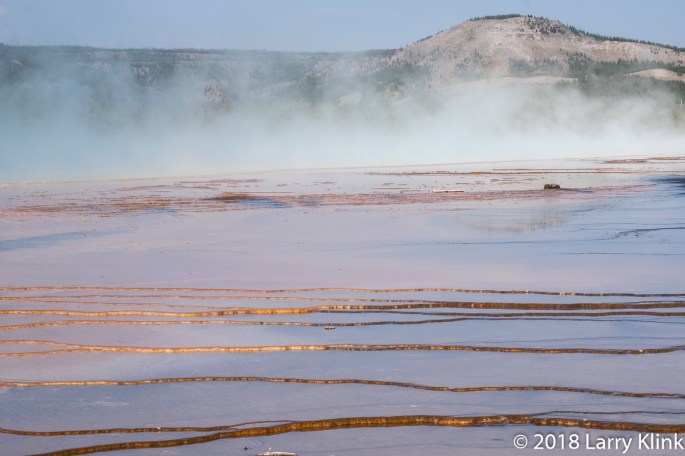
Geysers, Hot Springs and Mudpots

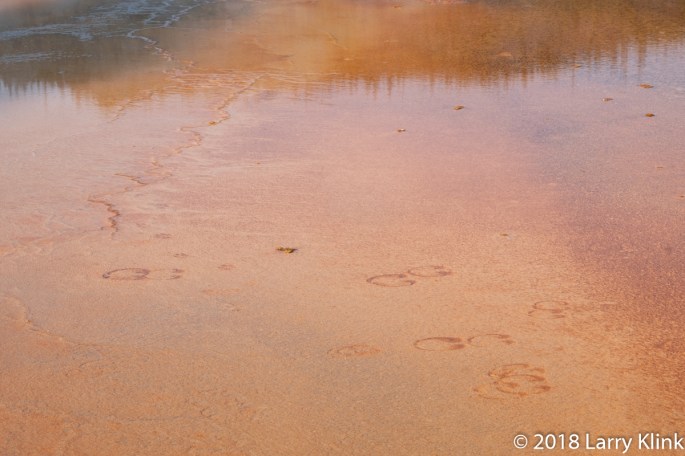
Upper Geyser Basin, Yellowstone National Park; SEP 2018
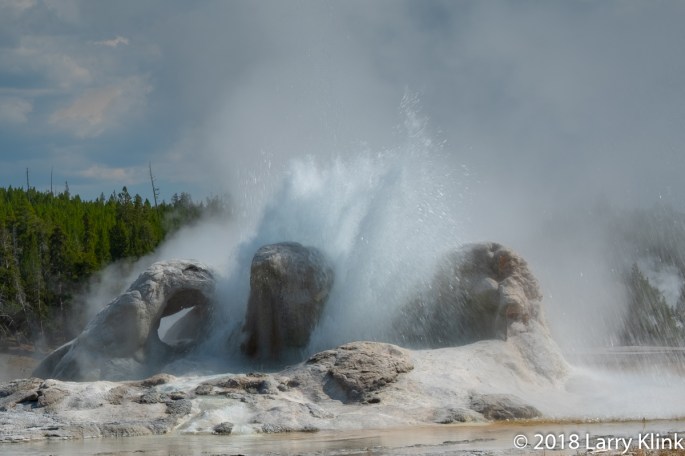
Grotto Geyser, Yellowstone National Park; SEP 2018

Yellowstone is full of hydro-thermal (Hot Water) features; features created when groundwater is heated by Yellowstone’s magma chamber and pushed up to the surface. The geyser, Old Faithful, is the iconic feature of Yellowstone. But that is just one of many. Near Old Faithful is the Grand Prismatic Spring and Morning Glory Pool; 2 famous hot springs. The travertine terraces of Mammoth Hot Springs are constantly under creation as the underlying hot spring bubbles up through a deposit of limestone. The Mud Volcano area has its bubbling mudpots and hot springs. Fumaroles that vent only steam abound.

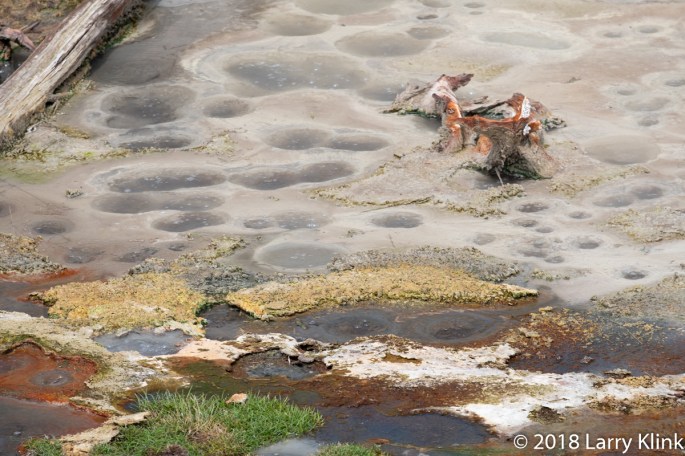
The interesting thing is that all these features work the same way. A hot spring has a crack or “pipe” that travels underground to the surface. As water is heated, it expands and gets pushed upward. If the pipe has a constriction, it slows the water’s upward movement until enough pressure builds so that the water explodes out of the ground as a geyser. If there is no constriction, the water runs continuously.  If there is a depression, the water creates a pool. If the hot spring doesn’t have a lot of water, it soaks the ground instead of forming a pool. If there is just enough water, it creates pool of bubbling mud. If the amount of water is very small, it forms a fumarole and vents only steam.

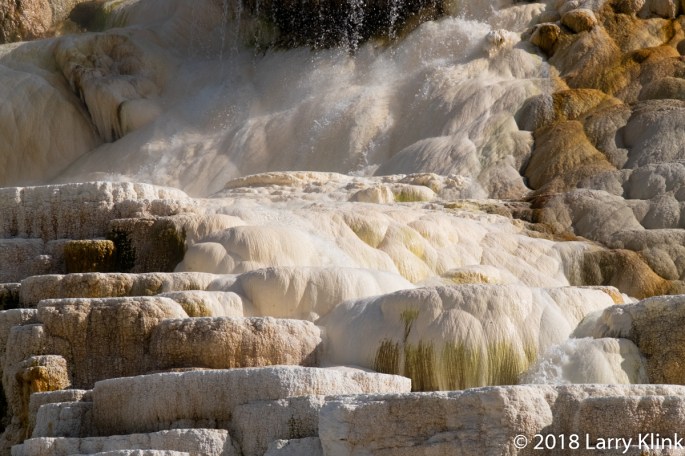
Hot springs encourage the growth of bacteria and algae that form mats on the beds of their pools and streams. These mats come in array of colors that make these springs breathtakingly beautiful. Mammoth Hot Springs, whose water flows through limestone, deposits calcium carbonate as the water evaporates forming huge terraces of travertine. In some parts, chemical impurities stain the terraces with beautiful color.

These hydro-thermal features of Yellowstone are a wonder to behold.

Note: Click on caption to see higher resolution image.

Travertine Terrace with Water
Travertine Terrace with Water – Mammoth Hot Springs
Upper Geyser Basin, Yellowstone National Park; SEP 2018
Color Spectrum of Morning Glory Pool – Upper Geyser Basin
Life in a Mud Pot
Ecosystem of a Mudpot – Mud Volcano Area
Orange Spring Mound
Wildflowers, Dead Tree and Travertine – Orange Spring Mound, Mammoth Hot Springs
Fumarole Along Grand Loop Road
Fumaroles Along Grand Loop Road 
Sizzling Basin, Mud Volcano Area, Yellowstone National Park; SEP 2018
Mudpot – Mud Volcano Area
Mini Forest in a Mini Hot Spring Delta
Mini Forest in a Mini Hot Spring Delta, Mud Volcano Area
Grotto Geyser
Grotto Geyser
Mammoth Hot Spring, Yellowstone Natonal Park; SEP 2018
Travertine Terrace – Mammoth Hot Springs
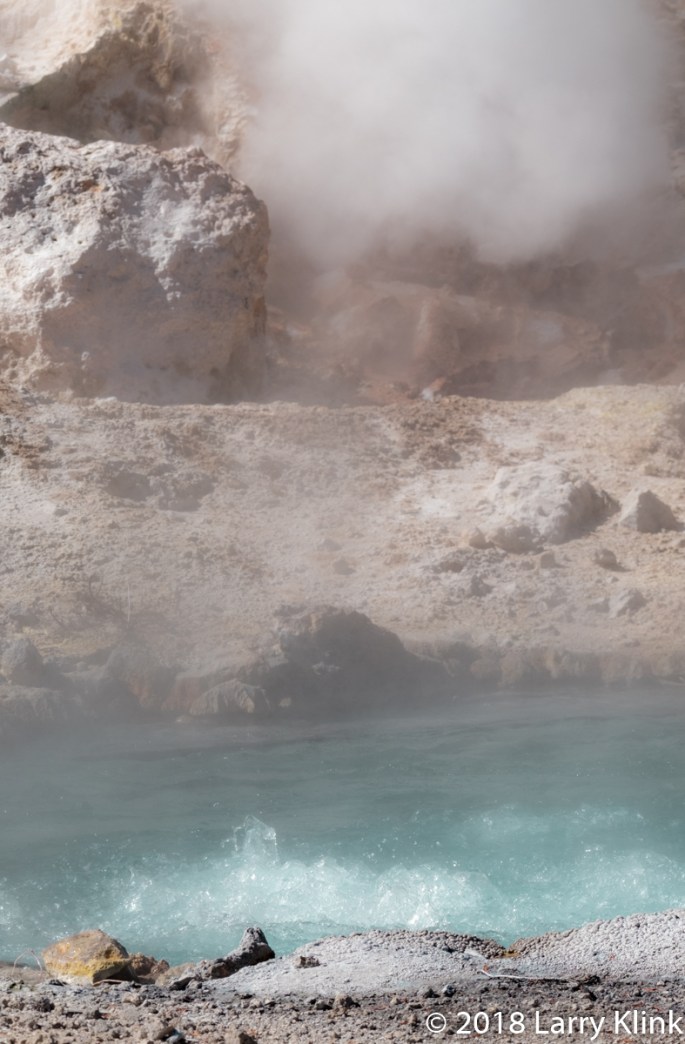
Beryl Spring - Hot Spring and Fumarole
Beryl Spring – Hot Spring and Fumarole – Grand Loop Road

These and oter images are available at my website: www.earthwatcher.us or by contacting larry@earthwatcher.us.

A Day at Okefenokee National Wildlife Refuge

Edge of the Prarie
Edge of the Prairie

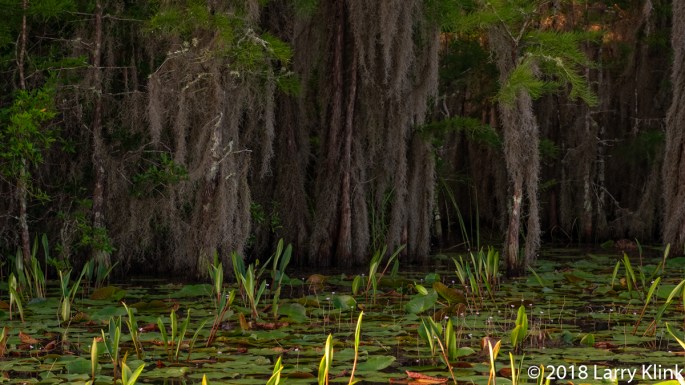
Commonly known as the Okefenokee Swamp, it is located near Folkston, GA – near the Georgia-Florida border. Though most people consider it a swamp, it is really a peat bog. A bog is a wetland underlain with peat, dead plant material that forms a woody, brown, fibrous blanket. Most of us know it from the peat moss we buy in garden stores. It is home to a wide variety of wildlife that live among the forest of balled cypress trees covered with Spanish Moss and the prairie, a tannin rich pond whose dark brown water is covered by water lilies and other plants.
The Okefenokee is not fed by any river or stream. It is a natural basin that is filled by rainfall on the pond and runoff from the surrounding terrain. Though it is only fed by rainwater, the pond maintains an average depth of 2 – 2 ½ feet of water. Twenty Five percent of its water drains to the Atlantic Ocean via the St Mary’s River. The remaining 75% drains to the Gulf of Mexico via the Suwanee River of “Way Down Upon the Suwanee River” fame.
During the late 1800’s it was heavily logged for its rot resistant cypress wood. The main canal through the swamp was an attempt to drain the bog to the east for purposes of transporting lumber. The canal was dug by hand but was not completed because it wasn’t deemed possible to dig through the natural berm on the east side of the basin.
Native Americans occupied the area surrounding the swamp between 500AD and 1840 when the Seminole tribe was driven off. There is record of Spanish settlement between 1625 and 1640. In 1937, the federal government purchased the Okefenokee and created the Okefenokee Wildlife Refuge. The facilities were first developed by the Civilian Conservation Corps between 1937 and 1941.

Note: Click on caption to see image at larger size and higher resolution.

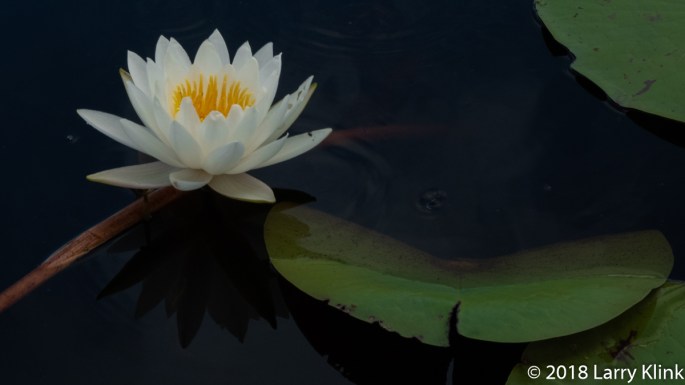
Water Lily
Water Lily
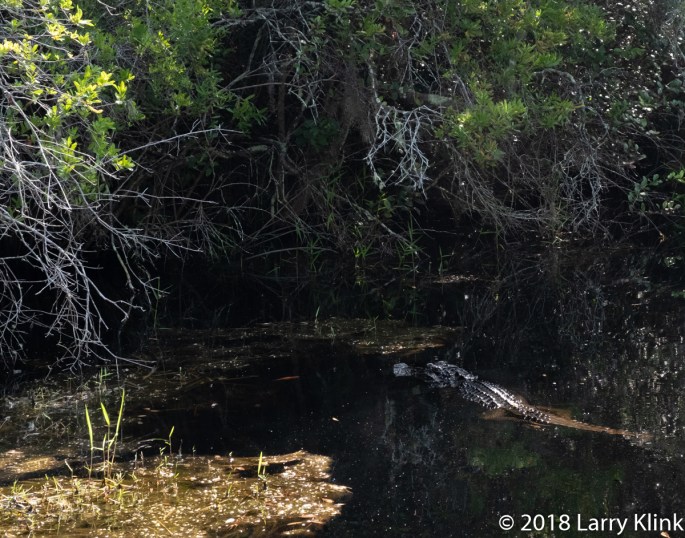
Alligator
Alligator
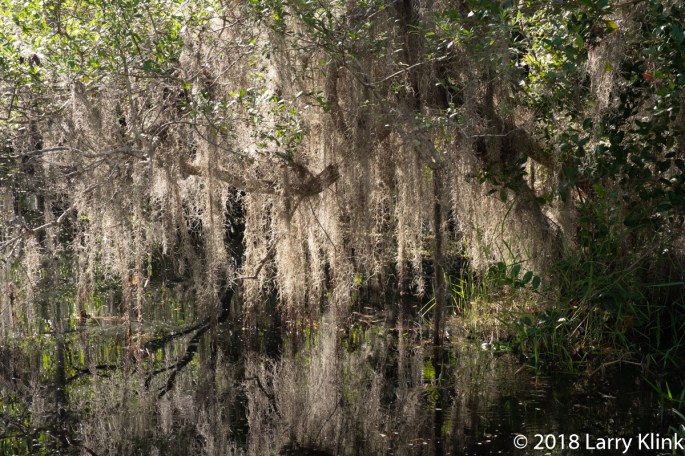
Spanish Moss Covered Balled Cypress
Eastern Barred Owl
Eastern Barred Owl
Cricket Frog on a Lily Pad
Water Lily
Water Lily
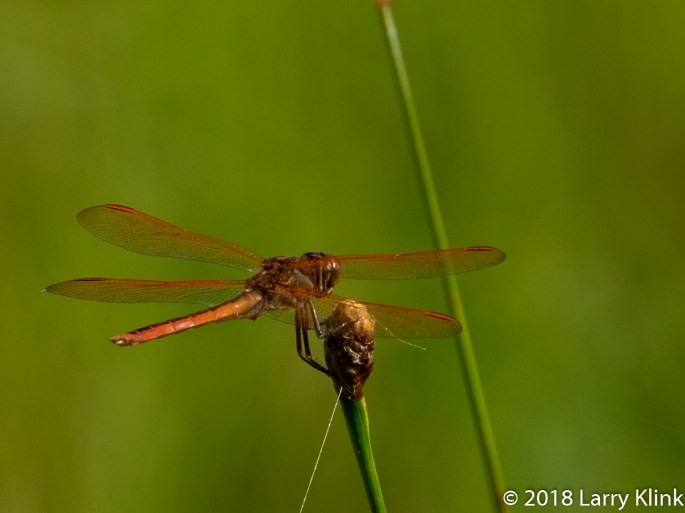
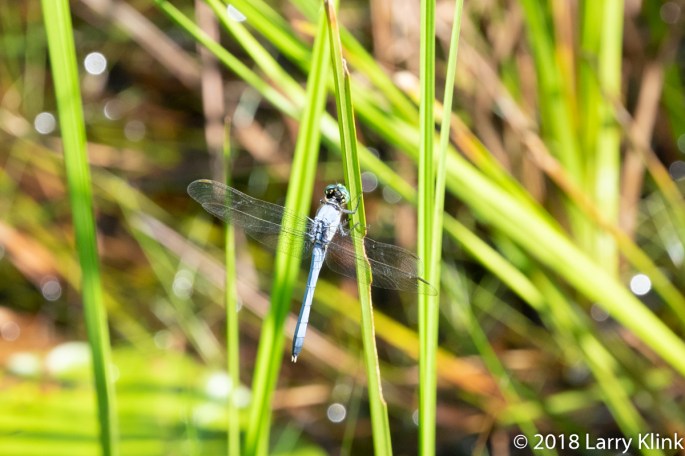
Eastern Amberwing Dragonfly
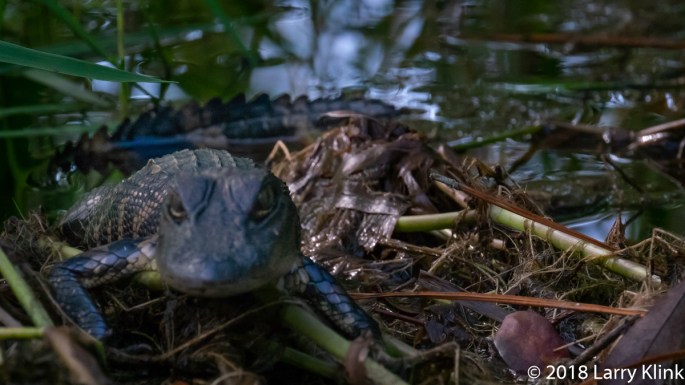
Juvenile Alligator
Juvenile Alligator
Spanish Moss on a Tree Limb
Prarie and Forest
Prairie and Forest
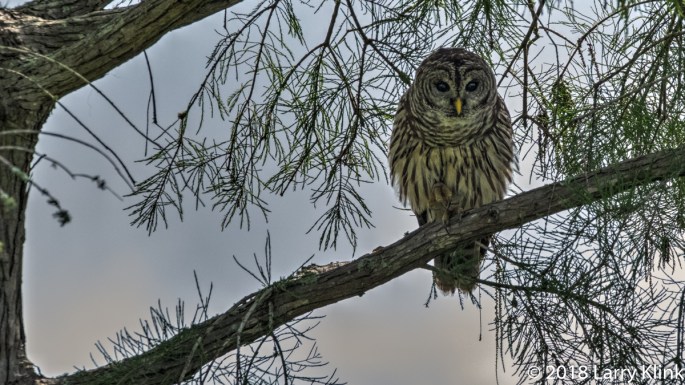
Eastern Barred Owl
Eastern Barred Owl
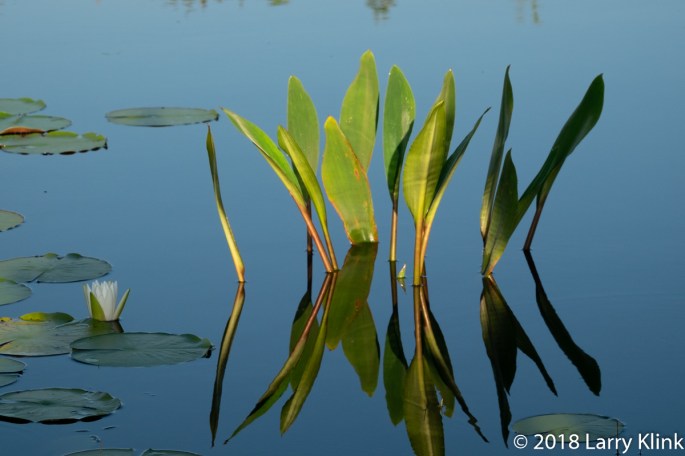
Water Llly
Water Lily
Male Eastern Pondhawk Dragonfly
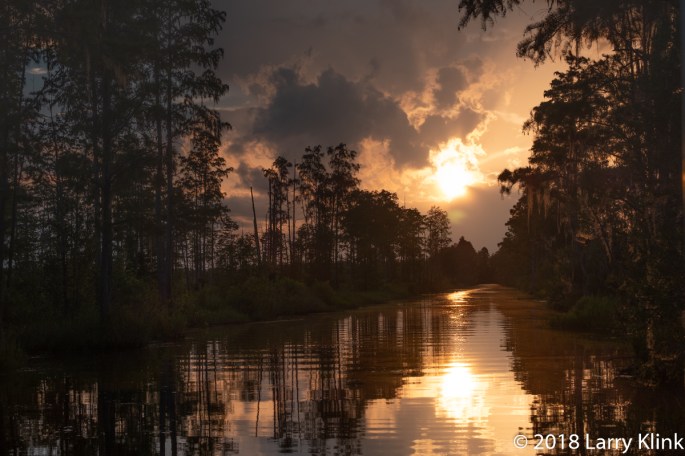
Sunset from the Main Canal
Sunset on the Main Canal
Sunset from the Main Canal - Perspective 2
Sunset on the Main Canal – Perspective 2


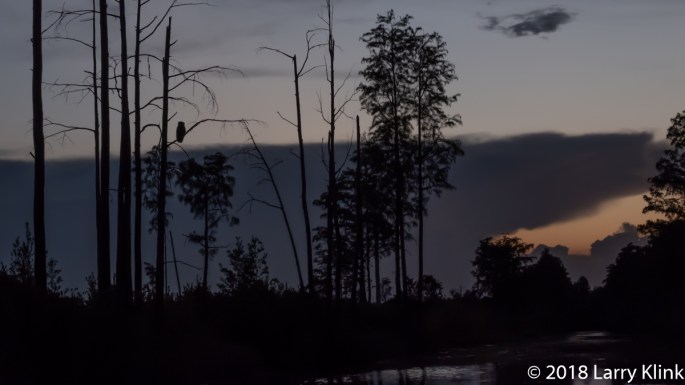
Almost Dark
Almost Dark


Note: These and other images are available for purchase at my website: www.earthwatcher.us or by contacting larry@earthwatcher.us

Butterflies at Atlanta Botanical Garden


Eastern Tiger Swallowtail Butterfly
Eastern Tiger Swallowtail

We made a visit to the Atlanta Botanical Garden recently. Though there were some beautiful flowers, I became fascinated with the butterflies.

I learned 2 interesting facts as I researched the insects for identification. One is that moths are distinguished from butterflies by their antennae and how they position their wings when resting. Butterfly antennae are club shaped while the moth’s are hairy. Moths rest with their wings flat while butterflies rest with their wings upright. The female tiger swallowtail can be black or yellow. The mail is always yellow. The yellow female has blue at the base of their wings; the male does not.

I hope you enjoy them, as well as the moth and the katydid.

Note: To see images at larger size and higher resolution, please click on caption.

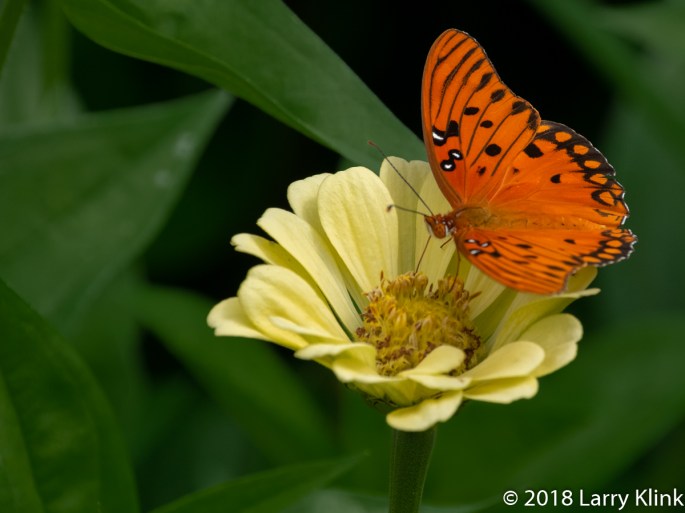
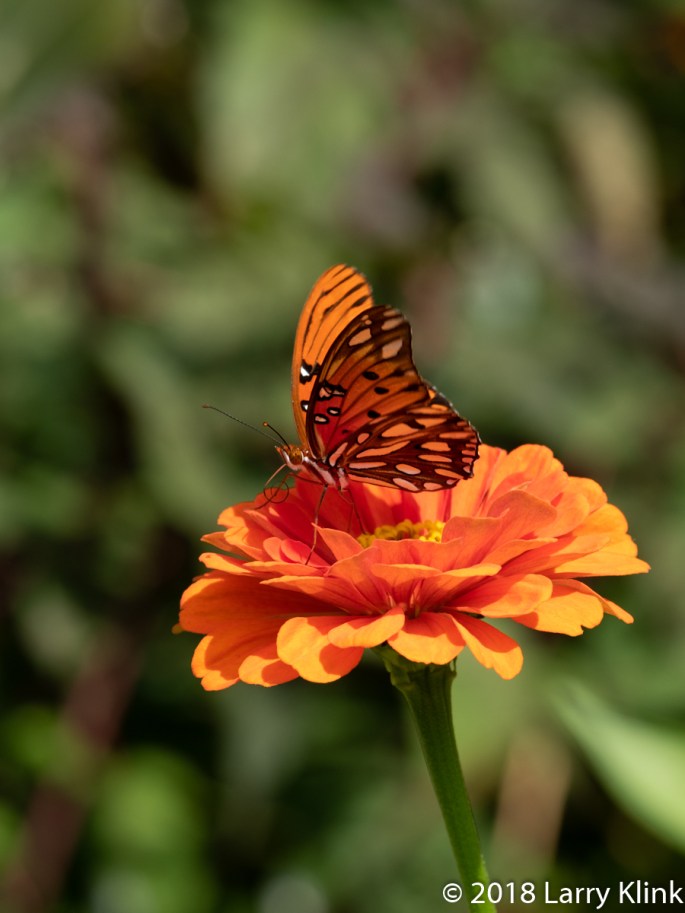
Gulf Fratillary Butterfly
Gulf Fratillary
Female Eastern Tiger Swallowtail Butterfly
Female Eastern Tiger Swallowtail
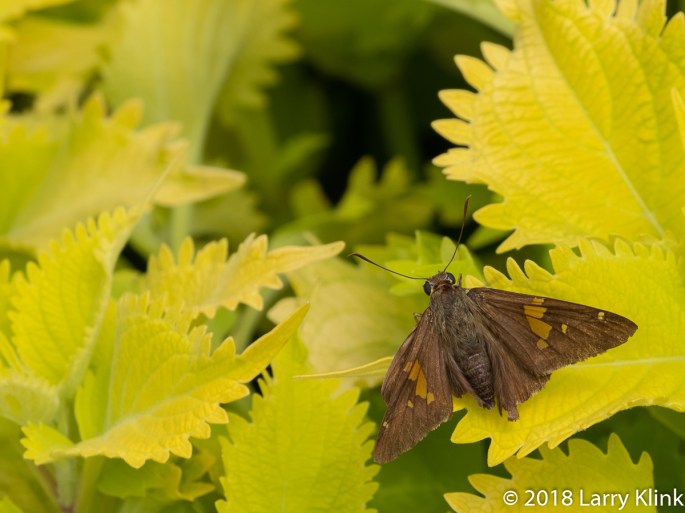
Silver Spotted Skipper Moth
Silver Spotted Skipper
Common True Katydid
Common True Katydid
Gulf Fritillary Butterfly
Gulf Fratillary
Eastern Tiger Swallowtail Butterfly
Eastern Tiger Swallowtail

Note these and other images are available to purchase by visiting my web site: www.earthwatcher.us or by contacting larry@earthwatcher.us.

Regards,

larry

The Turkey Vulture

20180711-Effie-Yeaw-032-Web
Turkey Vulture

Almost every day I see a kettle of Turkey Vultures soaring in search of food. One spot, where I walk up a half mile, 5% grade, there are always a few perched on a tower at the top. I hope you enjoy the images of these stately creatures with their odd looking heads.

Regards


Larry

Turkey Vulture
Turkey Vulture

Note: Click on captions to see images in larger size and higher resolution.

These and other images are available for purchase at www.earthwatcher.us or by contacting larry@earthwatcher.us.
Cooper’s Hawk

Cooper's Hawk
Cooper’s Hawk

We have an active backyard. Several species of birds frequent our feeder and the ground beneath. My wife is always chasing squirrels from the feeder. This afternoon, we had an unexpected visitor – a Cooper’s Hawk. He was very gracious. He hung around for about 15 minutes and allowed me to photograph him. Interesting though, no birds came to the feeder, no squirrels came around. Not a tweet could be heard; not even from the baby starling that has been crying all week. It took about an hour after the hawk left for backyard life to resume.

Regards,


Larry

Note: Click on caption to see larger, higher resolution image.

Note: This and other images are available to purchase at my website: www.earthwatcher.us or by contacting larry@earthwatcher.us

Some Interesting Wildlife Sightings

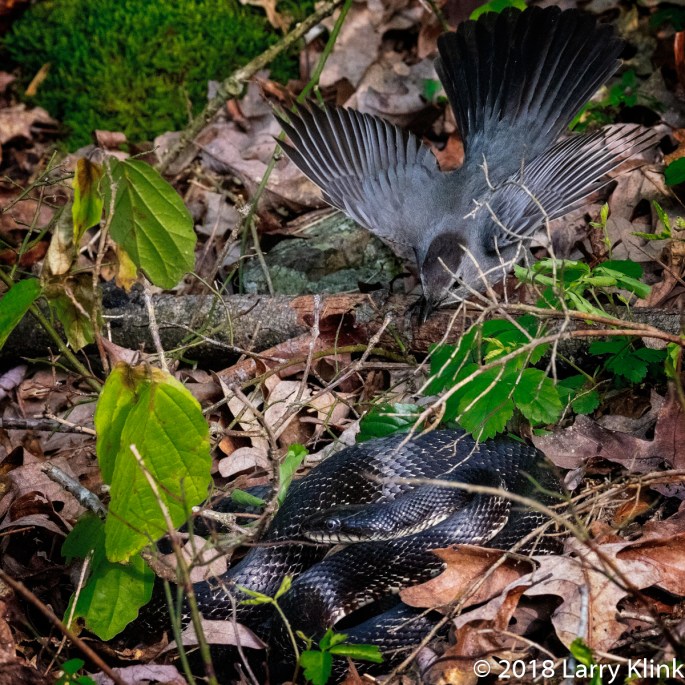
Grey Catbird Defending Nest Against Northern Black Racer Snake
Gray Catbird Attacking a Northern Black Racer Snake

Last week, we made a visit to Cowans Gap State Park in central Pennsylvania. We were fortunate to get two rare and interesting wildlife sightings.

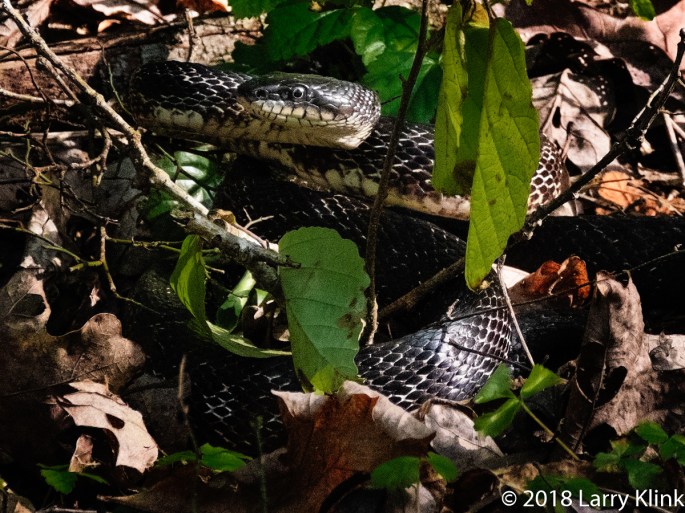
The first sighting was a grey catbird dancing around at the base of a tree. We watched for a few minutes, perplexed by what it was doing. When I got my camera and tripod set-up, I noticed a northern black racer snake curled up in the bush near the bird. As we watched, we learned that the catbird’s elaborate dance, coupled with pecking the snake’s head was really an attempt to chase the snake away. Though we didn’t see the bird’s nest, we surmised it was nearby. It was really fun to watch this activity live rather than a scene in a TV documentary.

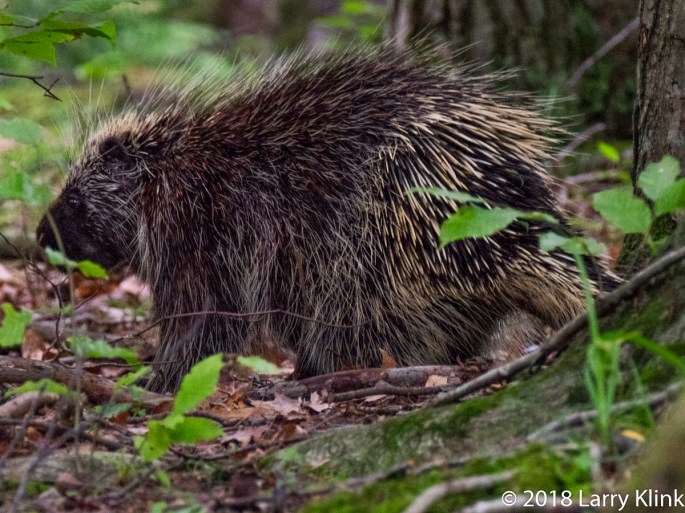
The second sighting was of a very large porcupine. It was the first time I have seen a porcupine in the wild.

I hope you enjoy these images.

Regards,

Larry

Note: To see images in larger size and higher resolution, click on the caption.

Northern Black Racer Snake
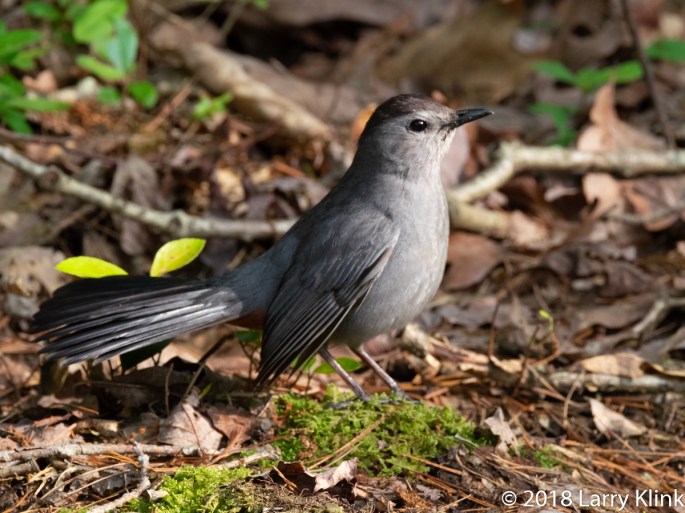
Gray Catbird
Gray Catbird
Cowan Gap State Park, PA; JUN 2018
Porcupine


Note: These and other images are available to purchase by visiting my website: www.earthwatcher.us or by contacting larry@earthwatcher.us.
Green Heron

Green Heron
Green Heron, Effie Yeaw Nature Center, Sacramento, CA; MAY 2018

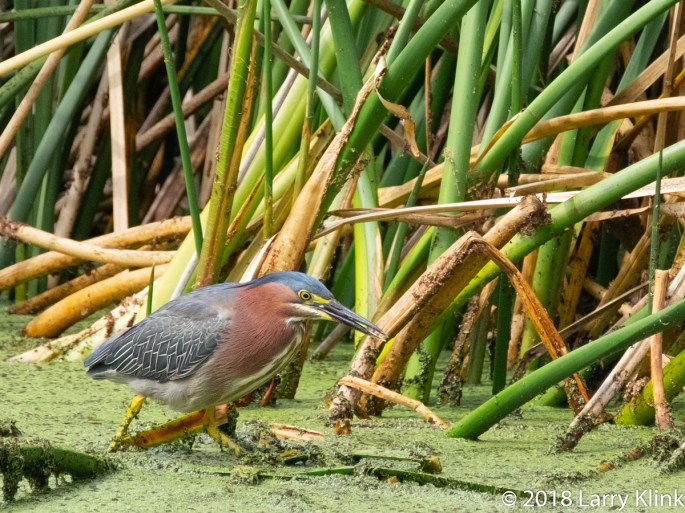
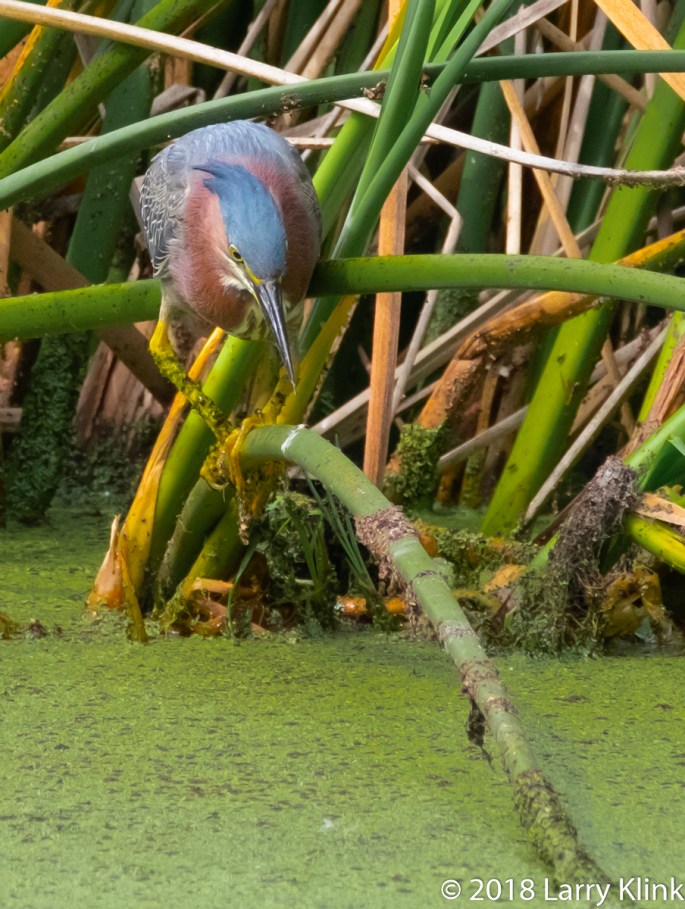
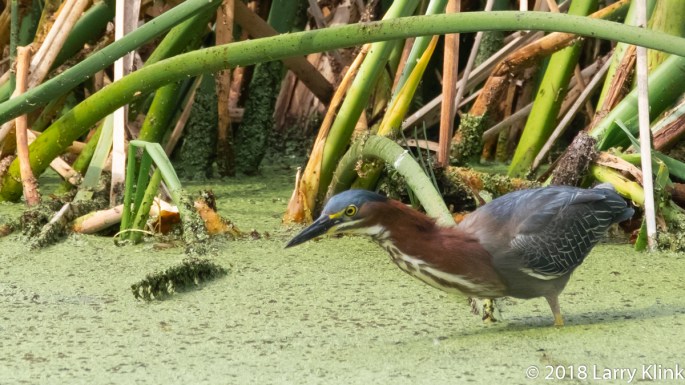
This week, I was blessed to be able to observe and photograph a green heron for 10 minutes. I see green herons from time to time but only one other time did I see one long enough to take a photo and one shot was all he gave me. This colorful bird is much smaller than its more familiar cousin, the Great Blue Heron. Why it is called the green heron, I do not know. I only see gray, blue, chestnut red and yellow. Regardless, they are beautiful. I hope you enjoy these images.

Regards,

Larry.

Note: Click on caption to see image at larger size and greater resolution

Green Heron
Green Heron
Green Heron
Green Heron
Green Heron
Green Heron

Note: These and other images are available to purchase at my website: www.earthwatcher.us or by contacting larry@earthwatcher.us.

More Images From Phoenix

Desert Landscape with Cactus

Here are some more images from my recent visit to the Phoenix area.

Note: Click on caption to see  images in larger size.

Image of a Prickly Pear Cactus Bloom
Prickly Pear Cactus Bloom
Image of an Ocotillo Cactus Bloom
Ocotillo Bloom
Landscape image of the Sonoran Desert featuring its Vegetation
Sonoran Desert Vegetation – Saguaro, Ocotillo, Prickly Pear and Others
Desert landscape image featuring Saguaro Cacti
Saguaro Cacti
Image of a Saguaro Cactus Bloom
Saguaro Bloom

Note: These and other images are available for purchase on my website: www.earthwatcher.us or by contacting larry@earthwatcher.us.
Images of A Few Birds

Red Shouldered Hawk with Chicks

Here are some images of birds I took over the past few weeks.

Note: Click on image caption to see image in larger size.

Yellow Billed Magpie

Thought magpies are common in many areas, the Yellow Billed Magpie is found only in Sacramento, CA and surrounding areas.

Common Moorhen in Bed of Yellow Water Lillies
Common Moorhen
Pied Billed Grebe
Pied Billed Grebe
Greater Roadrunner
Greater Roadrunner
Female Northern Flicker

These and other images are available to purchase at http://www.earthwatcher.us or by contacting larry@earthwatcher.us.

Visitors to the Saguaro

Image of a Gila Woodpecker perched atop a saguaro cactus
Gila Woodpecker

I visited Phoenix, AZ recently. I stayed at a beautiful place at the foot of South Mountain. The place had a patio that overlooked the city and at the corner of that patio was a large saguaro cactus. The mornings were beautiful, so I sat on the deck and watched the birds as they visited the cactus. Here is some of what I saw.
The starling was not taken on the same cactus. It was sitting outside its nesting hole on a cactus at another location.

Note: Click on caption to see image at a larger size.

Image of a Cactus Wren perched atop a saguaro cactus
Cactus Wren
Image of a European Collared Dove perched atop a saguaro cactus
Eurasian Collared Dove
Image of a Gila Woodpecker perched atop a saguaro cactus
Gila Woodpecker
Image of an Anna's Hummingbird hovering alongside a saguaro cactus
Anna’s Hummingbird
Image of a Gilded Flicker perched atop a saguaro cactus
Gilded Flicker
Image of a Gila Woodpecker hidden among the arms of a saguaro cactus
Gila Woodpecker
Image of a European Starling standing by its nesting hole in a saguaro cactus
European Starling