In Sacramento, we are privileged to live along the American
River. This mighty river is one of many that provide spawning territory for
salmon. Spawning is the last great act of these creatures; after they spawn,
they die. Though it is the end for them, their death provides nutrients for
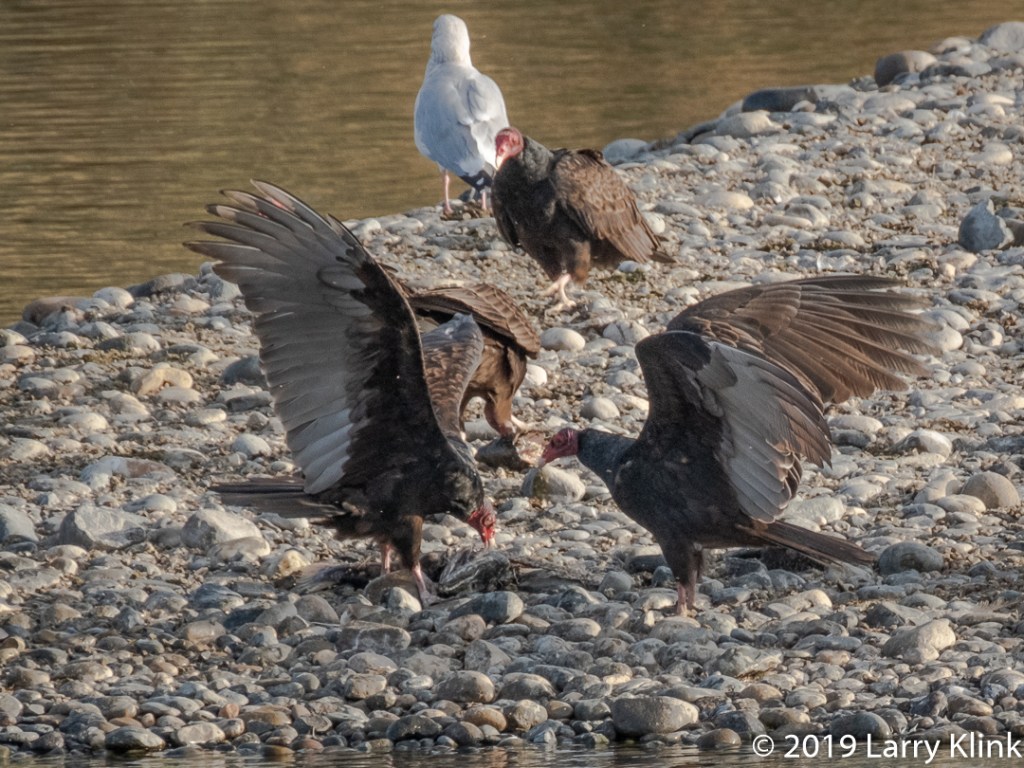
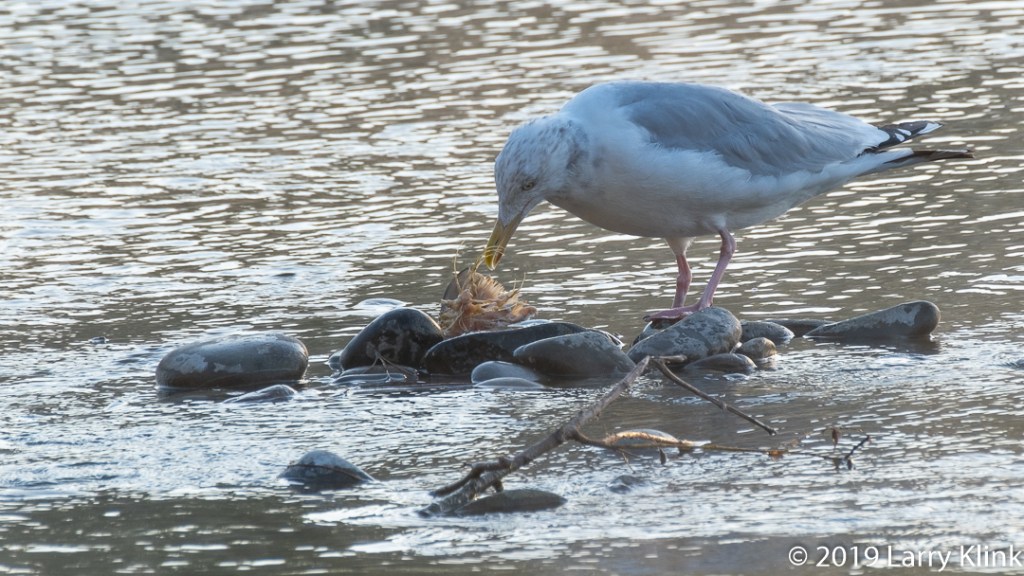
plants and other animals. When the Salmon run gets underway, migrating Turkey
Vultures and Gulls arrive and supplement the year-around population and clean
up the carcasses.
Scavenging is not limited to the Salmon carcasses. I’ve also
found a Raven with the carcass of a dead bird. Hunting and killing is not
normal behavior for the Raven so most likely it found the carcass.
Look closely at the rocks among the vultures. Some of what looks like rocks are part of the carcasses.
Note: Please click on caption to see images at higher resolution.
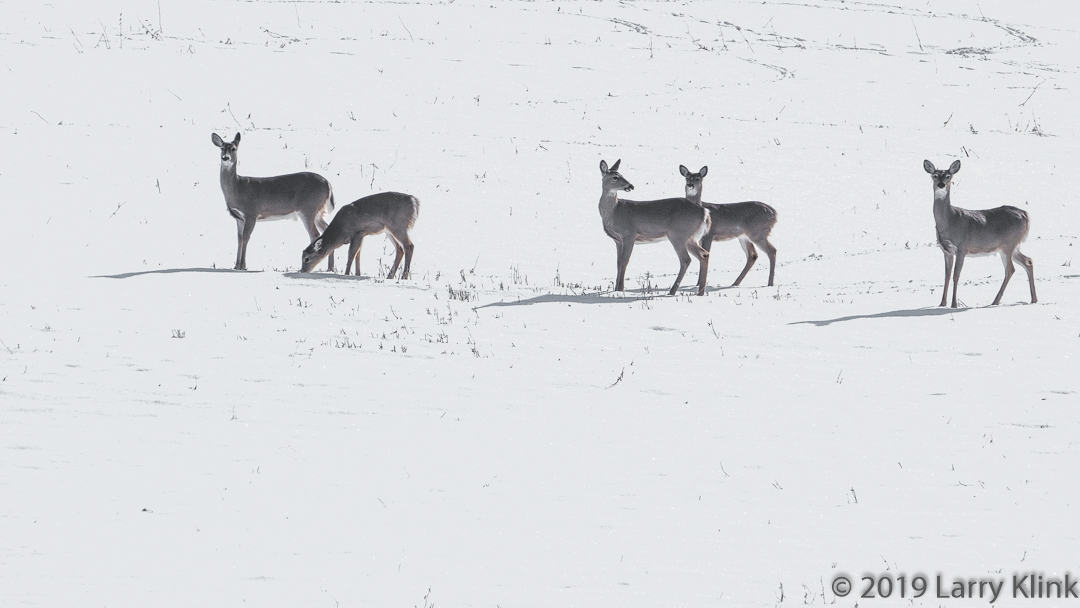
Here are some images of deer I recently photographed.
The White-tailed deer were spotted in rural southwestern Pennsylvania (US) grazing through some new fallen snow.
The Black-tailed Mule Deer was taken at the Effie Yeaw Nature Center here in Sacramento. I suppose he was taking a break after the rut. He’ll soon drop his antlers and begin growing them anew.
By the way, if you are ever in the Sacramento area, you should pay a visit to the Effie Yeaw Nature Center. You are almost guaranteed to see deer, wild turkeys and many birds. I occasionally see a jack rabbit and coyotes also.
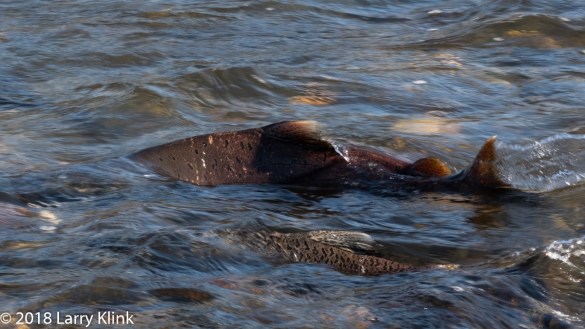
In November and December, the Chinook or King Salmon make their run into rivers along the Pacific Coast to spawn. Here, in Sacramento, they spawn in the American River. They lay their eggs in gravelly nests in shallow river beds. They need clean, cool, oxygenated, sediment-free fresh water for their eggs to develop. That means water that runs freely. Visiting Effie Yeaw Nature center yesterday, I got to watch some of the salmon preparing nests.They swam around in tight circles contorting their bodies and swishing their tail fins to clean any sediment from an area of river gravel. When they are done, the females will lay their eggs and the males will fertilize them. When finished spawning, both the males and females die. After the eggs hatch, those that survive mature for a few months then find their way to the ocean. If you walk along a river where salmon breed, look for an area where rocks are clean and shiny – it may be a salmon nest. They are usually about 6 feet by 2 feet.
I learned recently that prior to damming the American River,the salmon had a spawning ground of over 100 miles in the main river and tributaries. After the damming, it was reduced to 8 miles. To compensate, there is a fish hatchery just downstream from the Nimbus Dam. They open the fish ladders in November and December to capture salmon and spawn them. When the eggs hatch and grow to about 40 salmon per pound, they are released. They tag these salmon in some way and have tracked a 5 in 1000 success rate in salmon returning to breed. After the salmon run, they catch and spawn steelhead. The steelhead naturally come upstream to dine on salmon eggs.
In California, allocation of water is a contentious issue.Farmers have been promised water for irrigation and have seen those promises go unfulfilled, especially in years of drought. One of the oft sited points of contention is the amount of water required to support fisheries. As I pointed out above, the salmon need clear, cool, fresh water for their eggs to develop.Water that is kept in dams gets warmer and of course the outflow into the river is smaller. In order to protect the salmon fisheries, not just for human consumption, but also to keep the food chain enabled, some of the water needs to keep flowing from the dams. Many people rely on the fishing industry for their livelihood; not just for recreation. There are many other factors to consider. But, for this portion of the discussion, we must ask ourselves if the lettuce, almonds or beef are more important than the salmon to our diet because this is one of the compromises that need to be worked out.
Note: Click on caption to see image in higher resolution
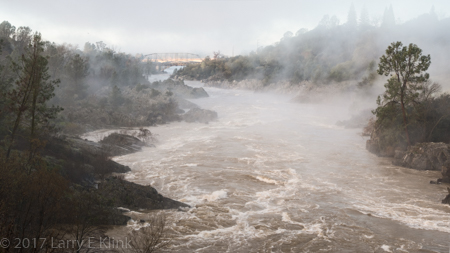
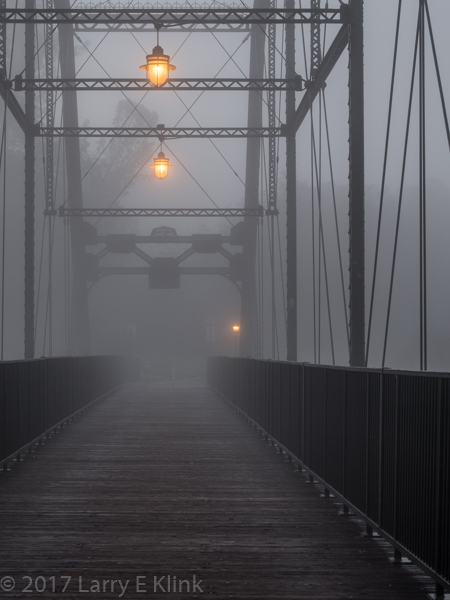
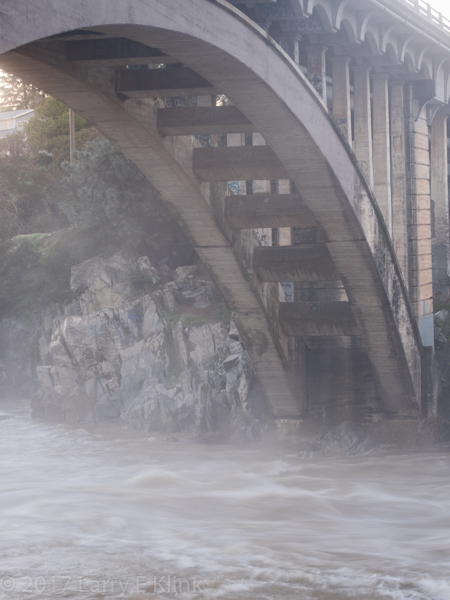
Last Friday was a cold, foggy morning and we had just come out of a long bout of heavy rain. A lot of water was being released from Folsom Lake and the American River, near Folsom was running strong. I decided to spend some time photographing the area of Folsom that surrounds the historic Walker Bridge / Donald W. Alden Memorial Bridge. It was a great time to be out. The river roared as it created whitewater through the gorge. Quite a treat. In the 5 years that I have lived in the area, I never saw significant whitewater or heard the river roar.
The Walker Bridge / Donald W. Alden Memorial Bridge was built in 1893. It was sold 3 times: once to a man in Japan who wanted it for the steel but was never able to get it, once to the State of California who dismantled it and moved it near Walker, CA to span the Klamath River, and finally back to the City of Folsom who reinstalled it on its original abutments. It now serves as a pedestrian footbridge and an access point to the American River Parkway from the City of Folsom.
I hope you enjoy these images.
Note: Click on image to see in larger size. I particularly recommend this for the image of the American Rive Gorge.
Walker Bridge / Donald W Alden Memorial Bridge, Folsom, CA
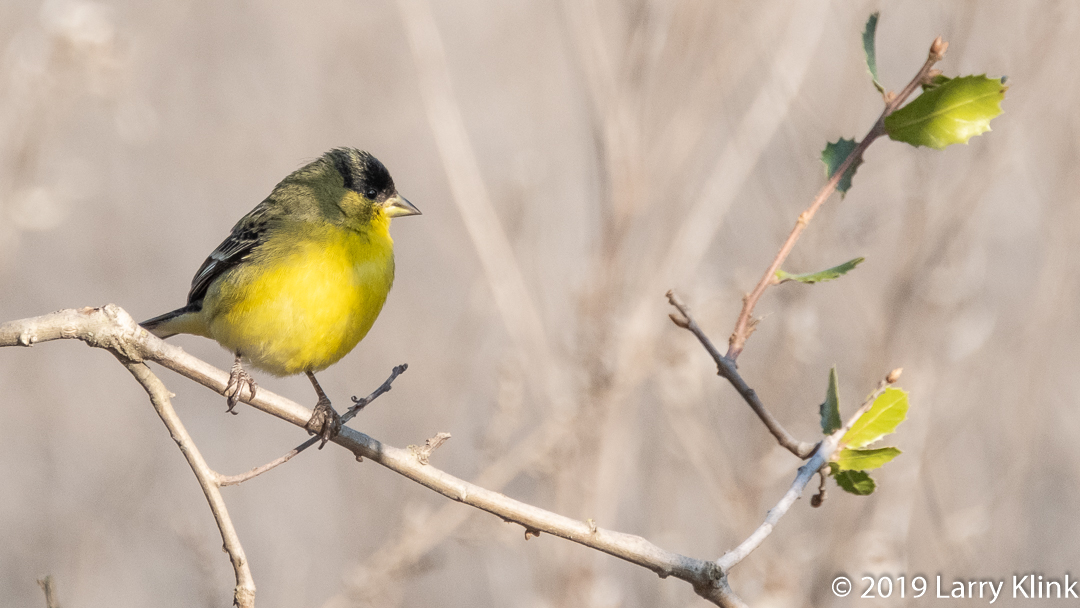
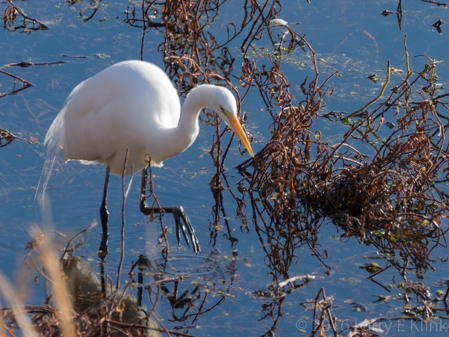
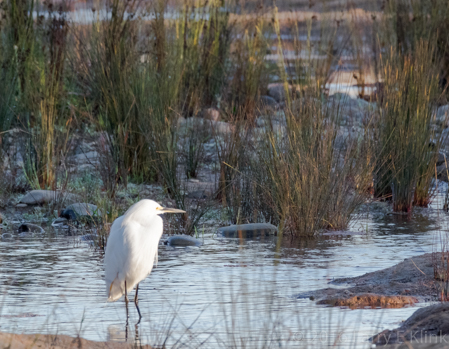
I am not typically a bird photographer. When I do shoot birds, I try to take them in the context of their environment, trying to answer the questions: this is who I am and this is how I survive. Living in the Sacramento, CA area affords me the opportunity to shoot migrating winter birds but, I find I really like to go back to the usual suspects – herons, egrets, Canada geese and mallards, hawks. Learning about them, observing their behavior gives me a lot of pleasure.
The last week or so, I’ve had the added pleasure of trying out my new Fujinon 100-400mm F4.5-5.6 lens and 1.4X Tele-converter. Its a great lens but its been more than a year since I shot with a long lens so, I made a few depth of field mistakes. Oh well, I guess I just need to go out and shoot more.
Anyway, here are a few images I shot. I hope you enjoy them.
Peaceful Morning on the American River. Wm Pond Park, American River Parkway, Sacramento, CA, APR 2015 (Click on image to enlarge)
Irises on the Bank. Wm Pond Park, American River Parkway, Sacramento, CA, APR 2015 (Click on image to enlarge)
As often as I have walked along the banks of the American River, at William Pond Park, I never realized that much of the vegetation I saw was wild irises. But, imagine if you will, clumps of the brilliant yellow blossoms outlining both sides of the shore for perhaps a half mile or so, complimenting the lupine and other wildflowers. Though there are some wild irises that are native to northern California, I haven’t been able to find if this particular species is or is not and even if it is, whether they are native to the banks of the American River. Regardless, they provide a real treat.
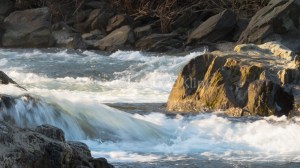
A Playful Moment in the Life of Water – Perspective 1
A Playful Moment in the Life of Water – Perspective 2
A river; water molecules traveling in unison; herded by rock and dirt; their progress blocked but not deterred. They flow until captured and stored; until they drift apart, their individual courses changed to serve the purposes of nature, or of human civilization. But here, in unrestricted freedom, they frolic, they crash, they splash and foam. Basking in early morning light, they appear to enjoy the moment unperturbed; as if they know they can play now, before they must get to work. They will do their part then some day will be reunited in the vast ocean, carried into the sky, and begin the journey anew. Such is the life of water.Regards,
Larry
Images displayed on this page, and many others can be viewed and purchased on my website: http://www.earthwatcher.us or by contacting me directly.











 Earthwatcher