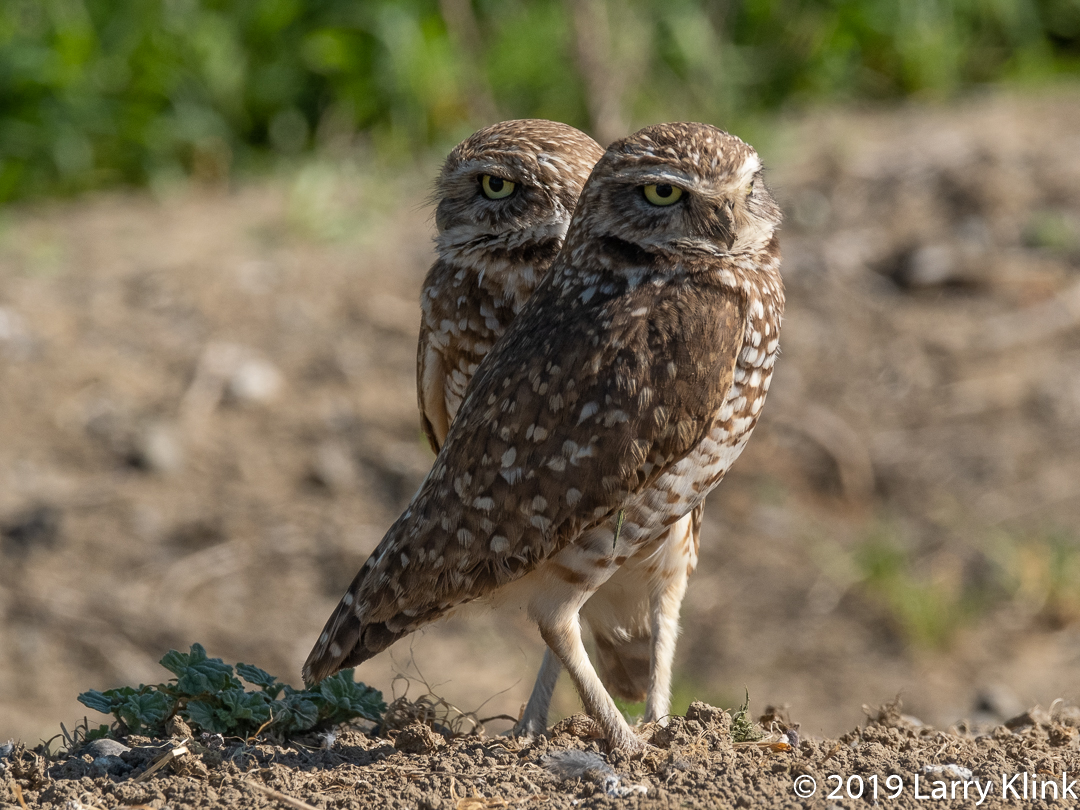
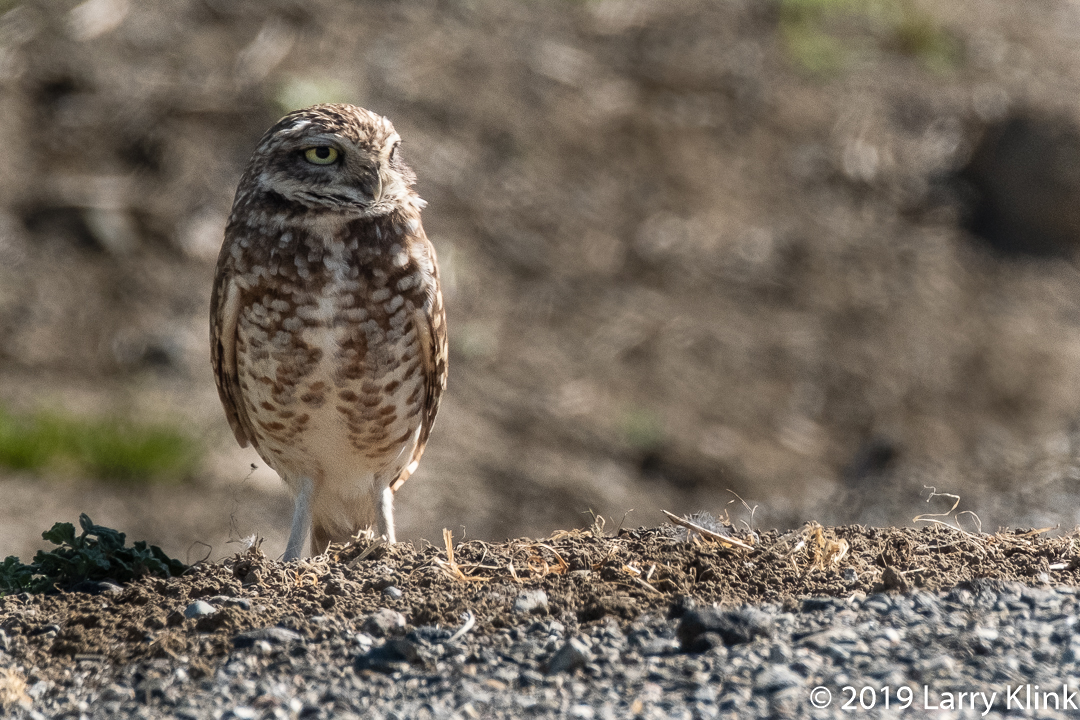
Burrowing Owls are interesting little creatures. Unlike most owls, these 8”-10” owls forage during the day and they live in burrows in the ground that were abandoned by ground squirrels, prairie dogs and the like. They spend most of their time on the ground or on low perches. They eat insects and small animals. I’ve even red that they will carry dung near the burrows to attract insects.
Please click on caption to see image at higher resolution.
Swallows are those little birds we see with their
distinctive back swept, pointed wings and their forked “swallow tail”. They maneuver
through the sky at high speed, in a seemingly erratic pattern, catching and
eating insects in flight. They will also eat mollusks, spiders and sometimes
fruit.
In the spring, along the American River, in the Sacramento
area, I commonly see two types of swallows: Tree Swallows and Cliff Swallows.
When I am lucky, I’ll see a Bank Swallow. I have been told we also have Violet-green
Swallows but I haven’t seen any.
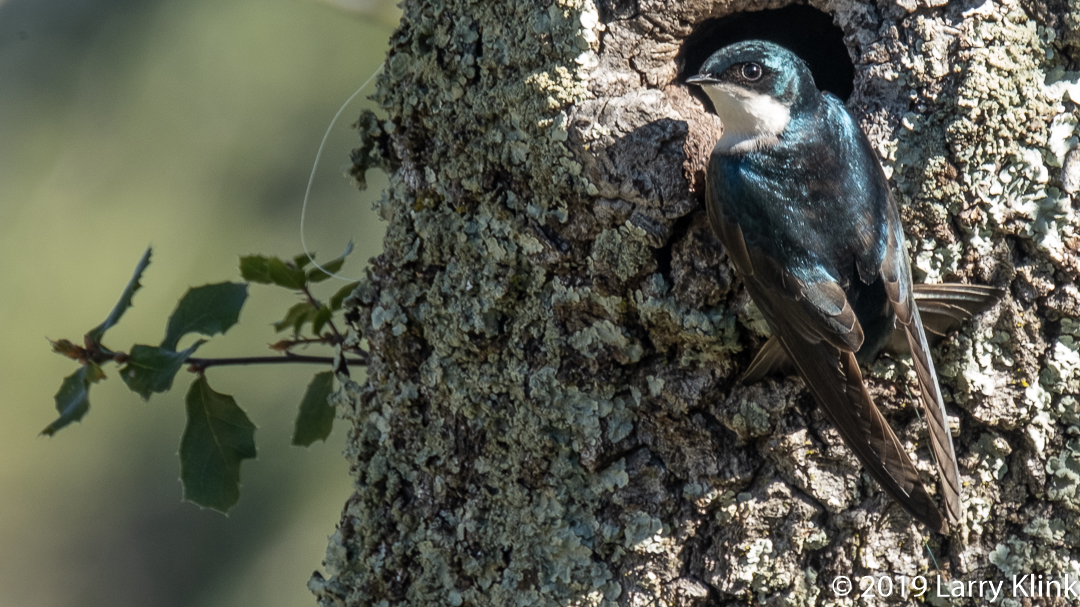
The most common swallow that I see is the Tree Swallow. They are called Tree Swallows because the nest in cavities in trees. It is a beautiful iridescent blue on its head and back, white on its breast and underside and blackish color on wings and tail. These birds live along the gulf coast, southern Mexico and Central America in the winter and move north throughout the US in summer.
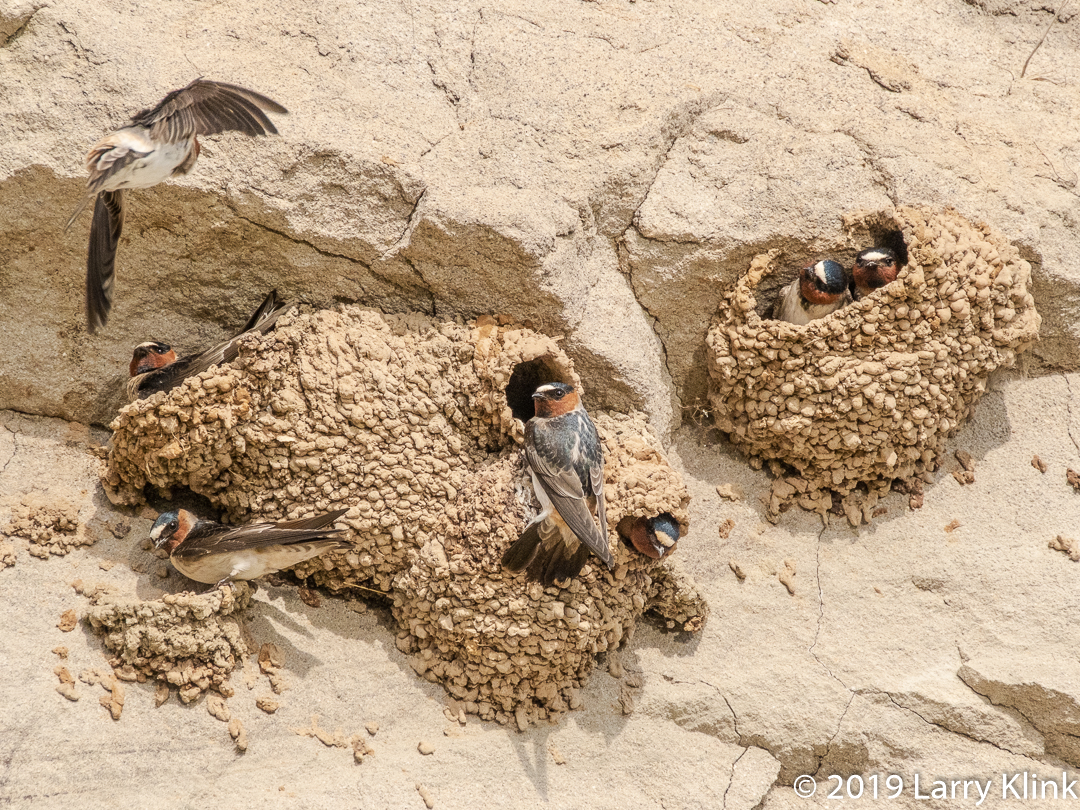
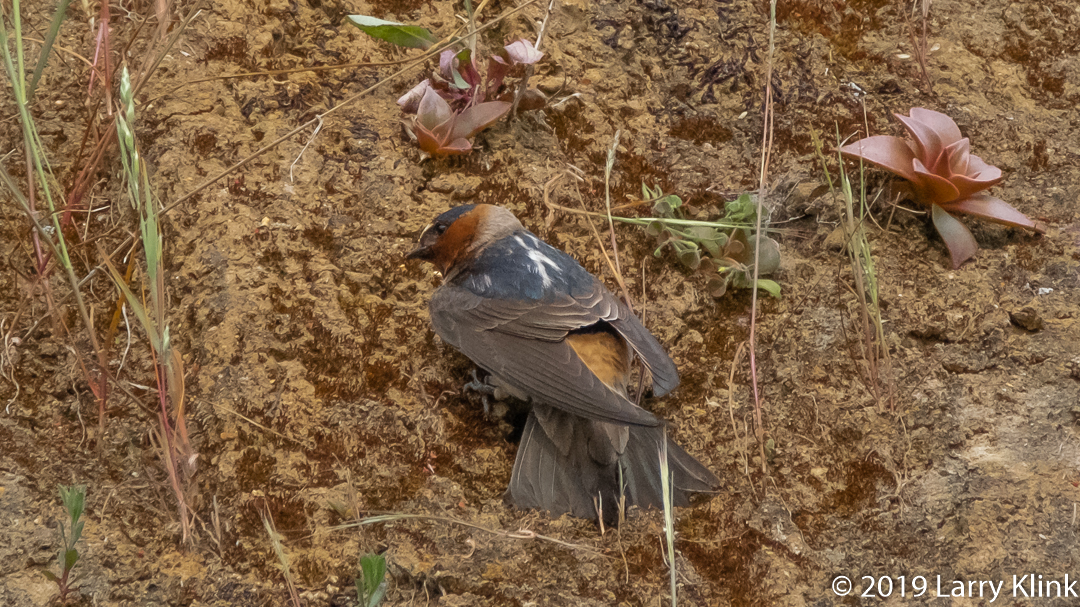
The Cliff Swallow is a multi-colored bird with off-white
underside, gray-brown wings, blue-gray back and head cap and a brown-red neck.
They are quire beautiful. They make nests of mud that appear precariously perched
on a cliff face. They also build nest in man-made structures like bridges and
buildings. They are very social; many birds build nests near one another and
hunt together. They also live along the gulf coast, southern Mexico and Central
America in the winter and move north throughout the US in summer.
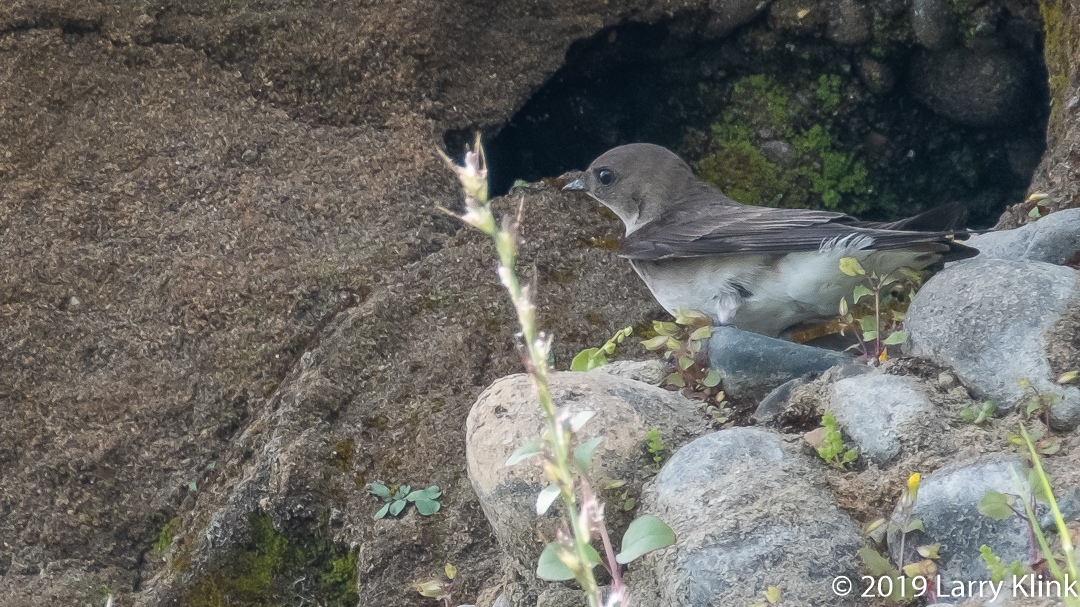
The bank swallow is a bird with different names in different
parts of the world. In Europe, it is the Sand Martin while on the Indian subcontinent
it is called the collard sand martin. They make a nest, lined with straw or
feathers, in a hole they burrow into sand or gravel. They have mostly white
underparts but have a gray back, wings and head. They will sometimes have a
prominent grey collar at the base of their neck. They winter across they
southern 1/3 of the US in winter then migrate north in the summer.
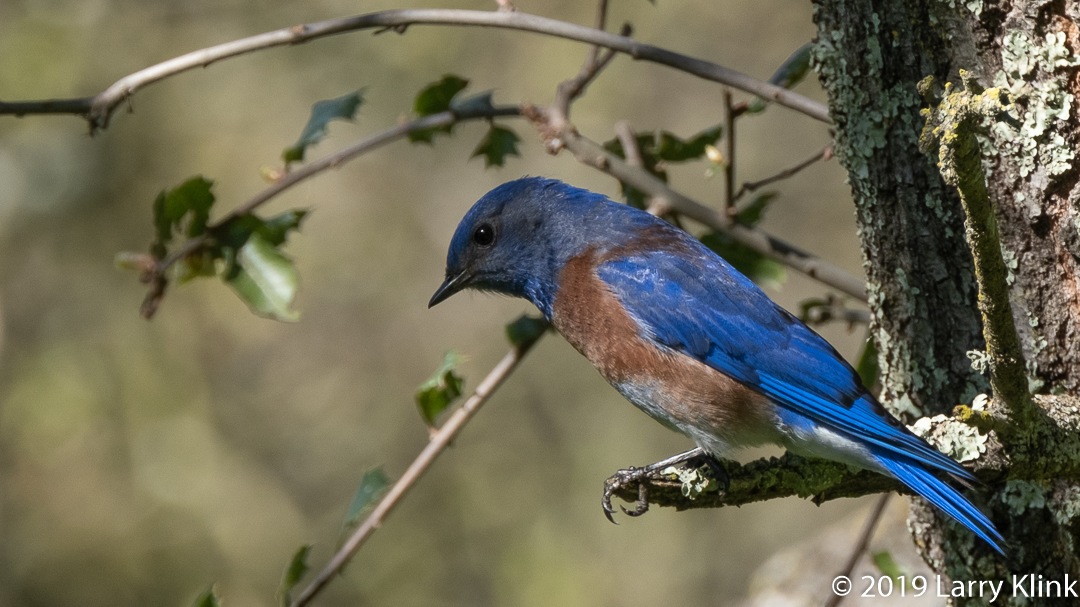
Here are some images of these beautiful swallows.
Please click on caption to see these images in higher resolution.
Great Blue Heron (Ardea Herodias) in the Rookery American River Parkway, Folsom, CA; APR 2019
In our area, we have a few rookeries; communal nesting areas
for herons, egrets and cormorants. There are other birds that nest in rookeries
but I am not aware of any I our area.
Rookeries are interesting. The two I see most often are in a
small cluster of tall trees along side of a river. The birds nest high above
the ground. Each bird tends to their own nest. But the colonies can contain two
dozen or more nests. The herons, egrets and cormorants will even nest in the
same tree. Many believe protection drives their desire to nest communally. More roommates make it easier to spot and
chase away predators.
I visited both rookeries last week and it appears to me that
the birds are sitting on eggs. If I am right, we should have babies soon. So, I’ll keep checking back and when I can,
post pictures. I can’t get close to the nets; I am about 75 yards away. So, I
won’t be able to photograph the chicks until they are big enough to pop their
heads above the sides of the nest.
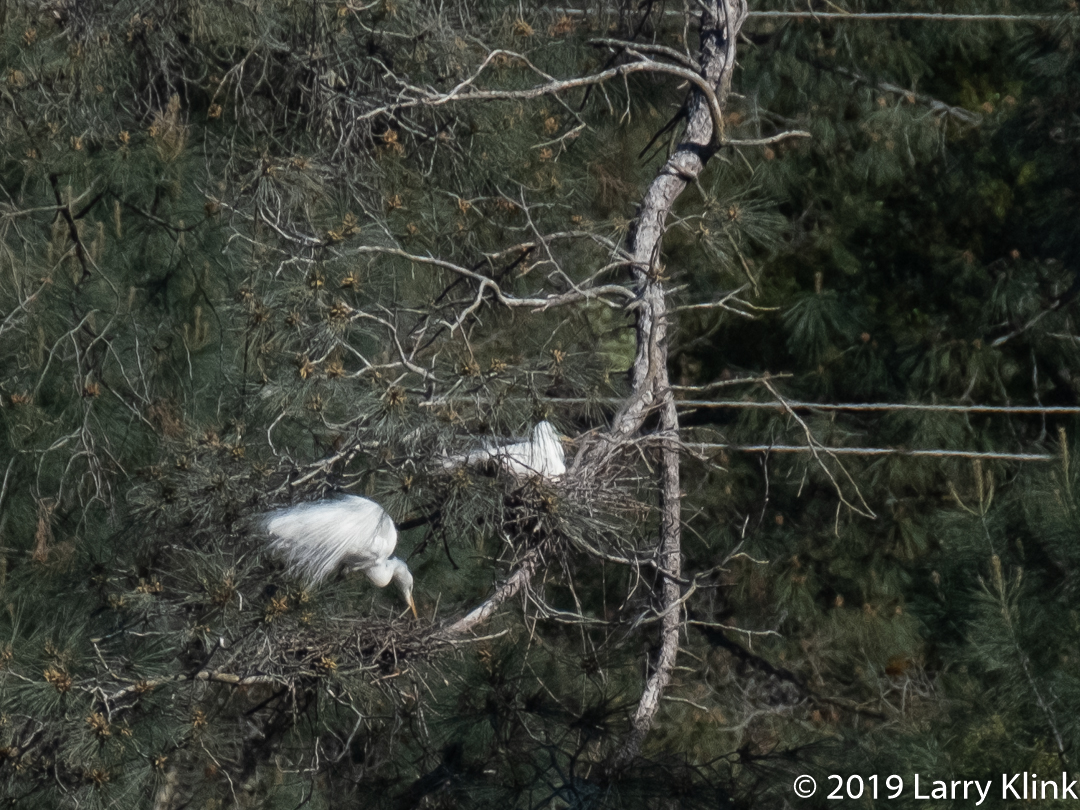
Here are a few rookery images. Take note of the male Double-crested Cormorant. He is displaying his orange patch and the crest of feathers on his head. For me, its rare to see the crests displayed.
Double-crested Cormorant (Phalacrocorax auritus) on the Nest American River Parkway, Folsom, CA; APR 2019Great Egrets (Ardea alba) on the Nest American River Parkway, Folsom, CA; APR 2019
Here are images of a some animals that I’ve taken over the last few weeks; the Coyote, the Black-tailed Jackrabbit and the California Ground Squirrel.
Take notice of the coyote. His eyes face front. That is a trait of predators. The ground squirrel and the jackrabbit need to keep their eyes open for predators while they forage, so their eyes are on the side. Remember the adage: “Eyes in the front, the animal hunts. Eyes on the side, the animal hides.”
Please click on caption to see image at higher resolution.
This past week, we had a morning where the rain clouds were
breaking up in the early morning. I chose that day to explore Doton’s Point trail
at Folsom Lake Recreation Area; a trail that was new to me. The grasses and
other plants were displaying their spring green. The early morning sun helped
saturate the colors. Spring was at its finest. I went with the expectation that
I might see some different birds. Instead, I discovered that it was time for some
landscapes.
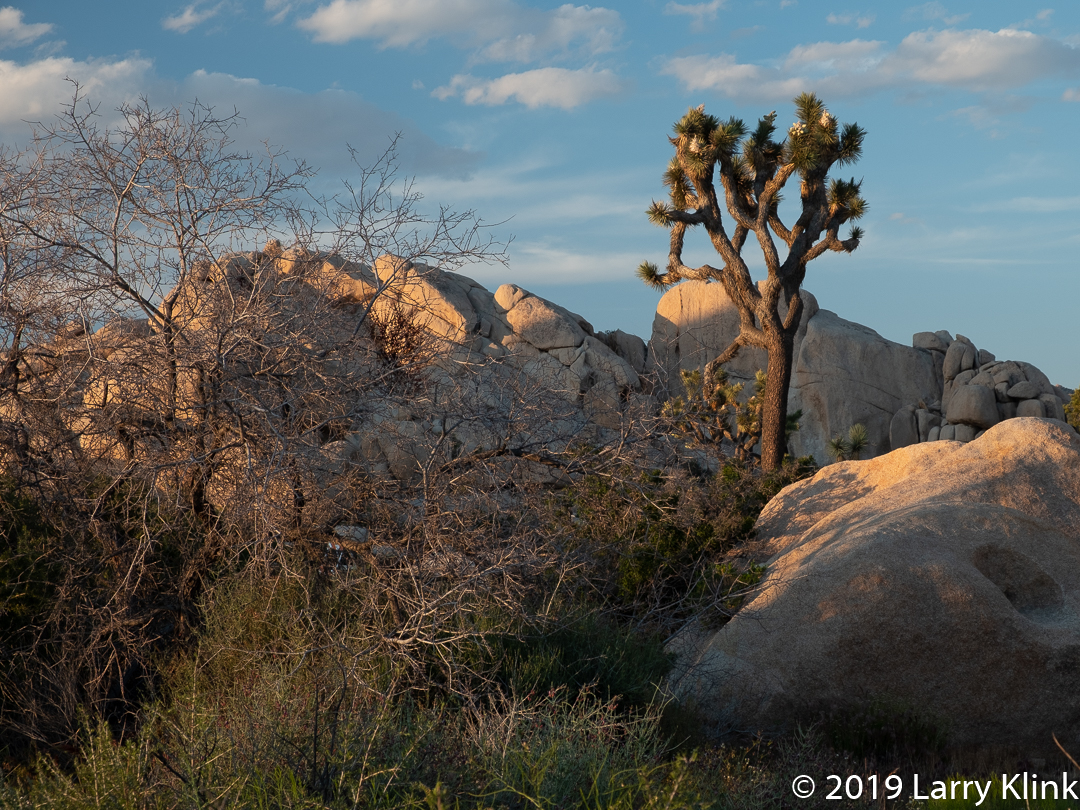
The beautiful rocks in this image are granite. The area around this portion of Folsom Lake is called Granite Bay because of the abundance of granite in the area. Like the Sierra Nevada mountains, this area sets on a pluton, a large blob of magma that cooled slowly underground to form granite then was uplifted and exposed.
Please click on caption to see image at higher resolution.
A few weeks ago, we visited family in the Gettysburg, PA area. While there, we were treated to some snow and
very cold weather. On one early, sunny, morning we drove along Confederate Ave.
The street. On Seminary Ridge, overlooks open meadows ringed with farms. The
ridge top is where Confederate troops set up their artillery and was the
starting point for many Confederate troop assaults. On July 3rd,
1863, it was the site of Pickett’s charge against the troops of Union General
George C. Meade.
On this early morning, the guns laid quiet. Sunlight glistened on the icy snow while frost gave trees, weeds and other objects a silvery glow. Though snow adds a burden to our efforts to maintain a normal life and we grow tired of it after a time, a morning like this makes you slow down and appreciate the beauty that nature bestows in winter.
Please click on caption to see images at higher resolution.
Here are some images of deer I recently photographed.
The White-tailed deer were spotted in rural southwestern Pennsylvania (US) grazing through some new fallen snow.
The Black-tailed Mule Deer was taken at the Effie Yeaw Nature Center here in Sacramento. I suppose he was taking a break after the rut. He’ll soon drop his antlers and begin growing them anew.
By the way, if you are ever in the Sacramento area, you should pay a visit to the Effie Yeaw Nature Center. You are almost guaranteed to see deer, wild turkeys and many birds. I occasionally see a jack rabbit and coyotes also.
Growing up in western Pennsylvania, I would see the Ring-necked Pheasant occasionally. I always considered it a special treat because they are so beautiful. But, for several decades I never saw any; though I thought about them from time to time. I’ve been fortunate, however, to have had 3 sightings in the past 2 years. I am very happy to be able to share them with you.
These birds like to live and forage in tall vegetation, so they aren’t easy to see. But, sometimes, you can see them as they cross over open spaces. They are omnivorous.
Please click on caption to see these images at higher resolution
Returning from a recent trip to the Seattle area, we stopped
at the Sacramento National Wildlife Refuge. The visitor center and restrooms
were closed but the government shutdown didn’t affect the birds. This stop
turned out to be very productive. It was a great day for raptors. The star was
a juvenile Bald Eagle on a kill. But we saw Ferruginous Hawks, Northern
Harriers, Rough Legged Hawks, a Cooper’s Hawk and a Red-shouldered hawk also.
This is feast time for the raptors at Sacramento NWR because of the large
numbers of waterfowl that spend the winter months there.
I didn’t share images of the Rough-legged haws because I only got a rear quarter shot and it didn’t show enough to make the shot interesting. I’ve shared other Cooper’s Hawks and Red-shouldered Hawks in the recent past, so I didn’t include them. But, I hope you enjoy what I shared.
Note: Please click on caption to see image in higher resolution.