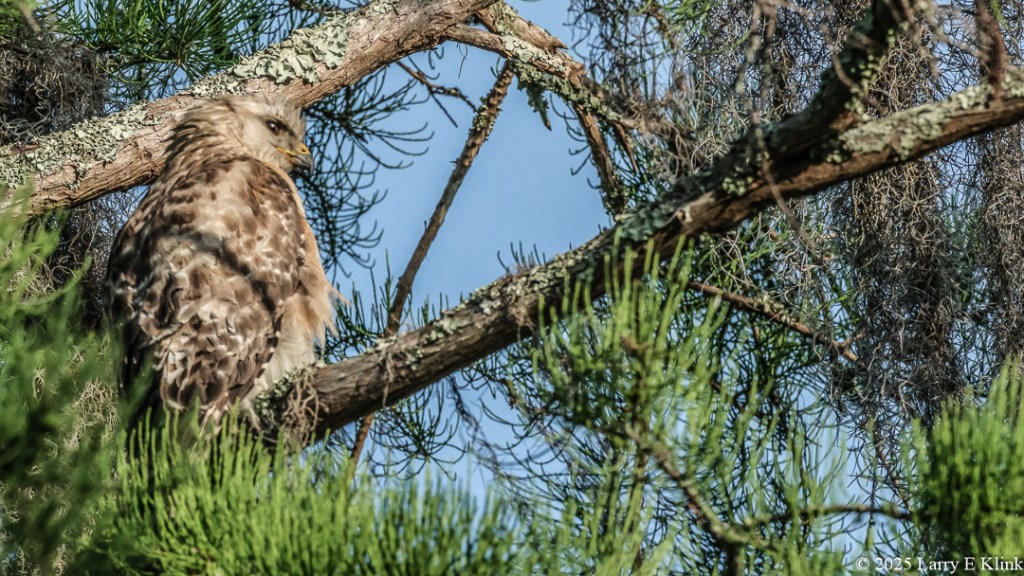
We had the opportunity to visit one of our favorite spots: the Okefenokee National Wildlife Refuge. While there we got to see a very interesting event. About 2 feet above the Hawk’s head is the Squirrel’s nest. The squirrel was about 15 feet away in another tree running around like crazy trying to distract the hawk.
The Okefenokee National Wildlife Refuge is one of my favorite places to visit. I love being there in the early morning or late evening when the swamp is quiet. If you prefer, you can take your canoe or kayak, but I prefer to hire a guide and a boat. We can explore parts of the swamp that the tourist cruises don’t see. There are trails to hike also. I’ve hiked one a few years ago but I want to do more.
Pleas click on caption to see image at higher resolution.
If anyone would like a copy of almost any picture in my library, for educational or research use, please contact me and I will happily share a digital copy with you.
Today I am sharing pictures of some birds we saw on a recent visit to the Okefenokee National Wildlife Refuge in Georgia, USA. Please note that the Pelican was photographed at nearby Jekyll Island.
A notable part of the bird life we saw was about 50 Little Blue Herons clustered among some trees in a remote area of the swamp. Refuge managers speculated that a new rookery was being formed for this colony to rear its young.
Please click on caption to see image at higher resolution.
If anyone would like a copy of almost any picture in my library, for educational or research use, please contact me and I will happily share a digital copy with you.
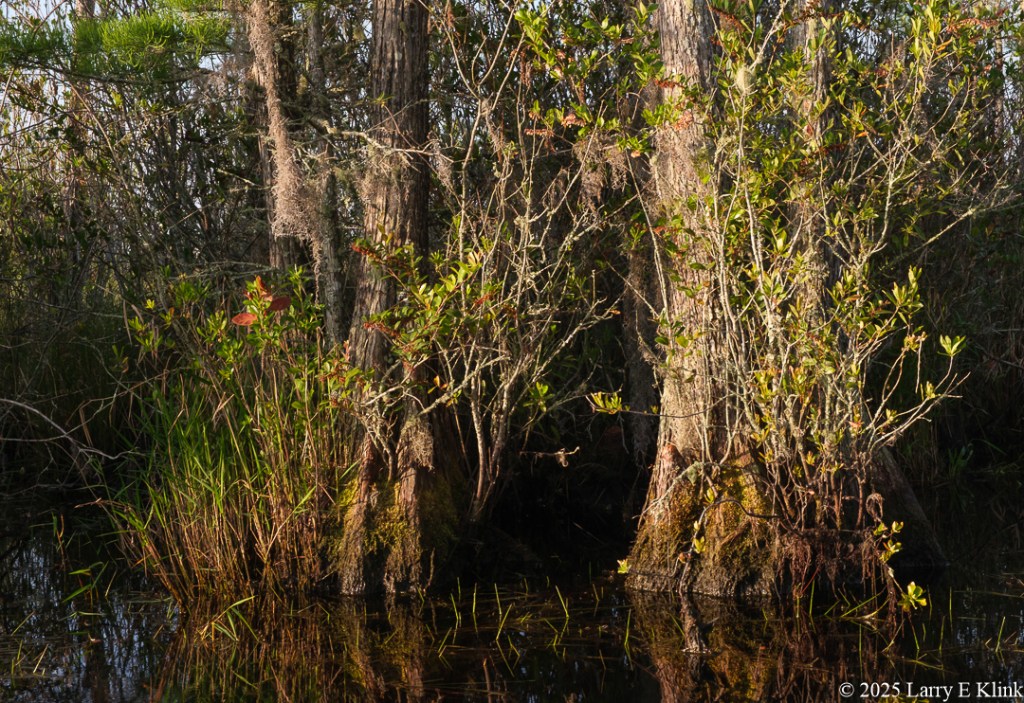
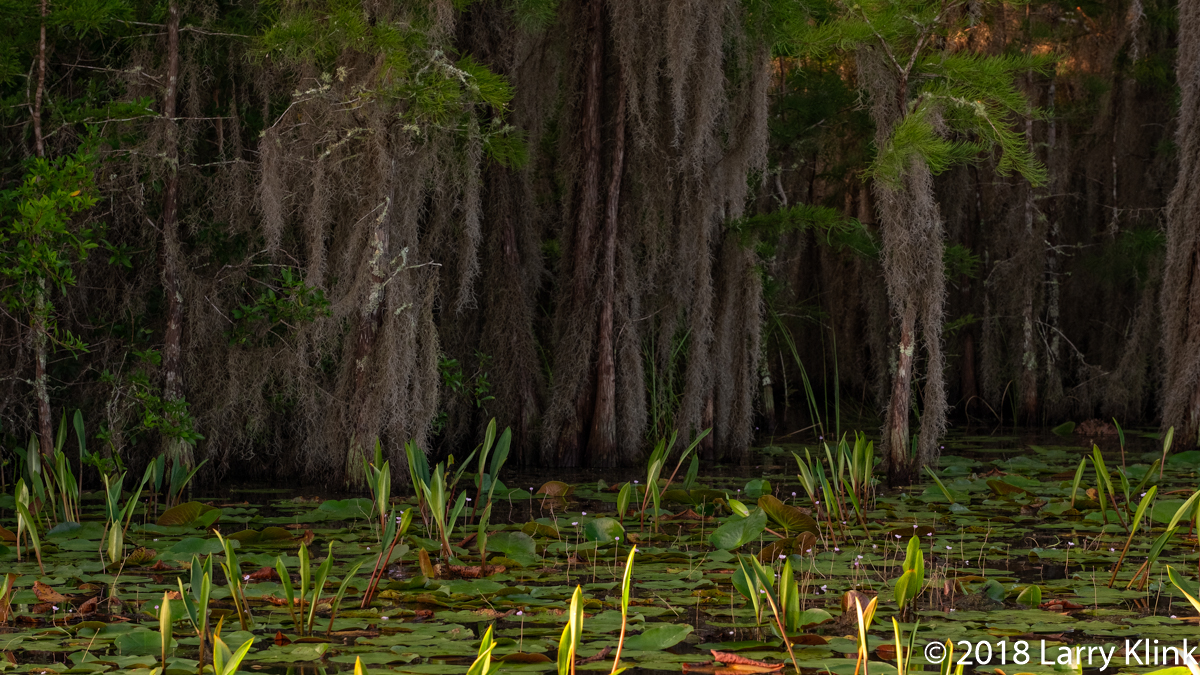
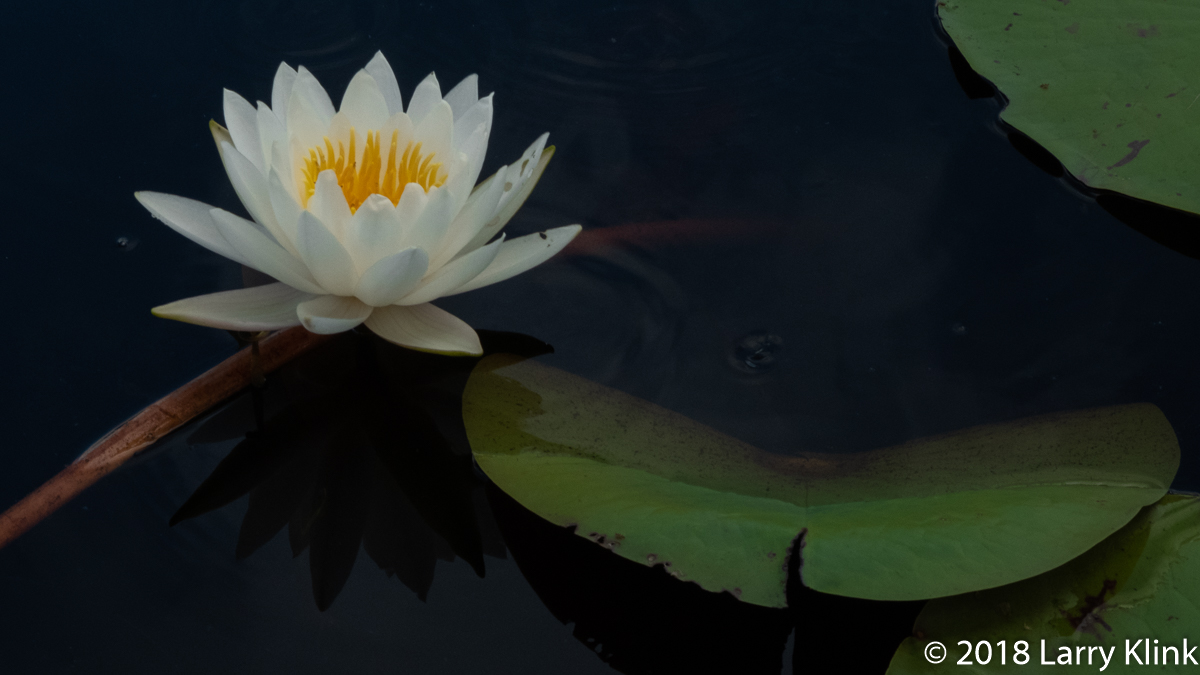
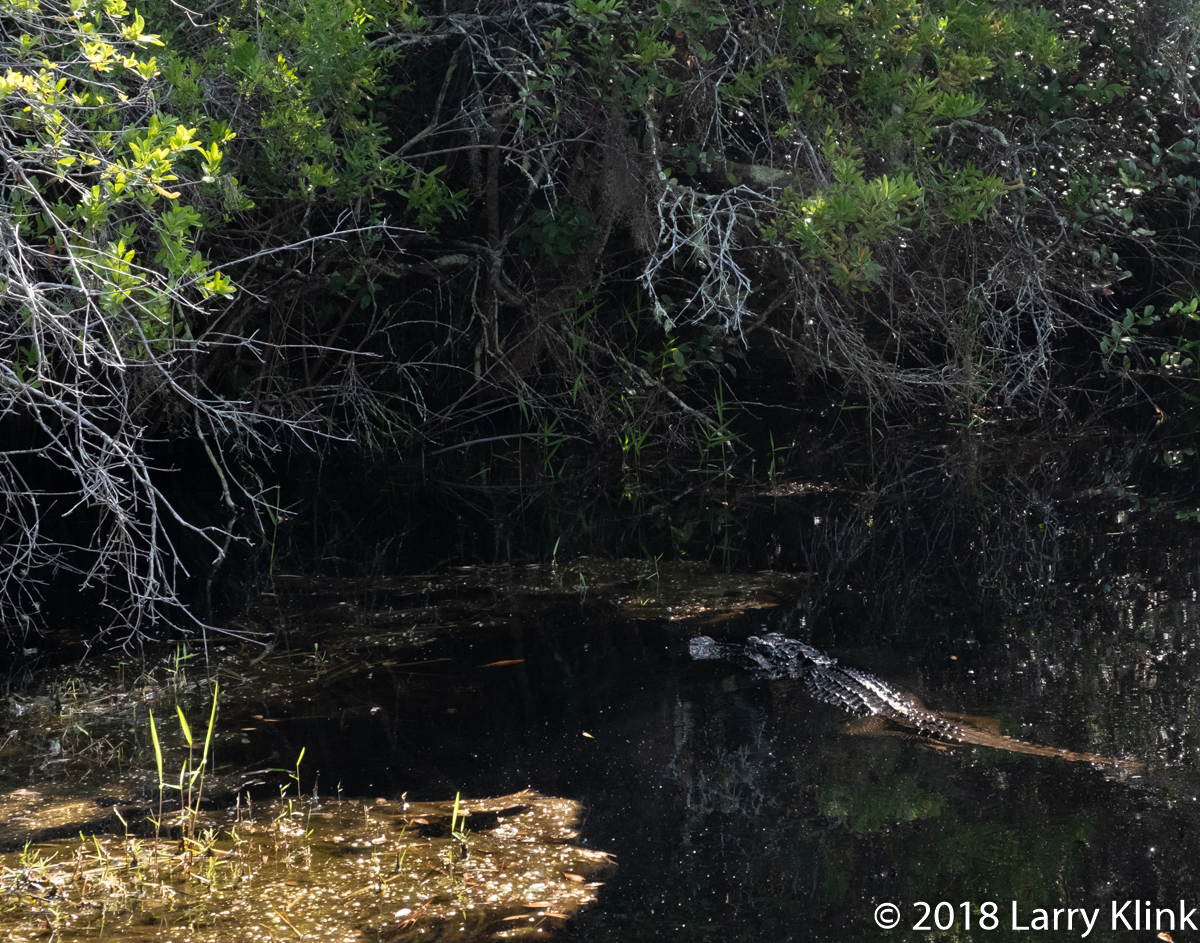
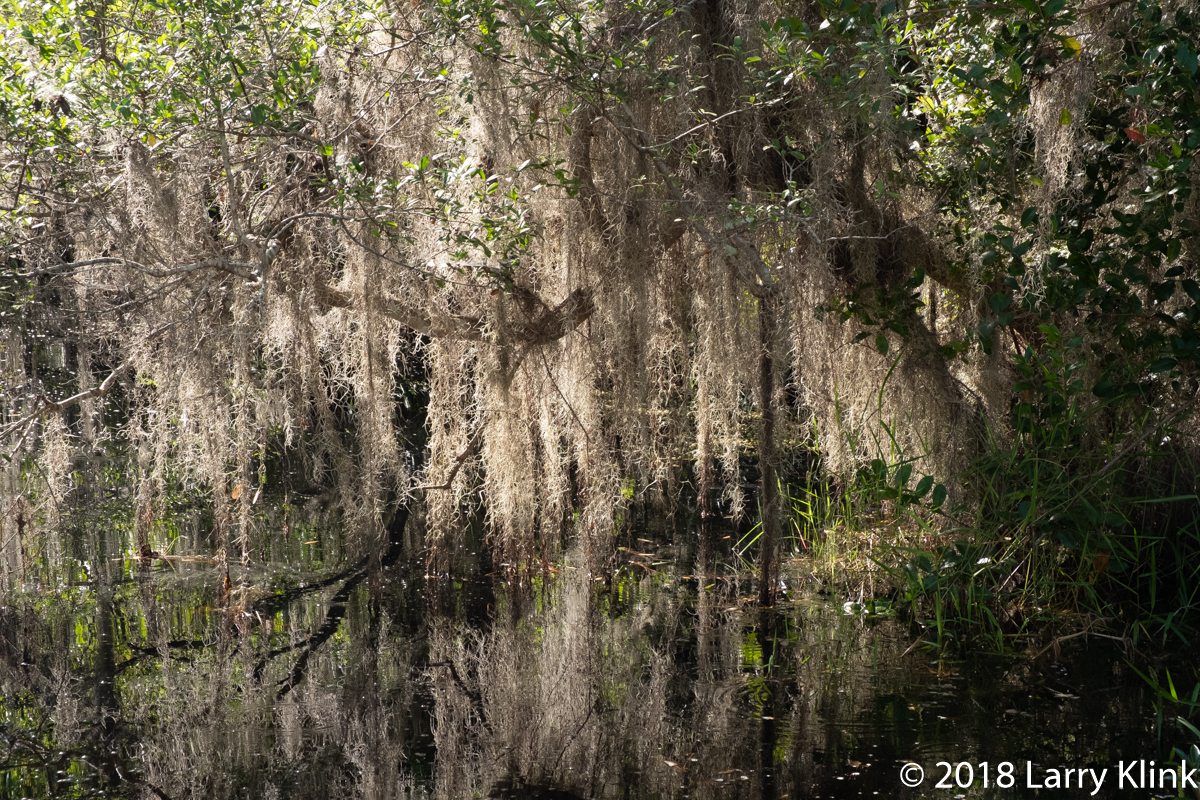
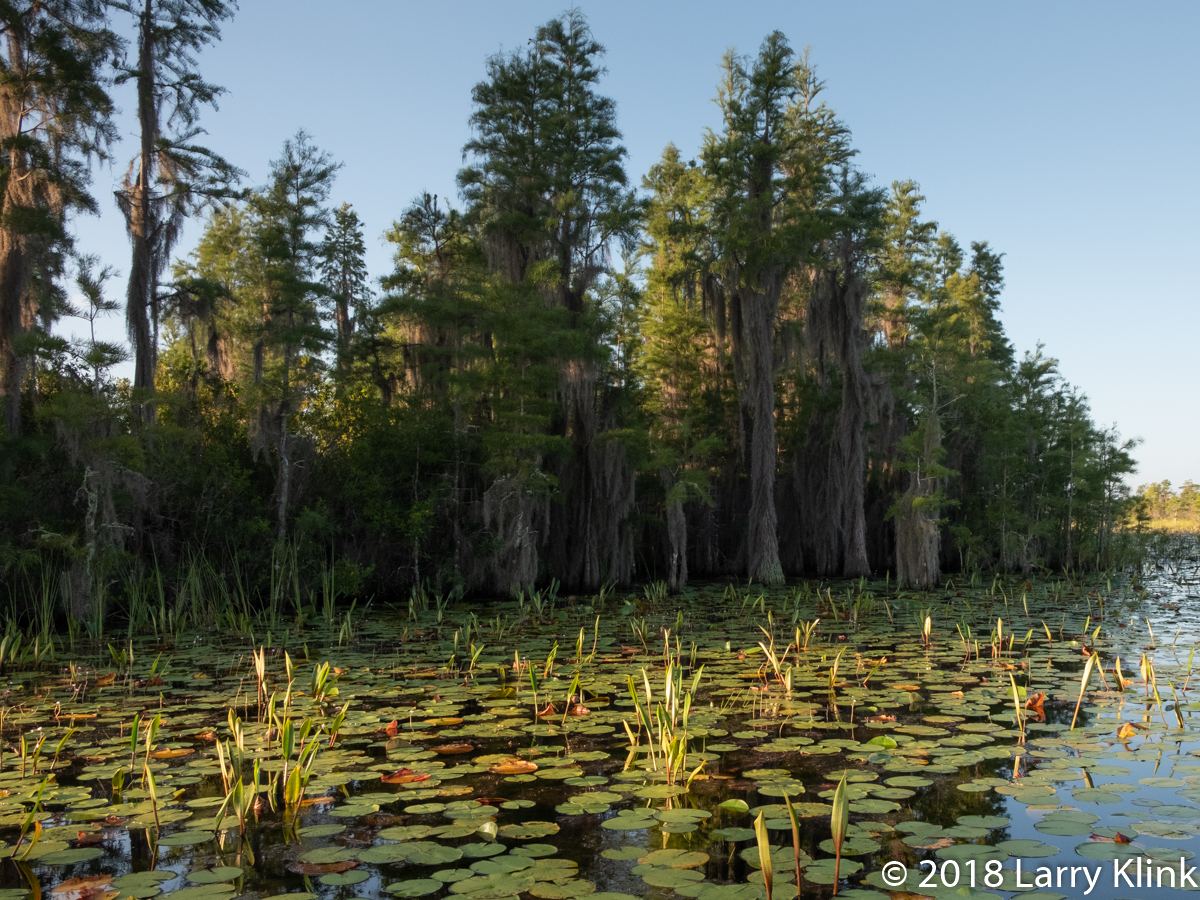
Commonly known as the Okefenokee Swamp, it is located near Folkston, GA – near the Georgia-Florida border. Though most people consider it a swamp, it is really a peat bog. A bog is a wetland underlain with peat, dead plant material that forms a woody, brown, fibrous blanket. Most of us know it from the peat moss we buy in garden stores. It is home to a wide variety of wildlife that live among the forest of balled cypress trees covered with Spanish Moss and the prairie, a tannin rich pond whose dark brown water is covered by water lilies and other plants.
The Okefenokee is not fed by any river or stream. It is a natural basin that is filled by rainfall on the pond and runoff from the surrounding terrain. Though it is only fed by rainwater, the pond maintains an average depth of 2 – 2 ½ feet of water. Twenty Five percent of its water drains to the Atlantic Ocean via the St Mary’s River. The remaining 75% drains to the Gulf of Mexico via the Suwanee River of “Way Down Upon the Suwanee River” fame.
During the late 1800’s it was heavily logged for its rot resistant cypress wood. The main canal through the swamp was an attempt to drain the bog to the east for purposes of transporting lumber. The canal was dug by hand but was not completed because it wasn’t deemed possible to dig through the natural berm on the east side of the basin.
Native Americans occupied the area surrounding the swamp between 500AD and 1840 when the Seminole tribe was driven off. There is record of Spanish settlement between 1625 and 1640. In 1937, the federal government purchased the Okefenokee and created the Okefenokee Wildlife Refuge. The facilities were first developed by the Civilian Conservation Corps between 1937 and 1941.
Note: Click on caption to see image at larger size and higher resolution.










 Earthwatcher