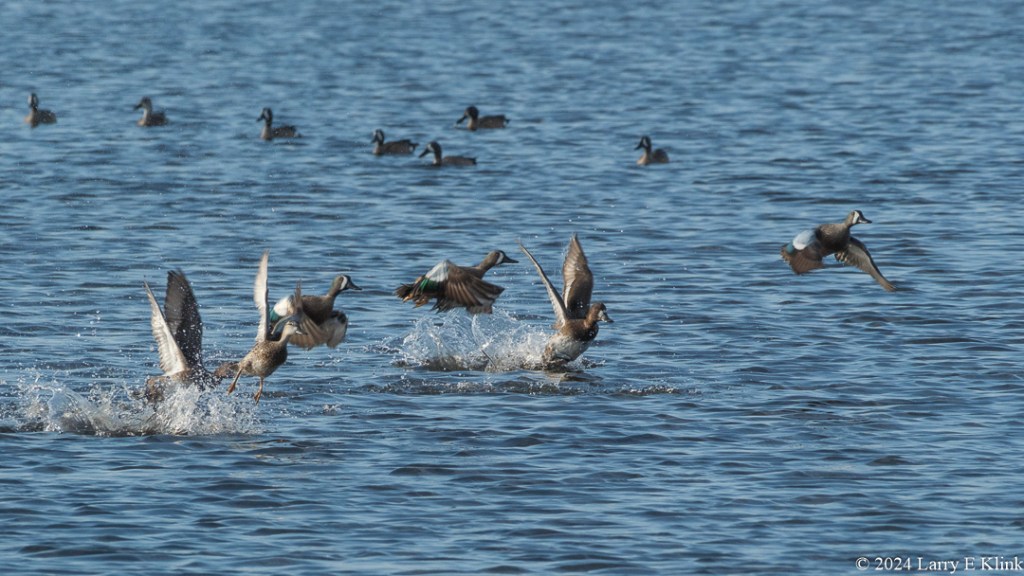
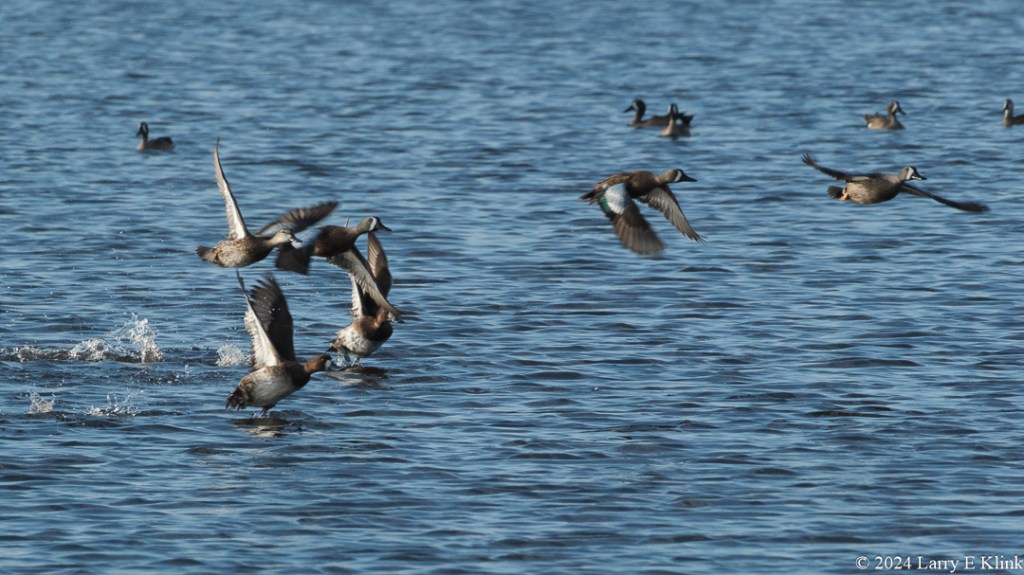
We were at Merritt Island National Wildlife Refuge admiring a large flock of Lesser Scaups, a species of Ducks, when a Bald Eagle made a flyover. The eagle panicked the ducks and they took flight. My thanks to the eagle.
Please click on caption to see images in higher resolution.
If anyone would like a copy of almost any picture in my library, for educational or research use, please contact me and I will happily share a digital copy with you.
If anyone would like a copy of almost any picture in my library, for educational or research use, please contact me and I will happily share a digital copy with you.
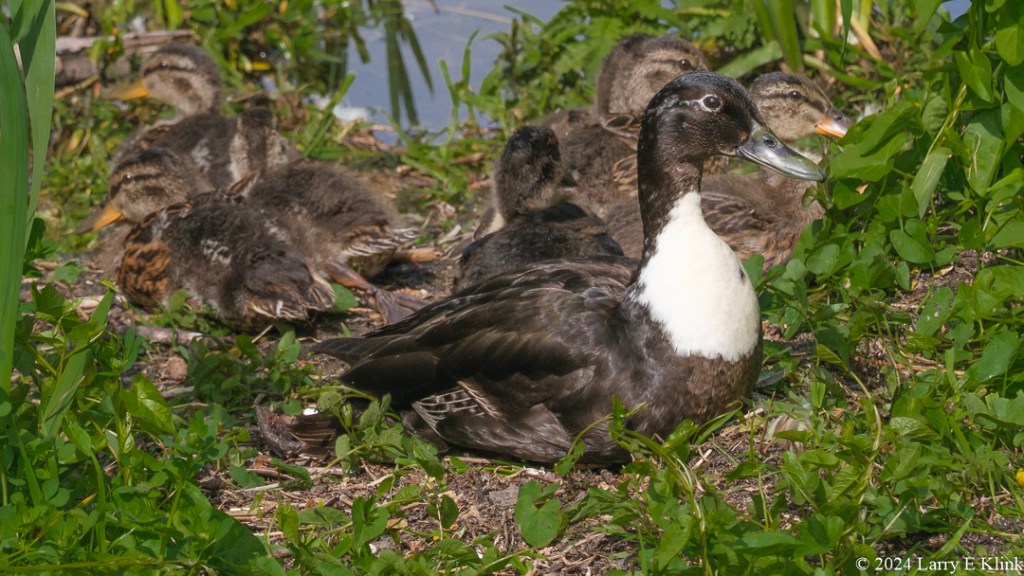
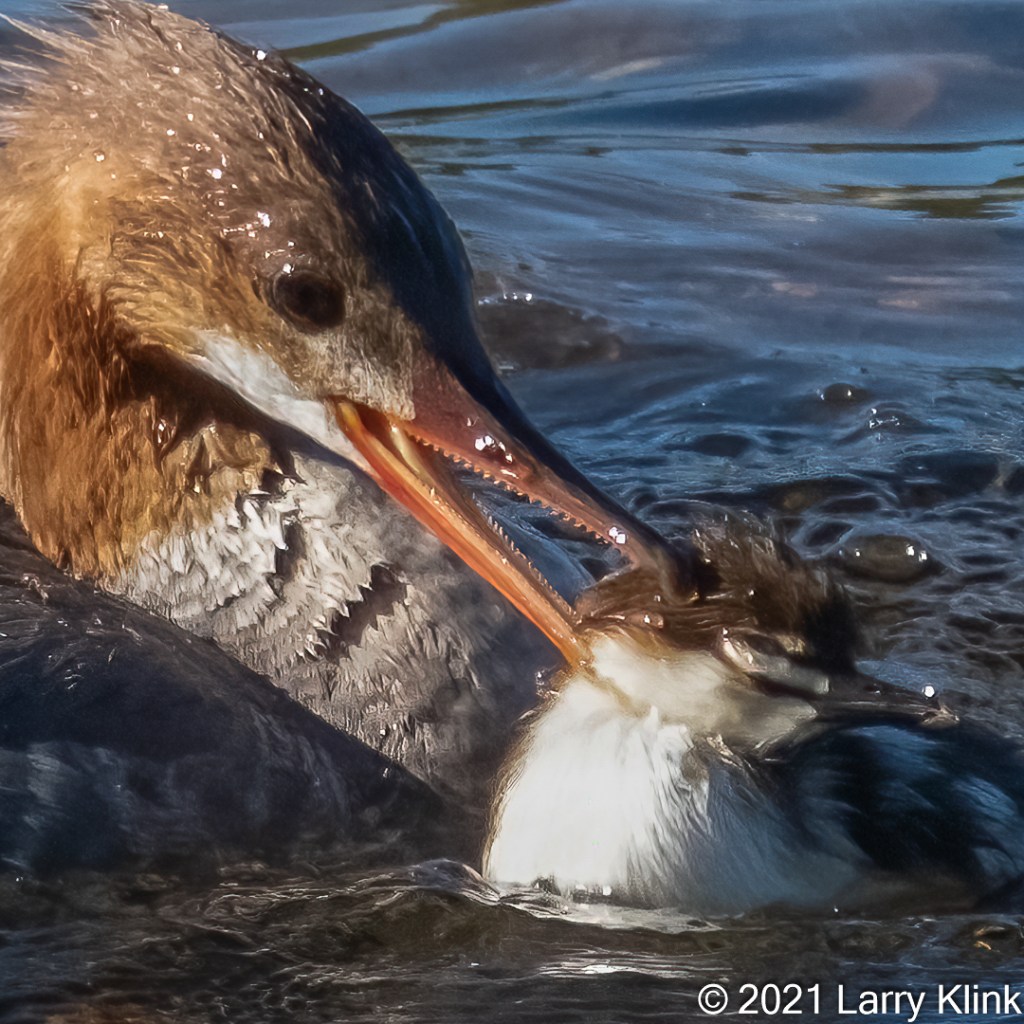
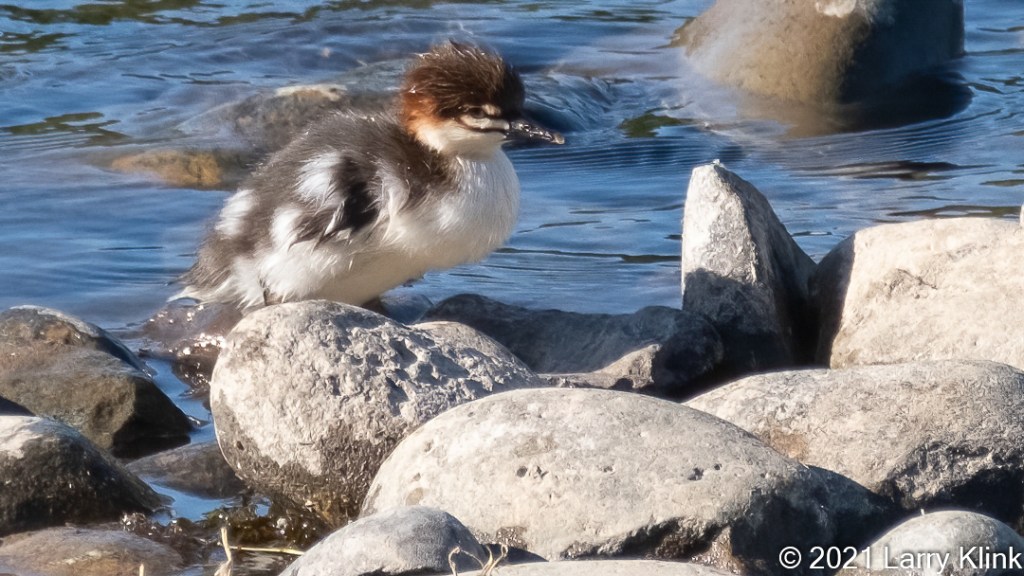
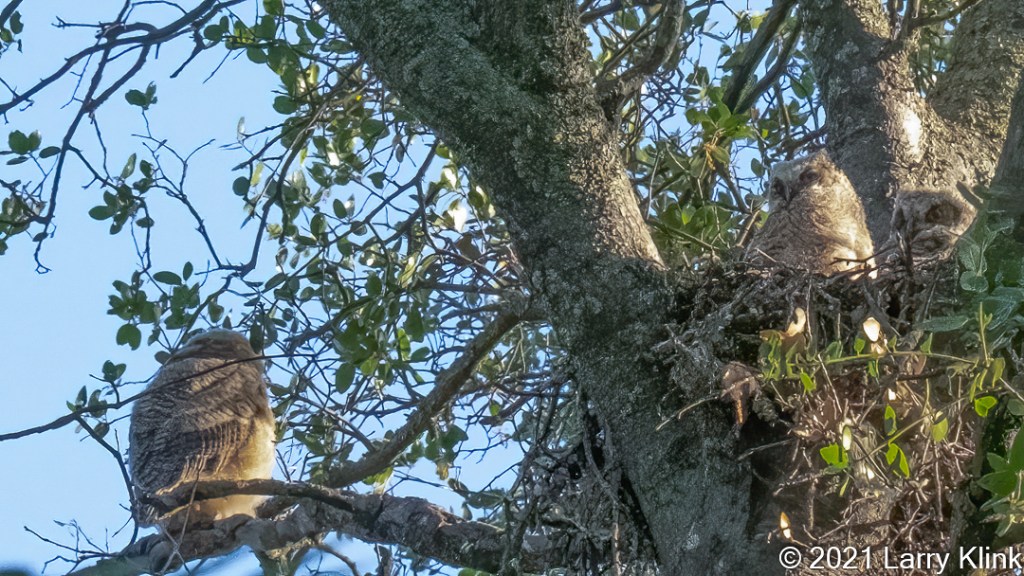
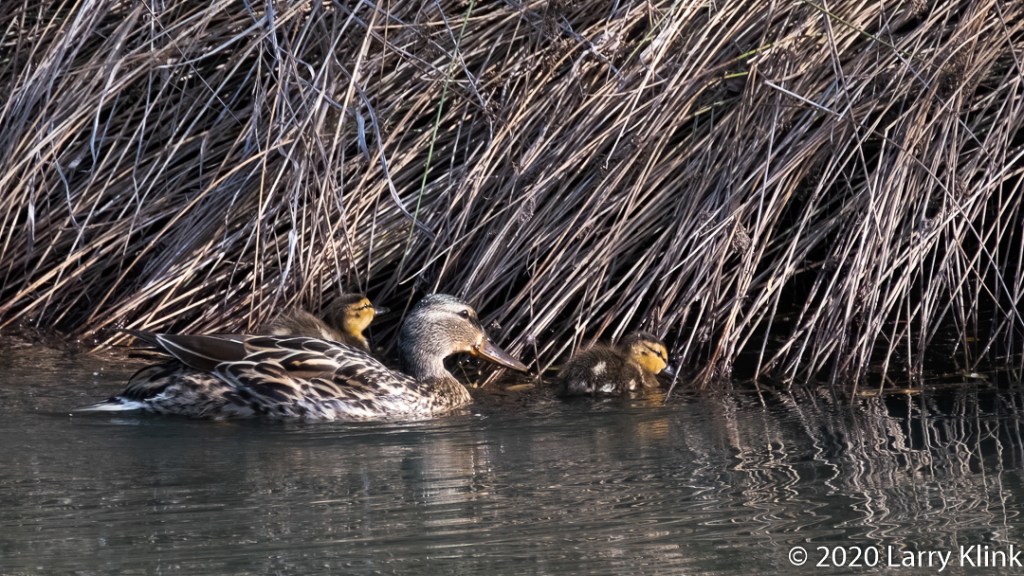
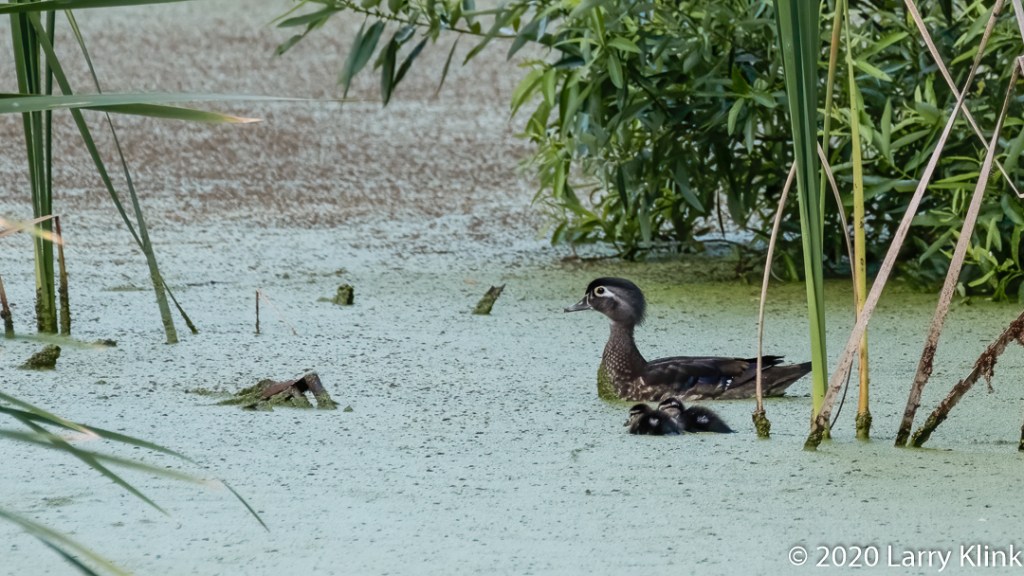
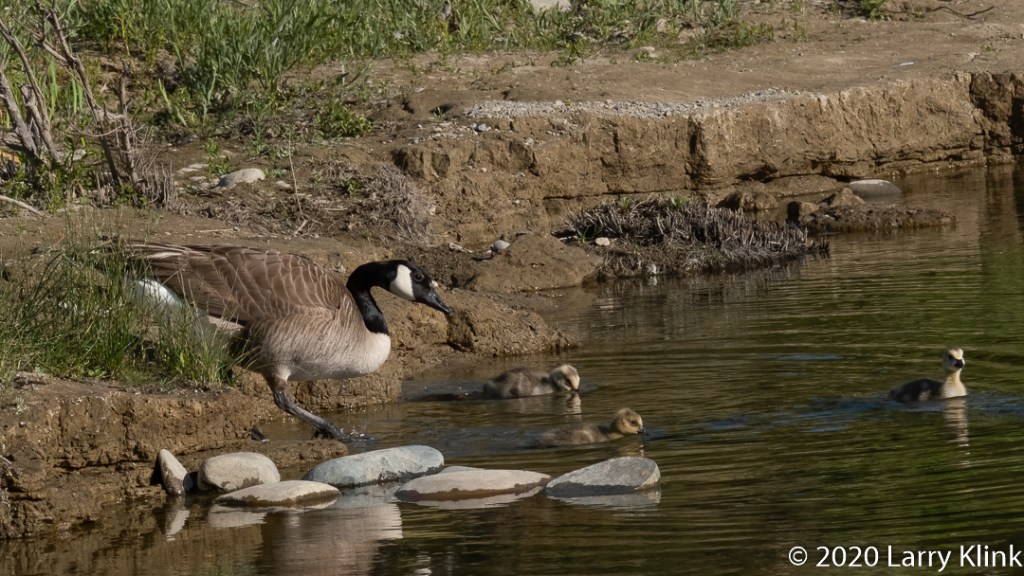
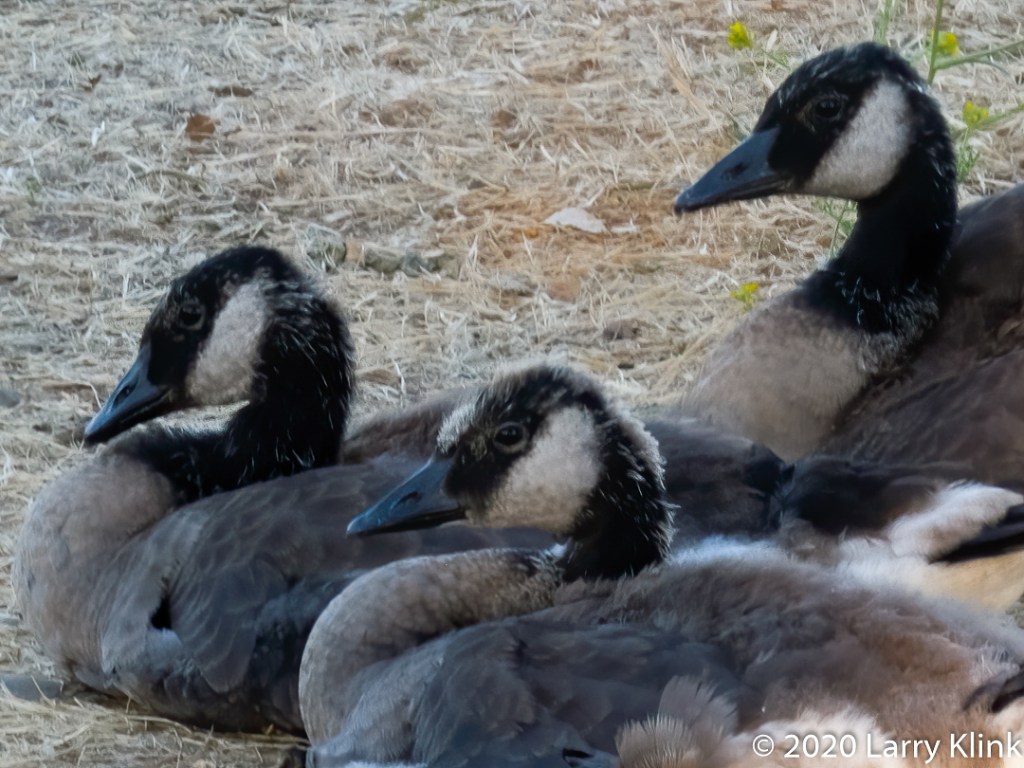
I am sharing pictures of some of this year’s crop of baby birds.
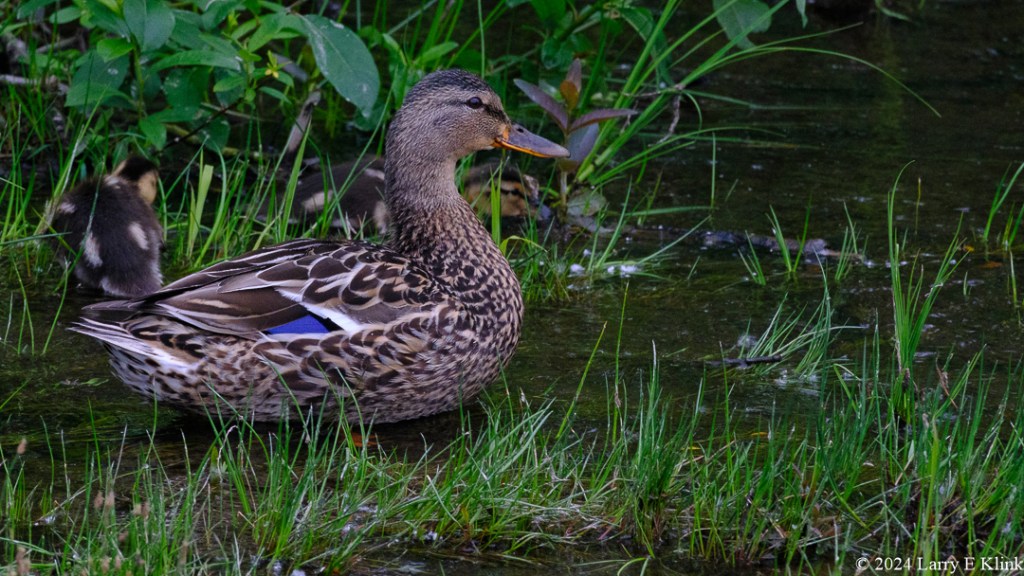
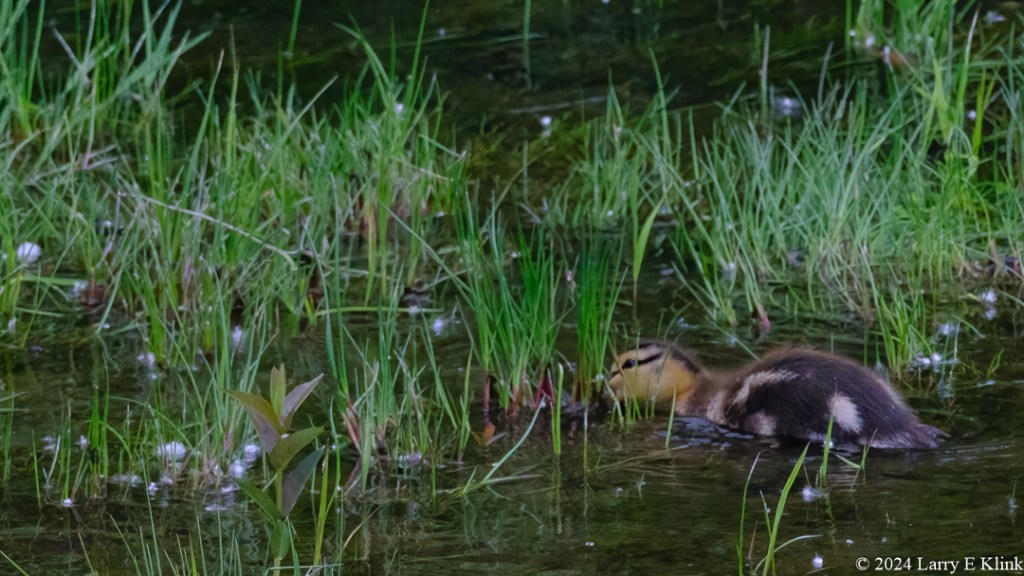
Please note that the young Mallards from several weeks apart may be the same family. The images were all taken in the vicinity of the nest site where I first found them.
Also, concerning the image of the Female Mallard Duck with Ducklings: Common Mergansers are diving ducks; they swim fully submerged when foraging for food. This mother was watching 2 ducklings. One was swimming with its head submerged. I watched the mother push this duckling’s head under the water. I wonder if I observed a foraging lesson.
Please click on caption to see images at higher resolution.
If anyone would like a copy of almost any picture in my library, for educational or research use, please contact me and I will happily share a digital copy with you.
Please visit my website, www.earthwatcher.us to see my collection of landscapes and wildlife.
I am presenting the first of 2 parts entitled Cute Chicks. This part will present some local waterfowl.
One of the images is entitled Huddled Sord of Baby Mallards. I learned that a group of Mallards in flight is called a flock or sometimes a flight. Mallards on the ground are called a SORD. If the name sounds weird, it is because it appears to have no other uses.
A week ago, we visited Staten Island, CA. It is an island in
the Sacramento-San Jouquin River Delta. More importantly, Staten Island is
owned by The Nature Conservancy and is managed to allow conservation friendly
agriculture and as a place for birds to stop on winter migrations as well as to
winter over. For this area, it means we have an opportunity to see Sandhill
Cranes, Tundra Swans, White-fronted Geese and many other birds. On this visit,
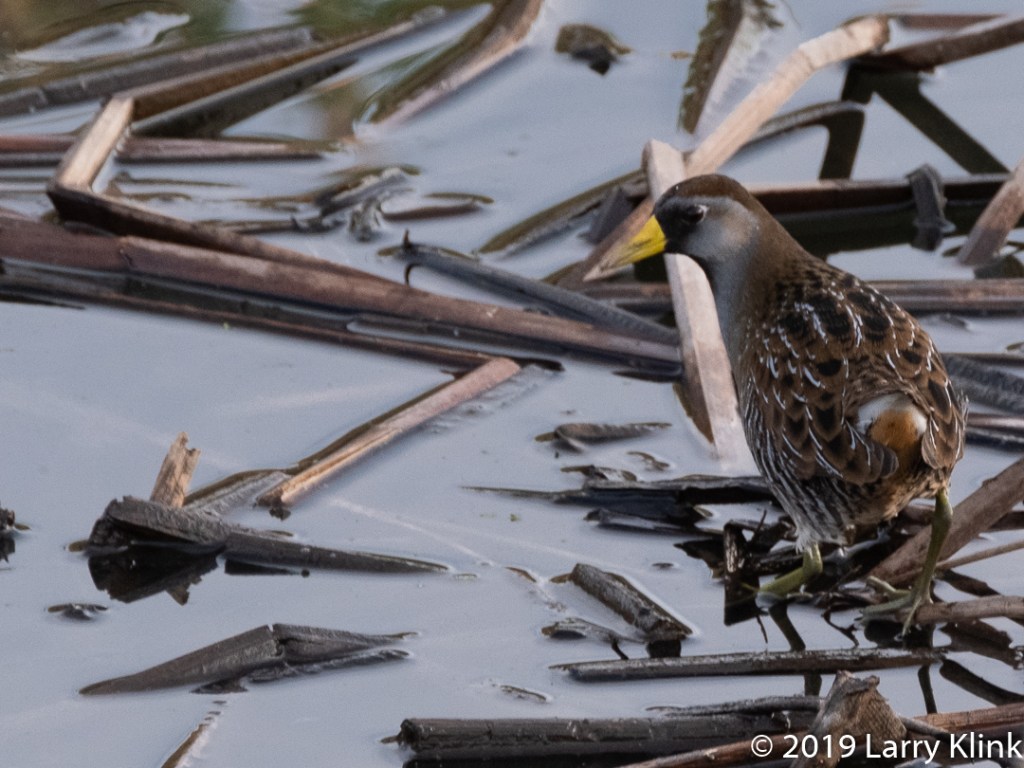
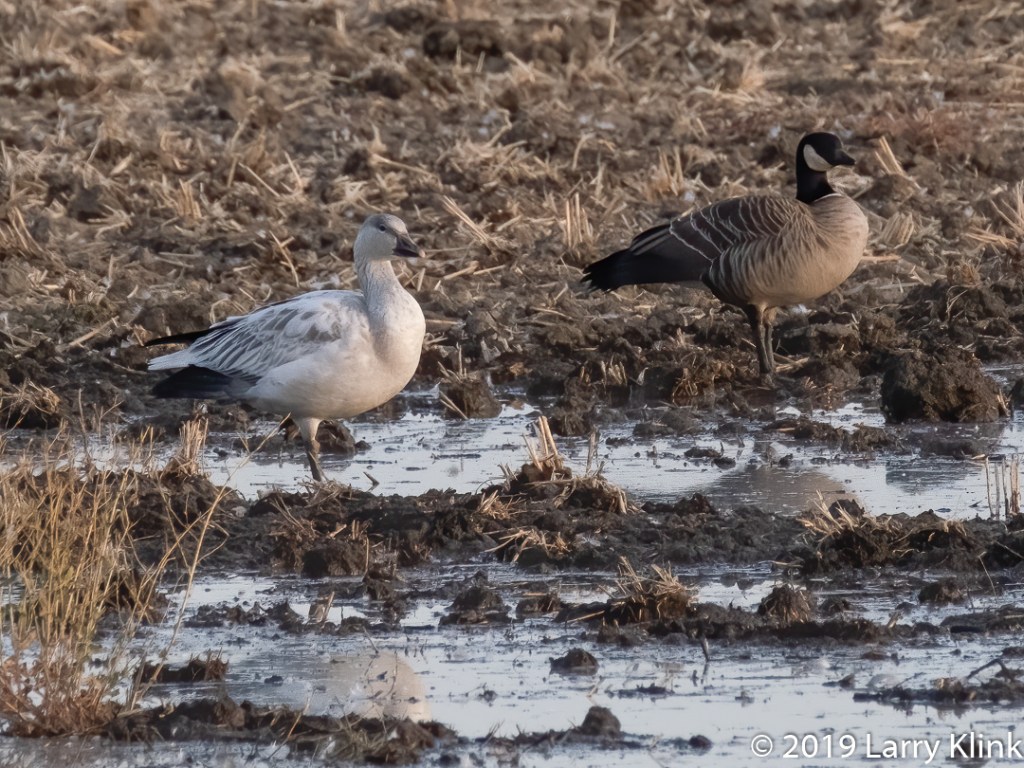
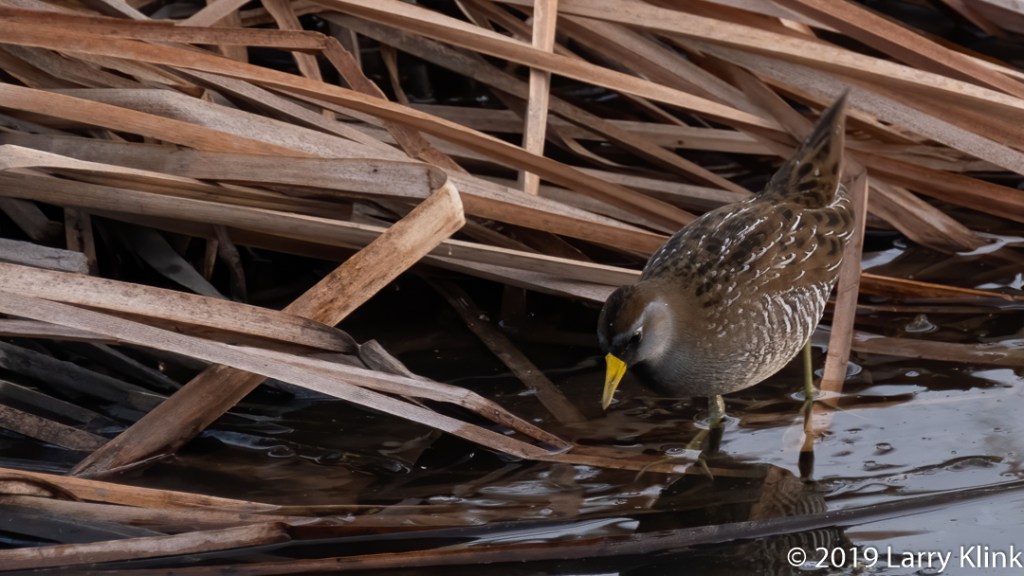
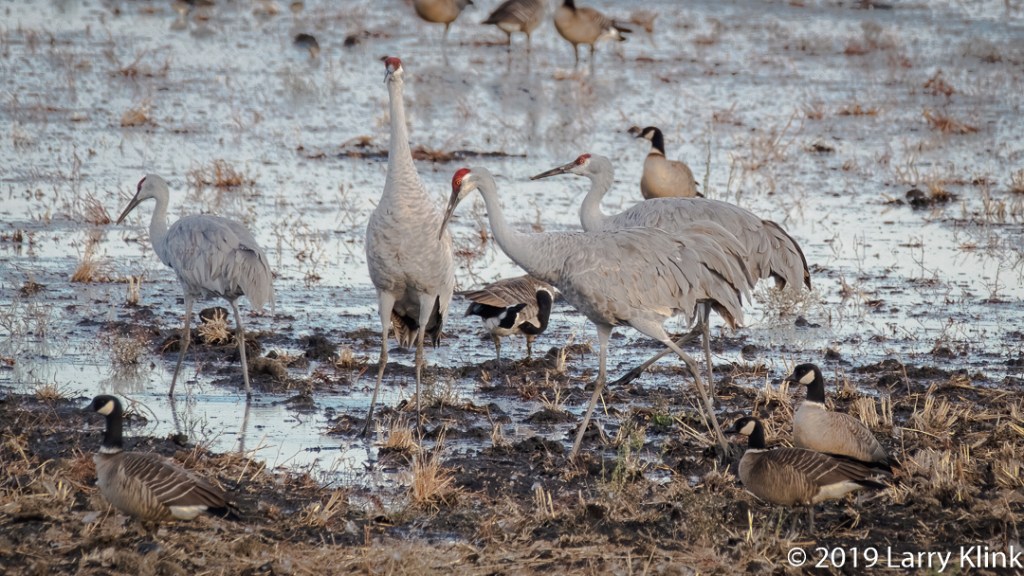
we got to see the Sandhill Cranes, Cackling Geese, Snow Geese and Sora.
The Sora (Porzana Carolina) was my surprise bird. I didn’t even know they existed. It is one of those drab, gray birds that hide in the brush, along streams and irrigation ditches. But drab and gray is not a fitting description. They are quite beautifully marked and have a bright yellow bill. Three Sora gave me the rare opportunity to see them in the open and photograph them.
Please click on caption to see images in higher resolution.
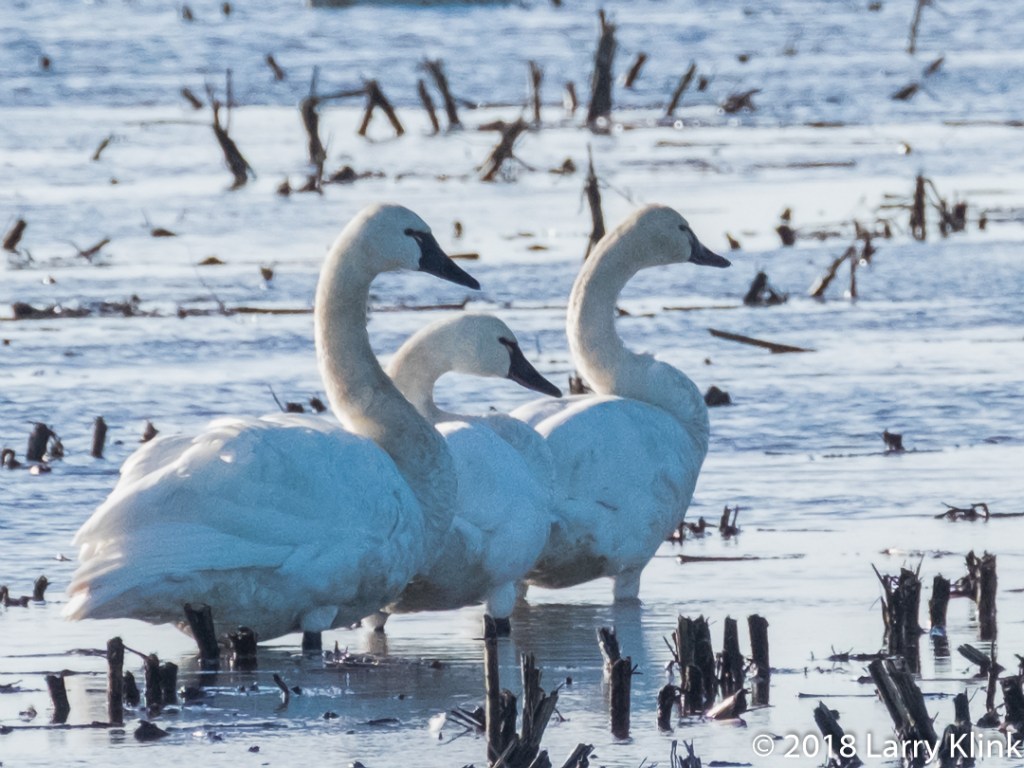
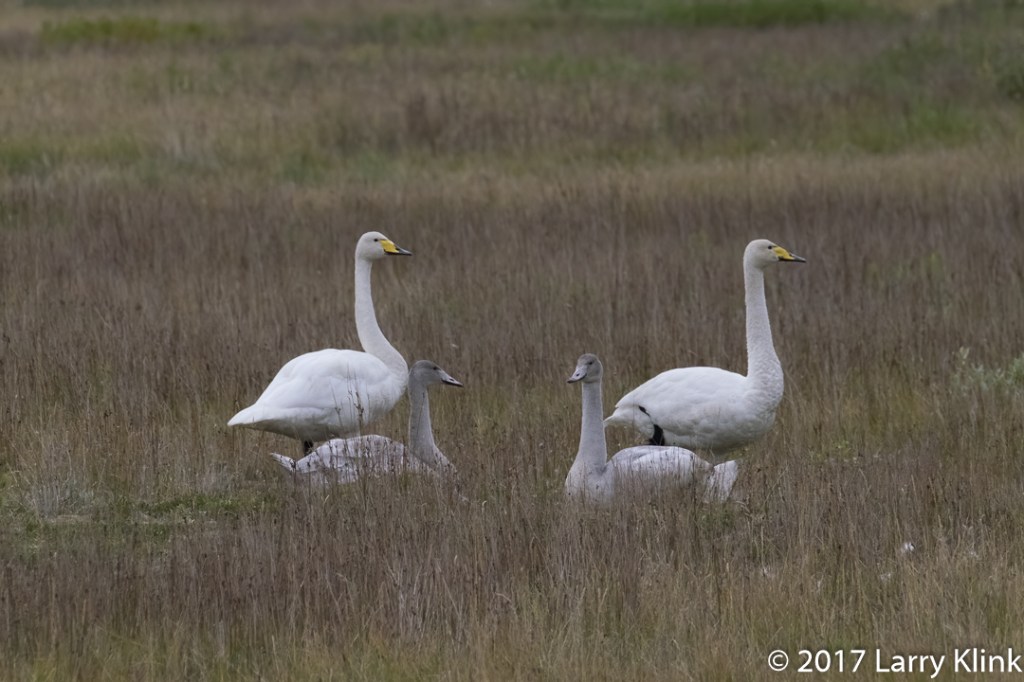
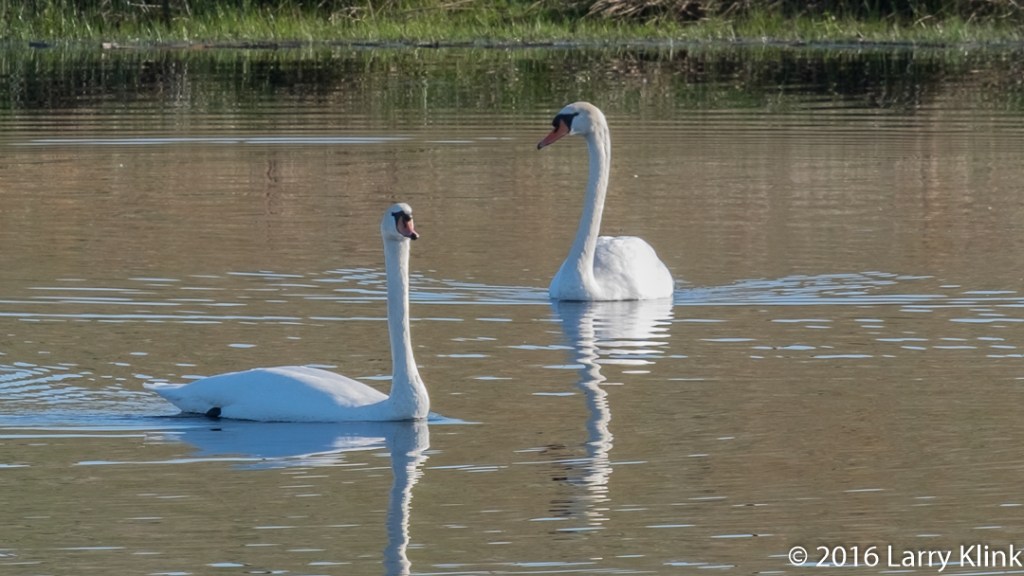
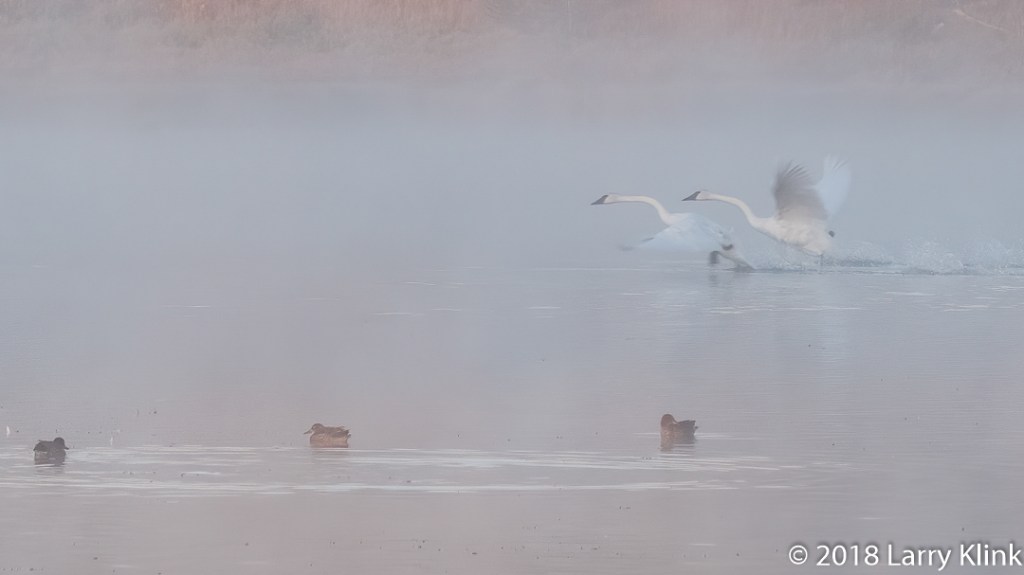
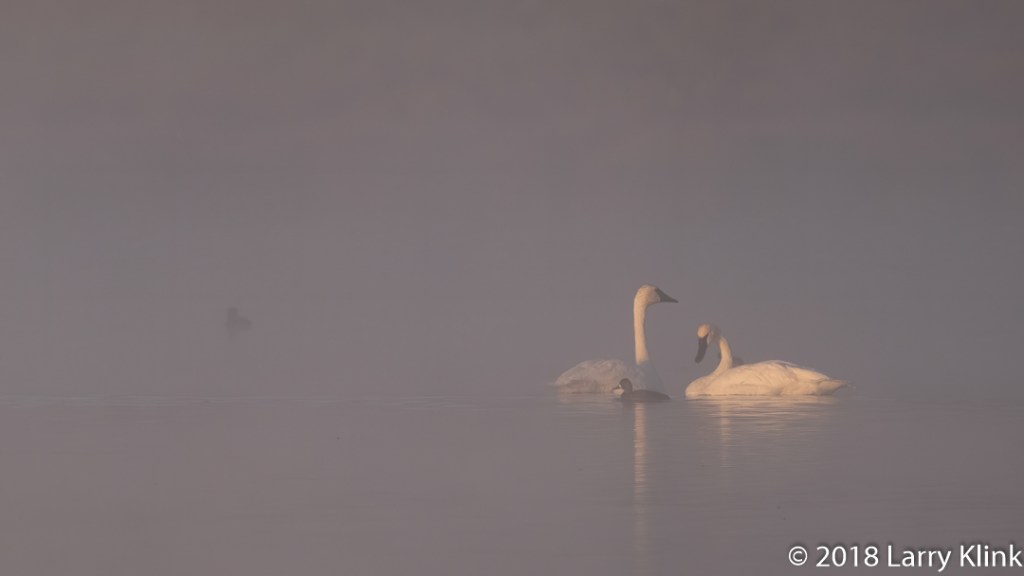
Today I am sharing images of swans I’ve photographed over
the past several years.
Trumpeter Swans (Cygnus Buccinator) are North America’s
largest waterfowl. Thy can have a 6 foot wingspan and weigh as much as 26
pounds. According to All About Birds, a Website from Cornell Labs: “They breed
on wetlands in remote Alaska, Canada, and the northwestern U.S., and winter on
ice-free coastal and inland waters.” The odd thing here is that I found some on
the icy Yellowstone River in February.
The Tundra Swan (Cygnus Columbianus) is a winter migrant to
the US. We see them winter over on the Pacific Flyway from late October through
about the end of February. They nest on arctic tundra. The Tundra Swan is
sometimes called a Whistling Swan.
The Mute Swan (Cygnus Olor) is not native to North America; it’s
a European immigrant. It is the swan we see in ponds and lakes at parks, farms
and estates. According to All About Birds: “ All of the Mute Swans in North
America descended from swans imported from Europe from the mid 1800s through
early 1900s to adorn large estates, city parks, and zoos. Escapees established
breeding populations and are now established in the Northeast, Mid-Atlantic,
Great Lakes, and Pacific Northwest of the U.S.” The ones I am presenting may be
from a wild colony or may be feral.
I found the Whooper Swans (Cygnus cygnus) in Iceland. According to Wikipedia, Whooper swans can migrate hundreds or even thousands of miles to their wintering sites in southern Europe and eastern Asia. They breed in subarctic Eurasia. Icelandic Whooper Swans breed and winter over in the United Kingdom and Ireland. They can have a wingspan of 9 feet and weigh over 30 pounds. Whooper Swans pair for life.
Please click on caption to see image at higher resolution.
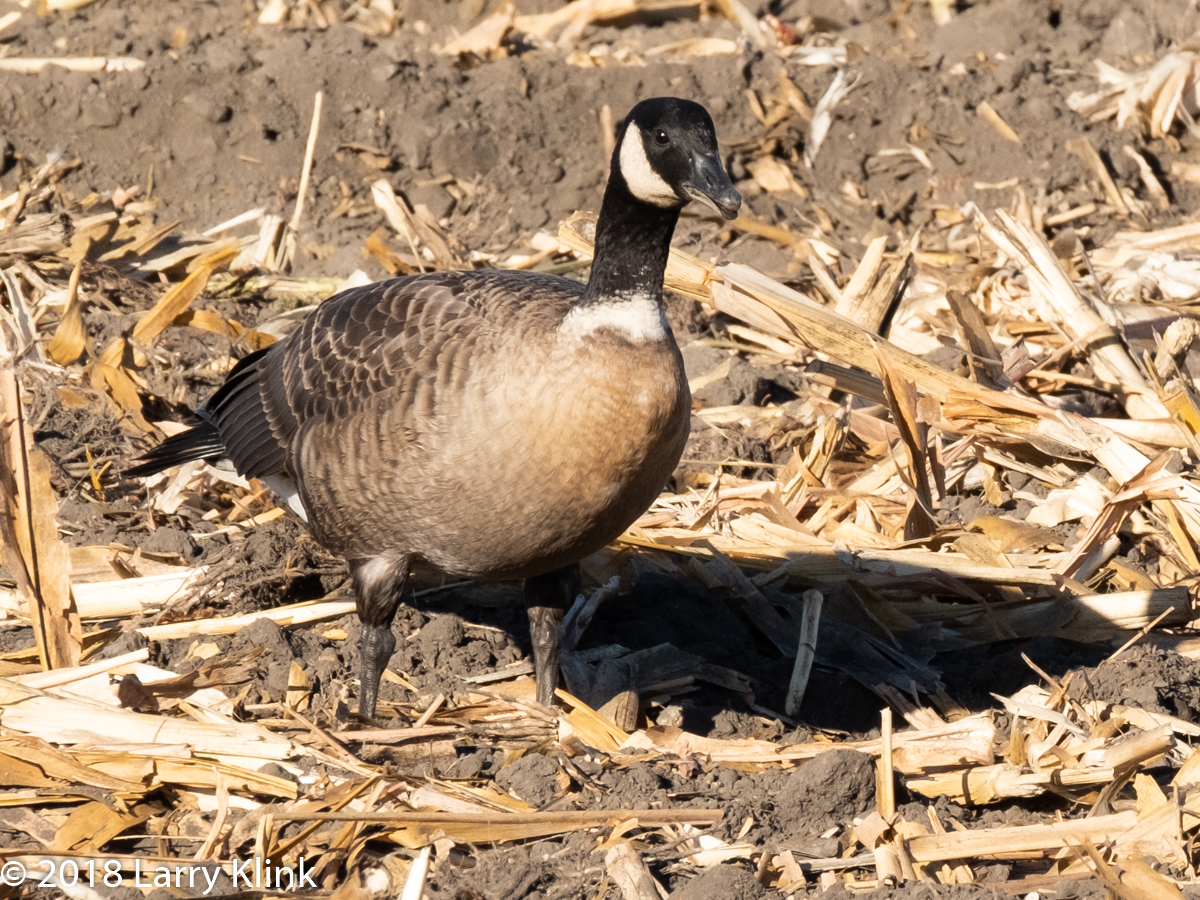
A couple of weeks ago, I went to photograph sandhill cranes. While there, I saw what I thought was Canada Geese. They seemed a bit unusual though, they were darker in color and instead of a handful, there were hundreds. I took a few images and thought little more about them. I stopped to talk to a person that led a tour I once took. I mentioned the geese. He told me they were not Canada Geese, they were Cackling Geese. I knew that several years ago, the powers that classify birds, split Canada Geese into 2 separate species: Canada and Cackling. All I ever knew was that the cackling geese were smaller. This person told me that there were other indicators: most have a white ring at the base of their dark neck and their call is more of a cackle than the honk of the Canada Goose; thus their name. So, it was a great experience. I learned something that will help me in the future. By the way, this was the Aleutian subspecies migrating to California’s central Valley from Alaska. They’ll start their trip back in January.
Please click on caption to see higher resolution image.
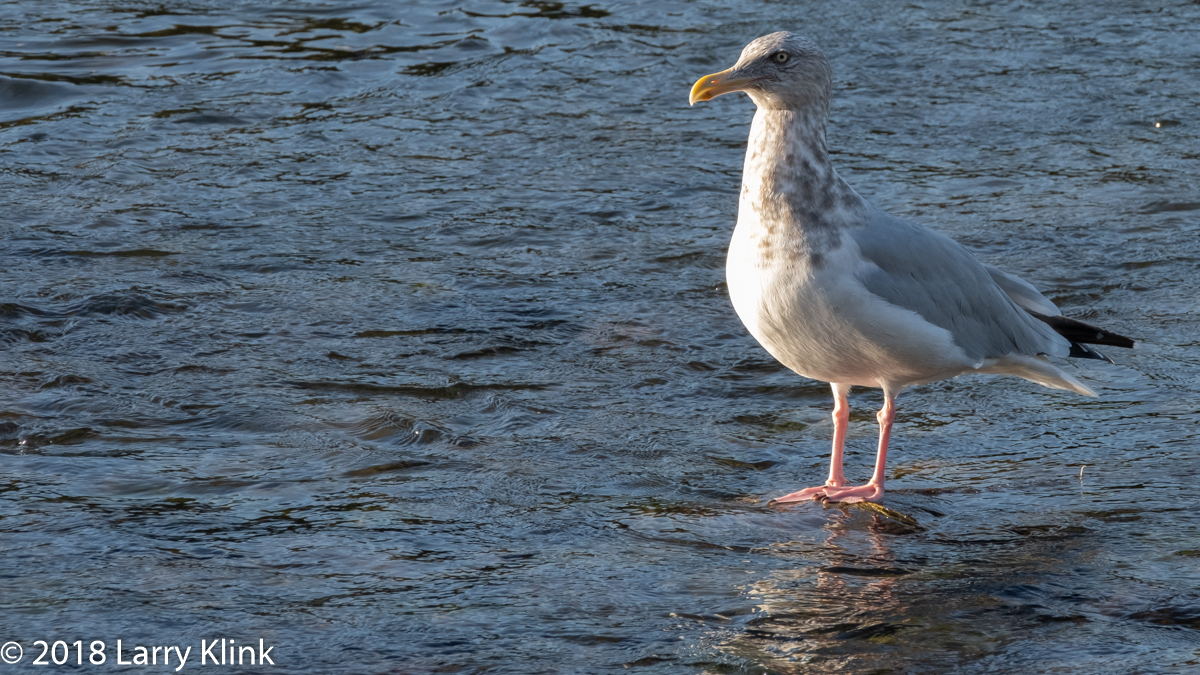
In November and December, the chinook or king salmon migrate from the ocean into the American River. The salmon breed and die. So, along with the salmon, the population of gulls and Turkey Vultures rise greatly. I assumed that what we see are California Gulls. After all, a gull is a gull. What I learned is we also get Herring Gulls. Both are white with a gray mantle, back and wing feathers. The California Gull is a noticeably darker gray, the Herring Gull is medium gray. The California Gull has yellow legs, dark eyes and a black spot on his bill; sometimes there is both a black and red spot. The Herring Gull has pink legs, yellow eyes and a red spot on his bill. Some of those colors change with the winter molt. I understand we also get the ring billed gull but I haven’t seen one.
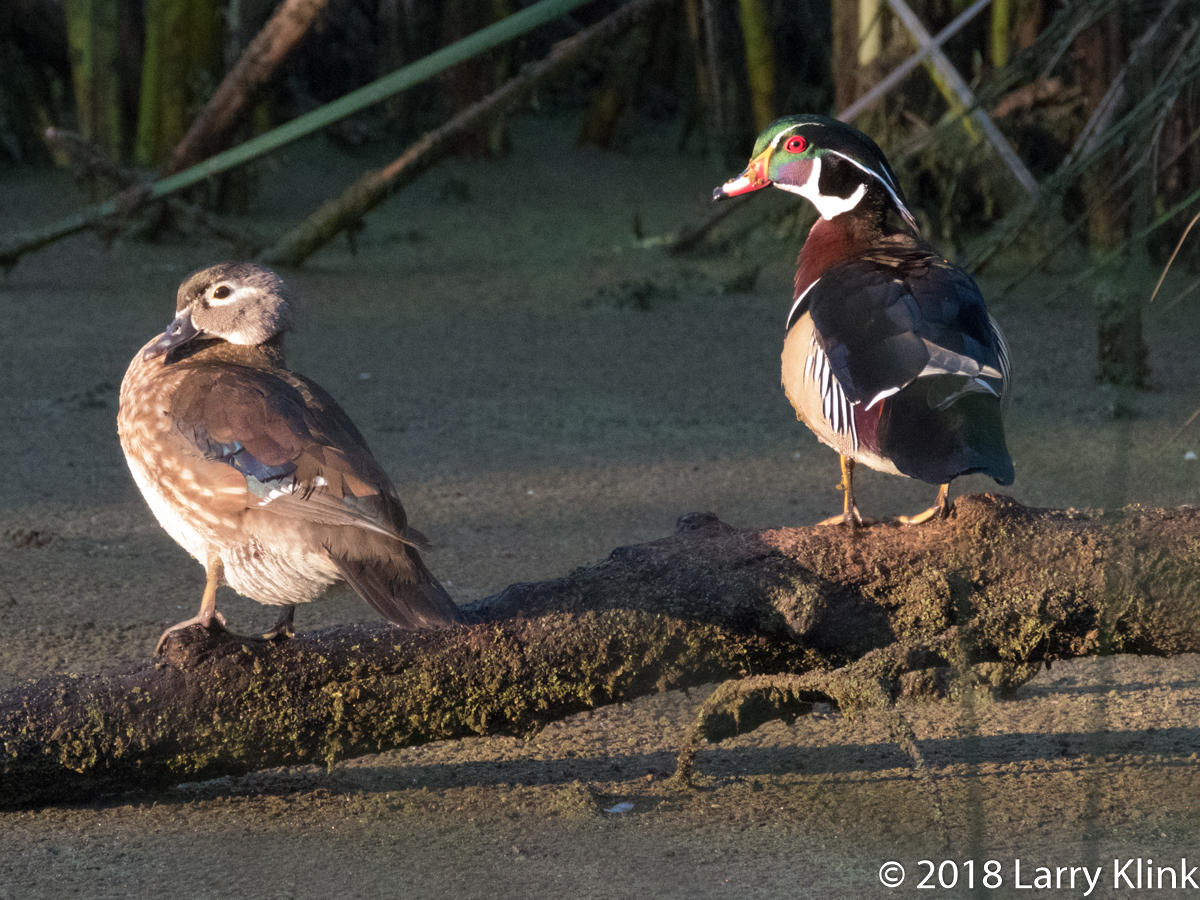
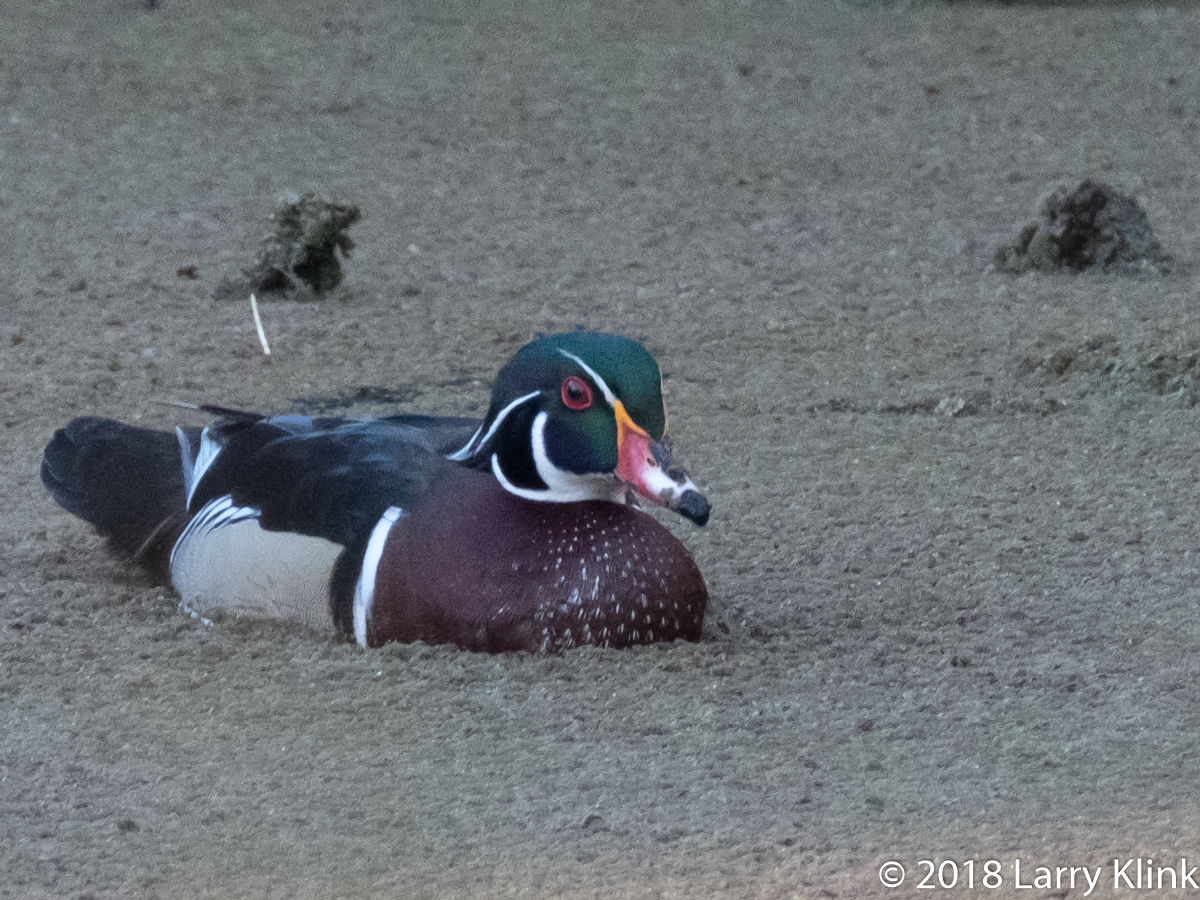
Ducks swim in lakes, ponds, rivers and oceans. They waddle around on the ground. Many display beautiful coloring. One of my favorites is the strikingly colored wood duck. They are a bit of an oddity among ducks; they perch and nest in trees. When the young have developed enough, the parents make them jump to the ground, without help, and waddle to the water to begin their life as a duck.
Note: Click on caption to see image in larger size.
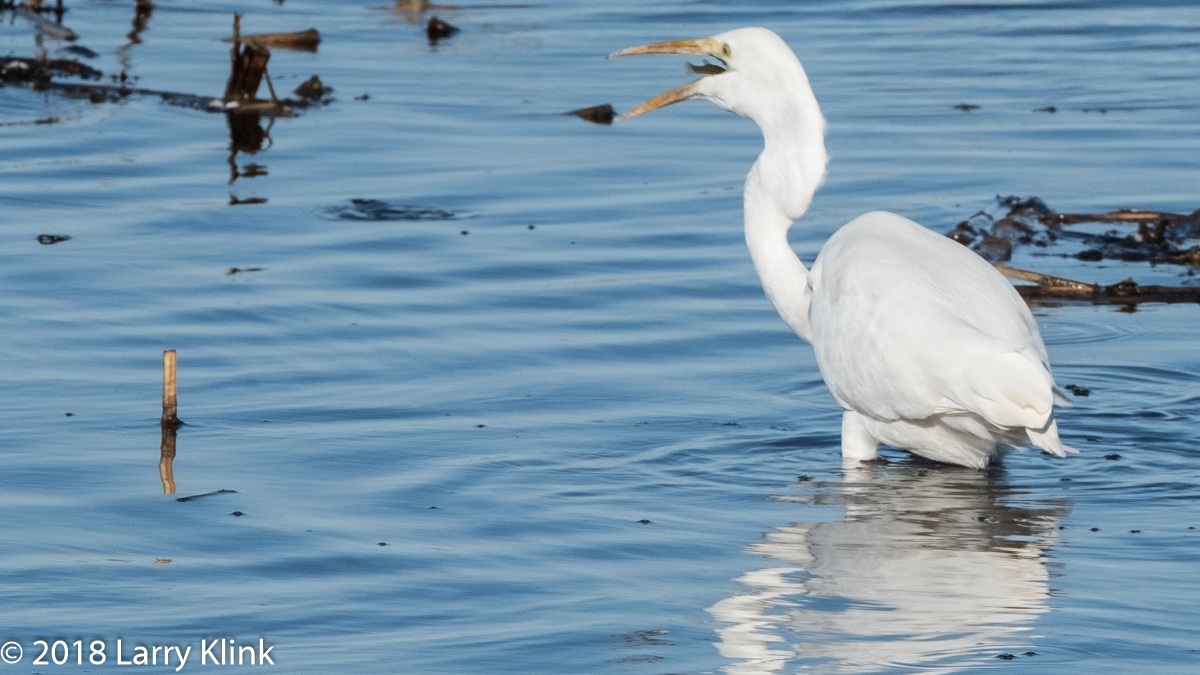
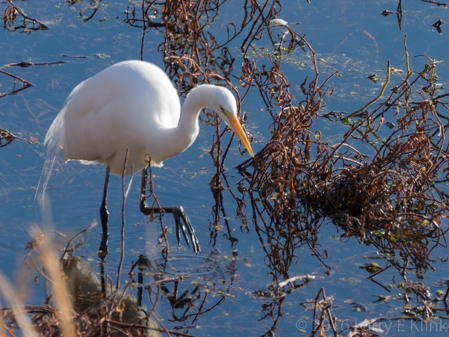
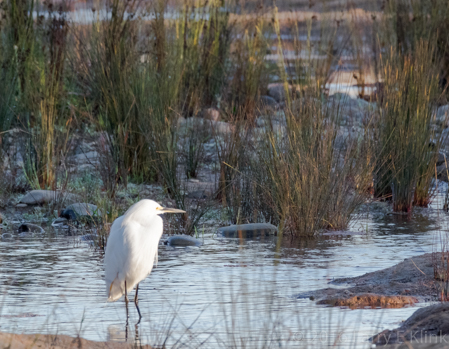
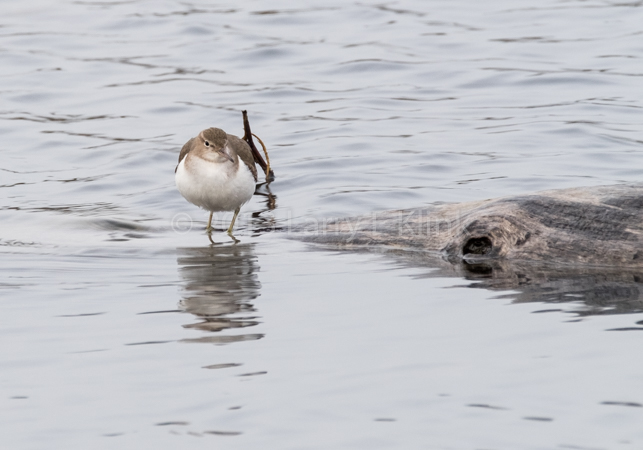
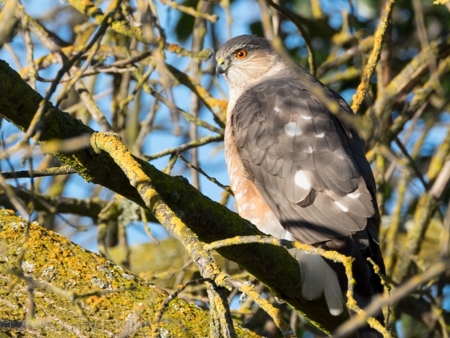
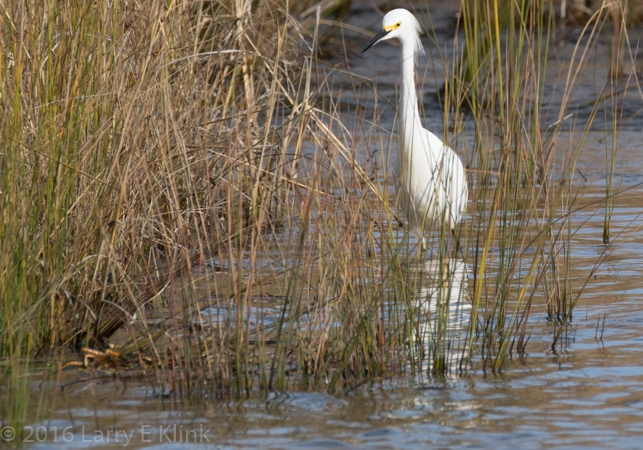
I am not typically a bird photographer. When I do shoot birds, I try to take them in the context of their environment, trying to answer the questions: this is who I am and this is how I survive. Living in the Sacramento, CA area affords me the opportunity to shoot migrating winter birds but, I find I really like to go back to the usual suspects – herons, egrets, Canada geese and mallards, hawks. Learning about them, observing their behavior gives me a lot of pleasure.
The last week or so, I’ve had the added pleasure of trying out my new Fujinon 100-400mm F4.5-5.6 lens and 1.4X Tele-converter. Its a great lens but its been more than a year since I shot with a long lens so, I made a few depth of field mistakes. Oh well, I guess I just need to go out and shoot more.
Anyway, here are a few images I shot. I hope you enjoy them.
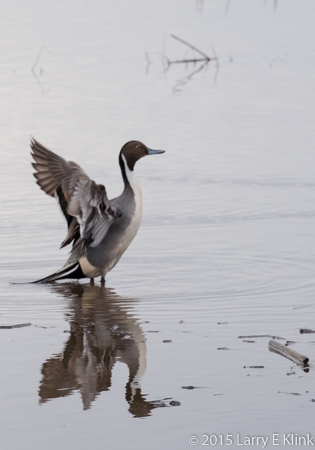
We are very lucky to be near the delta that flows into San Francisco Bay because it attracts many beautiful migrating birds in the winter. One of the birds that makes California’s Pacific Flyway their home is the Pintail Duck. I shot this image of a beautiful pintail Sunday morning, DEC 27, 2015.





















 Earthwatcher