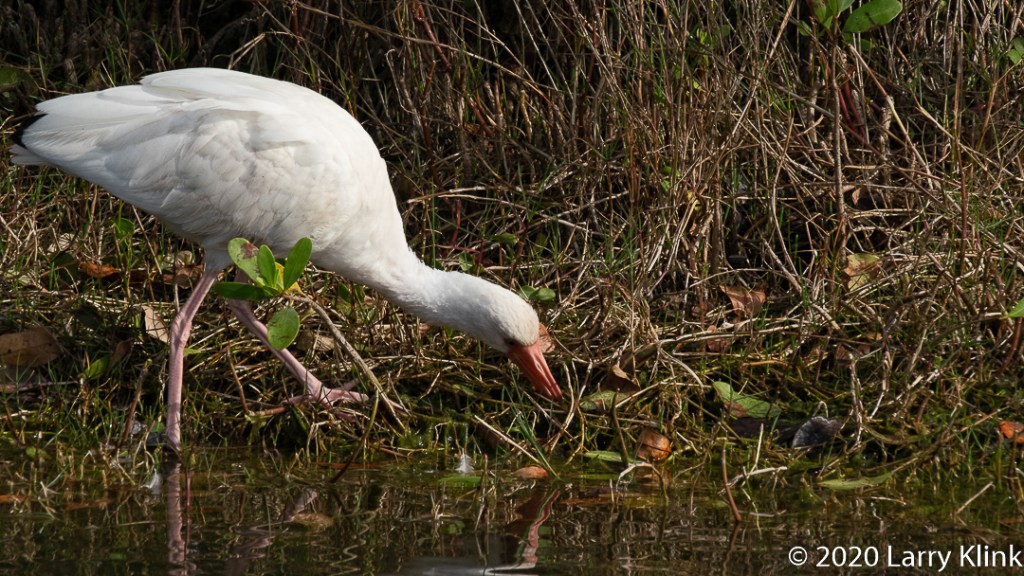
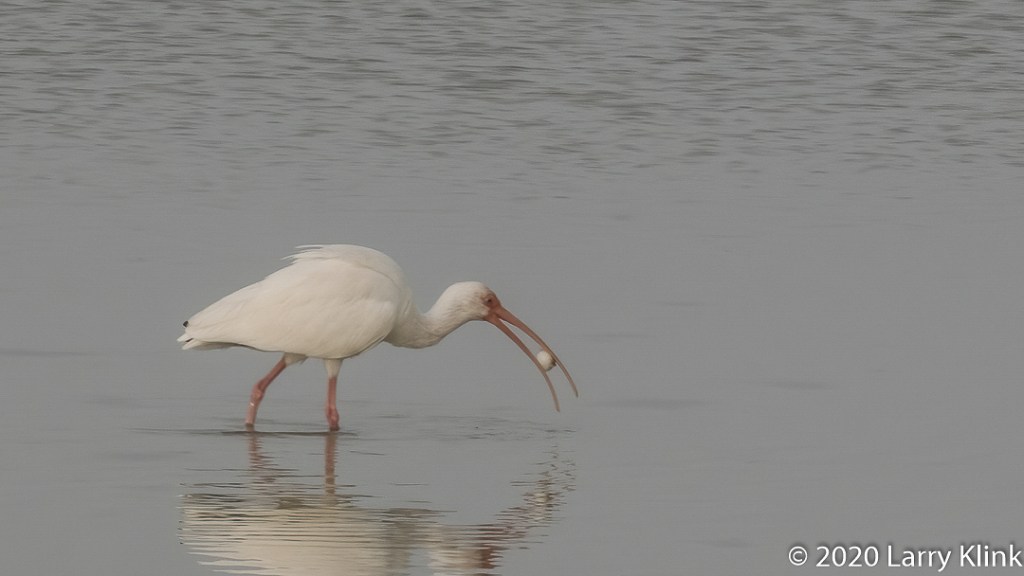
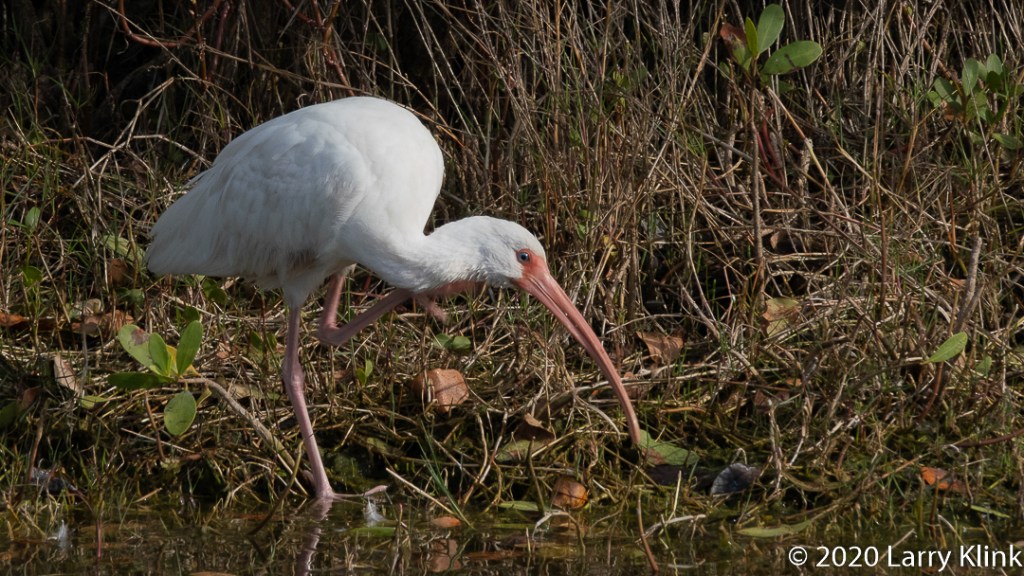
Glossy Ibis

Glossy Ibis (Plegadis falcinellus)
Merritt Island National Wildlife Refuge, Titusville, FL; FEB 2020

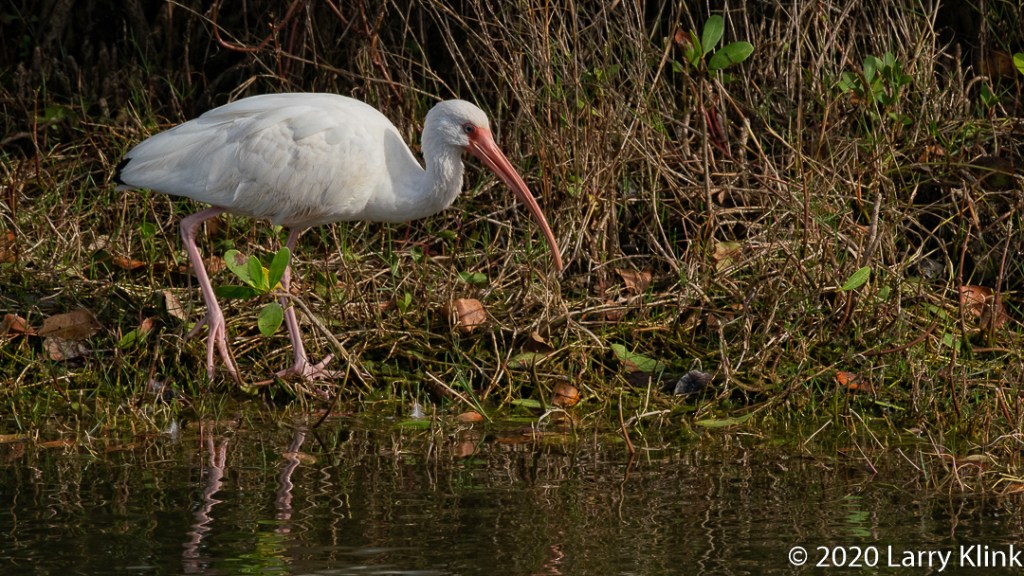
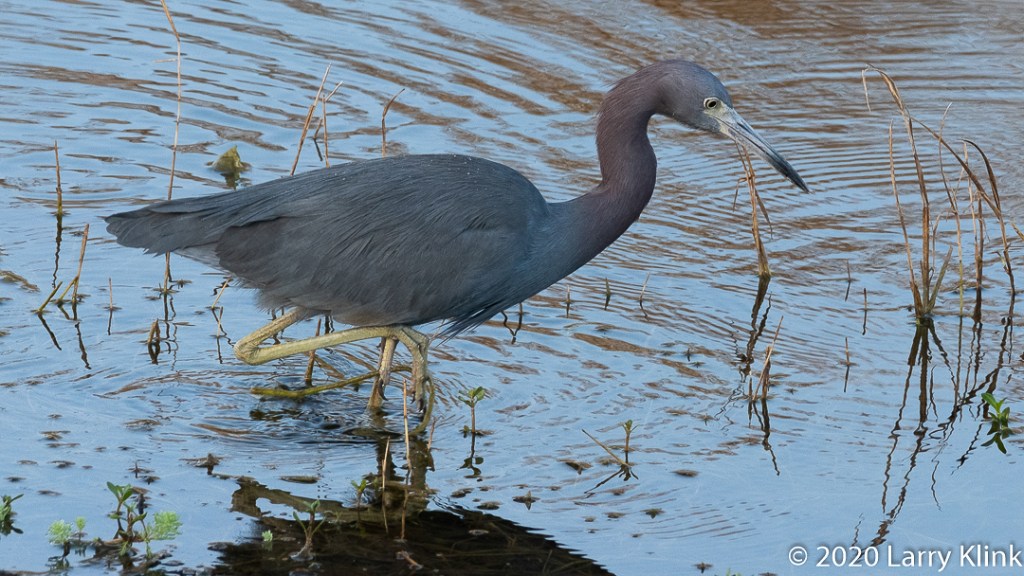
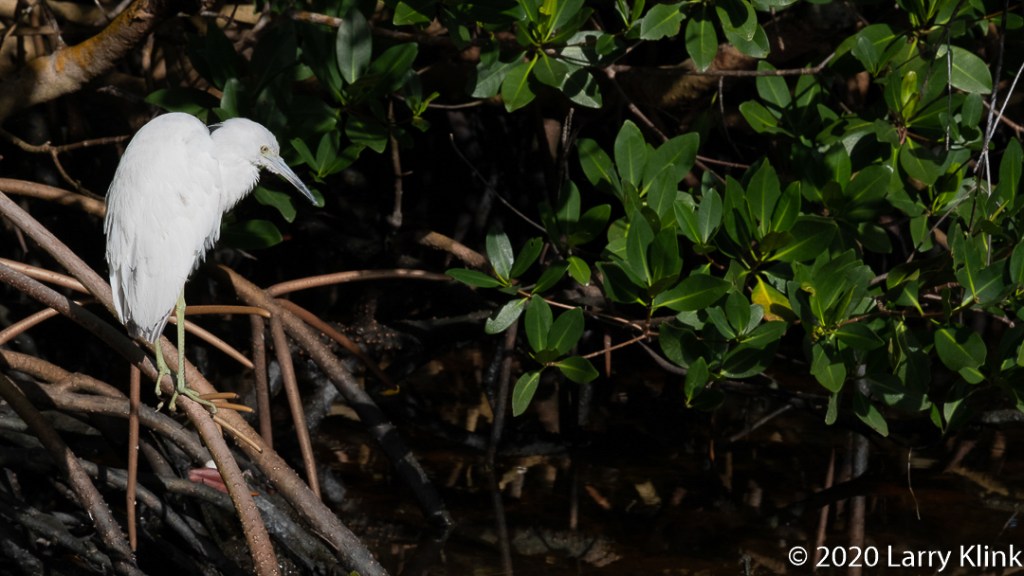
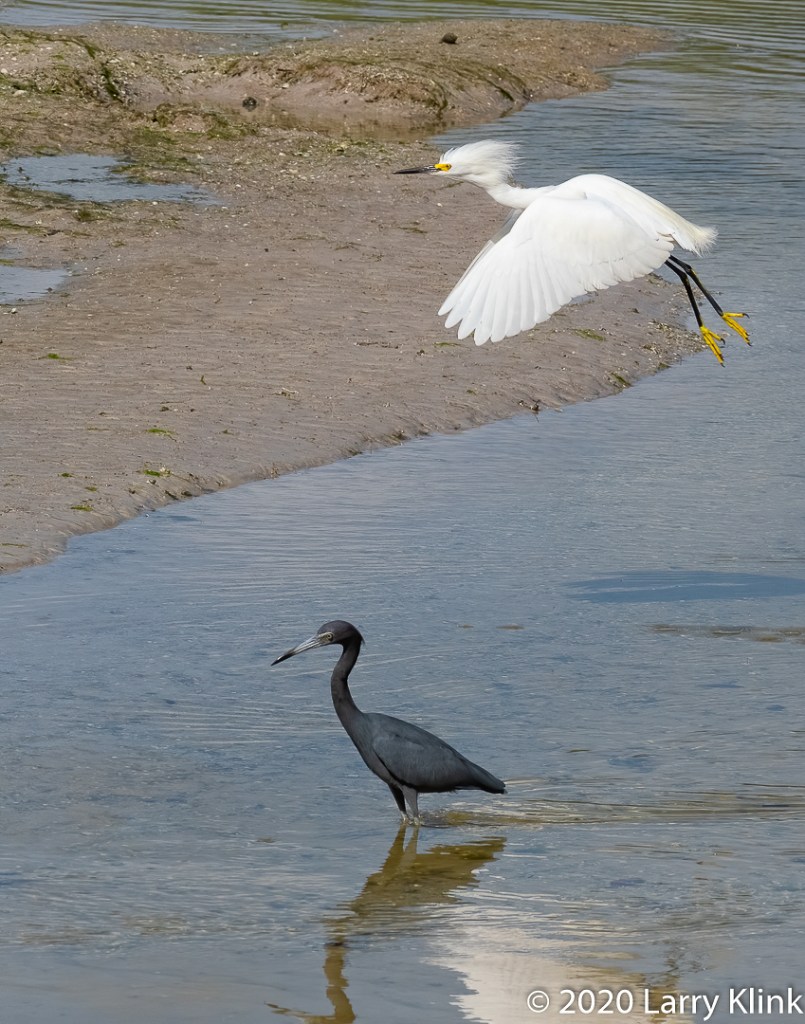
The Glossy Ibis is another interesting wading bird. From a distance, it just looks like a gray bird with long legs and a long, curved bill. But as you get closer, the iridescence of its feather’s colors it in reds, bronze and greens. These birds forage in wetlands, as well as fresh and saltwater marshes for fish, insects and seeds.

The Glossy Ibis is found, year around, in Florida, the Atlantic and Gulf Coast of the US as well as the Bahamas and the Caribbean. In breeding season, they venture all along the US Atlantic Coast. They can also be found in Europe, Asia and Africa. They nest in trees, in colonies with herons and egrets.

Info from CornellLab All About Birds: https://www.allaboutbirds.org/guide/Glossy_Ibis/overview

Note: Please click on caption to see image at higher resolution.
Glossy Ibis
Merritt Island National Wildlife Refuge, Titusville, FL; FEB 2020
Glossy Ibis
Harns Marsh, Fort Meyers, FL; FEB 2020
Glossy Ibis,
Merritt Island National Wildlife Refuge, Titusville, FL; FEB 2020
Glossy Ibis
Merritt Island National Wildlife Refuge, Titusville, FL; FEB 2020

Please visit my website, www.earthwatcher.us to see my collection of landscapes and wildlife.

These and other images are available to purchase by contacting larry.klink@earthwatcher.us.

Reddish Egret

Reddish Egret (Egretta rufescens)
J N “Ding” Darling National Wildlife Refuge; FEB 2020

The Reddish Egret is another amazingly beautiful, medium to large sized, heron. They are found, year around in the Bahamas, the Caribbean and parts of Florida. When not breeding they can also be found along the Gulf and Pacific Coasts of Mexico and Central America, They live and forage in marshes, particularly in brackish waters where they dine primarily on fish, crustaceans, frogs and insects.

They nest in swampy areas in colonies with other egrets and herons.

They are considered as a threatened species and are protected in Texas. They were, at one time, hunted for their plumage.

The images I shared here are breeding, dark morph, reddish egrets. The pink in the bill denotes its breeding status. When not breeding, the beak is gray. There is a white morph of the Reddish Egret but I have not seen any of those.

A note about herons and egrets. Herons and egrets are all members of the same family (Ardeidae). But they are not considered distinct groups. The 2 large ones, Great Blue Heron and Great Egret are members of the genus Ardea. The Snowy Egret, Little Egret, Little Blue Heron, Tricolored Heron and Reddish Egret are in the genus Egretta. So, despite the distinction in the common names, they are all related.

Info from:

Cornell Labs All About Birds: https://www.allaboutbirds.org/guide/Reddish_Egret/overview

Wikipedia: https://en.wikipedia.org/wiki/Reddish_egret

DifferenceBetween.Net: http://www.differencebetween.net/science/nature/birds-nature/difference-between-heron-and-egret/

Note: Please click on caption to see image at higher resolution

Reddish Egret
J N “Ding” Darling National Wildlife Refuge, Sanibel Island, FL; FEB 2020
Juvenile Reddish Egret
Fishing Pier, Sanibel Island, FL; FEB 2020
Reddish Egret
J N “Ding” Darling National Wildlife Refuge; FEB 2020
Reddish Egret
J N “Ding” Darling National Wildlife Refuge; FEB 2020

Please visit my website, www.earthwatcher.us to see my collection of landscapes and wildlife.

These and other images are available to purchase by contacting larry.klink@earthwatcher.us.

American White Pelican

American White Pelican (Pelecanus erythrorhynchos)
J. N. “Ding” Darling National Wildlife Refuge, Sanibel Island, FL; FEB 2020

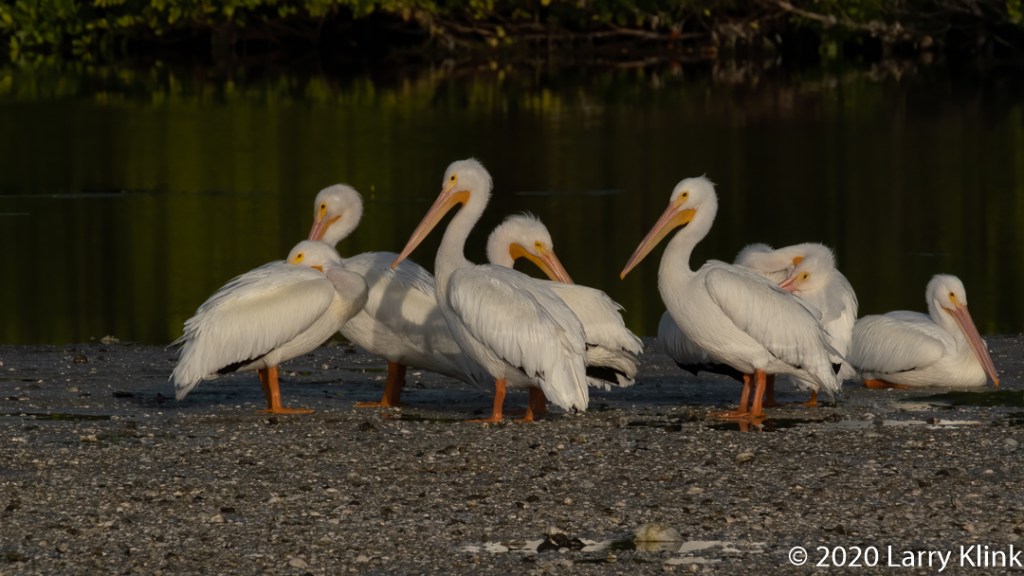
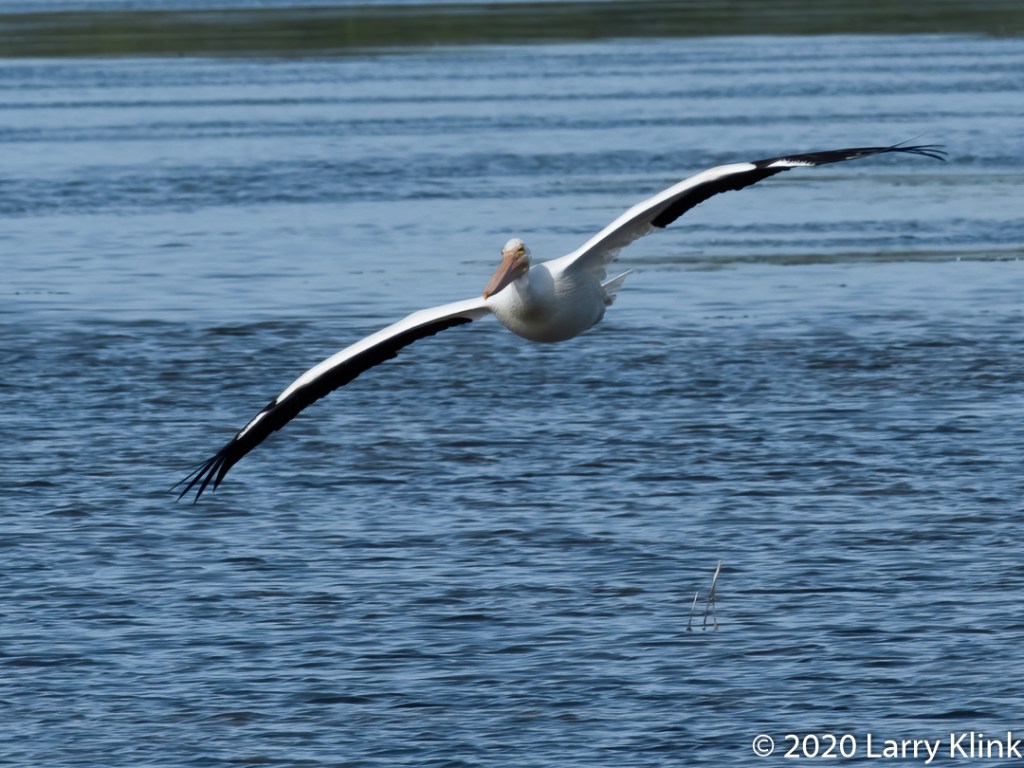
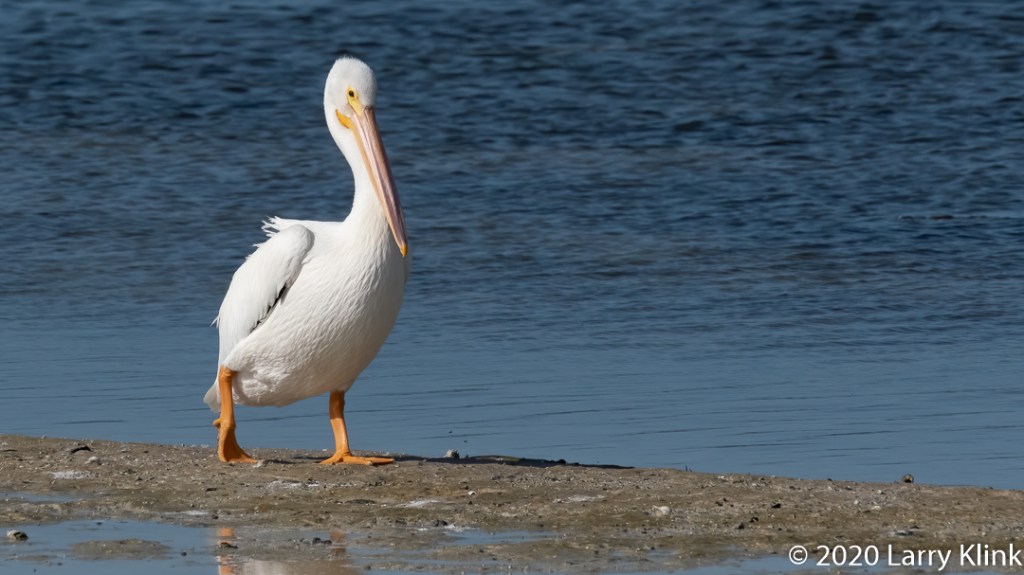
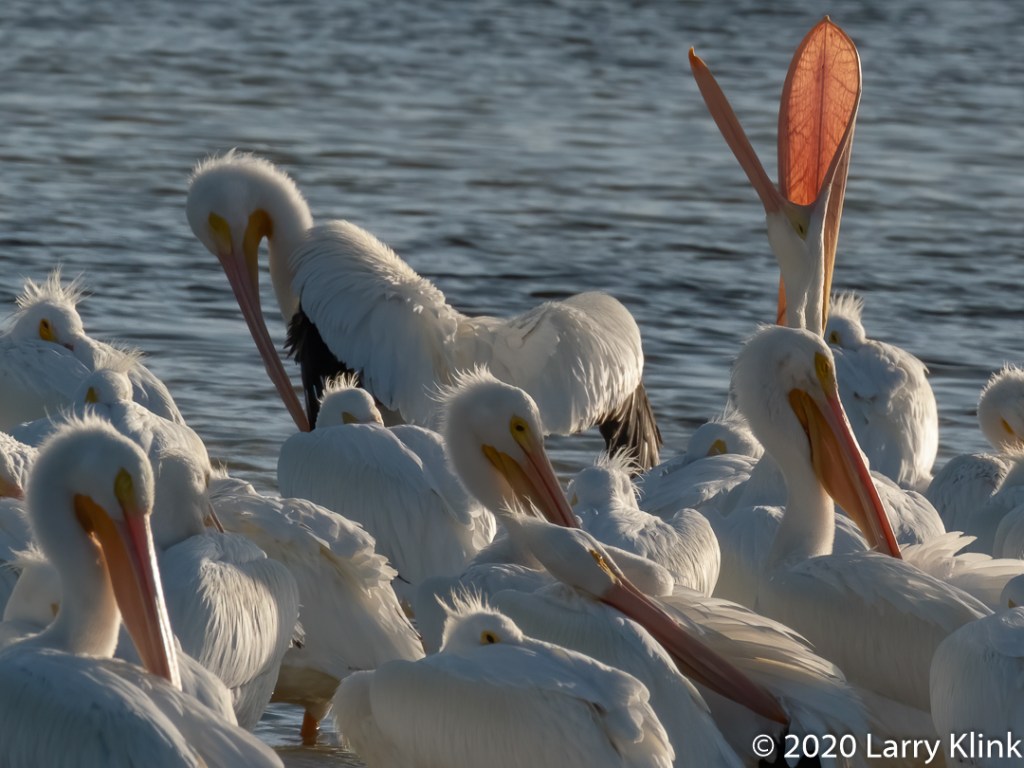
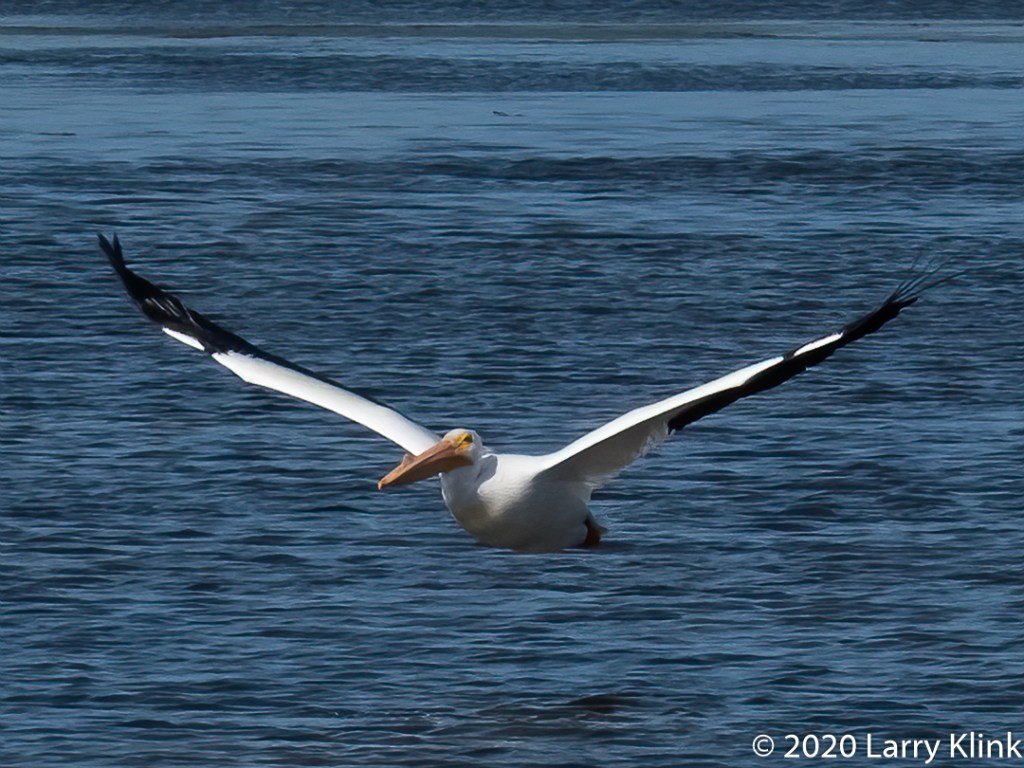
The American White Pelican is one of North America’s largest birds. Most of the year, they can be found in much of the area between the mid-western US to the western coast, south into Mexico and Central America and north into Canada. In their non-breeding winter season, they collect along the southern US Atlantic and gulf coasts as well as the coast of California. They also like the central valley of California and California’s Salton Sea and Colorado River Drainage area. They breed in the northern US and Canada. Though they stay near the coast over winter, they prefer to be in the ponds and estuaries rather than along the shore.

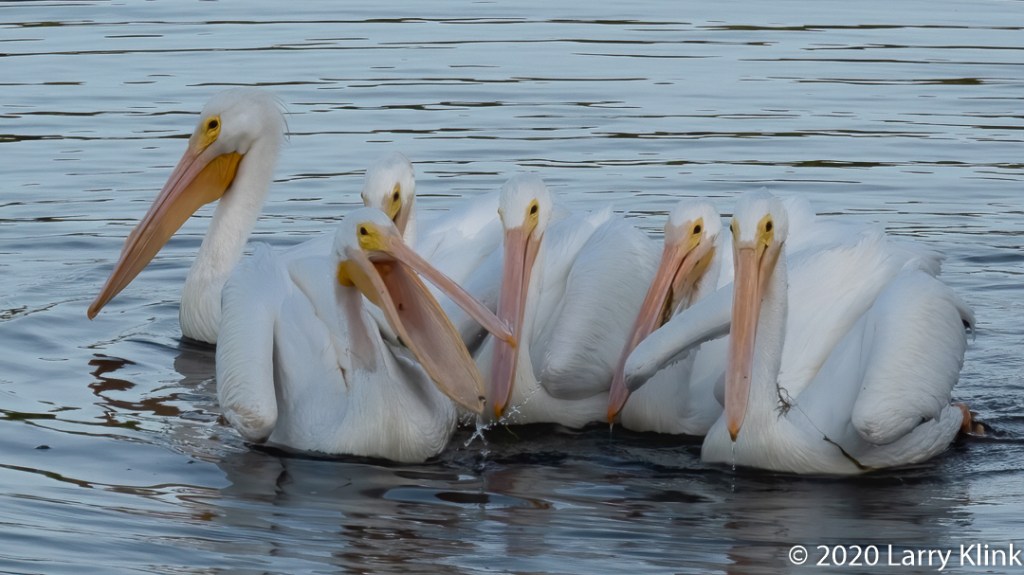
Unlike the Brown Pelican, the American White Pelican doesn’t dive for food. They tip their head into the water and scoop their food or sometimes they dabble; tip over and stick their head in the water with their tail up like a large duck. They dine mainly on fish but also on some marine invertebrates. Several of these pelicans may join together to hunt. They wrangle fish into shallow water or sometimes towards one another. At other times, they will steal food from cormorants and other pelicans.

In one of the pictures, there is a pelican with its mouth open and in the air. It may be trying to control its body temperature. I read that there are a lot of veins and arteries in its pouch so by warming or cooling its pouch, it can warm or cool its body.

Info from Cornell Labs All About Birds. https://www.allaboutbirds.org/guide/American_White_Pelican/overview

Note: please click on caption to see image at higher resolution.

American White Pelican
J. N. “Ding” Darling Wildlife Refuge, Sanibel Island, FL; FEB 2020
American White Pelican
J. N. “Ding” Darling National Wildlife Refuge, Sanibel Island, FL; FEB 2020
American White Pelican
J. N. “Ding” Darling Wildlife Refuge, Sanibel Island, FL; FEB 2020
American White Pelican
J. N. “Ding” Darling National Wildlife Refuge, Sanibel Island, FL; FEB 2020
American White Pelican
J. N. “Ding” Darling Wildlife Refuge, Sanibel Island, FL; FEB 2020

Please visit my website, www.earthwatcher.us to see my collection of landscapes and wildlife.

These and other images are available to purchase by contacting larry.klink@earthwatcher.us.
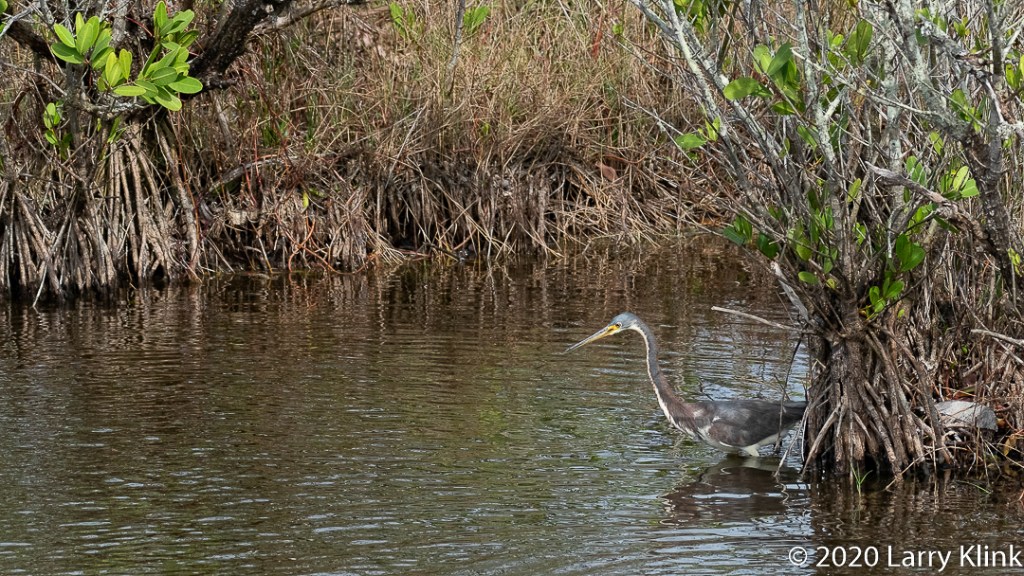
The Tricolored Heron

Tricolored Heron (Egretta tricolor)
Merritt Island National Wildlife Refuge, Titusville, FL; FEB 2020

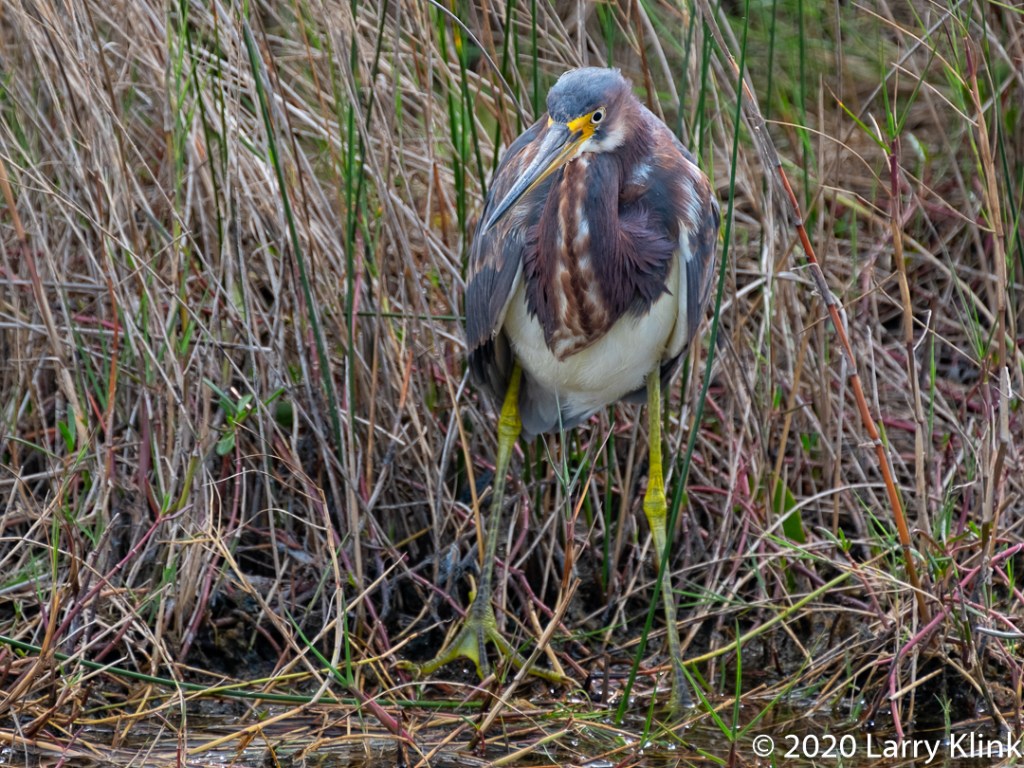
The Tricolored Heron is an amazingly beautiful, small heron – up to 30” tall. They are found, year-round in Florida and along the US Gulf Coast. During nonbreeding periods, they can also be found along the Pacific Coast of Southern California and Mexico as well as parts of Central America. They breed in areas of North Florida. They like the coastal estuaries, saltmarshes, mangrove forests and lagoons.

Tricolored Herons prefer to eat fish from brackish waters. They stalk and attack like other herons and egrets with a few minor uniqueness’s. They nest in colonies with other herons and egrets.

All About Birds from Cornell Labs posted an interesting observation about the Tricolored Heron: “Angsty teenagers aren’t just a human phenomenon. As Tricolored Herons get older they often lunge and snap at their parents when they arrive at the nest with food. To appease the youngsters, parents greet them with bows.”

I was amazed when I first saw one of these birds. I think all herons and egrets are beautiful but, for me, this one tops the list.

Note: Click on caption to see image at higher resolution.

Tricolored Heron;
Harns Marsh, Fort Meyers, FL; FEB 2020
Tricolored Heron;
J N “Ding” Darling National Wildlife Refuge; FEB 2020
Tricolored Heron;
Merritt Island National Wildlife Refuge, Titusville, FL; FEB 2020
Tricolored Heron;
Merritt Island National Wildlife Refuge, Titusville, FL; FEB 2020

Please visit my website, www.earthwatcher.us to see my collection of landscapes and wildlife.

These and other images are available to purchase by contacting larry.klink@earthwatcher.us.
The Atlantic Brown Pelican

Brown Pelican (Pelecanus occidentalis carolinensis); Atlantic Subspecies
Island, FL; FEB 2020

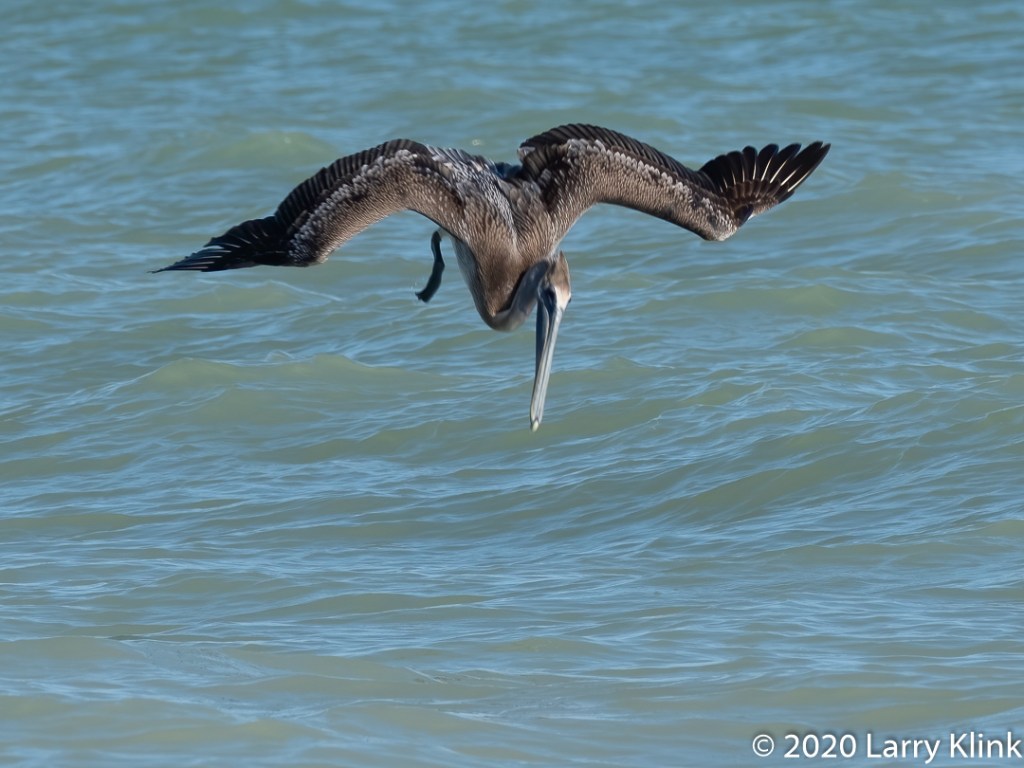
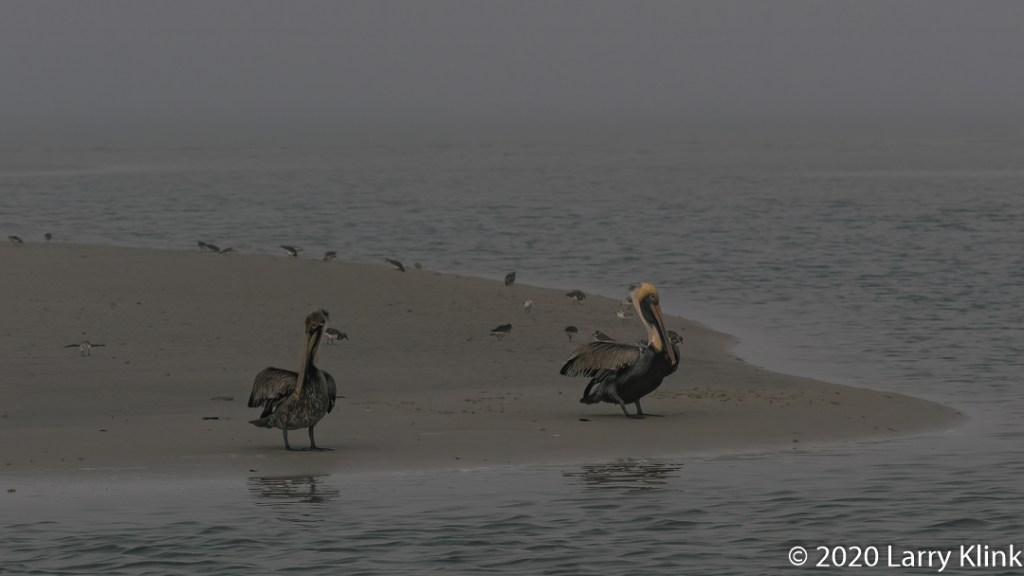
The Brown Pelican is the common pelican species we see along the east and west coast of the United States. There are 2 subspecies of the Brown Pelican – the Atlantic (Pelecanus occidentalis carolinensis) and the Pacific (Pelecanus occidentalis californicus). There are 3 other subspecies found in other parts of the Western Hemisphere. Today’s post pertains to the Atlantic subspecies birds I saw on a recent rip to Florida.

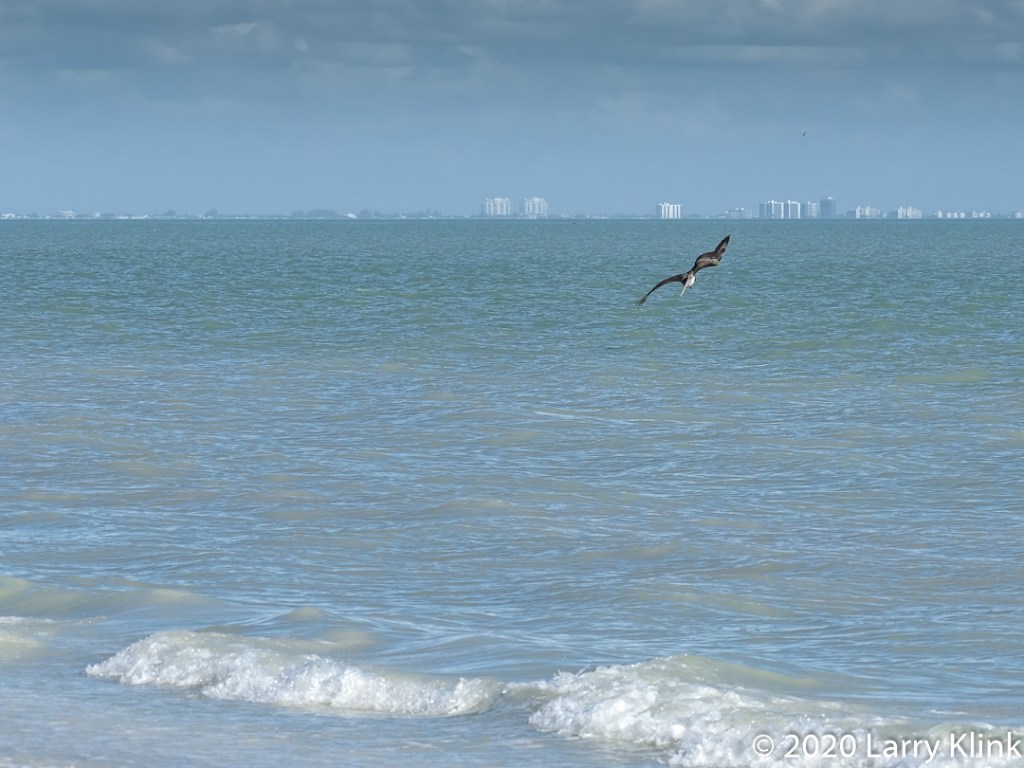
The Brown Pelican lives in flocks and are primarily year around residents of the areas where the forage. They do migrate to breeding grounds, but they are generally in close proximity to their foraging area. They prefer small fish but will eat marine invertebrates like prawns and scavange dead animals too. Thy sometimes swim in shallow water and scoop up food but they are renowned for  their steep, head first, dives into the water to scoop up their prey. It’s pretty cool to watch. They can pick-up as much as 2 ½ gallons of water with their prey.

Here are a few images to enjoy.

Note: Please click on caption to see image at higher resolution.

Brown Pelican (pelecanus occidentalis carolinensis)
The one with the yellow head is a breeding adult, the other is a juvenile.
Bunche Beach, Fort Meyers, FL; FEB 2020
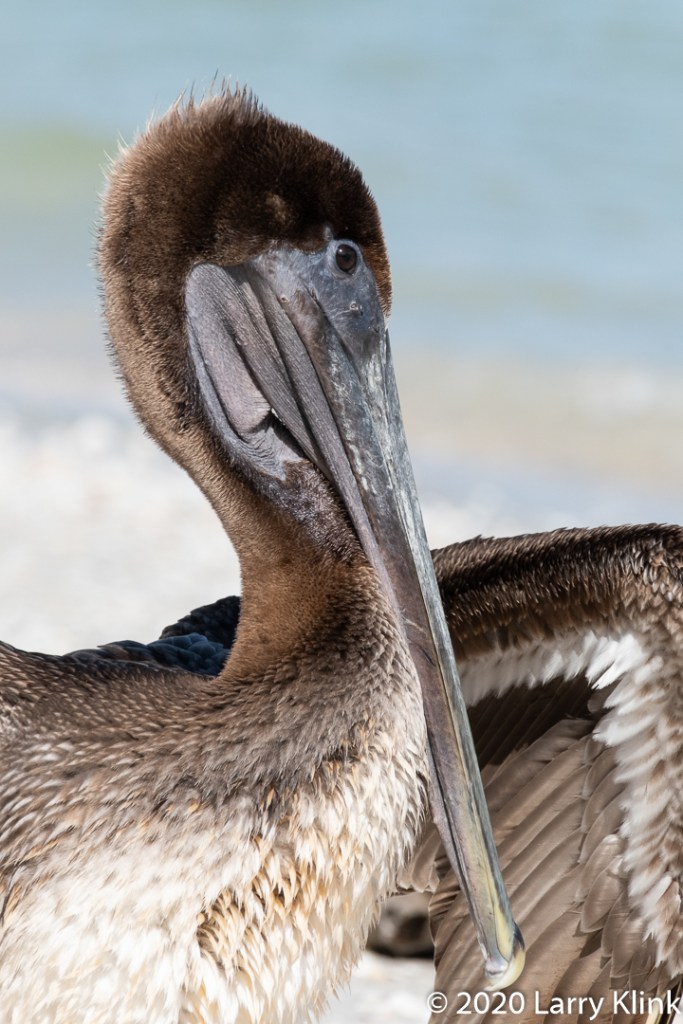
Juvenile Brown Pelican (Pelecanus occidentalis carolinensis); Atlantic Subspecies
Fishing Pier, Sanibel Island, FL; FEB 2020
Seascape With Brown Pelican (Pelecanus occidentalis carolinensis)
Sanibel Island, FL; FEB 2020
Juvenile Brown Pelican (Pelecanus occidentalis carolinensis); Atlantic Subspecies
Fishing Pier, Sanibel Island, FL; FEB 2020

Please visit my website, www.earthwatcher.us to see my collection of landscapes and wildlife.

These and other images are available to purchase by contacting larry.klink@earthwatcher.us.

Info from All About Birds (https://www.allaboutbirds.org/guide/Brown_Pelican/lifehistory) and Wikipedia (https://en.wikipedia.org/wiki/Brown_pelican).

The Roseate Spoonbill

Roseate Spoonbill (Platalea ajaja)
J. N. “Ding” Darling Wildlife Refuge; FEB 2020

On a recent trip to Florida, we got to see the Roseate Spoonbill. I was excited. It was one of the birds I had hoped to see. In the US, they live year-round in Florida and along the Gulf Coast of Texas. They can also be found in Mexico, Central and South America. They breed in colonies with birds like herons and ibises. They forage in shallow water where small fish and marine invertebrates are available. They forage by walking slowly with beak open, feeling for their pray.

Note: Please click on caption to see image at higher resolution.

Roseate Spoonbill (Platalea ajaja);
Merritt Island National Wildlife Refuge, Titusville, FL; FEB 2020
Roseate Spoonbills (Platalea ajaja)
Merritt Island National Wildlife Refuge, Titusville, FL; FEB 2020
Roseate Spoonbill (Platalea ajaja)
J. N. “Ding” Darling Wildlife Refuge; FEB 2020
Roseate Spoonbill (Platalea ajaja)
Merritt Island National Wildlife Refuge, Titusville, FL; FEB 2020
Roseate Spoonbill (Platalea ajaja)
J N “Ding” Darling National Wildlife Refuge; FEB 2020

Please visit my website, www.earthwatcher.us to see my collection of landscapes and wildlife.

These and other images are available to purchase by contacting larry.klink@earthwatcher.us.
The Wood Stork

Wood Stork (Mycteria americana)
Merritt Island National Wildlife Refuge, Titusville, FL; FEB 2020

The Wood Stork (Mycteria Americana) is a large bird that is found in the swamps and wetlands of coastal Florida, Georgia and South Carolina. It can also be found in Cuba and Mexico. It hunts for fish and crustaceans while walking slowly with its beak in the shallow water. I watched one hunt. It had its beak submerged but used its feet to stir up the muddy bottom.

We found these beautiful creatures during a recent visit to Florida. I watched some fly overhead but I didn’t see any delivering babies.

Note: Please click on caption to see image in higher resolution.

Juvenile Wood Stork (Mycteria americana)
Merritt Island National Wildlife Refuge, Titusville, FL; FEB 2020
Wood Stork (Mycteria americana) in Flight
They remind me a bit of a pterodactyl while in flight. I particulaly like the appearance of bones on the underside of the wing.
Sanibel Island, FL; FEB 2020
Wood Stork (Mycteria americana)
Lakes Park, Fort Meyers, FL; FEB 2020
Wood Stork (Mycteria americana) and Little Blue Heron (egretta caerulea)
Lakes Park, Fort Meyers, FL; FEB 2020

Please visit my website, www.earthwatcher.us to see my collection of landscapes and wildlife.

These and other images are available to purchase by contacting larry.klink@earthwatcher.us.
A Flyover View of a Portion of California and Nevada

A Basin and Some Surrounding Mountain Ranges
Taken on flight from Sacramento to Dallas; FEB 2020. GPS coordinates indicate plane was in vicinity of Dyer, Nevada. Viewed in southwesterly direction from plane.
I’m intrigued by this image beacause of the beautiful alluvial fan formed when water carried debris from the mountian to the valley below. But, erosion doesn’t stop. You can see the channels cut by further runoff over the fan.

On a recent trip. We flew over the Sierra  Nevada Mountains and the Basin and Range area of Nevada. The sun was rising, and it provided some interesting views from the plane.

One scene was Mono Lake. I have posted scenes of Mono Lake and its magnificent tufa on many occasions. The flight path on this trip provided a stunning view of the lake and the mountains surrounding it.

I enjoy studying geomorphology, i.e. how the earth was sculpted by natural forces. Two of the images tell a story about land formation through the erosion and deposition that sculpted the beautiful landscape.

By the way, these images were taken with my iPhone 8 through the window of the commercial passenger plane.

Mono Lake and Sierra Nevada Mountains
Taken on flight from Sacramento to Dallas; FEB 2020. GPS coordinates indicate plane was over somewhere in the vicinity of Mina, CA. Viewed in southwesterly direction from plane.
Desert Mountains in the Early Morning
Taken of flight from Sacramento to Dallas; FEB 2020. GPS coordinates indicate plane was in vicinity of Dyer, Nevada, Viewed in southwesterly direction from plane. I am intrigued by this image. The mountains appear to have little snow cover. Yet the ice covered erosional channels stand in relief from the mountain sides they are carving.
Snow Capped Sierra Nevada at Sunrise
Taken on flight from Sacramento to Dallas; FEB 2020. GPS coordinates indicate plane was somewhere in Mono County, CA. Viewed in southwesterly direction from plane.

Visit my website, www.earthwatcher.us to see my collection of landscapes and wildlife.

These and other images are available to purchase by contacting larry.klink@earthwatcher.us.

Downy Woodpeckers and Northern Flickers

Red-shafted Northern Flicker (Colaptes auratus)
Effie Yeaw Nature Center, Sacramento, CA; JAN 2020

Today I am sharing some images of woodpeckers and flickers.

Note: Please click on caption to see image at higher resolution.

Female Red-shafted Northern Flicker (Colaptes auratus)
Effie Yeaw Nature Center, Sacramento, CA; OCT 2019
Female Downy Woodpecker (Picoides pubescens)
Effie Yeaw Nature Center, Sacramento, CA; JAN 2020
Downy Woodpecker (Picoides pubescens)
Effie Yeaw Nature Center, Sacramento, CA; JAN 2020

Visit my website, www.earthwatcher.us to see my collection of landscapes and wildlife.

These and other images are available to purchase by contacting larry.klink@earthwatcher.us.

Some Random Images

Coyote (Canis latrans)
Lamar Valley, Yellowstone National Park, WY; MAY 2019

There is no theme to this post. It’s just a set of images taken mostly in 2019 that I thought I’d post today.

The Southern Boubou (Laniarius ferrugineus) was taken in August of 2016. It is one image that I overlooked when I was posting my images from Africa.

The Coyote (Canis latrans) was taken at Yellowstone National Park in May 2019. We watched him stalk for half an hour until he took off after something. We never saw what he was stalking but alas, he missed.

The Yellow Swallowtail Butterfly (Papilio glaucus) was taken in Jasper National Park, Alberta, Canada in May 2019.

This female Common Merganser (Mergus merganser) was taking care of these babies all by herself. The Common Mergansers have some peculiar child rearing behavior. Sometimes, one will lay its eggs in the nest of another and leave. Sometimes they just abandon their chicks to another Common Merganser to raise. So, at times, you will see one female with a large group of ducklings. I watched this group for a long period of time. During that time, the mother would hide the brood in the shelter of some brush alongside the river. When she felt it was safe, they would dash to another shelter. It was a lot of fun. This image was taken at Effie Yeaw Nature Center, Sacramento, CA in June, 2019.

The landscape is a sunrise at Ash Meadows National Wildlife Refuge in Amargosa Valley, NV in October 2019. This wonderful sanctuary is an oasis in the Nevada desert outside Death Valley National Park. Its home to birds and other creatures alike.

Note: Please click on caption to see image at higher resolution.

Southern Boubou (Laniarius ferrugineus)
Kruger National Park, South Africa; AUG 2016
Sunrise From Point of Rocks Spring
Ash Meadows National Wildlife Refuge, NV; OCT 2019
Common Merganser (Mergus merganser) with Babies
This female was taking care of all of these babies by herself.
Effie Yeaw Nature Center, Sacramento, CA; JUN 2019

Yellow Swallowtail Butterfly (Papilio glaucus)
Jasper National Park, Alberta, Canada; MAY 2019

These and other images are available to purchase on my website: www.earthwatcher.us or by contacting larry.klink@earthwatcher.us.