This past week, we had a morning where the rain clouds were
breaking up in the early morning. I chose that day to explore Doton’s Point trail
at Folsom Lake Recreation Area; a trail that was new to me. The grasses and
other plants were displaying their spring green. The early morning sun helped
saturate the colors. Spring was at its finest. I went with the expectation that
I might see some different birds. Instead, I discovered that it was time for some
landscapes.
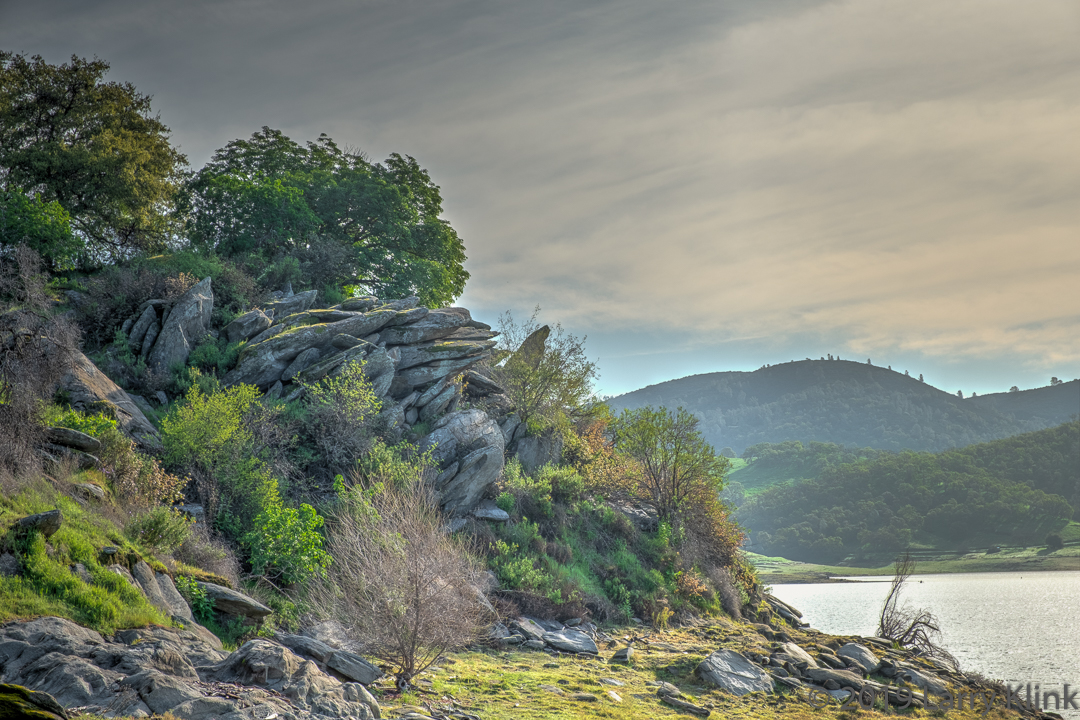
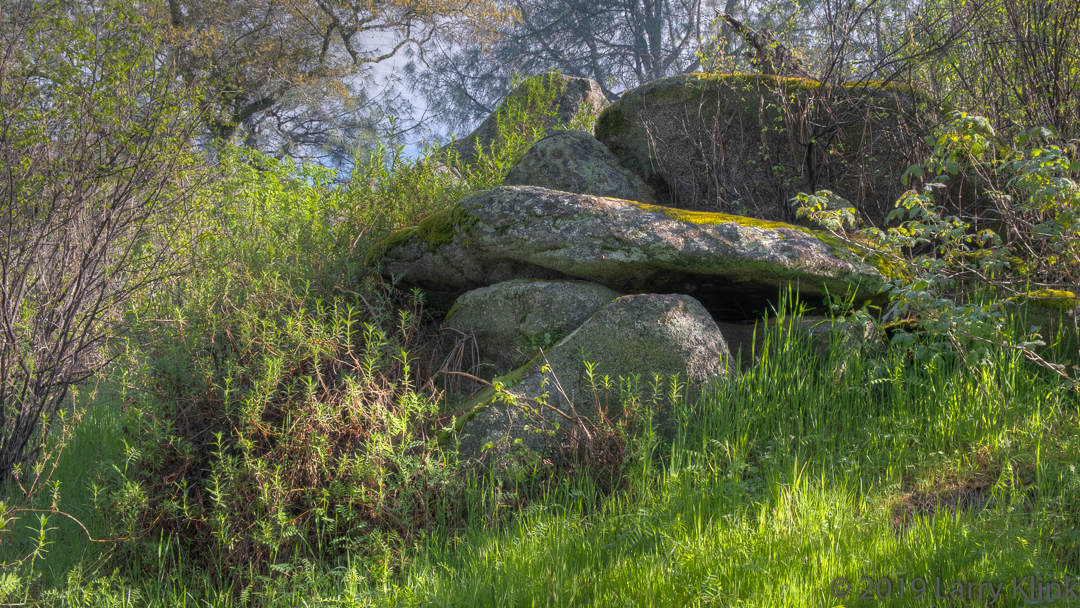
The beautiful rocks in this image are granite. The area around this portion of Folsom Lake is called Granite Bay because of the abundance of granite in the area. Like the Sierra Nevada mountains, this area sets on a pluton, a large blob of magma that cooled slowly underground to form granite then was uplifted and exposed.
Please click on caption to see image at higher resolution.
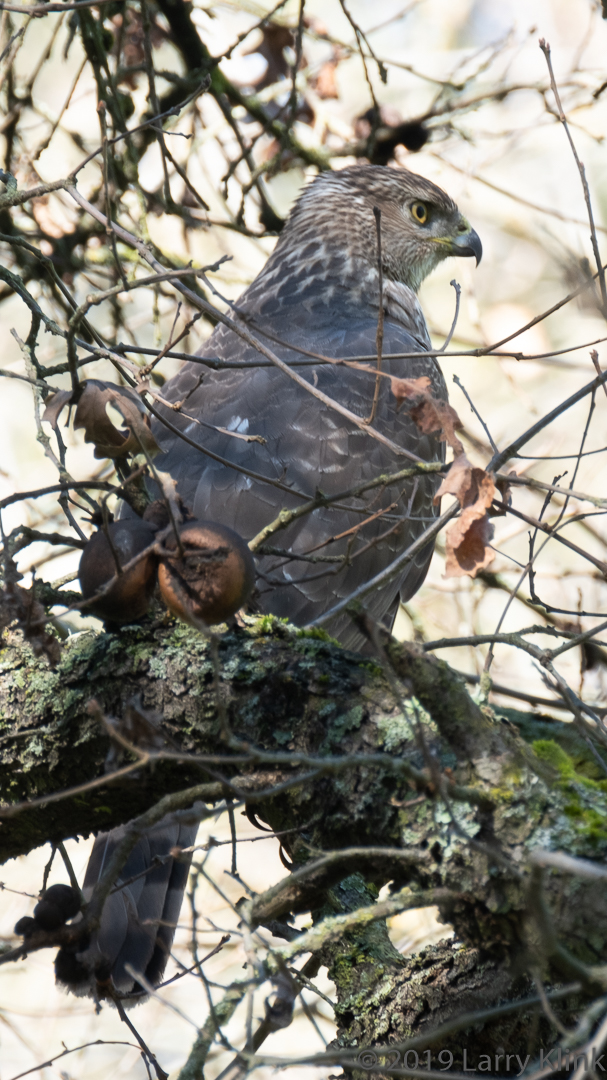
There are 2 major classifications of hawks. Buteos and Accipiters. Buteos are the familiar Red-tailed, Red-shouldered Hawks along with numerous others.The Accipiters are generally smaller, with shorter wings. This makes them more maneuverable; a skill needed because they live in more wooded areas and prefer to eat other birds. I’ve included images of 2 accipiters; the Coopers Hawk and the Sharp-shinned hawk.
Please click on caption to see images at higher resolution.
On our trip to Yosemite last week, a pair of ravens were
foraging among the trees outside our hotel room. They were totally unfazed by me as I followed
them around.
It was an interesting day to shoot ravens. Everyone knows
ravens are black. But black just means that its feathers absorb all frequencies
of color and reflect none back. Like some other birds, the raven’s feathers can
refract or bend light, allowing their feathers to appear other colors. When the
birds were in bright light, they were their bright, familiar, black. But, when
they were in lower light, depending upon how they positioned themselves, their
wing and tail feathers appeared blue. In one other instance, the light hit the
raven’s ruff under his chin and made it look brown.
Is it a raven or is it a crow. If its big and bulky and it makes a croaking sound, its probably a raven. If its smaller and makes the familiar caw, its probably a crow. But, sometimes its not so simple. I am collecting images to put together a simple but more complete illustrated guide.
Please click on caption to image at a larger size.
Last week, we took a trip to Yosemite National Park. We were a bit late in the season. We were looking for snow, but almost all of the snow was gone from the valley floor. There was some clinging to the nooks on the cliff side. It was sunny when we arrived but, as the golden hour approached, the skies became cloud covered and we got rain. Just being in Yosemite when there are few people is a real treat, so walking around in the rain was enjoyable even though photography opportunities were few. Little did we know the treat that would await us in the morning.
We dutifully got up and out ½ hour before sunrise – about an
hour before the sun would start to light up the valley walls. While planning
the trip, I learned we would have clear skies in the morning and that the sun
would be in a good position to light Yosemite Falls. Yosemite falls is often
shaded during the golden hours for photography. We found the position from
which I wanted to shoot and set up. It was then we got our first surprise –
snow had fallen on the cliffsides on either side of the waterfall. There was
even a dead tree that was partially snow covered that I could get into the
frame.
I set up my composition and waited in the cold. After a
period of time that seemed interminable, golden sunlight began to penetrate the
valley. Watching the sun light the mountain tops and valley walls is one of my
favorite experiences; I never grow tired of it. We watched and enjoyed. I would
shoot from time to time. But, I really wanted more light on the water fall.
When the light broke, I got a treat I hadn’t expected. The sun began giving the
water and the mist a golden glow. I watched and I shot as the different
sections would glow. We stayed through the entire show.
I’ve included 2 of the images I got that morning. I hope you enjoy them.
Please click on caption to see these images at higher resolution.
A few weeks ago, we visited family in the Gettysburg, PA area. While there, we were treated to some snow and
very cold weather. On one early, sunny, morning we drove along Confederate Ave.
The street. On Seminary Ridge, overlooks open meadows ringed with farms. The
ridge top is where Confederate troops set up their artillery and was the
starting point for many Confederate troop assaults. On July 3rd,
1863, it was the site of Pickett’s charge against the troops of Union General
George C. Meade.
On this early morning, the guns laid quiet. Sunlight glistened on the icy snow while frost gave trees, weeds and other objects a silvery glow. Though snow adds a burden to our efforts to maintain a normal life and we grow tired of it after a time, a morning like this makes you slow down and appreciate the beauty that nature bestows in winter.
Please click on caption to see images at higher resolution.
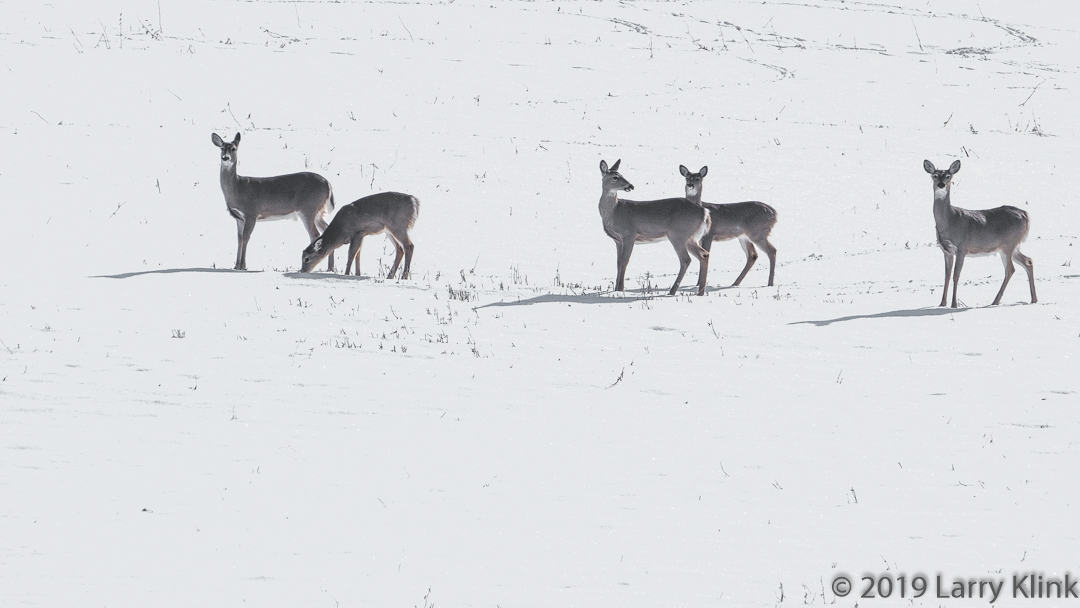
Here are some images of deer I recently photographed.
The White-tailed deer were spotted in rural southwestern Pennsylvania (US) grazing through some new fallen snow.
The Black-tailed Mule Deer was taken at the Effie Yeaw Nature Center here in Sacramento. I suppose he was taking a break after the rut. He’ll soon drop his antlers and begin growing them anew.
By the way, if you are ever in the Sacramento area, you should pay a visit to the Effie Yeaw Nature Center. You are almost guaranteed to see deer, wild turkeys and many birds. I occasionally see a jack rabbit and coyotes also.
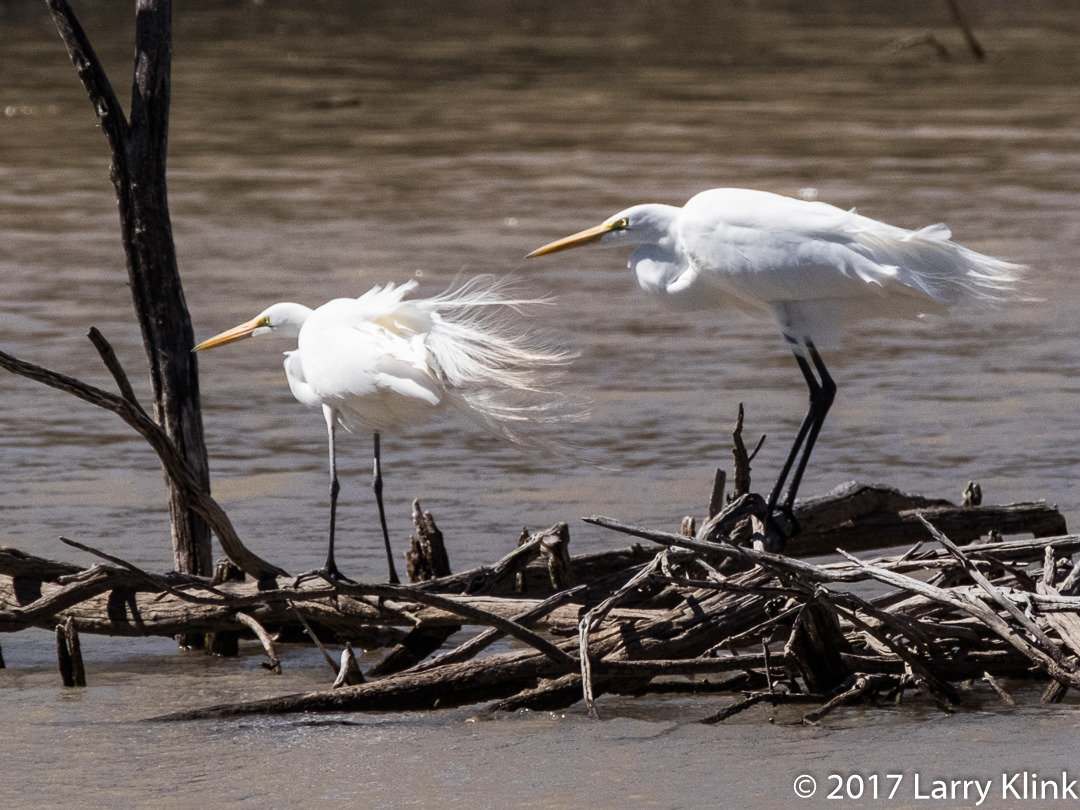
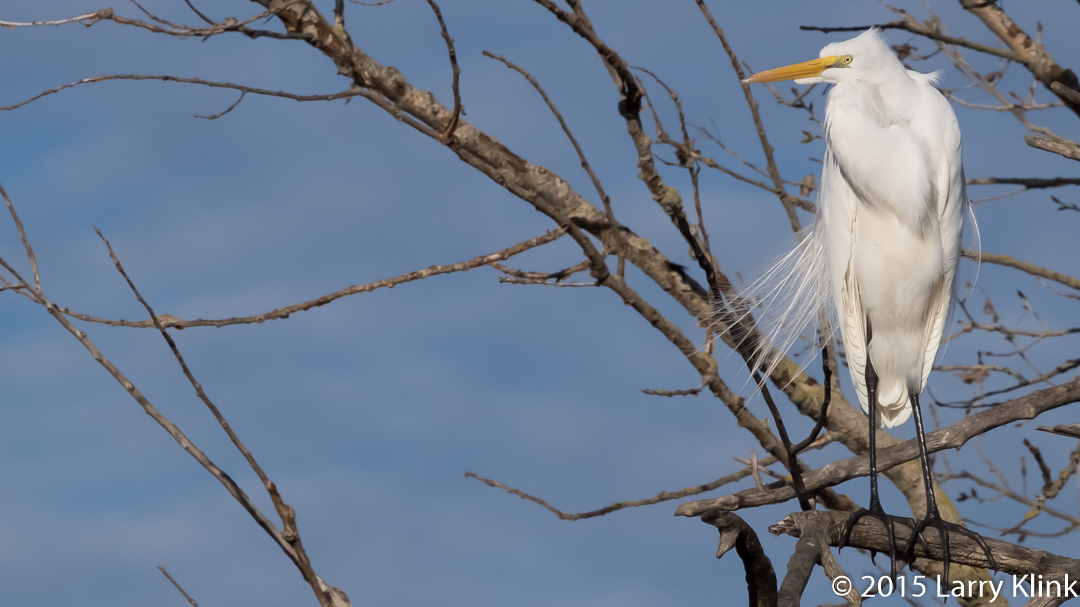
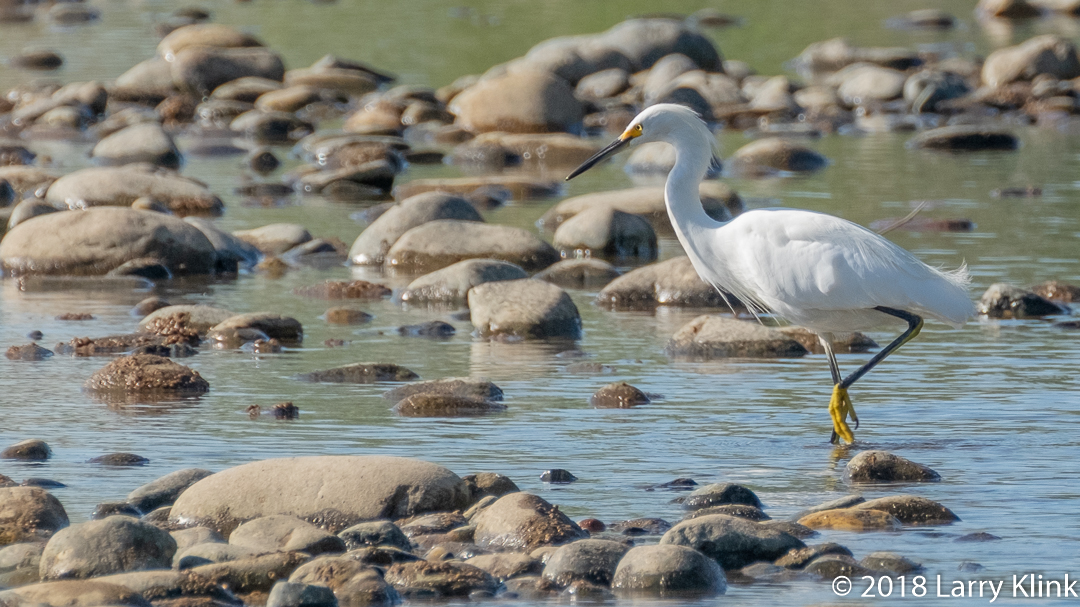
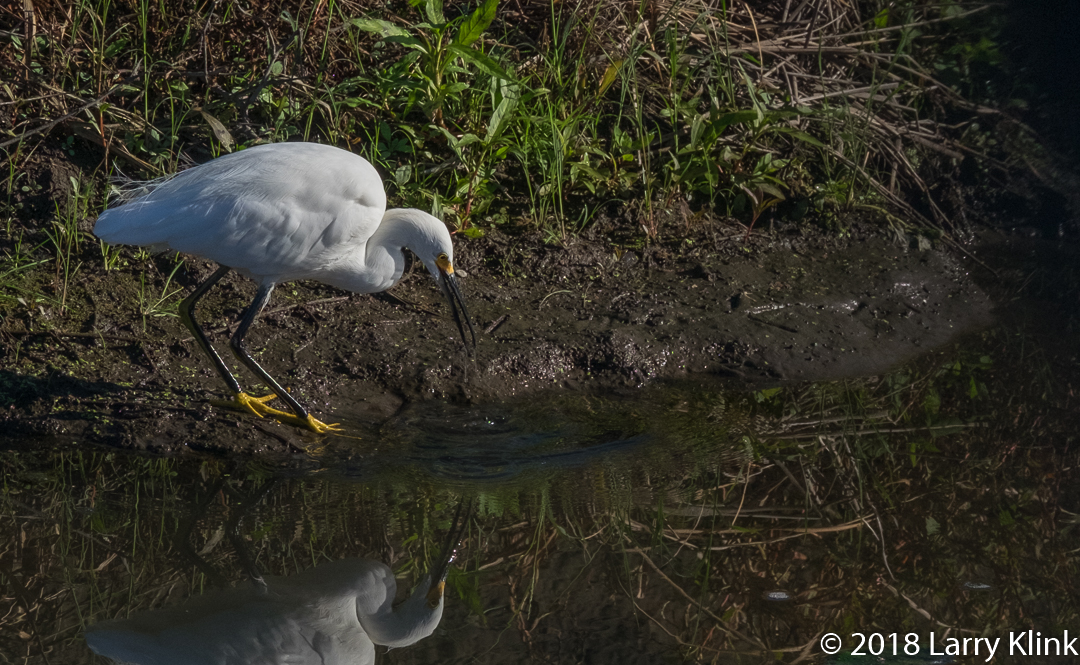
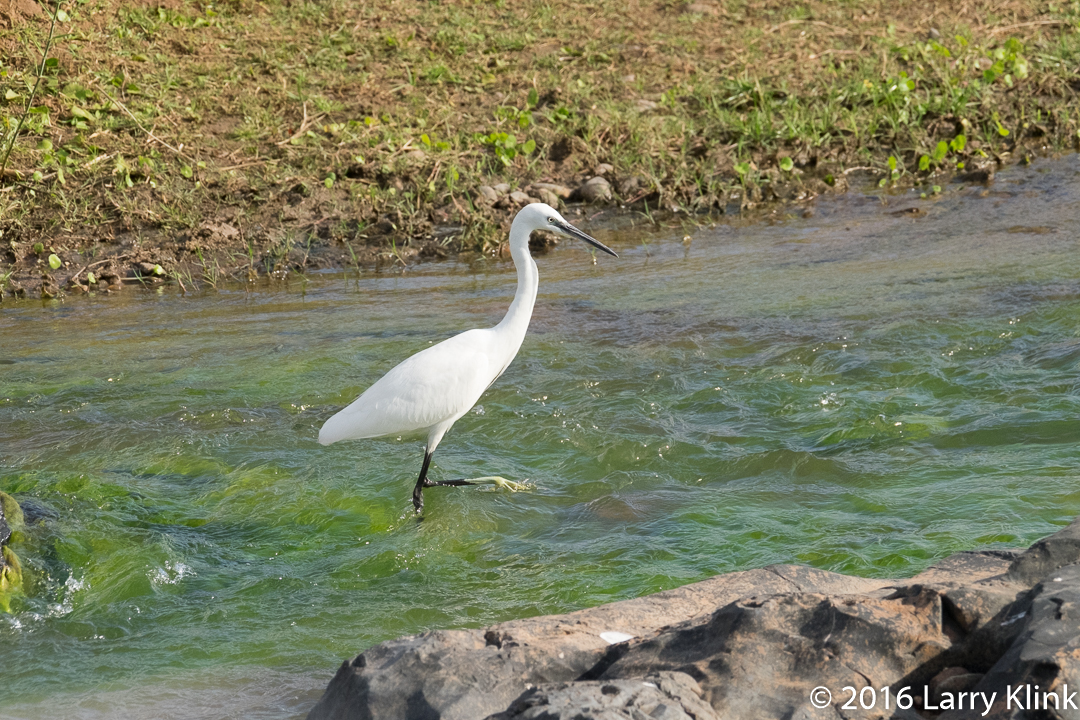
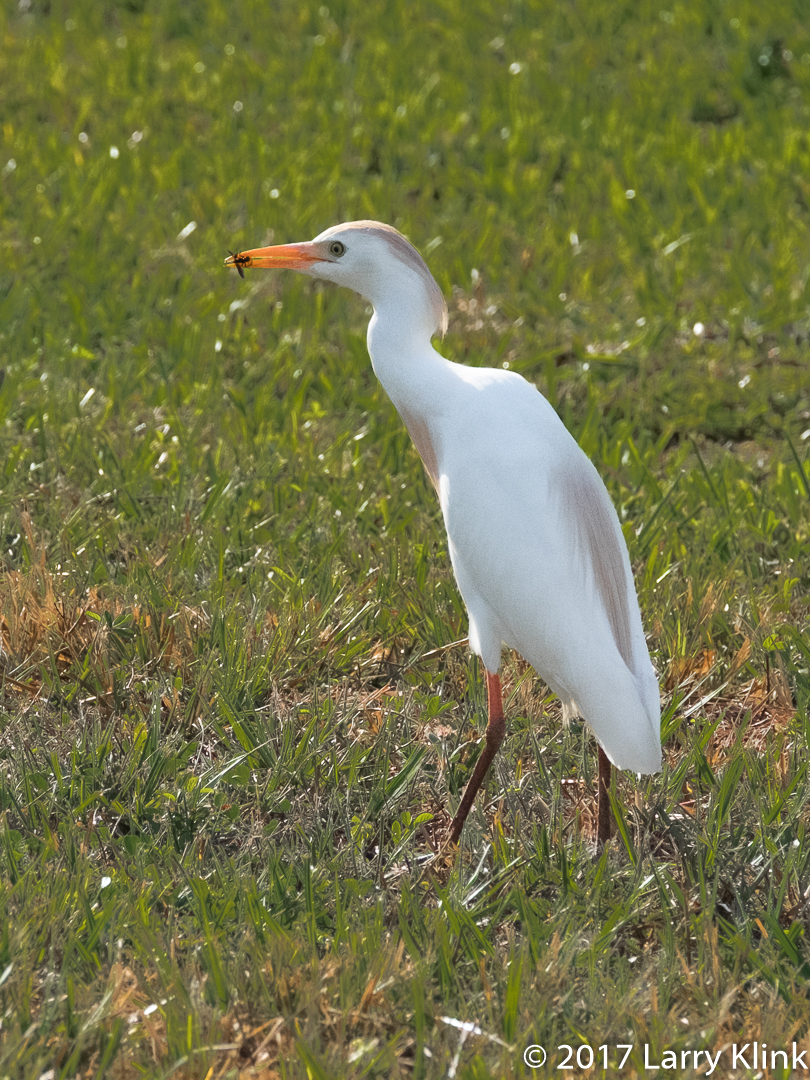
There are about 12 members of the family Ardeidae; birds we know as Herons, Egrets, and
Bitterns, that are found in North America. For the most part, if it is white,
it is an Egret. But, there are exceptions. There is a Reddish Egret that has a
rusty brown head and neck with a gray body; they live mostly along the Gulf
Coast as well as Florida’s Atlantic Coast. There is a white morph of the Great
Blue Heron and is difficult to distinguish from an Egret. What I see mostly are
the Great Egret and the Snowy Egret. Occasionally I see Cattle Egrets. In this
post, I also included a Little Egret. Its range is mostly, Europe, Africa and Asia
but sometimes visits the east coast of the North America.
The Great Egret is a big guy. He has black legs and a yellow bill.
The Snowy Egret is substantially smaller; it has a black bill with black legs
and yellow-green colored feet. The
Little Egret looks a lot like the snowy but the eye mask is a bit different
color. The breeding male Cattle Egret has a brown head with a brown patch at the base of its neck and breast,
and has some red on its legs. Otherwise, they are all white.
Most egrets forage along water like lakes and rivers and even
irrigation ditches, looking for insects, small invertebrates, and small fish. The
Cattle Egret forages in meadows and pasturelands.
By the way, I often try to give a simple explanation to help you recognize a bird. Mostly it has to do with coloration. But, coloration can vary between males and females and male coloration is often different during breeding season than at other times of the year. Juveniles are often colored differently. Color can also vary by region. My tips will get you in the ballpark but don’t get frustrated if things don’t look quite right. I get confused all the time and must search the books to be sure.
Please click on caption to see image at higher resolution.
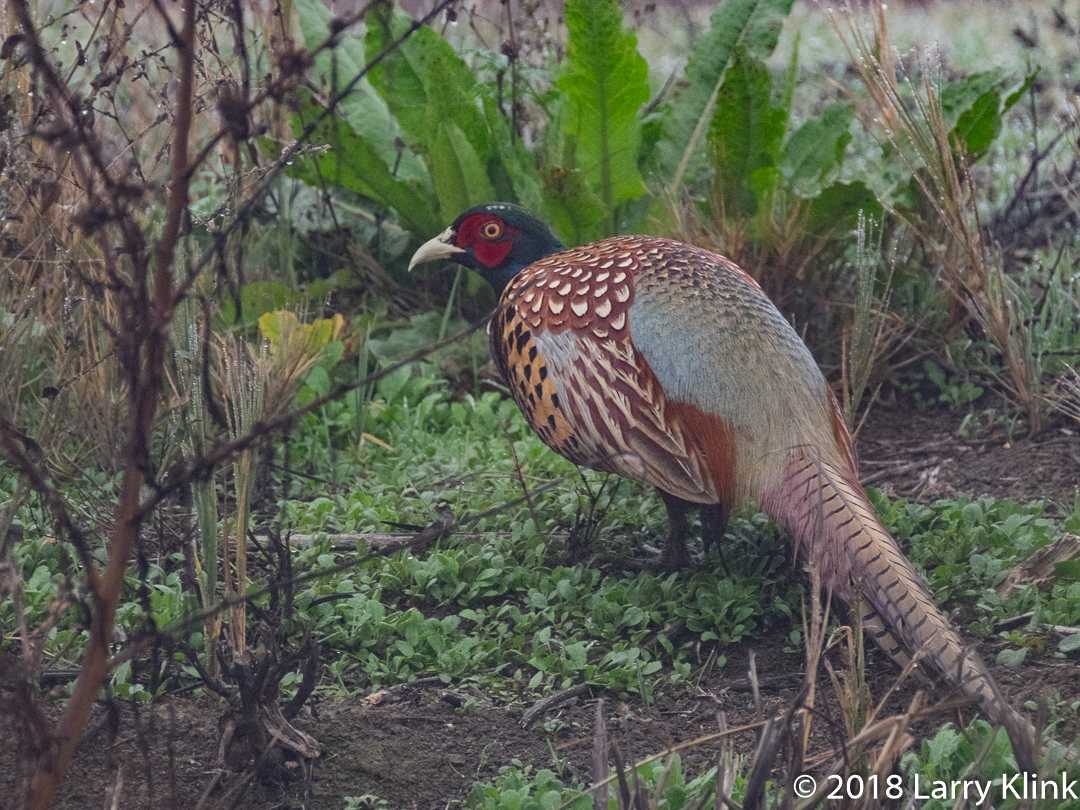
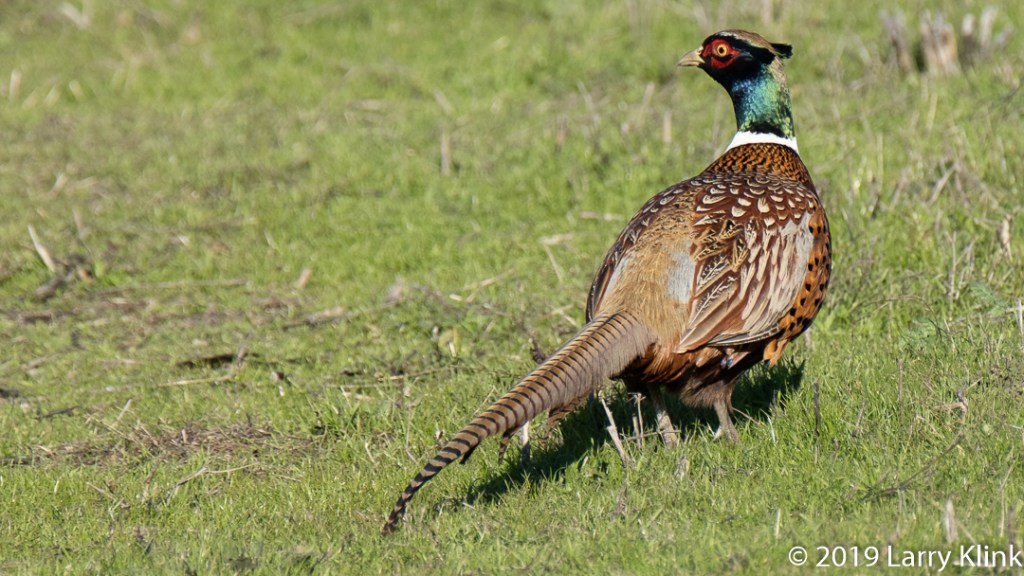
Growing up in western Pennsylvania, I would see the Ring-necked Pheasant occasionally. I always considered it a special treat because they are so beautiful. But, for several decades I never saw any; though I thought about them from time to time. I’ve been fortunate, however, to have had 3 sightings in the past 2 years. I am very happy to be able to share them with you.
These birds like to live and forage in tall vegetation, so they aren’t easy to see. But, sometimes, you can see them as they cross over open spaces. They are omnivorous.
Please click on caption to see these images at higher resolution







 Earthwatcher