Downy Woodpecker Effie Yeaw Nature Center, Sacramento, CA; DEC 2018
Correction: I mistakenly identified the male woodpecker as a Nuttal’s. It is actually a Downy. Sorry for the confusion.
The Nuttal’s Woodpecker is a small woodpecker who lives only in California’s Oak Woodlands. Interestingly, though they live in oak woodlands, they don’t eat acorns. Instead they eat insects from the oak and other trees.
Please click on caption to see image in higher resolution
Returning from a recent trip to the Seattle area, we stopped
at the Sacramento National Wildlife Refuge. The visitor center and restrooms
were closed but the government shutdown didn’t affect the birds. This stop
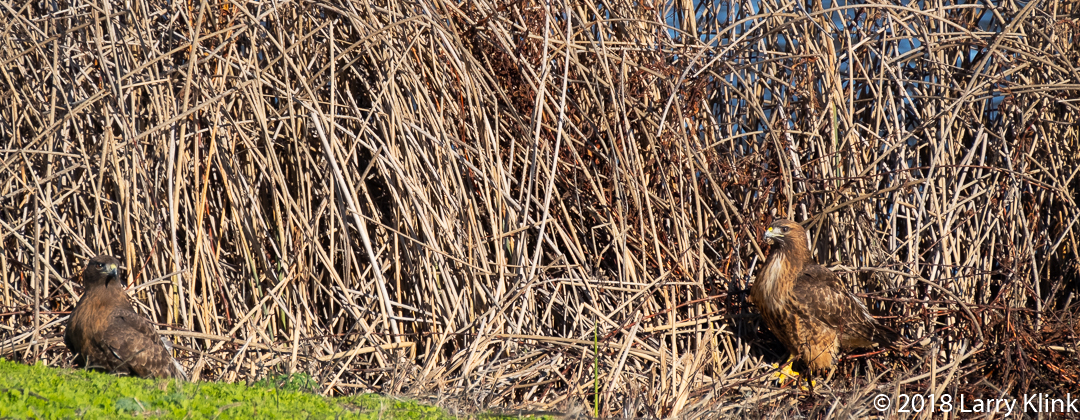
turned out to be very productive. It was a great day for raptors. The star was
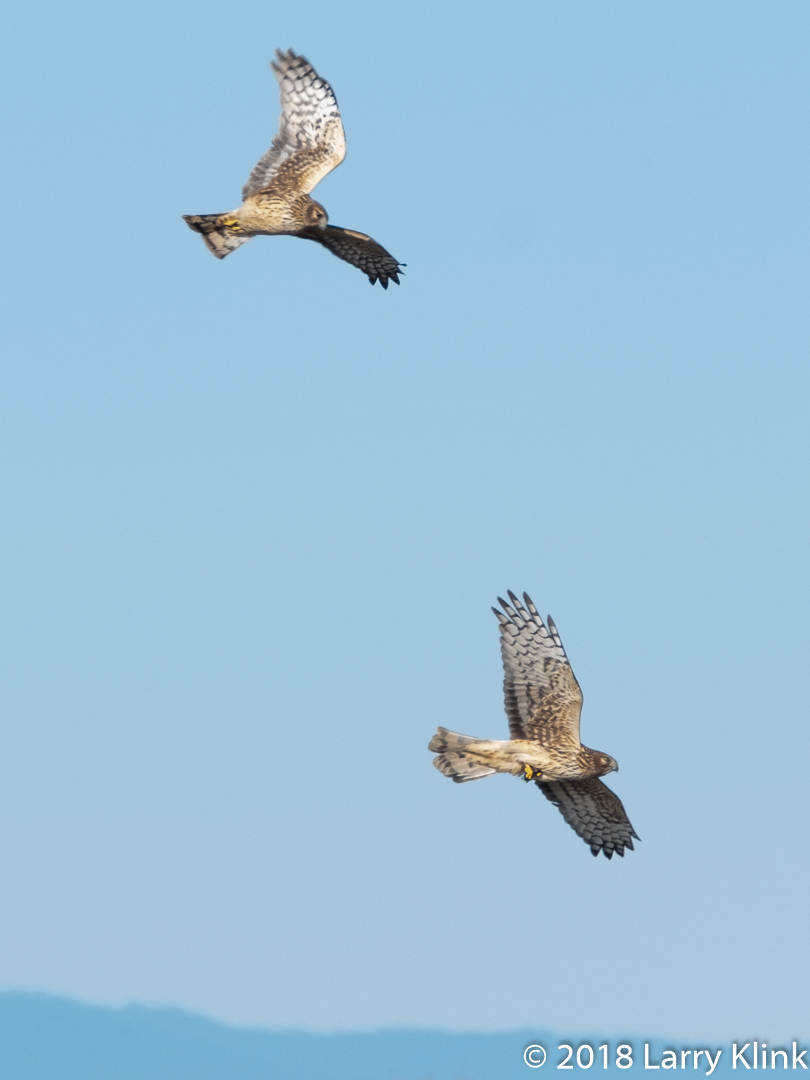
a juvenile Bald Eagle on a kill. But we saw Ferruginous Hawks, Northern
Harriers, Rough Legged Hawks, a Cooper’s Hawk and a Red-shouldered hawk also.
This is feast time for the raptors at Sacramento NWR because of the large
numbers of waterfowl that spend the winter months there.
I didn’t share images of the Rough-legged haws because I only got a rear quarter shot and it didn’t show enough to make the shot interesting. I’ve shared other Cooper’s Hawks and Red-shouldered Hawks in the recent past, so I didn’t include them. But, I hope you enjoy what I shared.
Note: Please click on caption to see image in higher resolution.
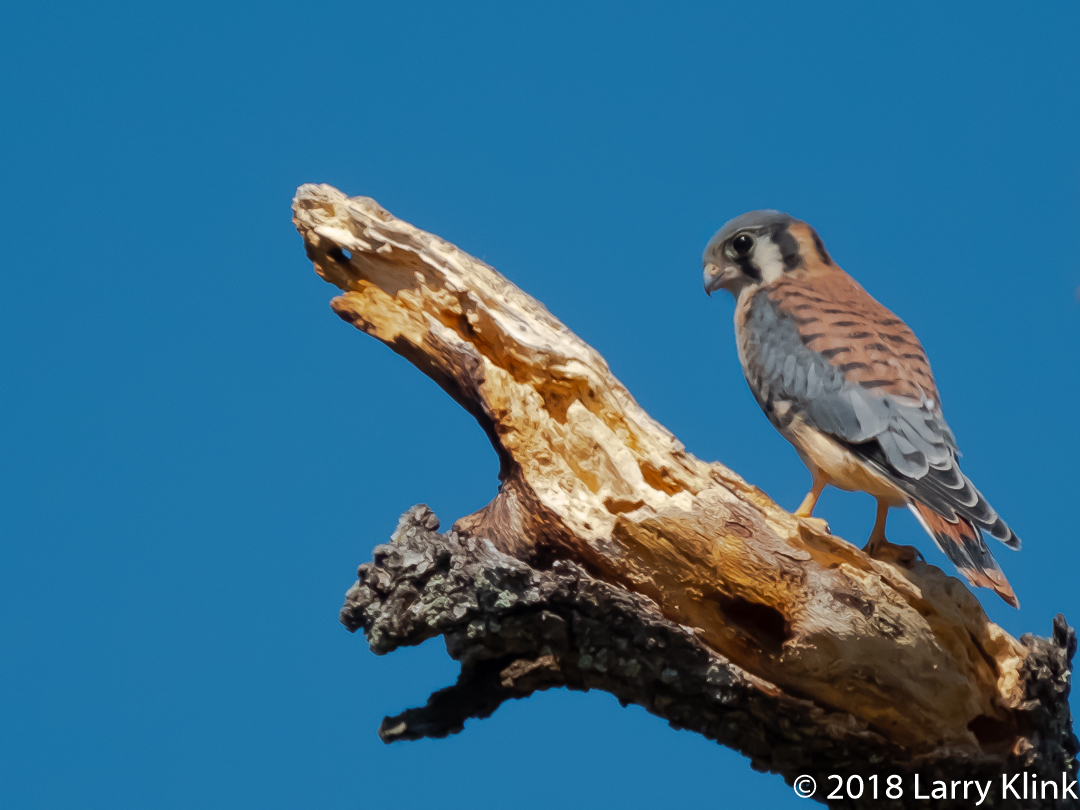
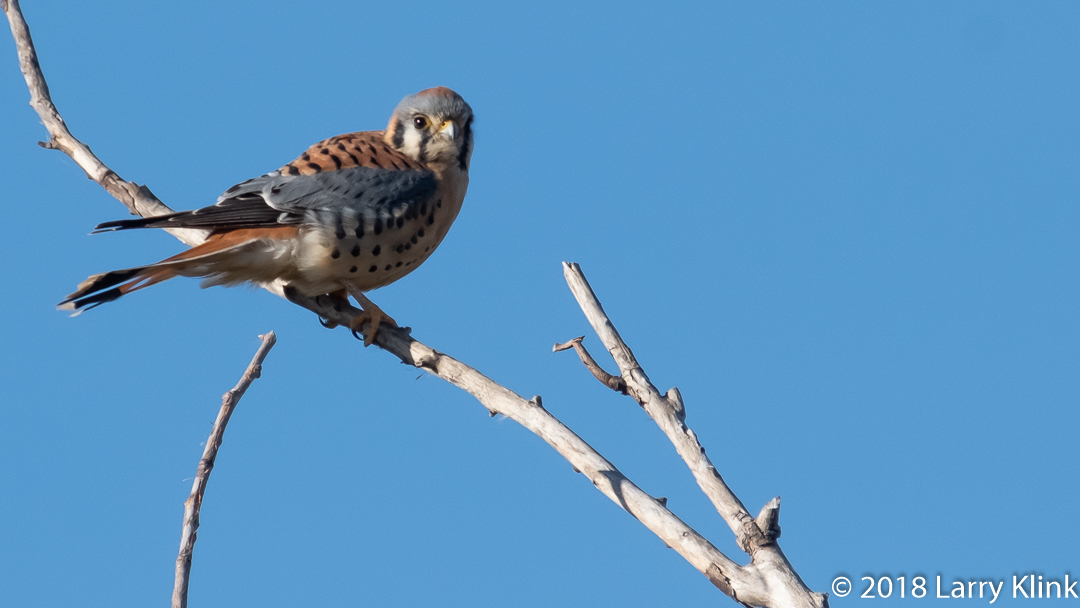
American Kestrel Effie Yeaw Nature Center, Sacramento CA; JUN 2018
The American Kestrel is a small raptor; about the size of a robin. As you travel through rural, agricultural areas or open meadows, you might notice a small bird on a wire or pole. As you notice it, you may think: just another gray bird. But, if you slow down, you may be surprised by a beautiful little multi-colored bird. This small falcon eats lizards, insects and small birds. One of its hunting behaviors is fascinating to watch. It, will hover, flapping its wings, then dive down to capture its prey.
Note: Click on caption to see image at higher resolution.
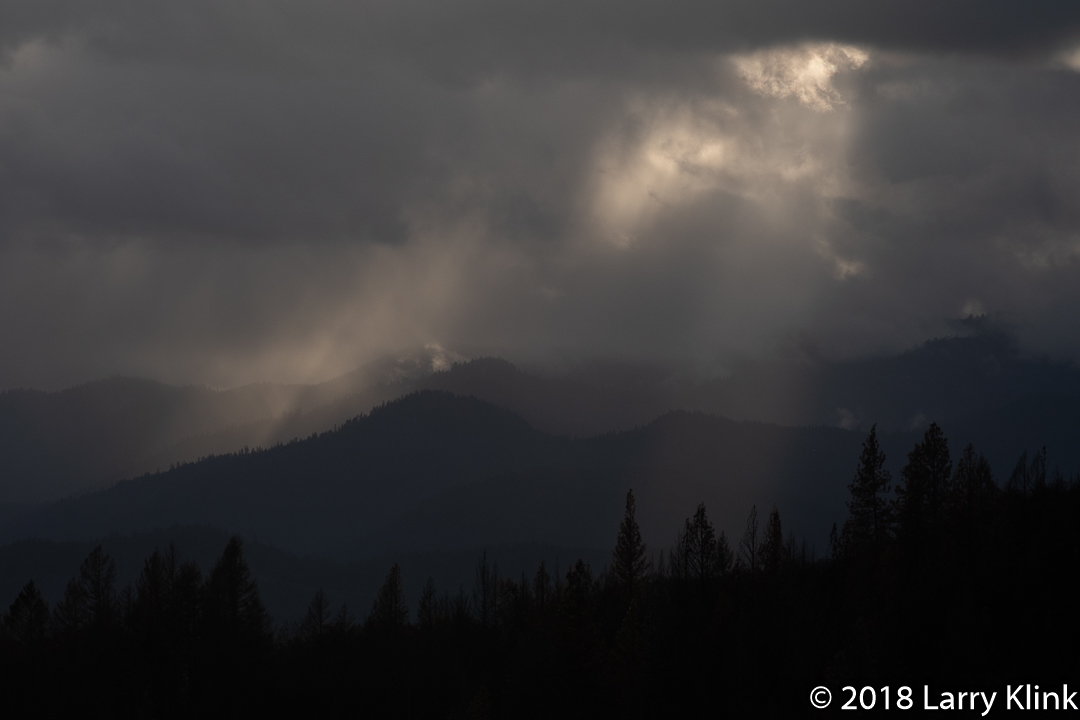
The drive between Redding, CA and Roseburg, OR. on Interstate
5, takes you through some beautiful mountain scenery. Between Redding and the
Oregon border, Mt Lassen and Mt Shasta, 2 Cascade volcanoes can be seen. The
mountains of California and Oregon’s coastal range line both sides of the
highway. Because the area is so close to the Pacific ocean, the area is often
blanketed in a layer of stratus clouds and fog. But, don’t think of it as
dismal. In the morning and evening, the sun often pushes through the clouds casting
spotlights, replete with crepuscular rays, that play on the ridge tops and valleys
creating magical landscapes.
Returning from Seattle, we saw many such vignettes. One spot made me break the rules and pull off to photograph it. Fortunately, this spot gave us room to get off safely. I hope you’ll agree this image was worth it.
Regards,
Larry
Note: To see image at higher resolution, please click on caption.
Over the past couple of months, I have been doing some birding in the area around home. Late fall and winter bring some birds migrating to warmer climates to join those that stay year around. Here are a few that live in the area most or all of the year.
Please click on caption to see image at higher resolution.
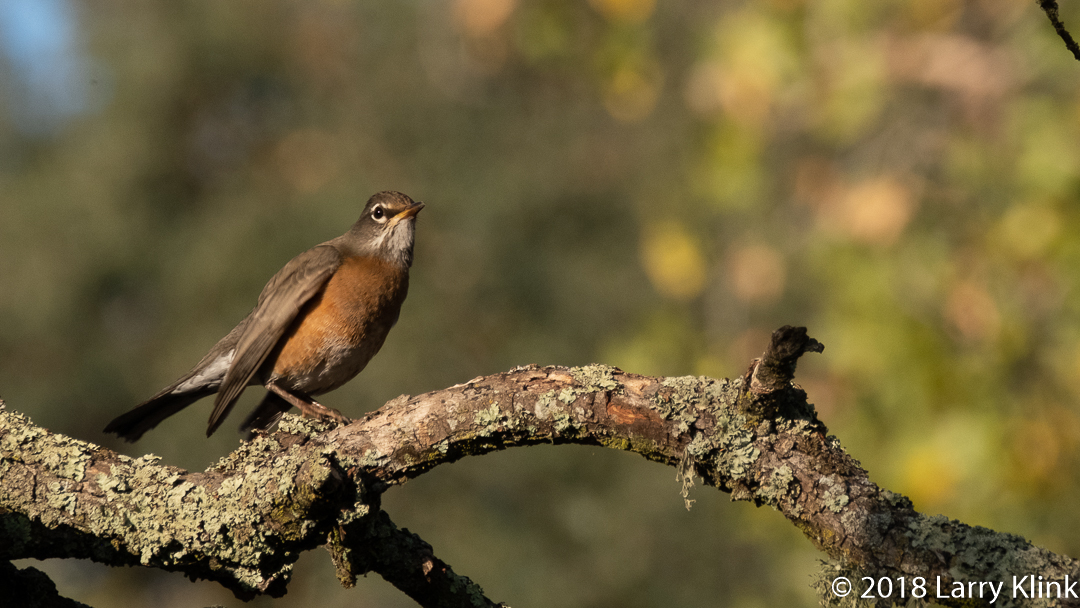
The American Robin stays around all year, but I never see them in large numbers like I have seen them in other areas. They are a beautiful bird with a pretty song. They are very easy to spot; they hunt for worms and other insects on the ground in open areas.
The black phoebe is a flycatcher. They like to live near the water, You can see them perched on trees, hunting for insects or arthropods. When they spot something take it while in the air or diving upon their prey while it is on the ground.
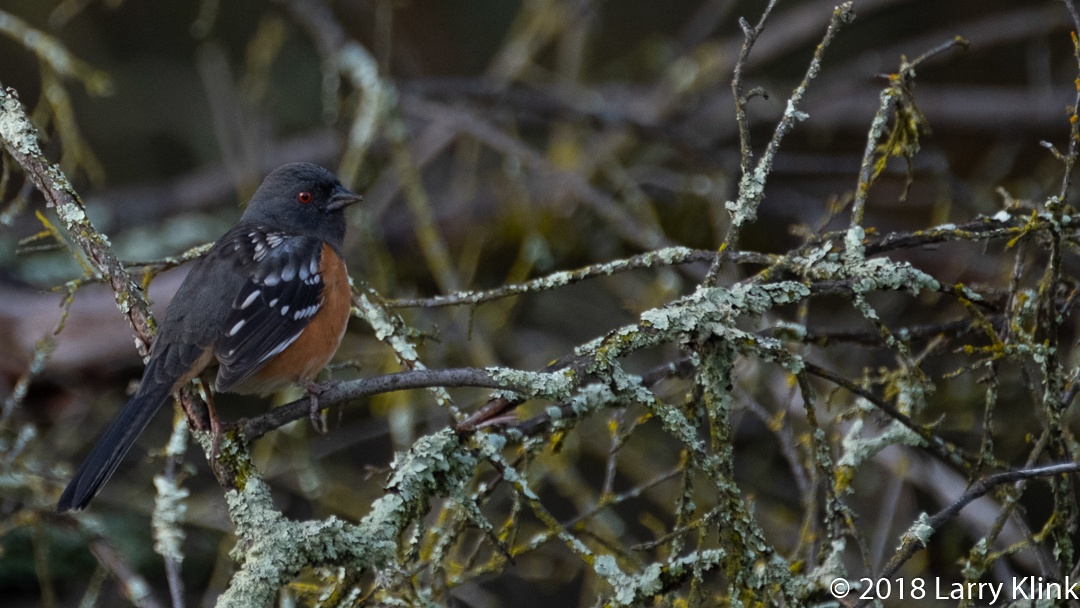
The spotted towhee likes to hide in the underbrush and eat insects. Look for fluttering in the brush pile and watch carefully you just might catch a glimpse of one.
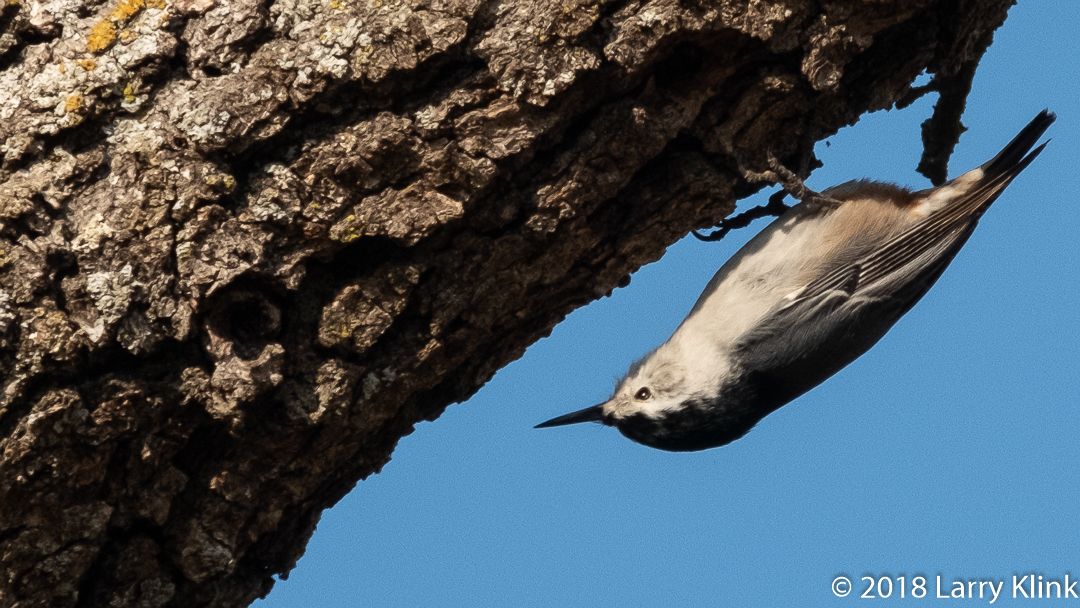
The white breasted nuthatch can be seen scampering up, down and around tree branches and trunks in search of food. They are fun to watch as they move quickly while searching and descend headfirst when going downward. They primarily eat insects but do also eat nuts.
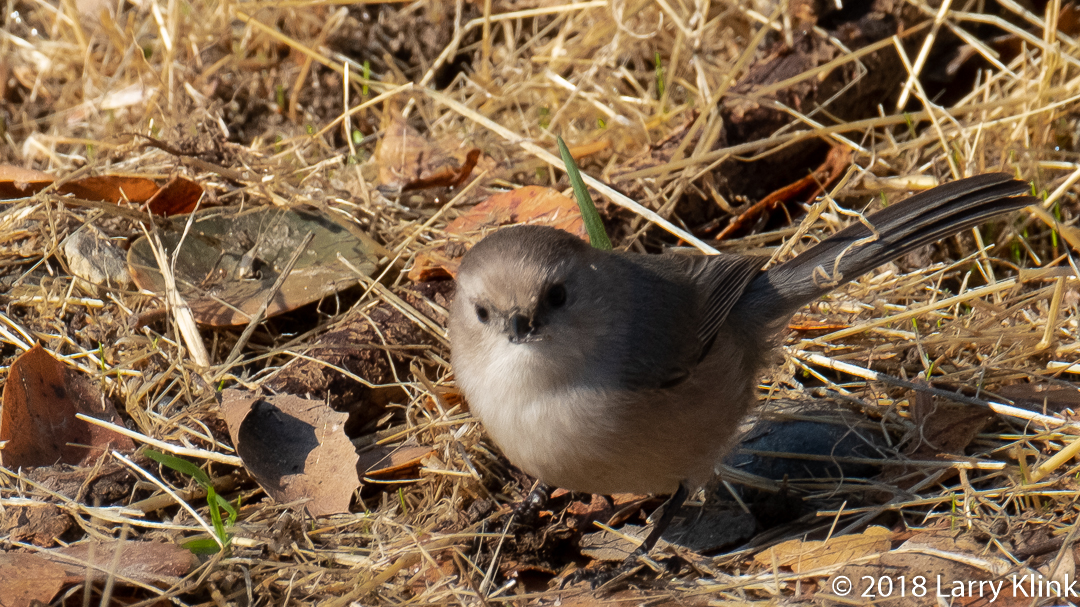
The bushtit is a tiny bird mostly found in small flocks. They fly from tree to tree staying only a very short time. They primarily dine on small insects and spiders.
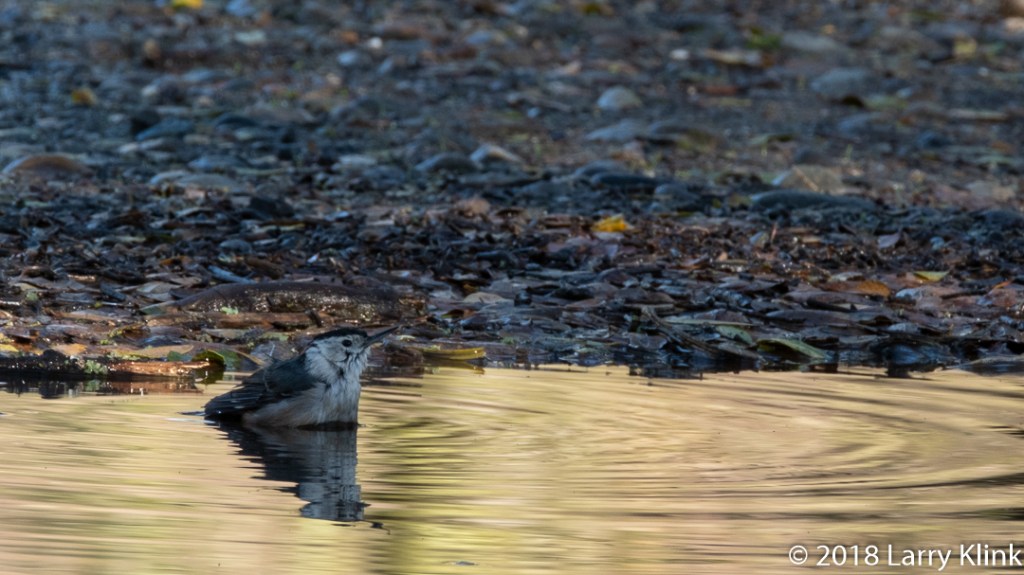
At last, the rainy season has arrived in northern California. The dry season runs from April through October so, when rain arrives, it is a wonderful thing to see. But humans aren’t the only ones that appreciate the new fallen rain. Some of the birds were happy to see puddles form so that they could perform their ablutions also!
Note: Please click on caption to see image in higher resolution.
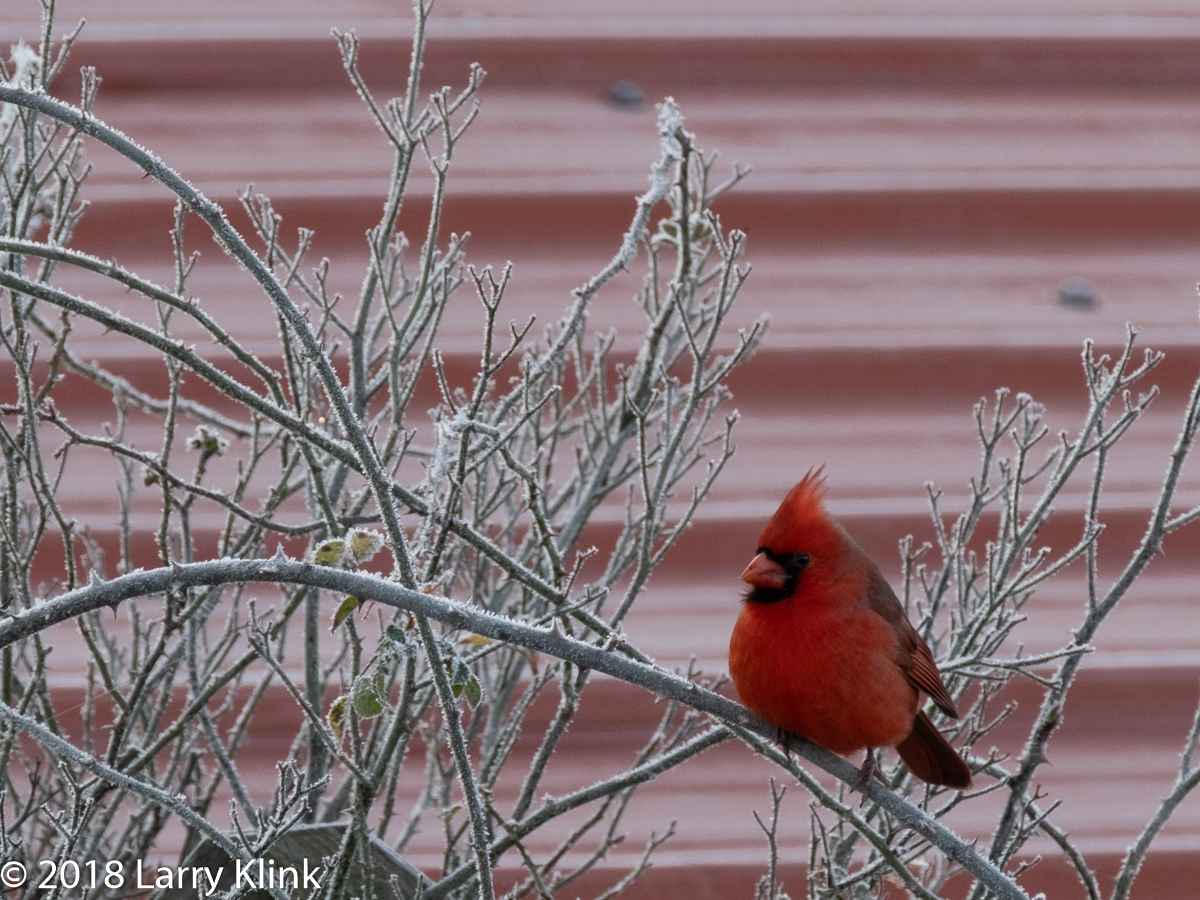
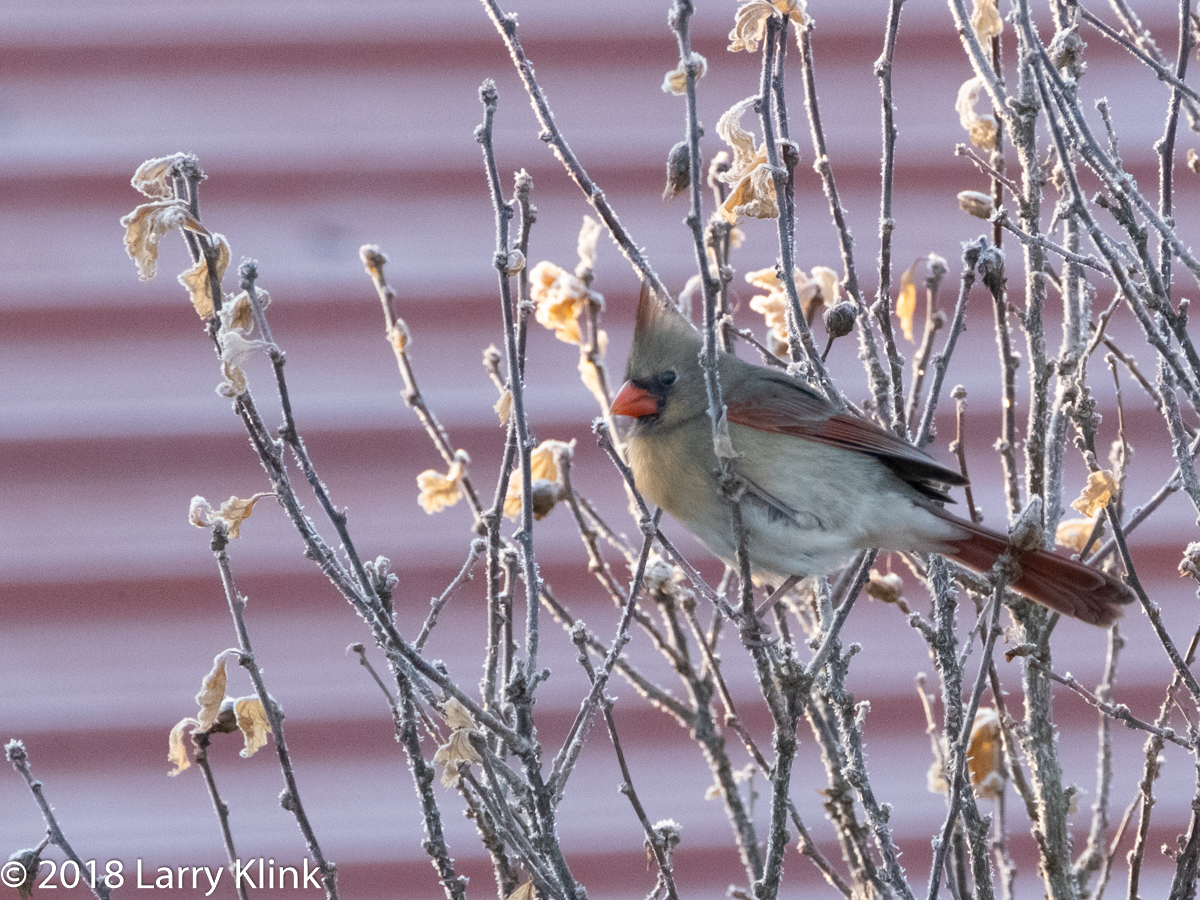
To be correct for the season, I should have had a cardinal on a bright green holly sprig draped with bright red berries and snow. However, I was in southeastern Oklahoma and had to settle for a frost covered crepe myrtle. But, the Northern Cardinal is a beautiful bird that looks lovely in almost any environment. I am happy to have gotten a few images to share with you. To my friends who celebrate Christmas, Hannukah, Diwali and Kwanza, may they brighten your holiday season. To those friends who don’t celebrate those holidays, may they brighten your week.
Note: Please click on caption to see these images at higher resolution.
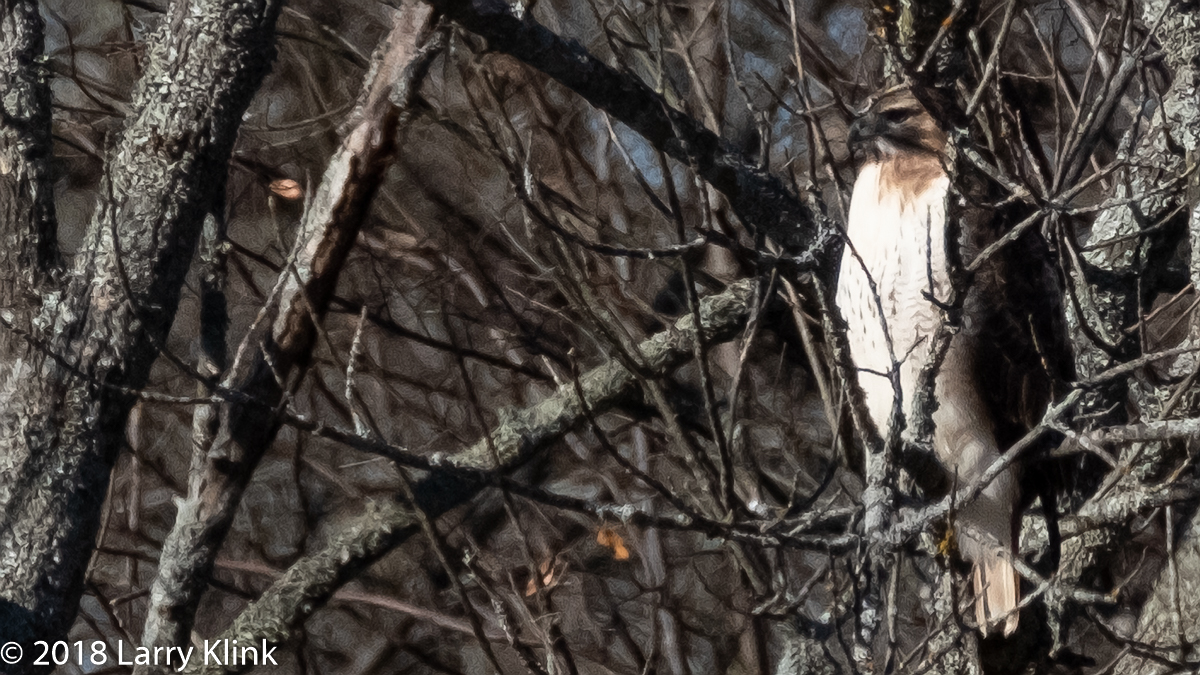
We made a visit to rural southeastern Oklahoma recently. While there, I was amazed at the number of red tailed hawks I saw. Much of the countryside was pastureland and I imagine it provided a lot of good food for the rodents and, in turn, the hawks. One day, I also saw a bald eagle in the grass, alongside the road.
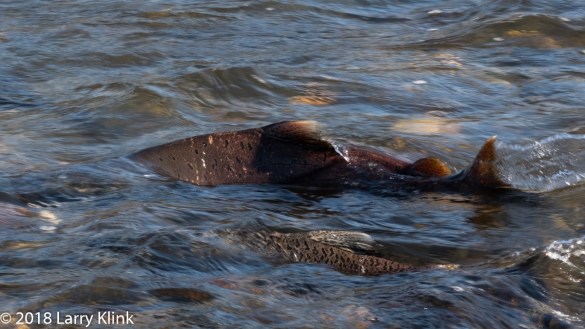
In November and December, the Chinook or King Salmon make their run into rivers along the Pacific Coast to spawn. Here, in Sacramento, they spawn in the American River. They lay their eggs in gravelly nests in shallow river beds. They need clean, cool, oxygenated, sediment-free fresh water for their eggs to develop. That means water that runs freely. Visiting Effie Yeaw Nature center yesterday, I got to watch some of the salmon preparing nests.They swam around in tight circles contorting their bodies and swishing their tail fins to clean any sediment from an area of river gravel. When they are done, the females will lay their eggs and the males will fertilize them. When finished spawning, both the males and females die. After the eggs hatch, those that survive mature for a few months then find their way to the ocean. If you walk along a river where salmon breed, look for an area where rocks are clean and shiny – it may be a salmon nest. They are usually about 6 feet by 2 feet.
I learned recently that prior to damming the American River,the salmon had a spawning ground of over 100 miles in the main river and tributaries. After the damming, it was reduced to 8 miles. To compensate, there is a fish hatchery just downstream from the Nimbus Dam. They open the fish ladders in November and December to capture salmon and spawn them. When the eggs hatch and grow to about 40 salmon per pound, they are released. They tag these salmon in some way and have tracked a 5 in 1000 success rate in salmon returning to breed. After the salmon run, they catch and spawn steelhead. The steelhead naturally come upstream to dine on salmon eggs.
In California, allocation of water is a contentious issue.Farmers have been promised water for irrigation and have seen those promises go unfulfilled, especially in years of drought. One of the oft sited points of contention is the amount of water required to support fisheries. As I pointed out above, the salmon need clear, cool, fresh water for their eggs to develop.Water that is kept in dams gets warmer and of course the outflow into the river is smaller. In order to protect the salmon fisheries, not just for human consumption, but also to keep the food chain enabled, some of the water needs to keep flowing from the dams. Many people rely on the fishing industry for their livelihood; not just for recreation. There are many other factors to consider. But, for this portion of the discussion, we must ask ourselves if the lettuce, almonds or beef are more important than the salmon to our diet because this is one of the compromises that need to be worked out.
Note: Click on caption to see image in higher resolution
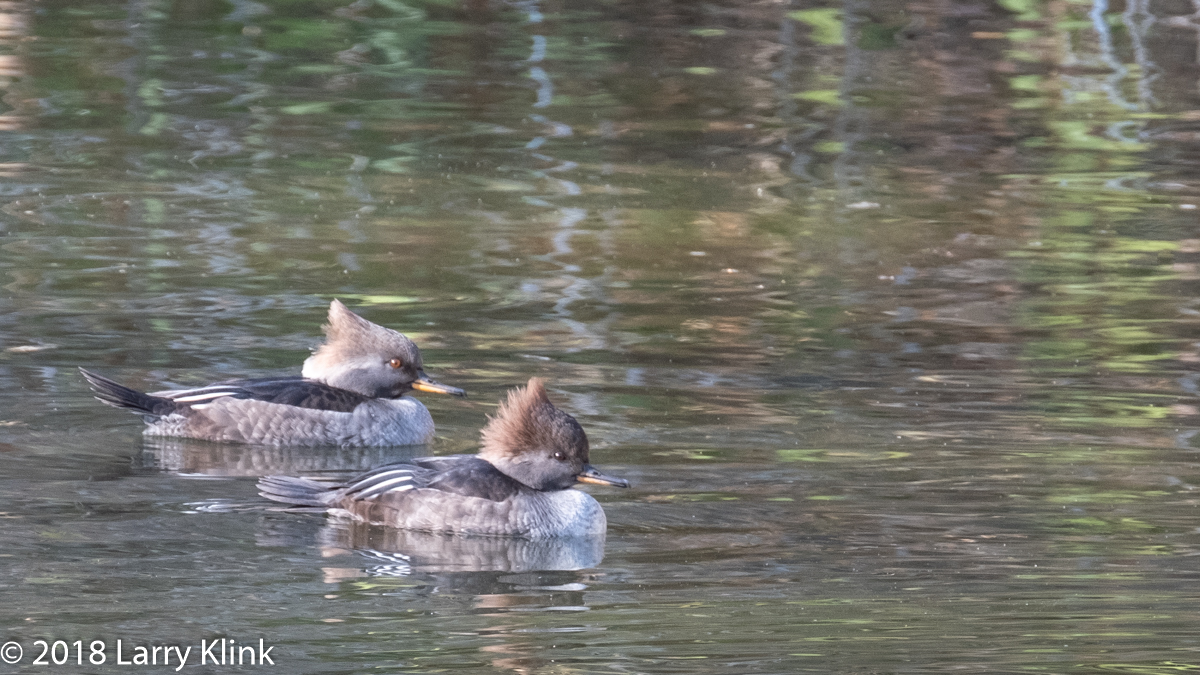
I regularly take long walks at different sections of the American River Parkway between Folsom and Fair Oaks. At one spot, along Lake Notomas, there is a small pond tucked back but alongside the bike trail. I never know what I am going to find. Last week, I was treated to what is a rare site to me – some hooded mergansers. Their cousins, the common mergansers, stick around all year. I often see belted kingfishers and acorn woodpeckers in that area also.
Acorn Woodpeckers are ubiquitous in this area. For those of you who aren’t familiar with them, their behavior is different from most other woodpeckers. They find acorns and pound them into holes in dead trees. When they can’t find a hole, they make one. Later, they come back and eat them – if the squirrels and other wildlife don’t get them first.
Regards,
Larry
Please click on caption to see image at higher resolution













 Earthwatcher