Butterflies at Atlanta Botanical Garden


Eastern Tiger Swallowtail Butterfly
Eastern Tiger Swallowtail

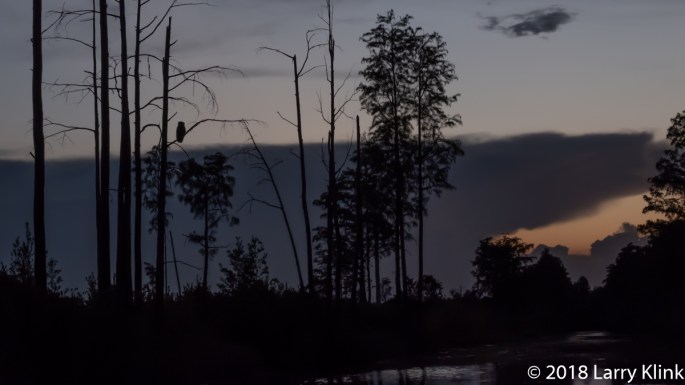
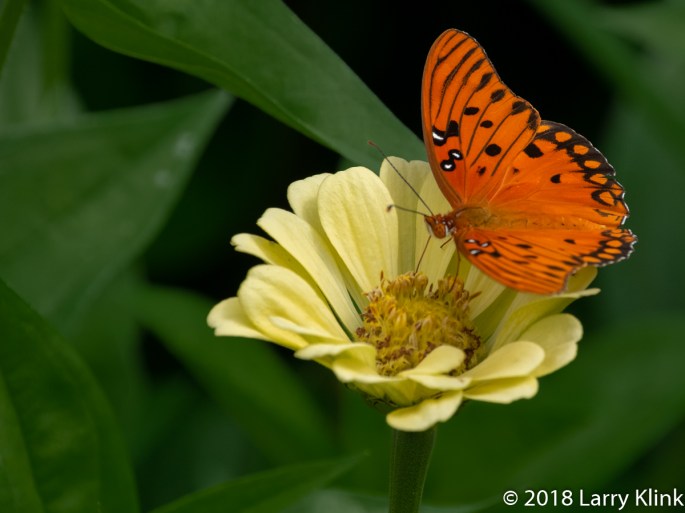
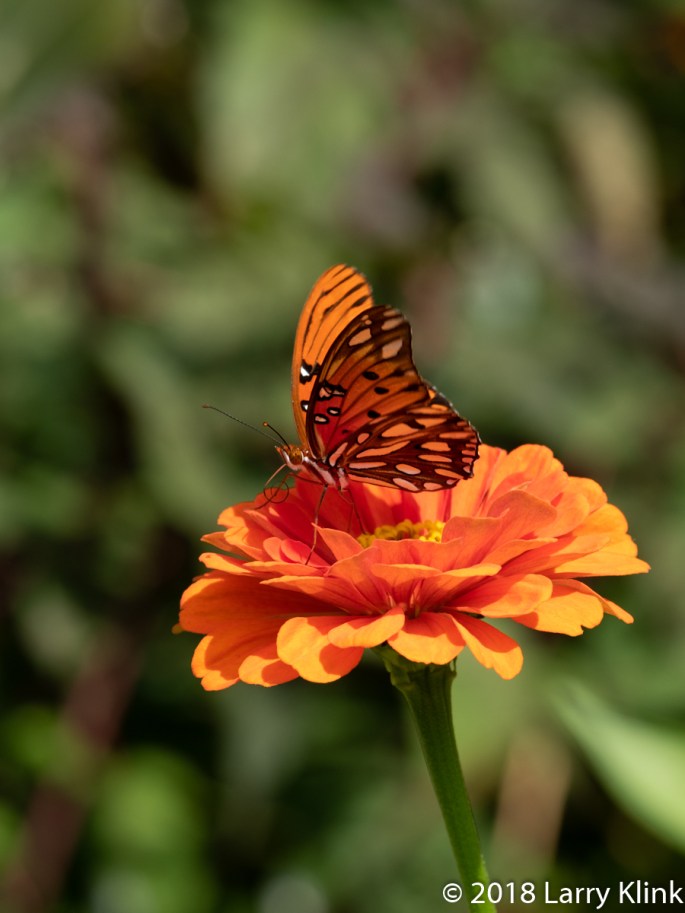
We made a visit to the Atlanta Botanical Garden recently. Though there were some beautiful flowers, I became fascinated with the butterflies.

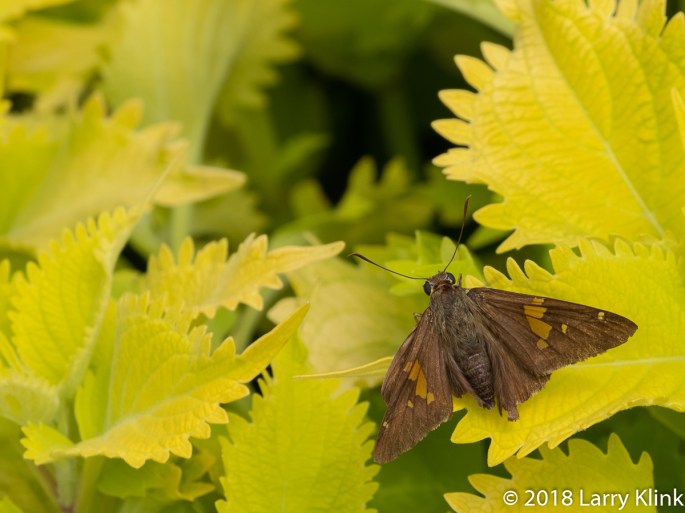
I learned 2 interesting facts as I researched the insects for identification. One is that moths are distinguished from butterflies by their antennae and how they position their wings when resting. Butterfly antennae are club shaped while the moth’s are hairy. Moths rest with their wings flat while butterflies rest with their wings upright. The female tiger swallowtail can be black or yellow. The mail is always yellow. The yellow female has blue at the base of their wings; the male does not.

I hope you enjoy them, as well as the moth and the katydid.

Note: To see images at larger size and higher resolution, please click on caption.

Gulf Fratillary Butterfly
Gulf Fratillary
Female Eastern Tiger Swallowtail Butterfly
Female Eastern Tiger Swallowtail
Silver Spotted Skipper Moth
Silver Spotted Skipper
Common True Katydid
Common True Katydid
Gulf Fritillary Butterfly
Gulf Fratillary
Eastern Tiger Swallowtail Butterfly
Eastern Tiger Swallowtail

Note these and other images are available to purchase by visiting my web site: www.earthwatcher.us or by contacting larry@earthwatcher.us.

Regards,

larry

The Turkey Vulture

20180711-Effie-Yeaw-032-Web
Turkey Vulture

Almost every day I see a kettle of Turkey Vultures soaring in search of food. One spot, where I walk up a half mile, 5% grade, there are always a few perched on a tower at the top. I hope you enjoy the images of these stately creatures with their odd looking heads.

Regards


Larry

Turkey Vulture
Turkey Vulture

Note: Click on captions to see images in larger size and higher resolution.

These and other images are available for purchase at www.earthwatcher.us or by contacting larry@earthwatcher.us.

Cooper’s Hawk

Cooper's Hawk
Cooper’s Hawk

We have an active backyard. Several species of birds frequent our feeder and the ground beneath. My wife is always chasing squirrels from the feeder. This afternoon, we had an unexpected visitor – a Cooper’s Hawk. He was very gracious. He hung around for about 15 minutes and allowed me to photograph him. Interesting though, no birds came to the feeder, no squirrels came around. Not a tweet could be heard; not even from the baby starling that has been crying all week. It took about an hour after the hawk left for backyard life to resume.

Regards,


Larry

Note: Click on caption to see larger, higher resolution image.

Note: This and other images are available to purchase at my website: www.earthwatcher.us or by contacting larry@earthwatcher.us

Some Interesting Wildlife Sightings

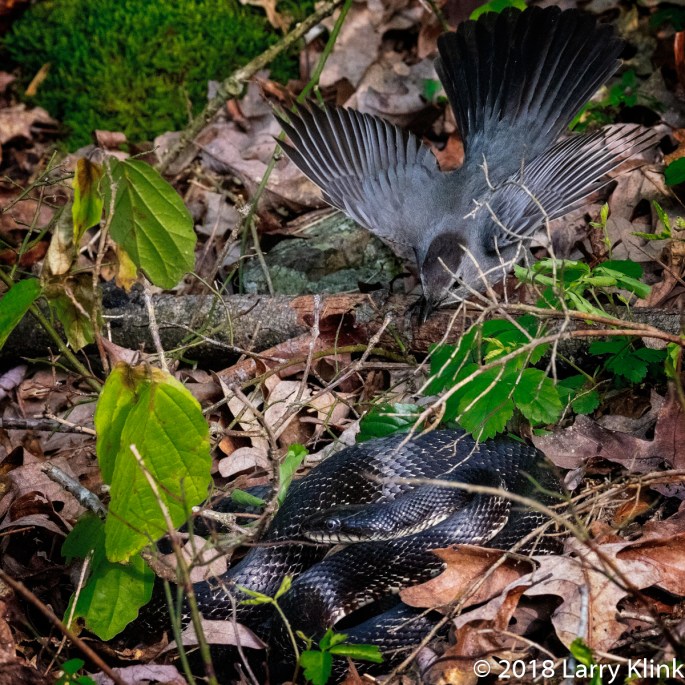
Grey Catbird Defending Nest Against Northern Black Racer Snake
Gray Catbird Attacking a Northern Black Racer Snake

Last week, we made a visit to Cowans Gap State Park in central Pennsylvania. We were fortunate to get two rare and interesting wildlife sightings.

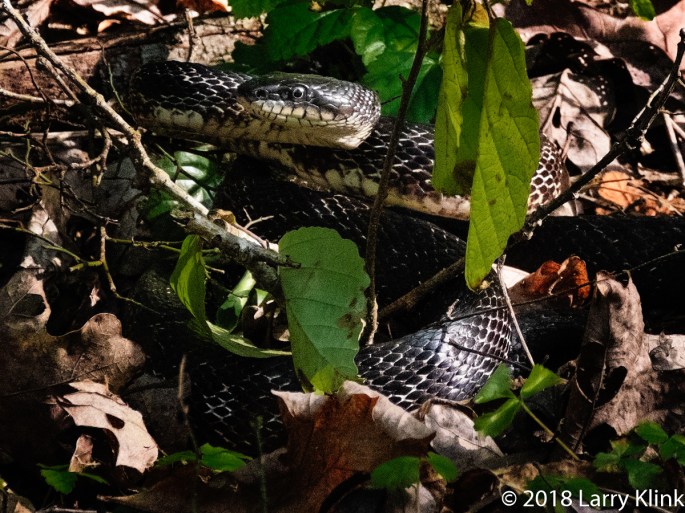
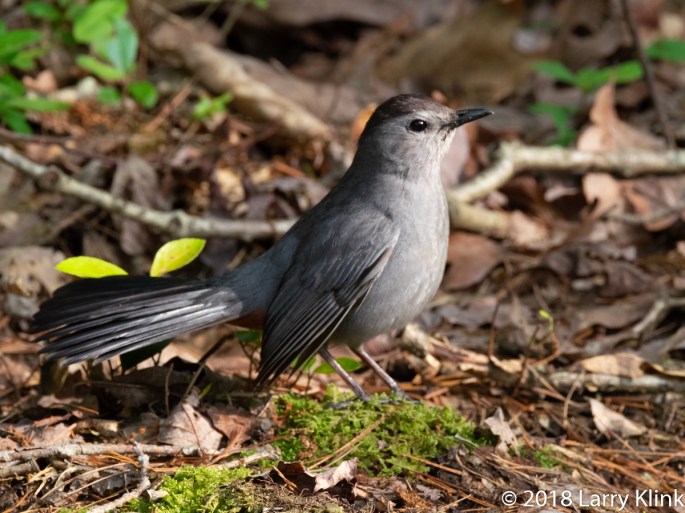
The first sighting was a grey catbird dancing around at the base of a tree. We watched for a few minutes, perplexed by what it was doing. When I got my camera and tripod set-up, I noticed a northern black racer snake curled up in the bush near the bird. As we watched, we learned that the catbird’s elaborate dance, coupled with pecking the snake’s head was really an attempt to chase the snake away. Though we didn’t see the bird’s nest, we surmised it was nearby. It was really fun to watch this activity live rather than a scene in a TV documentary.

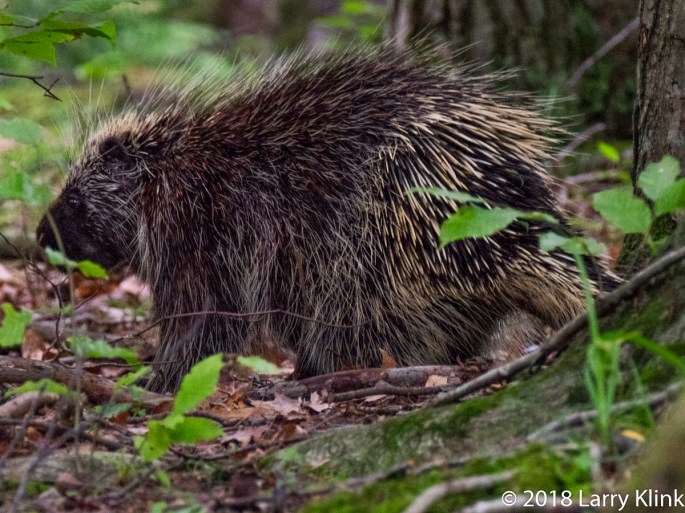
The second sighting was of a very large porcupine. It was the first time I have seen a porcupine in the wild.

I hope you enjoy these images.

Regards,

Larry

Note: To see images in larger size and higher resolution, click on the caption.

Northern Black Racer Snake
Gray Catbird
Gray Catbird
Cowan Gap State Park, PA; JUN 2018
Porcupine


Note: These and other images are available to purchase by visiting my website: www.earthwatcher.us or by contacting larry@earthwatcher.us.
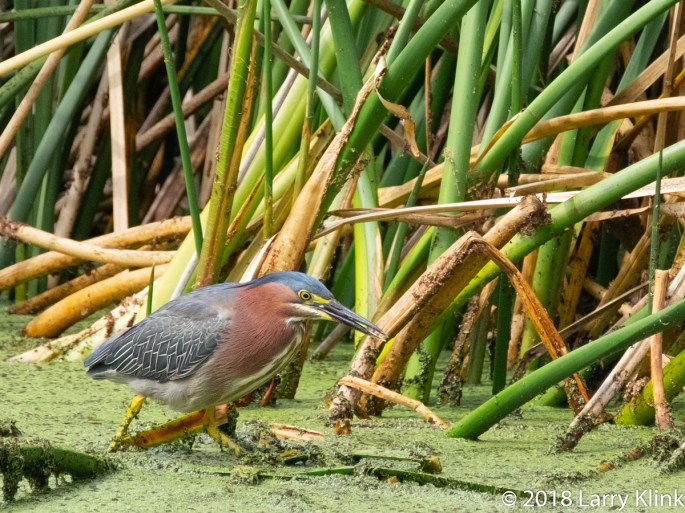
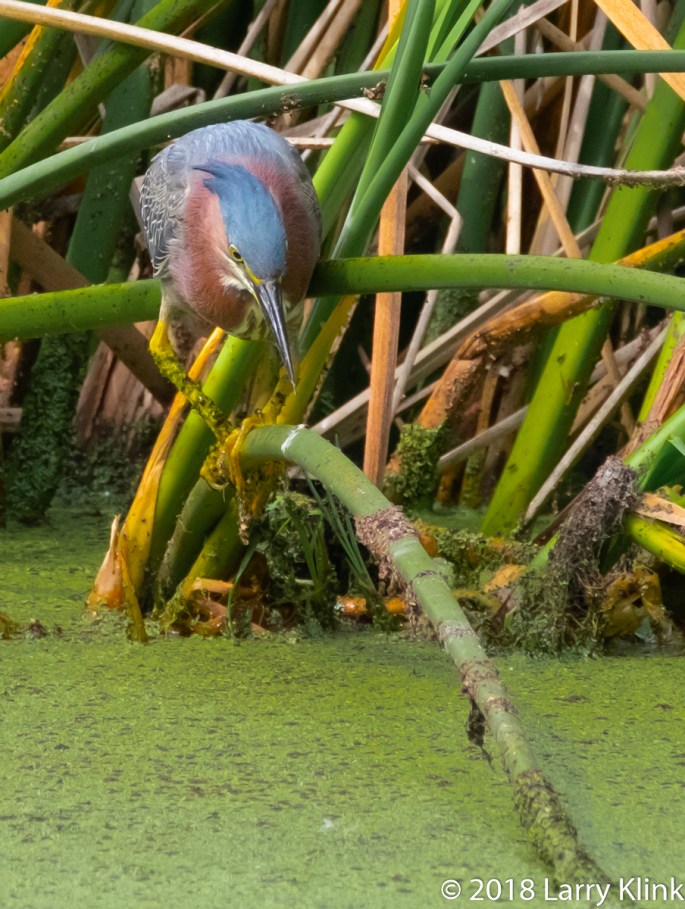
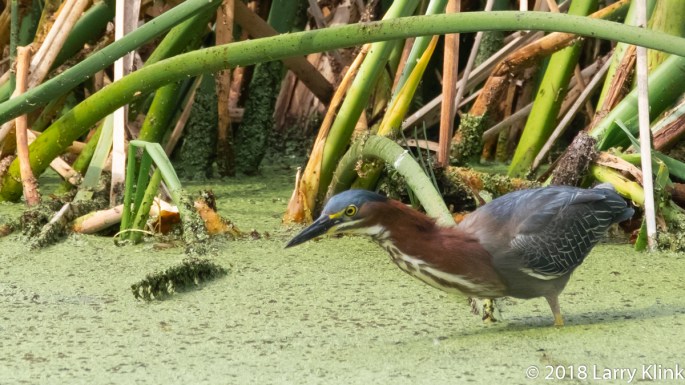
Green Heron

Green Heron
Green Heron, Effie Yeaw Nature Center, Sacramento, CA; MAY 2018

This week, I was blessed to be able to observe and photograph a green heron for 10 minutes. I see green herons from time to time but only one other time did I see one long enough to take a photo and one shot was all he gave me. This colorful bird is much smaller than its more familiar cousin, the Great Blue Heron. Why it is called the green heron, I do not know. I only see gray, blue, chestnut red and yellow. Regardless, they are beautiful. I hope you enjoy these images.

Regards,

Larry.

Note: Click on caption to see image at larger size and greater resolution

Green Heron
Green Heron
Green Heron
Green Heron
Green Heron
Green Heron

Note: These and other images are available to purchase at my website: www.earthwatcher.us or by contacting larry@earthwatcher.us.
More Images From Phoenix

Desert Landscape with Cactus

Here are some more images from my recent visit to the Phoenix area.

Note: Click on caption to see  images in larger size.

Image of a Prickly Pear Cactus Bloom
Prickly Pear Cactus Bloom
Image of an Ocotillo Cactus Bloom
Ocotillo Bloom
Landscape image of the Sonoran Desert featuring its Vegetation
Sonoran Desert Vegetation – Saguaro, Ocotillo, Prickly Pear and Others
Desert landscape image featuring Saguaro Cacti
Saguaro Cacti
Image of a Saguaro Cactus Bloom
Saguaro Bloom

Note: These and other images are available for purchase on my website: www.earthwatcher.us or by contacting larry@earthwatcher.us.

Images of A Few Birds

Red Shouldered Hawk with Chicks

Here are some images of birds I took over the past few weeks.

Note: Click on image caption to see image in larger size.

Yellow Billed Magpie

Thought magpies are common in many areas, the Yellow Billed Magpie is found only in Sacramento, CA and surrounding areas.

Common Moorhen in Bed of Yellow Water Lillies
Common Moorhen
Pied Billed Grebe
Pied Billed Grebe
Greater Roadrunner
Greater Roadrunner
Female Northern Flicker

These and other images are available to purchase at http://www.earthwatcher.us or by contacting larry@earthwatcher.us.
Visitors to the Saguaro

Image of a Gila Woodpecker perched atop a saguaro cactus
Gila Woodpecker

I visited Phoenix, AZ recently. I stayed at a beautiful place at the foot of South Mountain. The place had a patio that overlooked the city and at the corner of that patio was a large saguaro cactus. The mornings were beautiful, so I sat on the deck and watched the birds as they visited the cactus. Here is some of what I saw.

The starling was not taken on the same cactus. It was sitting outside its nesting hole on a cactus at another location.

Note: Click on caption to see image at a larger size.

Image of a Cactus Wren perched atop a saguaro cactus
Cactus Wren
Image of a European Collared Dove perched atop a saguaro cactus
Eurasian Collared Dove
Image of a Gila Woodpecker perched atop a saguaro cactus
Gila Woodpecker
Image of an Anna's Hummingbird hovering alongside a saguaro cactus
Anna’s Hummingbird
Image of a Gilded Flicker perched atop a saguaro cactus
Gilded Flicker
Image of a Gila Woodpecker hidden among the arms of a saguaro cactus
Gila Woodpecker
Image of a European Starling standing by its nesting hole in a saguaro cactus
European Starling

The Magnificent Wood Duck

Image of a male wood duck perched in a tree
Male Wood Duck

Ducks swim in lakes, ponds, rivers and oceans. They waddle around on the ground. Many display beautiful coloring. One of my favorites is the strikingly colored wood duck. They are a bit of an oddity among ducks; they perch and nest in trees. When the young have developed enough, the parents make them jump to the ground, without help, and waddle to the water to begin their life as a duck.

Note: Click on caption to see image in larger size.

Image of a pair of wood ducks.
Pair of Wood Ducks
Image of a male wood duck in a pond.
Male Wood Duck

Note: These and other images are available for purchase by visiting my website: www.earthwatcher.us or by contacting: larry@earthwatcher.us.

The Lenten Rose

Lenten Rose - P3
Lenten Rose – P3

The Lenten Rose, or Helleborus, is a beautiful flower that blooms much of the year for us in the Sacramento area. But, the blooms are at their most spectacular in the spring. Most of the flowers are a dusty rose color but they are sometimes yellow, green or a creamy white. For me, I love looking out the front door at our 2 plants. I took these images in the early morning, after a rain. I hope you enjoy them too.

Regards,

Larry

Note: Click on Caption to see image in larger size and higher resolution

Lenten Rose - P4
Lenten Rose – P4
Lenten Rose - P1
Lenten Rose – P1
Lenten Rose - P2
Lenten Rose – P2

Note: These and other images are available to purchase by visiting my website: www.earthwatcher.us or by contacting larry@earthwatcher.us