Elk, Moose and Pronghorn from A Trip Through the Rocky Mountains

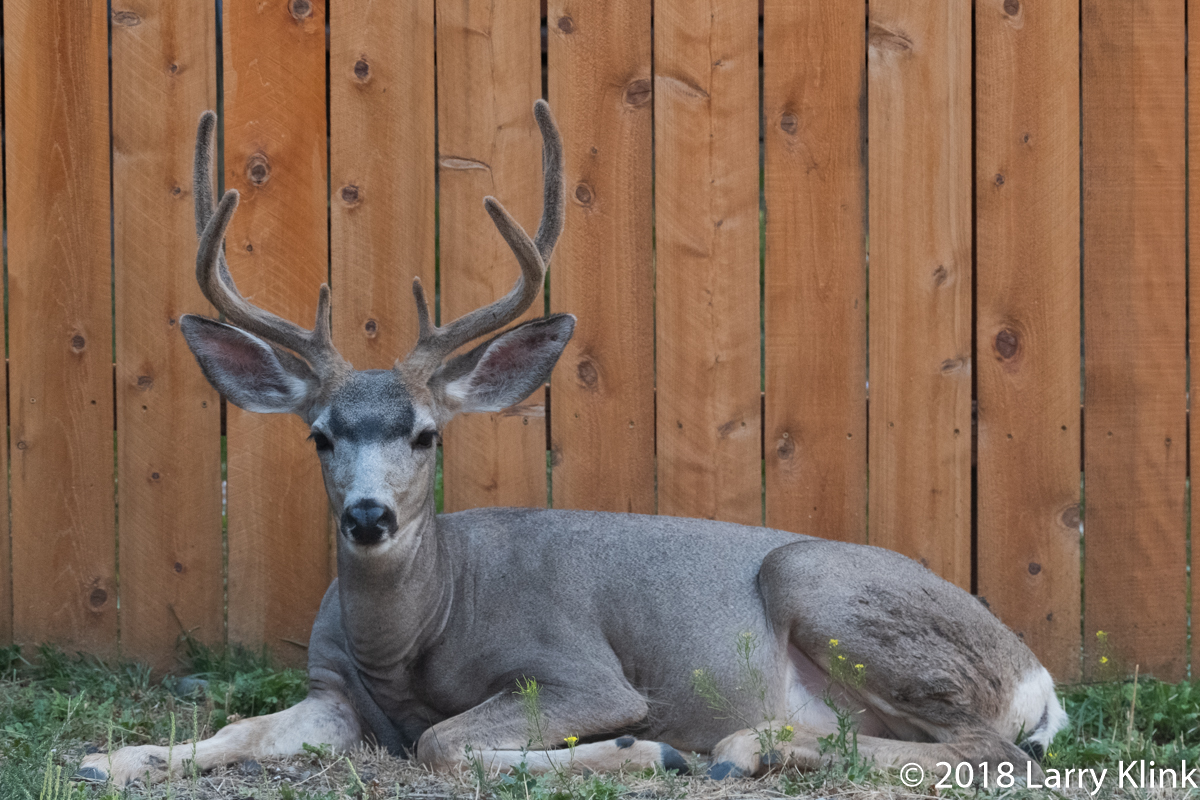
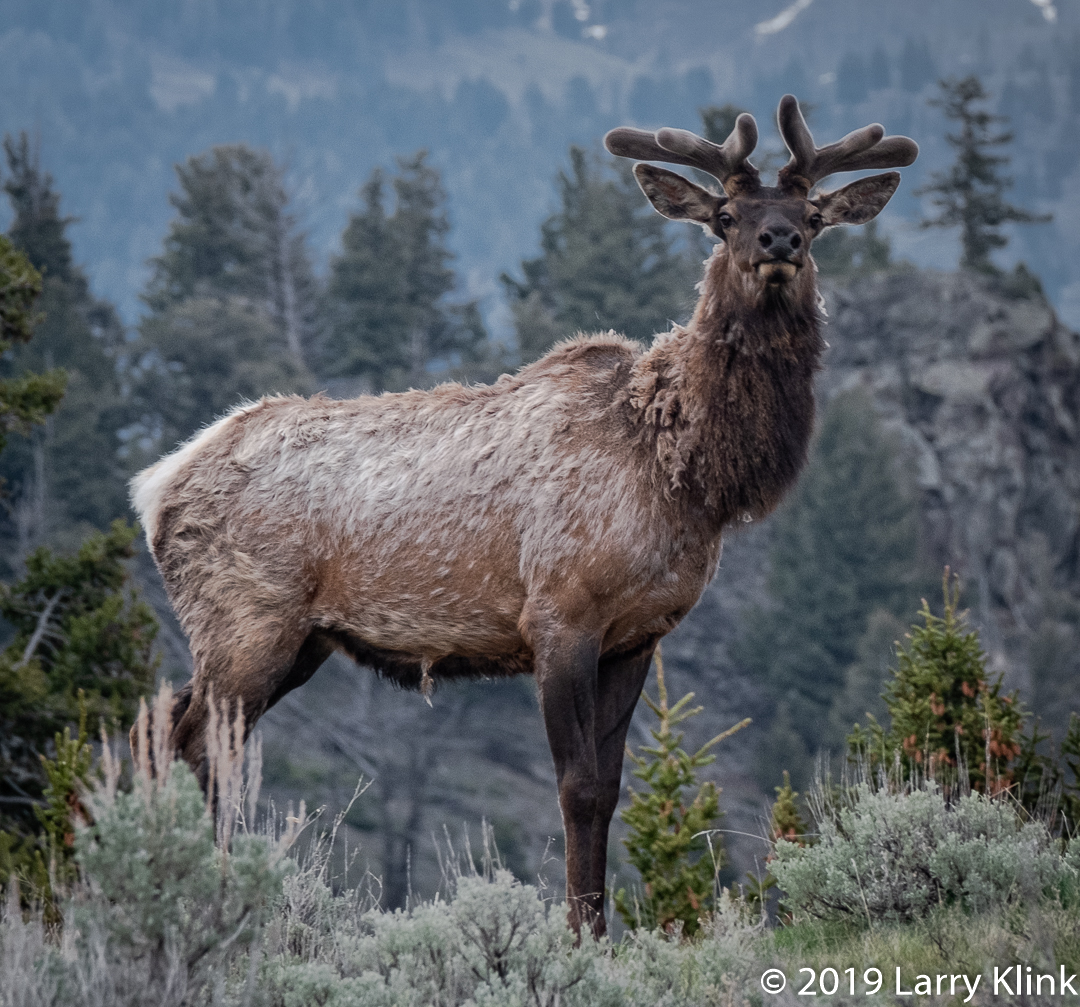
Male or Bull Elk (Cervus canadensis) with Antlers in Velvet;
Lamar Valley, Yellowstone National Park, WY; MAY 2019

In sharing these images today, I am using the common North American names for these animals. It was interesting learning about these animals though because, the names are not consistent. Even in North America, the Elk is referred to a Wapiti, from the Shawnee term Wa Piti meaning White-rumped. Also, Elk are sometimes claimed to be the same as the European Red Deer. However, mitochondrial testing in 2004 found that the much smaller Red Deer is a different species.[i] To confuse matters further, in Eurasia, the Moose is called an Elk.[ii]

The Pronghorn is sometimes referred to as an antelope but it is not a true antelope. Unlike true antelopes, the keratin sheathing on its horns is shed and regrown annually. The pronghorn is also the only animal that has branched horns.

The Elk and the Moose are members of the deer family, which means they have antlers made of bone. The pronghorn and true antelope, as well as cows, sheep and goats have horns which have a bony center covered by a keratinous sheath.

Anyway, forget the confusion unless it helps in social conversation and enjoy these magnificent animals.


[i] Elk Network. https://elknetwork.com/whats-the-difference-between-red-deer-and-elk/

[ii] Wikipedia: https://en.wikipedia.org/wiki/Moose

Note: Please click on caption to see image at higher resolution.

Female Moose (Alces alces);
Moose Wilson RD, Grand Tetons National Park, WY
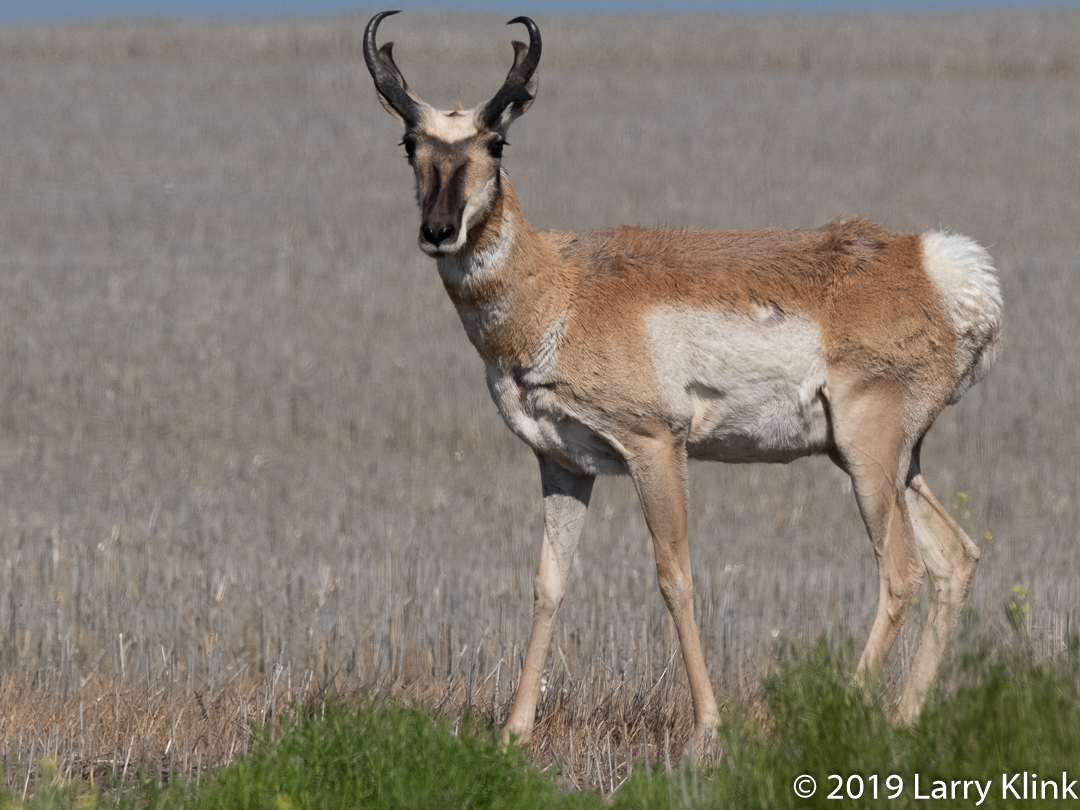
Pronghorn (Antilocapra americana)
Female Elk (Cervus canadensis);
Grand Tetons National Park, Near Moran, WY; MAY 2019
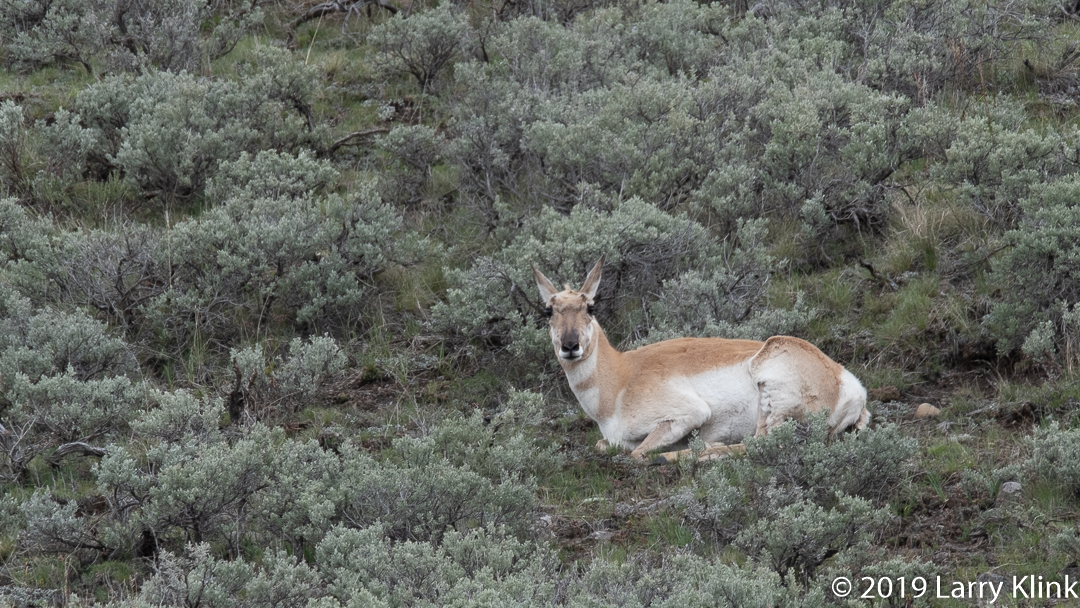
Female Pronghorn (Antilocapra americana);
Lamar Valley, Yellowstone National Park, WY; MAY 2019
Male or Bull Elk (Cervus canadensis) with Antlers in Velvet;
Lamar Valley, Yellowstone National Park, WY; MAY 2019

These and other images are available to purchase on my website: www.earthwatcher.us or by contacting larry.klink@earthwatcher.us.

A Winter Morning in the Gettysburg National Military Park

Confederate Rifles in Winter;
Gettysburg National Military Park, Gettysburg, PA; FEB 2019

A few weeks ago, we visited family in the Gettysburg, PA area.  While there, we were treated to some snow and very cold weather. On one early, sunny, morning we drove along Confederate Ave. The street. On Seminary Ridge, overlooks open meadows ringed with farms. The ridge top is where Confederate troops set up their artillery and was the starting point for many Confederate troop assaults. On July 3rd, 1863, it was the site of Pickettโ€™s charge against the troops of Union General George C. Meade.

On this early morning, the guns laid quiet. Sunlight glistened on the icy snow while frost gave trees, weeds and other objects a silvery glow. Though snow adds a burden to our efforts to maintain a normal life and we grow tired of it after a time, a morning like this makes you slow down and appreciate the beauty that nature bestows in winter.

Please click on caption to see images at higher resolution.

Frosty Winter Morning;
Gettysburg National Military Park, Gettysburg, PA; FEB 2019
Parot Rifle in Winter;
Gettysburg National Military Park, Gettysburg, PA; FEB 2019

Note: These and other images are available for purchase on my website: www.earthwatcher.us or by contacting larry.klink@earthwatcher.us.

#Photography #Photographie #PhotosOfTheDay #Fujifilm #fujifilmusa #fujifeed #gnmp #gettysburg # civilwar #nationalpark #artillary #fieldartillary #parotrifle #rifle #winter #snow #landscape #ig_landscape #landscapelover #landscapehunter

Some More Interesting Raptors

Juvenile Bald Eagle, Turkey Vultures and Herring Gull on a Kill
Sacramento National Wildlife Refuge; DEC 2018

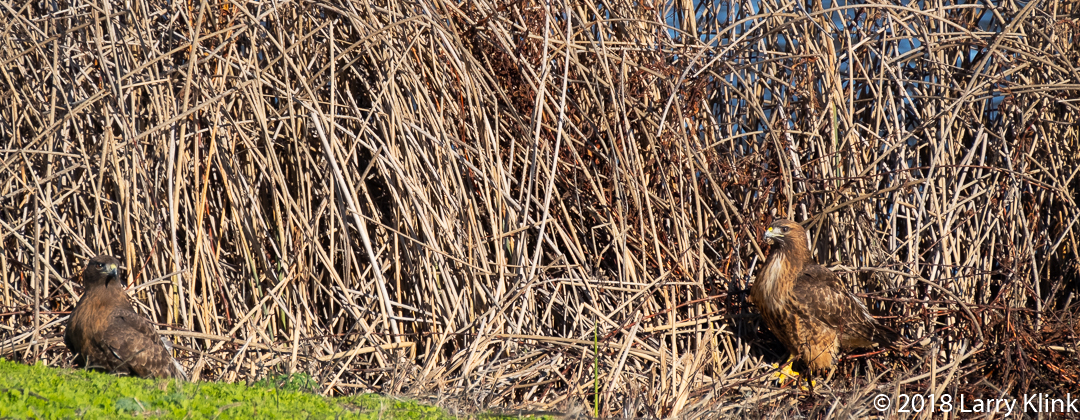
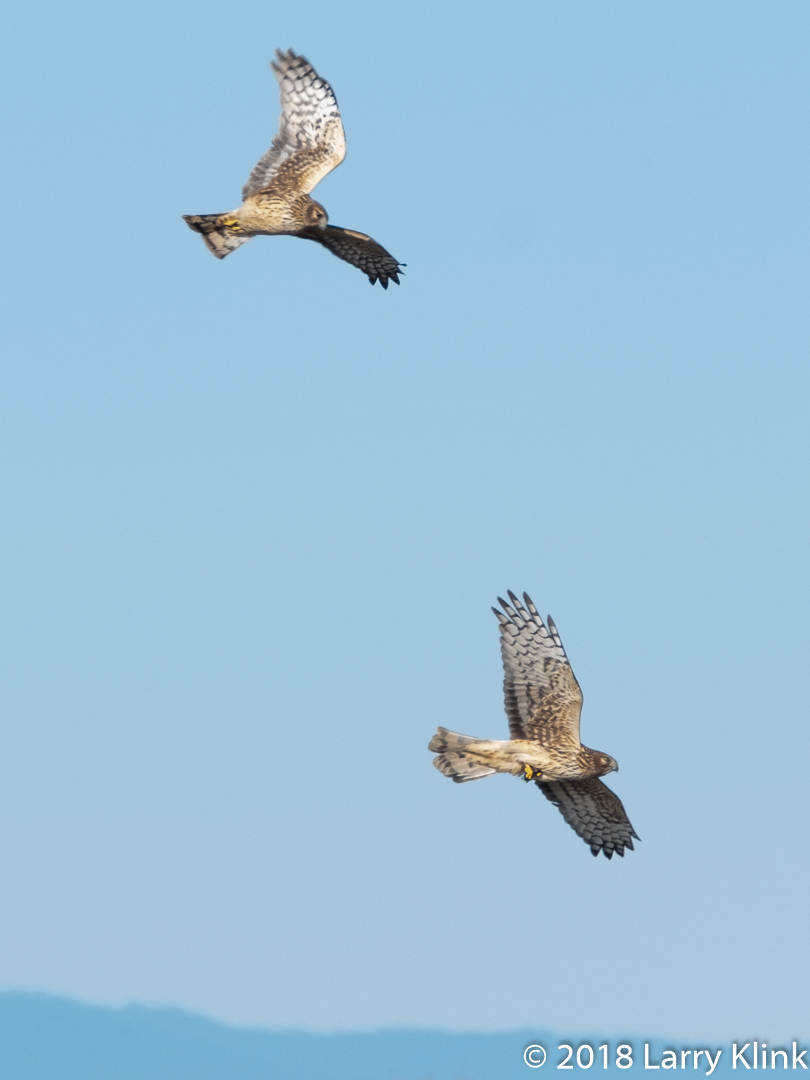
Returning from a recent trip to the Seattle area, we stopped at the Sacramento National Wildlife Refuge. The visitor center and restrooms were closed but the government shutdown didnโ€™t affect the birds. This stop turned out to be very productive. It was a great day for raptors. The star was a juvenile Bald Eagle on a kill. But we saw Ferruginous Hawks, Northern Harriers, Rough Legged Hawks, a Cooperโ€™s Hawk and a Red-shouldered hawk also. This is feast time for the raptors at Sacramento NWR because of the large numbers of waterfowl that spend the winter months there.

I didnโ€™t share images of the Rough-legged haws because I only got a rear quarter shot and it didnโ€™t show enough to make the shot interesting. Iโ€™ve shared other Cooperโ€™s Hawks and Red-shouldered Hawks in the recent past, so I didnโ€™t include them. But, I hope you enjoy what I shared.

Note: Please click on caption to see image in higher resolution.

Ferruginous Hawk
Sacramento National Wildlife Refuge; DEC 2018
Pair of Ferruginous Hawks
Sacramento National Wildlife Refuge; DEC 2018
Northern Harriers
Sacramento National Wildlife Refuge; DEC 2018

Note: These and other images are available for purchase at my website: www.earthwatcher.us or by contacting larry.klink@earthwatcher.us.

Some Wildlife from Recent Trips

Black Bear
Black Bear, Markleeville, CA

Here is a few shots of some wildlife we saw travelling through various places. The locations are listed with each image.

We hadn’t seen any bears in the wild for several years. Then, on one trip, we saw 2. Unfortunately, the one that got away, was a cinnamon colored one. Maybe someday I’ll be able to photograph one of those.

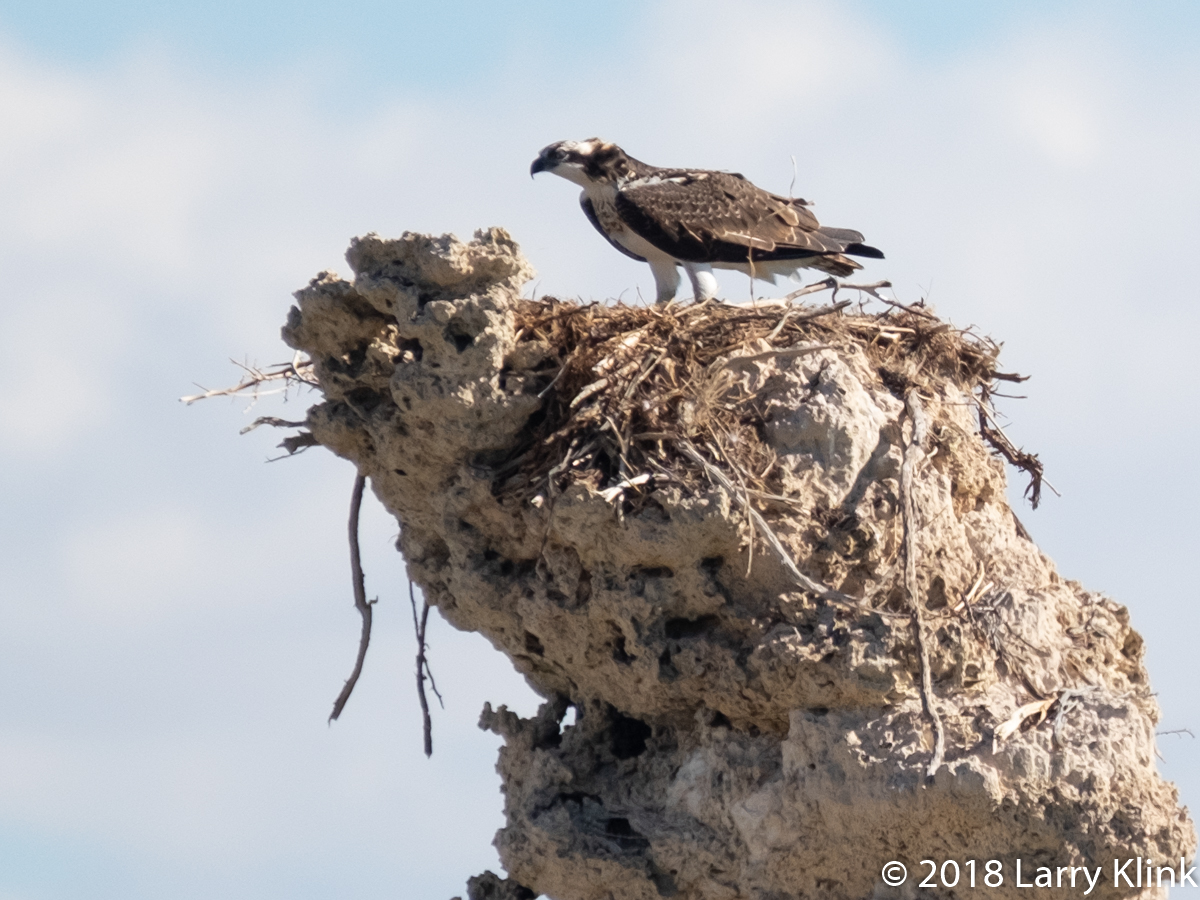
The tufa in Mono Lake are beautiful themselves but we got a rare treat – an osprey on its nest on top of a tufa.

Note: Click on caption to see image at higher resolution.


Grand Prismatic Spring

Grand Prismatic Spring, Yellowstone National Park; SEP 2018
Grand Prismatic Spring – P4

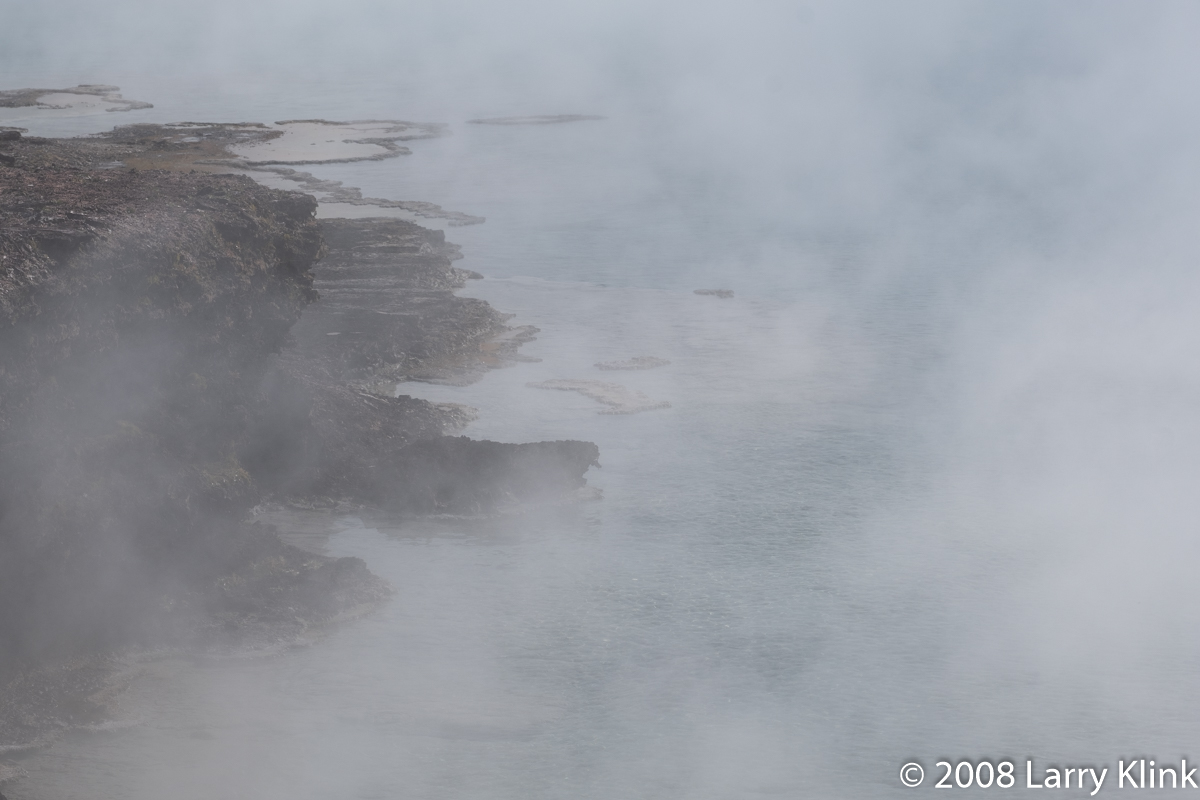
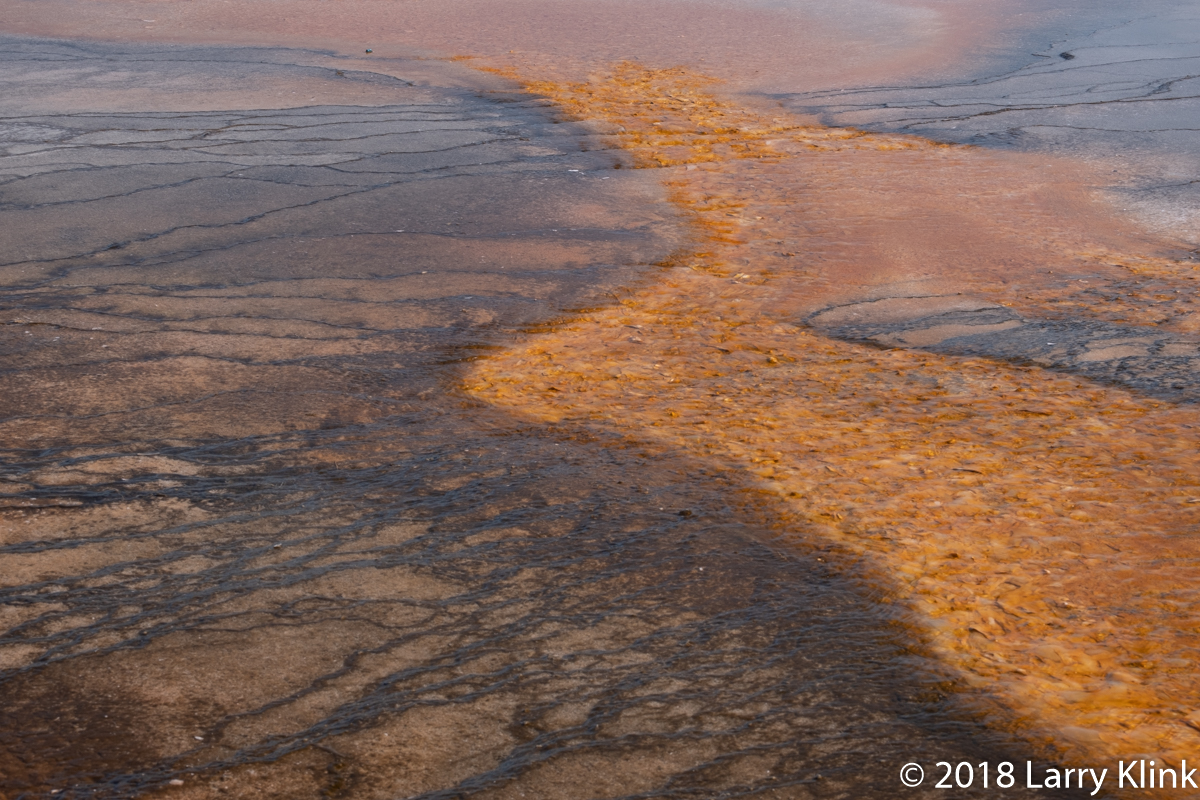
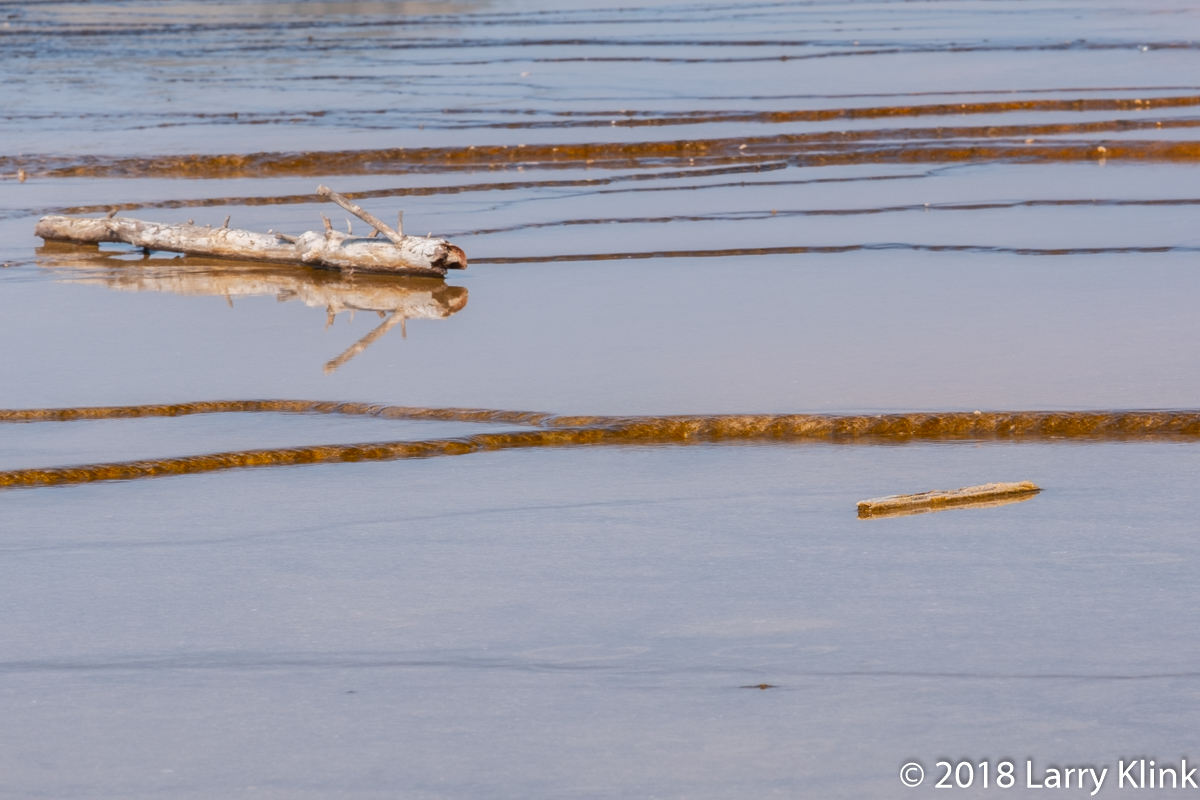
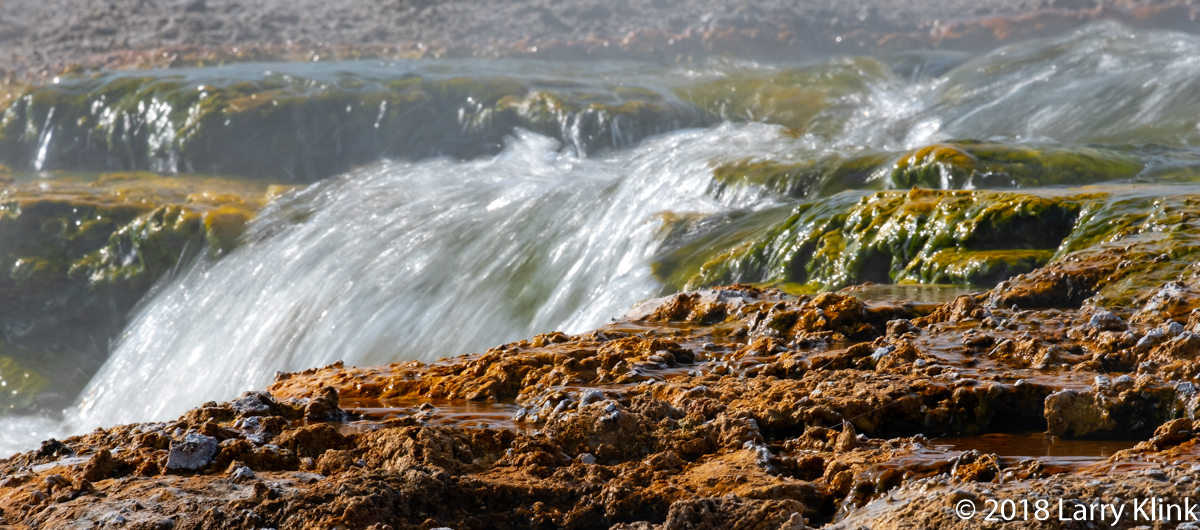
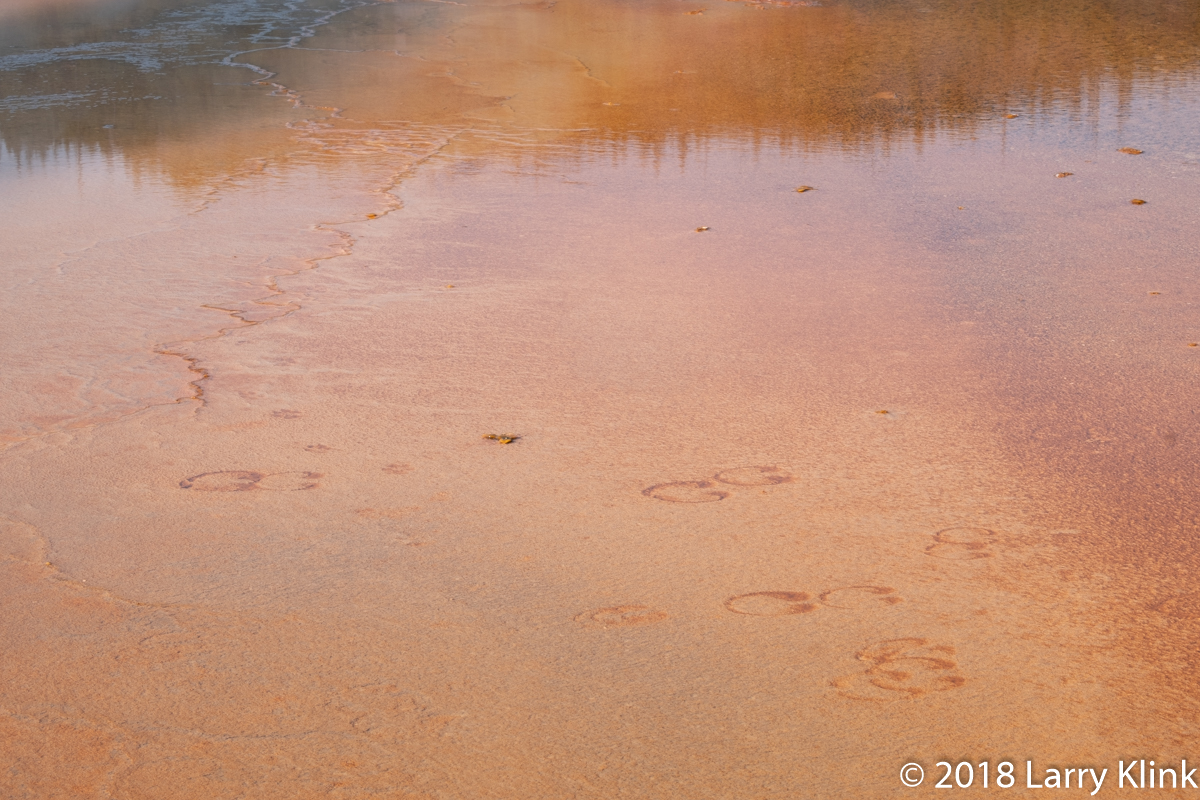
The Grand Prismatic Spring is another of Yellowstoneโ€™s iconic hydrothermal features. It is the one that looks like a big orange and blue eye. The spring sits along the Firehole River in the general area of the Upper Geyser Basin where Old Faithful resides. It produces a constant flow of water that flows into and heats the Firehole River. To me, the Firehole River is the most fascinating of Yellowstoneโ€™s rivers. It flows from Madison Lake, on the continental divide, 21 miles to the Gibbon River at Madison Junction. What fascinates me, is that it travels through the Upper Geyser Basin, where Old Faithful is located, and past the Grand Prismatic Spring. Those and other hydrothermal features dump their water into the Firehole. This raises the temperature 9-18 degrees Fahrenheit.

The pool filled by the Grand Prismatic Spring is very shallow. It is colored by the brown. orange and yellow bacteria and algae that grow in its pool. The sun highlights its colored features and the water reflects the blue of the sky. Steam rising from the spring adds mystery to the landscape. Though you can appreciate the spring by just giving it a cursory walk-by, paying attention to the details and seeing how the light seems to make them change provides a breathtaking experience.

Here is a link to an image that shows the spring in totality: https://www.gettyimages.com/detail/photo/grand-prismatic-spring-close-up-royalty-free-image/136952950; I donโ€™t have one of my own to share.

Note: Click on caption to see higher resolution image.

Grand Prismatic Spring, Yellowstone National Park; SEP 2018
Grand Prismatic Spring – P8

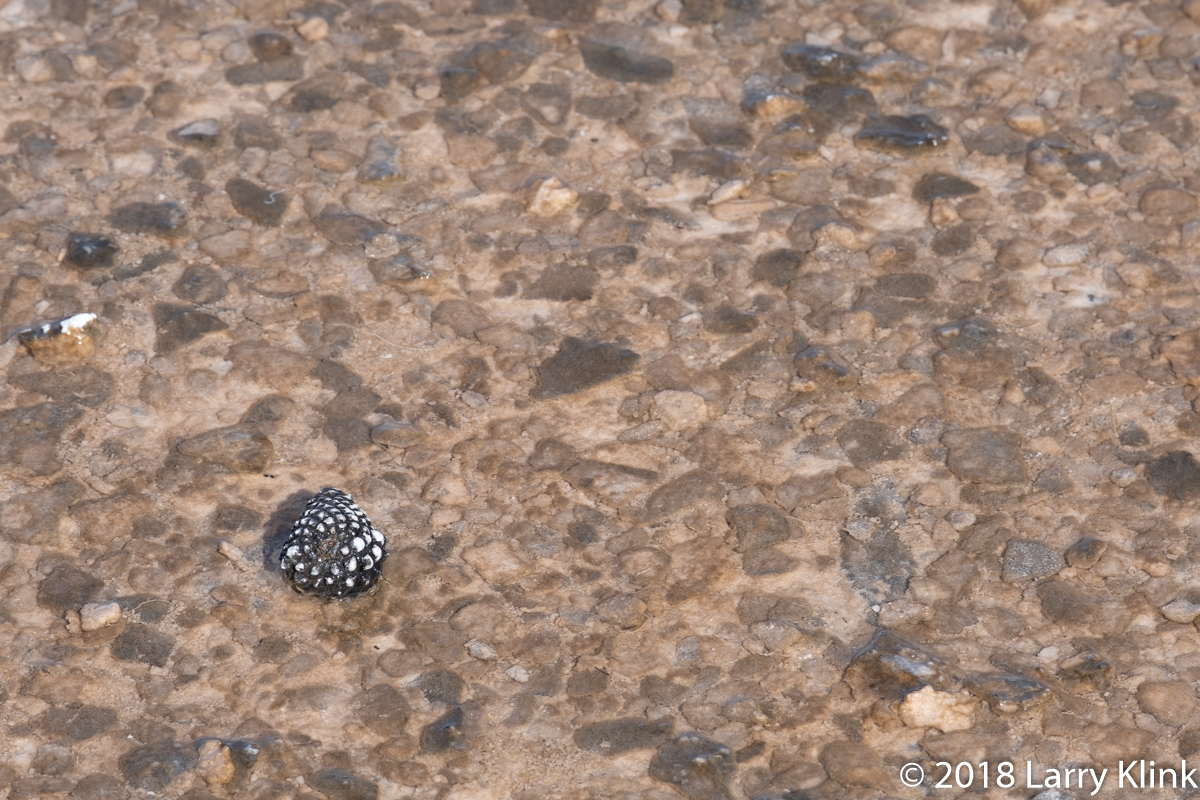
Pine Cone in a Hot Spring

Edge of Excelsior Geyser

Grand Prismatic Spring, Yellowstone National Park; SEP 2018
Grand Prismatic Spring – P10

Grand Prismatic Spring, Yellowstone National Park; SEP 2018
Grand Prismatic Spring – P6

Edge of Excelsior Geyser -P2
Edge of Excelsior Geyser – P2

Grand Prismatic Spring, Yellowstone National Park; SEP 2018
Grand Prismatic Geyser – P1

Overflow Into the Firehole River - P2
Overflow Into The Firehole River – P2

Grand Prismatic Spring, Yellowstone National Park; SEP 2018
Grand Prismatic Spring – P7

Overflow Into the Firehole River

Note: These and other images are available to purchase on my website: www.earthwatcher.us or by contacting larry@earthwatcher.us.

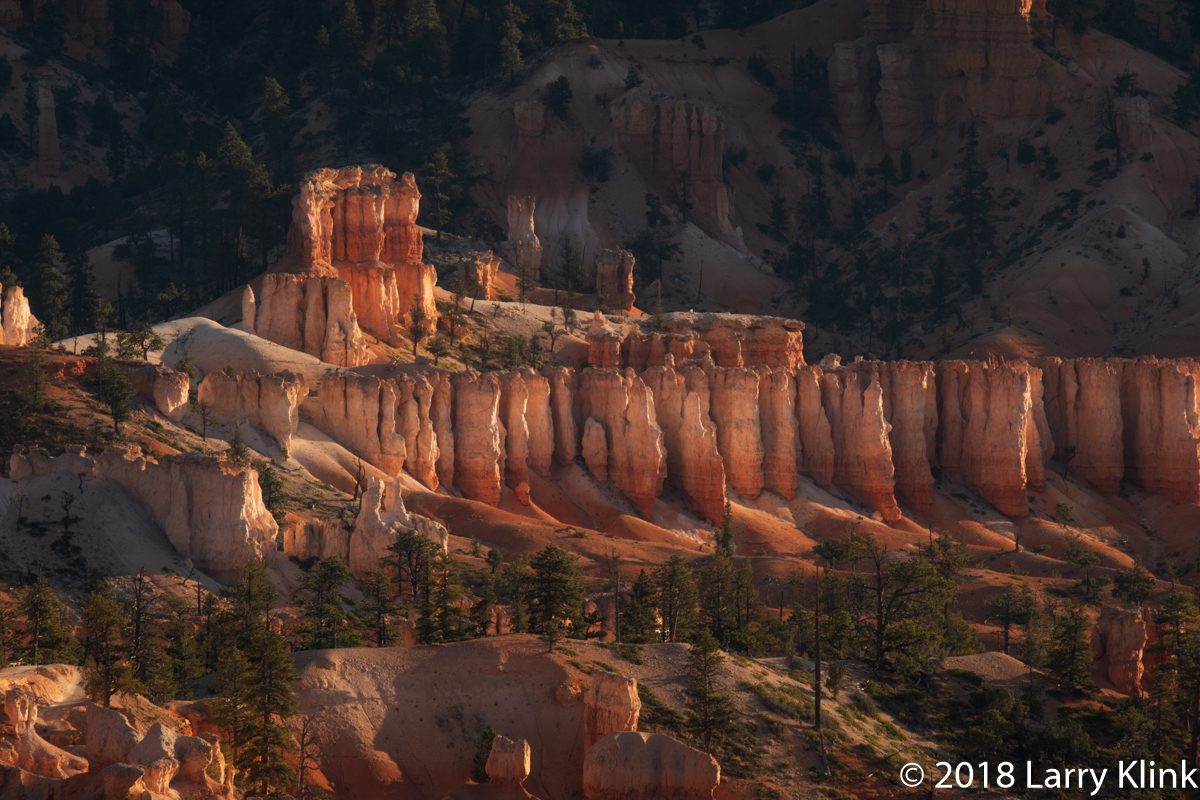
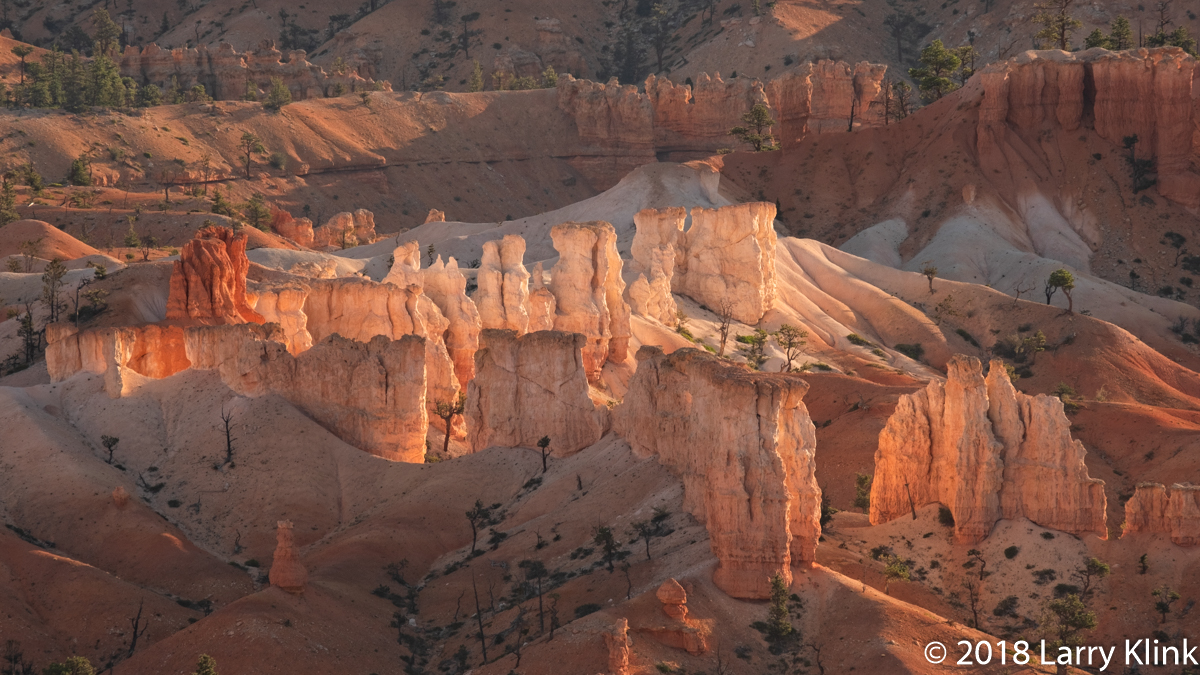
Bryce Canyon

The Ancient City
The Ancient City

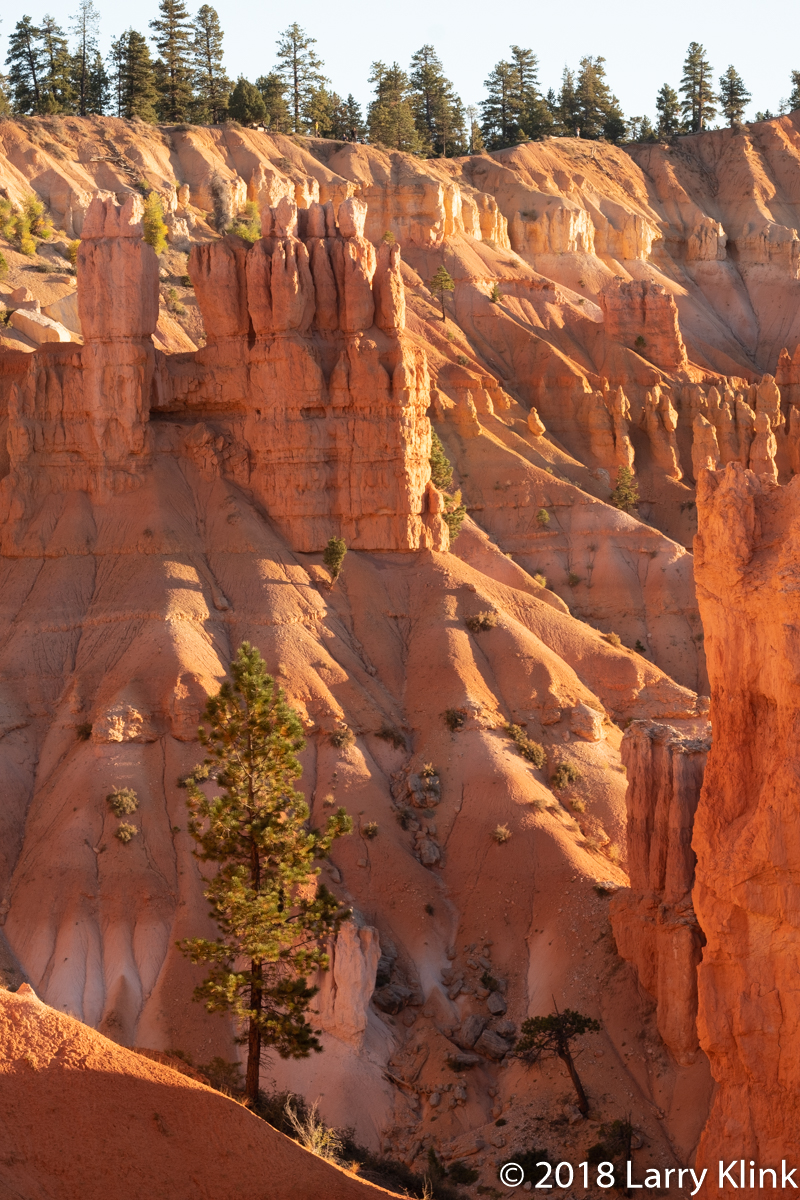
Bryce Canyon, in Utah, is stunningly beautiful; especially at sunrise and sunset. It should be on your bucket list. You can enjoy it any time of day but, I recommend being there in the morning, before the sun creeps over the distant mountains and as the sun sets in the evening. The colors saturate, the whites appear almost translucent at hose times and it will take your breath away. If you can, walk the trails that take you below the base and look at the hoodoos face on.

As I looked over the landscape, my thoughts turned to the ancient cities from fantasy and action adventures. Perhaps drawing from Petra in southern Jordan. I can imagine temples and palaces constructed from the hoodoos. I see โ€œimpregnableโ€ walls being breached by the barbarians outside. It’s a fun connection.

For me, the process of how the land became to look as it does, enhances its beauty. In this case, water channels away the softer soil, forming the hoodoos. The freeze-thaw cycle sculpts the hoodoos by breaking off chunks. The wind helps sculpt too, but, to a lesser degree. What is left are acres of an orange and cream landscape filled with spectacular hoodoos and the erosional hills and valleys at their base.

I canโ€™t wait to go back. Only this time, I am going to allow a day to hike and see what other treasures I uncover. I wonder what it would like in snow.

Note: Please click on caption to see higher resolution images.

Sunrise at Inspiration Point

Bryce Canyon - P4
Bryce Canyon – P4

Castle on a Hill
Castle on a Hill

Bryce Canyon - P3
Bryce Canyon – P3

Bryce Canyon - P2
Bryce Canyon – P2

Bryce Canyon - P5
Bryce Canyon – P5

Bryce Canyon - P7
Bryce Canyon – P7

Bryce Canyon - P10
Bryce Canyon – P10

These and other images are available to purchase at my website www.earthwatcher.us or by contacting larry@earthwatcher.us

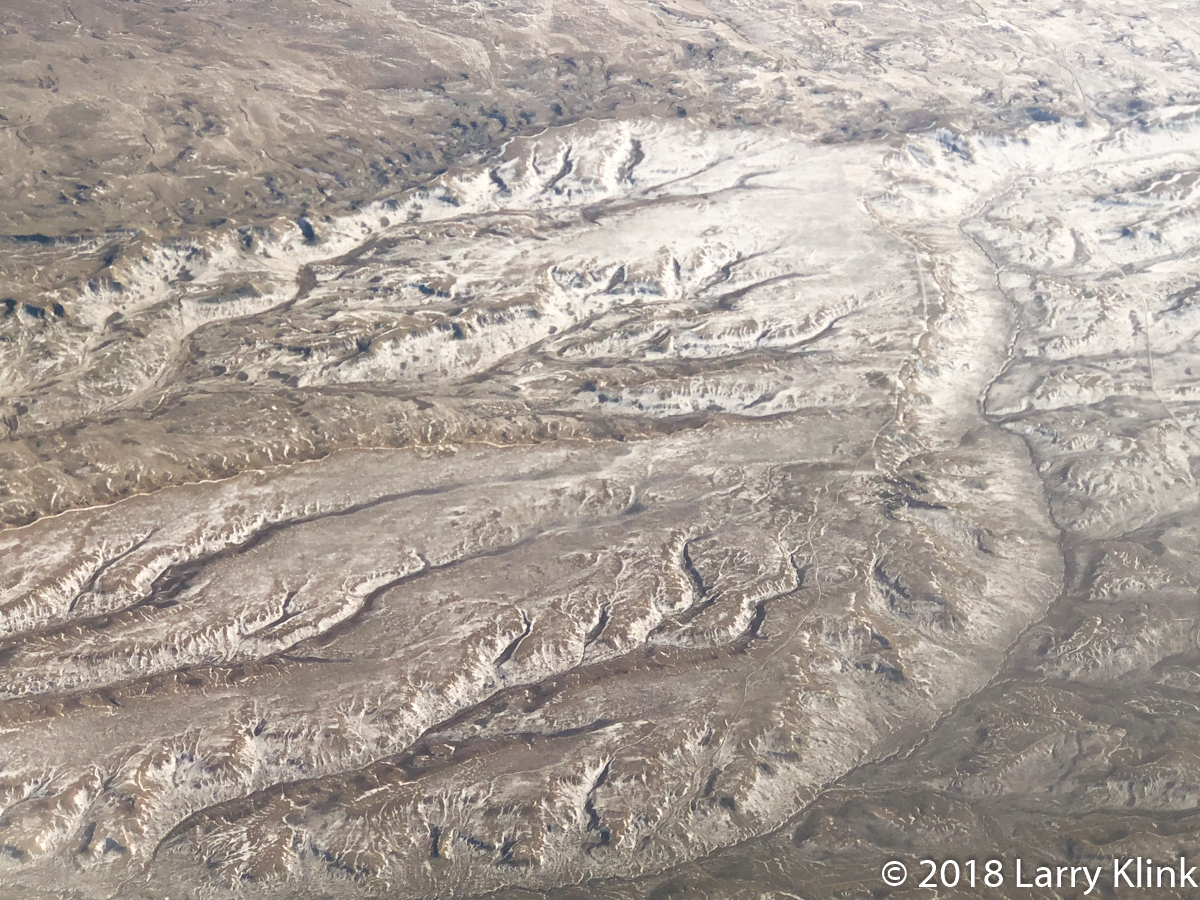
Aerial Abstracts

Fans and Flows, Aerial Abstracts - P10
Aerial Abstracts – P10

Abstract art uses color, shape and line to create a pleasing image. That image may or may not represent something real. In photography, you arrive at the result through a different route. You find a candidate and create a composition that emphasizes the pattern created by the color, shape and/or line over the subject itself.

I am a primarily a landscape photographer. As I progressed and learned more about that art, I became fascinated with the questions about how a scene evolved; what processes shaped it in the past and what processes are shaping it today. As I observed, I began to see the patterns and to understand how to recognize the effects of the wind, water and tectonic events that influenced it.ย  I also began to see how the patterns repeated themselves in different ways in different objects. It is those patterns that often make a wonderful abstract image.

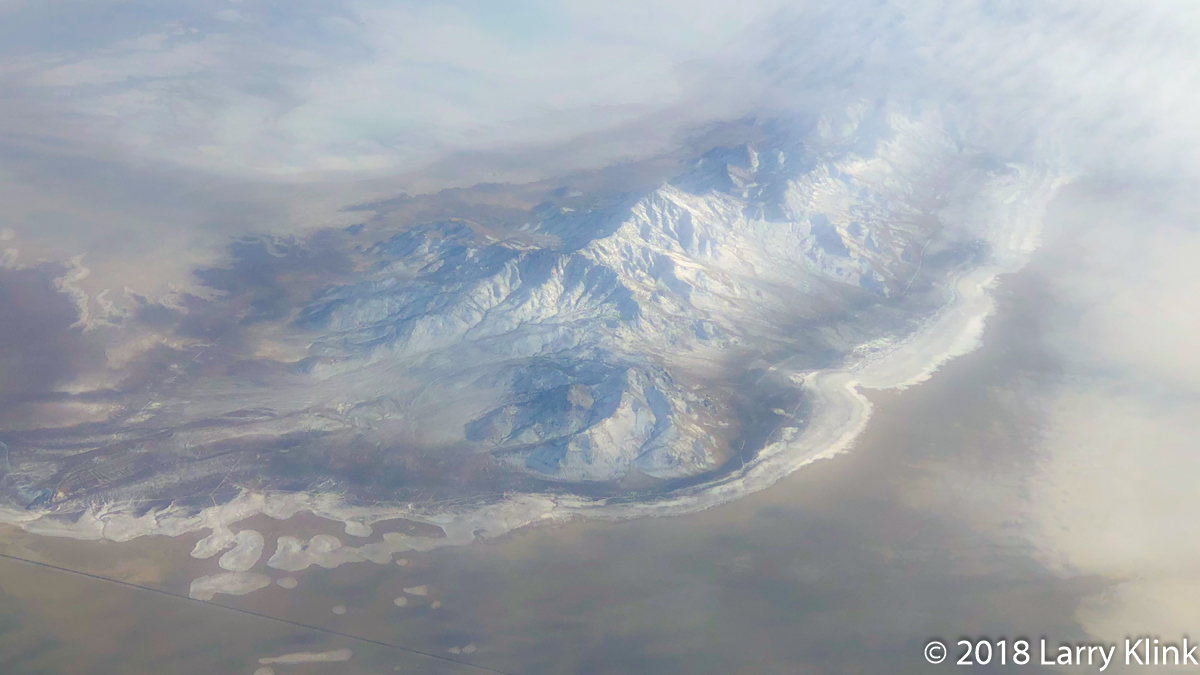
On a recent cross-country trip, we flew over the high plains of Kansas and the foothills and peaks of the Rocky Mountains. In many places the snowpack was broken; ice and snow lay in the crevices where snowmelt flows, while the remaining surfaces were clear. I was struck by the patterns that I saw. Erosion created patterns like those of a bush branching or leaves branching on a stem. In one spot, I saw a fish backbone with its tiny ribs extended. Using my trusty phone camera, through an airplane window, I created some abstracts from the landscapes I love.

I hope you enjoy these images. Reflect on the patterns โ€“ what do you see?

Regards

Larry

Note: Click on Caption to see larger, higher resolution image

These and other images are available for purchase at http://www.earthwatcher.us or by contacting me at larry@earthwatcher.us.
Aerial Abstracts - P4
Aerial Abstracts – P4

Aerial Abstracts - P11
Aerial Abstracts – P11

Aerial Abstracts - P9
Aerial Abstracts – P9

Aerial Abstracts - P5
Aerial Abstracts – P5

These and other images are available for purchase at www.earthwatcher.us or by contacting me at larry@earthwatcher.us.
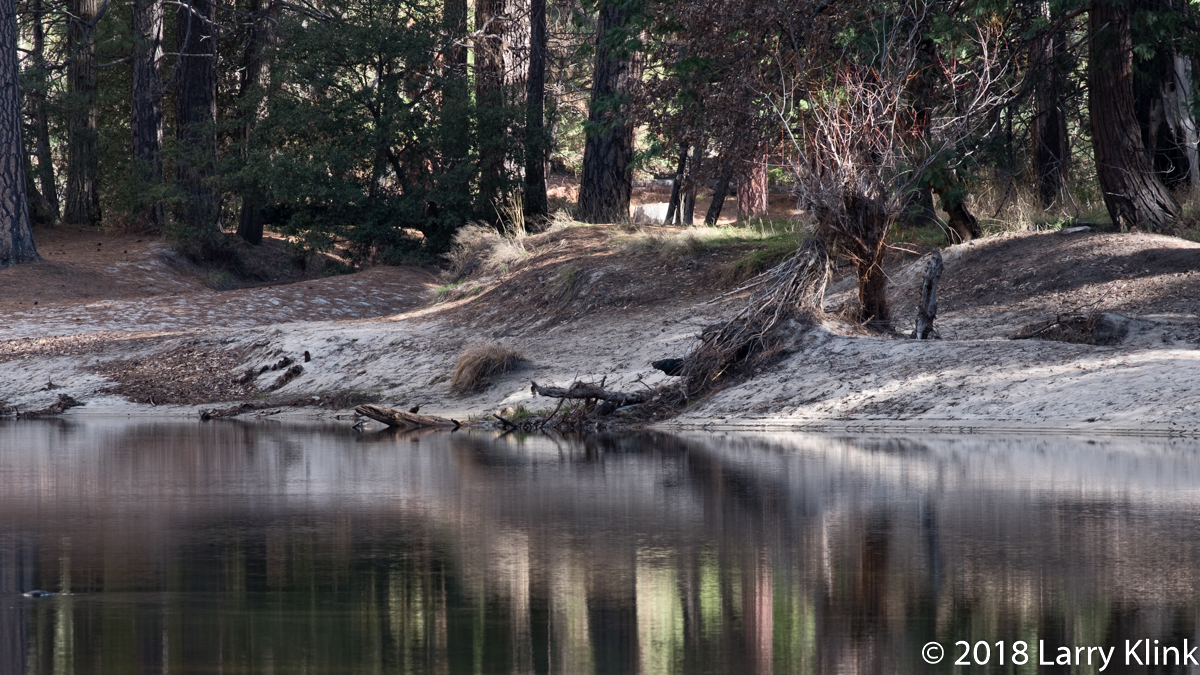
Some Less Photographed Perspectives of Yosemite

Along the Merced River Near El Capitan Bridge
Along the Merced River Near El Capitan Bridge –ย Yosemite National Park, CA; FEB 2018

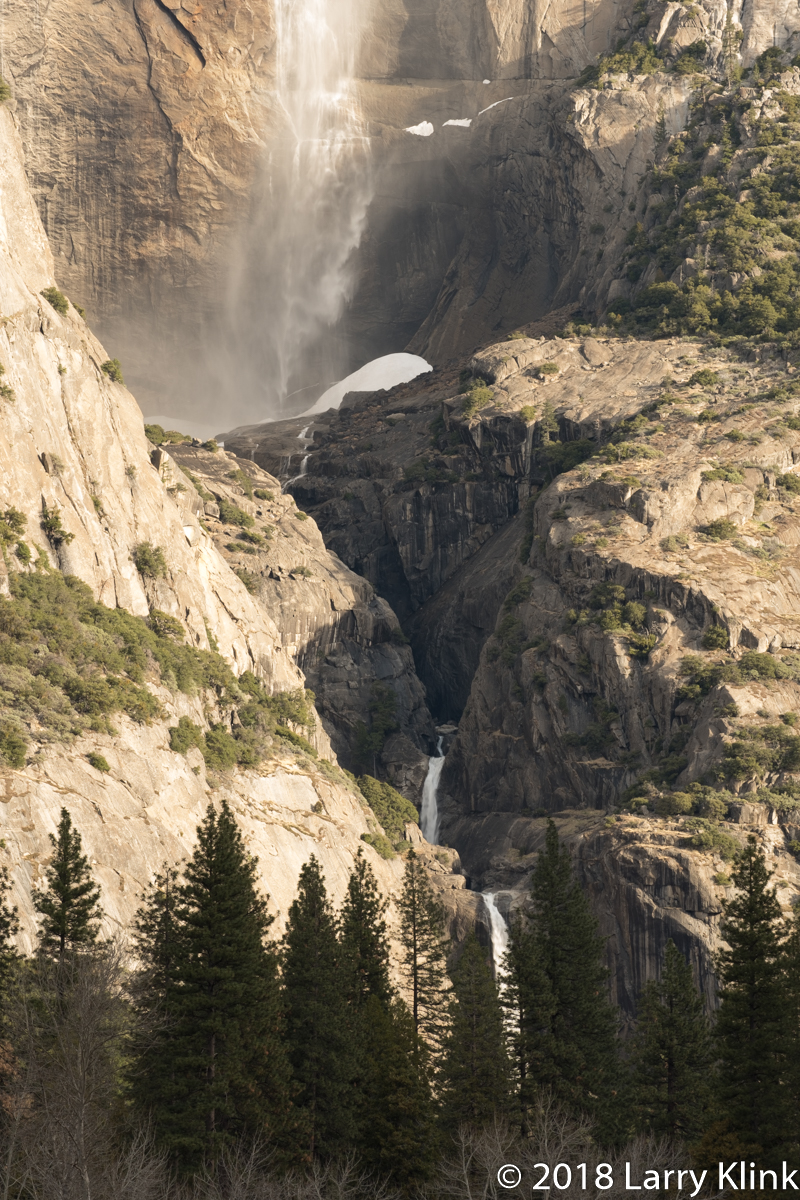
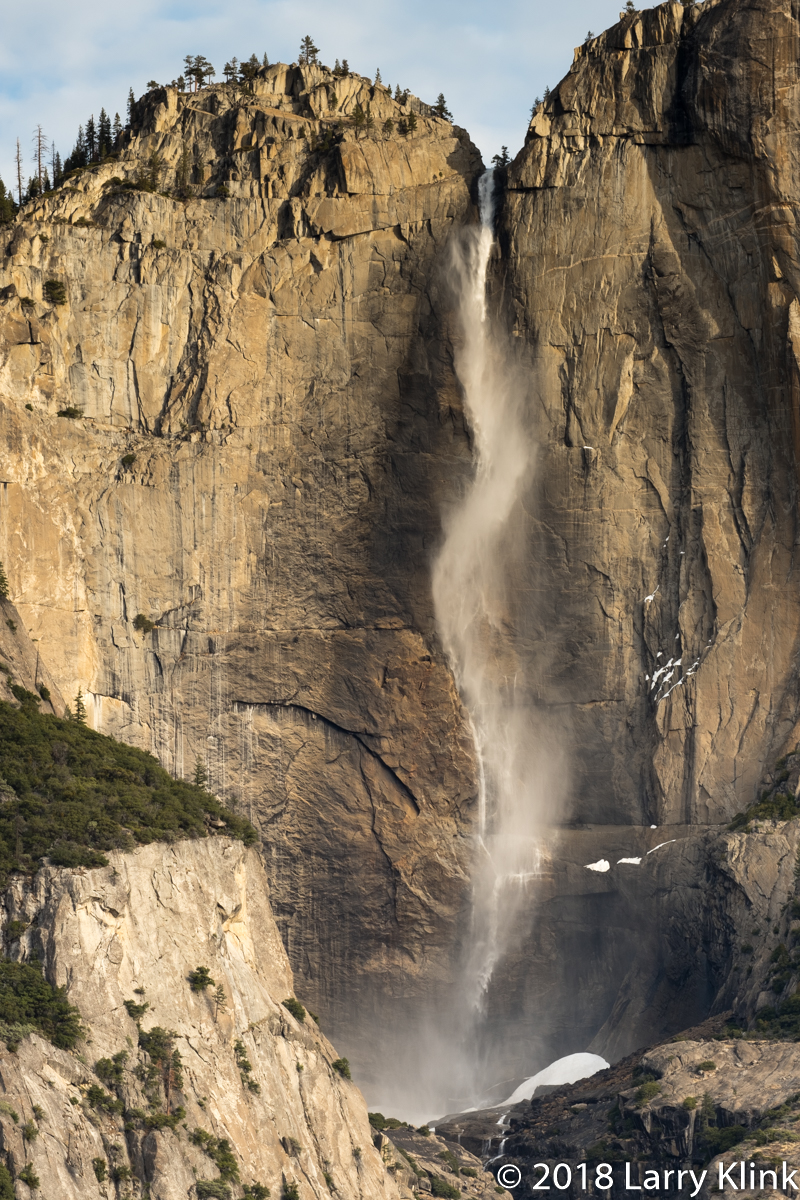
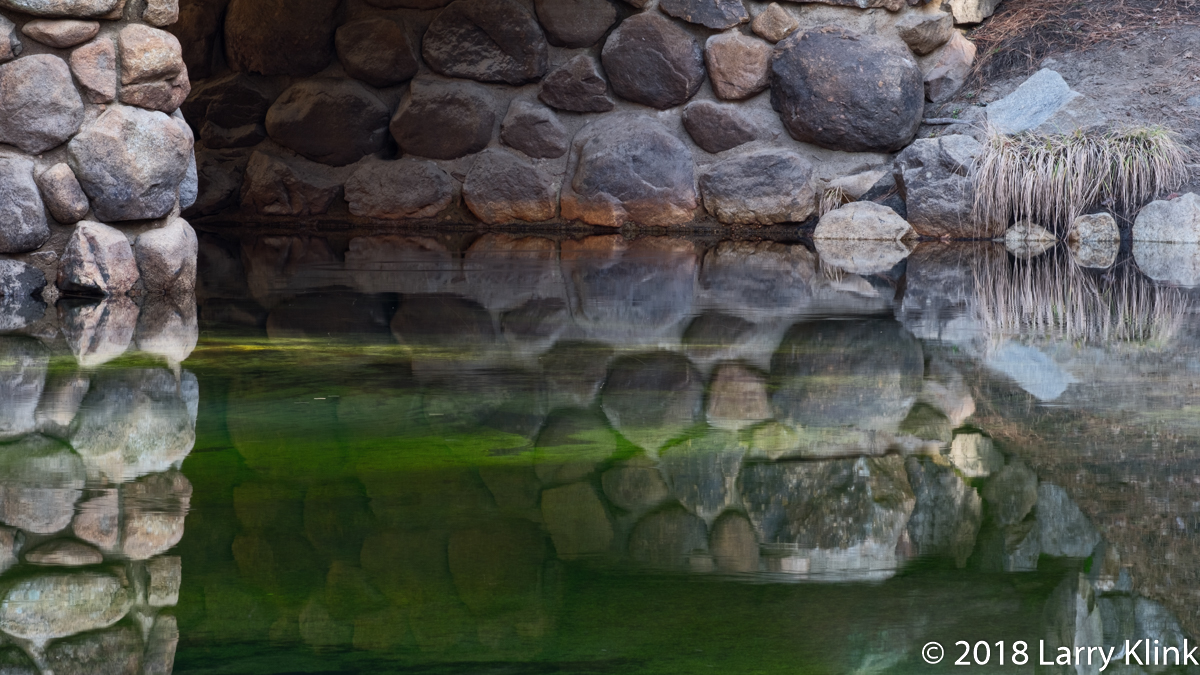
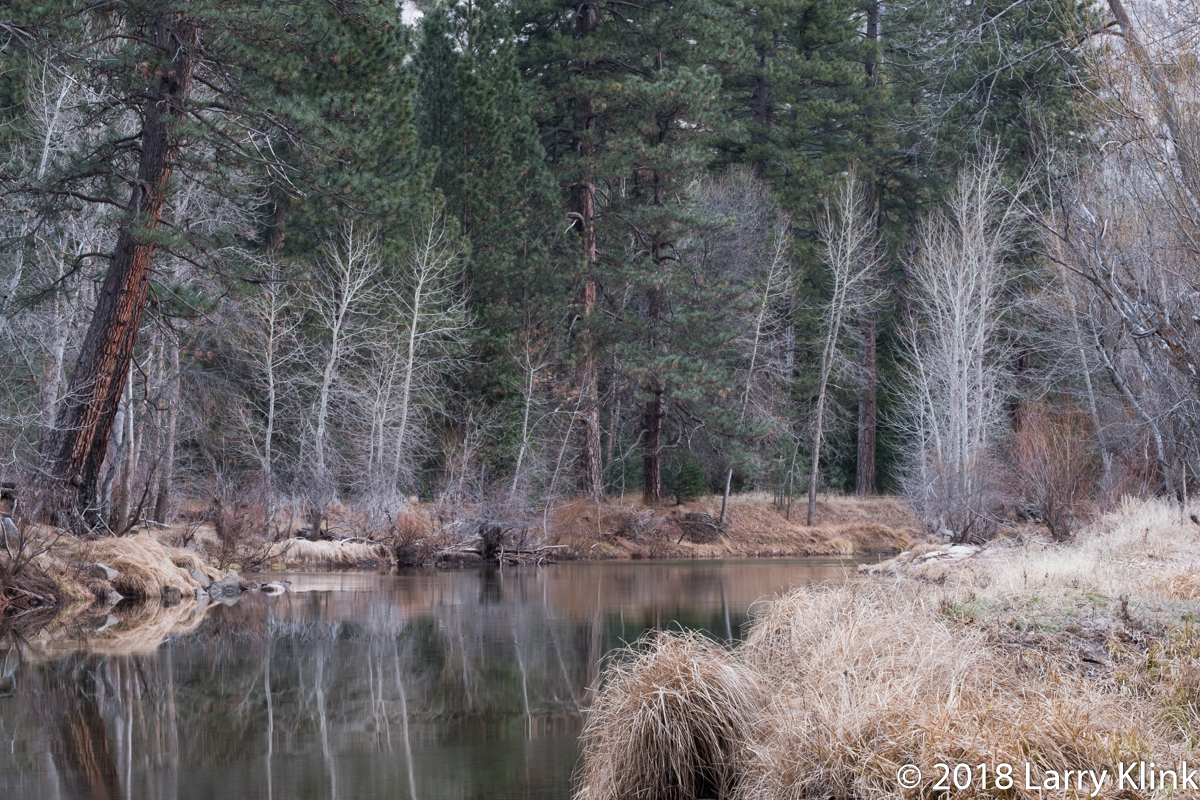
We recently visited Yosemite National Park. On the day we visited, I decided to look for perspectives that arenโ€™t commonly photographed. I love the iconic images but there are lots of nooks and crannies that provide wonderful landscapes. I hope you enjoy these images.

Regards,

Larry

Note: Click on caption to see image at larger size.

Middle Section of Yosemite Falls from Swinging Bridge meadow
Middle Section of Yosemite Falls from Swinging Bridge Meadow –ย Yosemite National Park, CA; JAN 2018

Sections of El Capitan, El Capitan Meadow, Yosemite National Park, JAN 2018
Demon Like Feature on El Capitan –ย from El Capitan Meadow, Yosemite National Park, JAN 2018

20180131-Yosemite-054-Web
Swirling Waterfall –ย Upper Yosemite Falls from Swinging Bridge Meadow, Yosemite National Park, CA; JAN 2018

Reflections Under a Bridge
Reflections Under a Bridge –ย Merced River Under El Capitan Bridge, Yosemite National Park, CA; FEB 2018ย 

Merced River from Swinging Bridge Meadow, Yosemite National Park, CA; FEB 2018

Note: These and other images are available for purchase at my website: www.earthwatcher.us or by contacting larry@earthwatcher.us.

Autumn Images

Autumn Sunrise at Twin Lakes
Autumn Sunrise at Twin Lakes, Twin Lakes, Bridgeport, CA; OCT 2017

As winter approaches, it is time to share some of the autumn images I collected over the past few months.

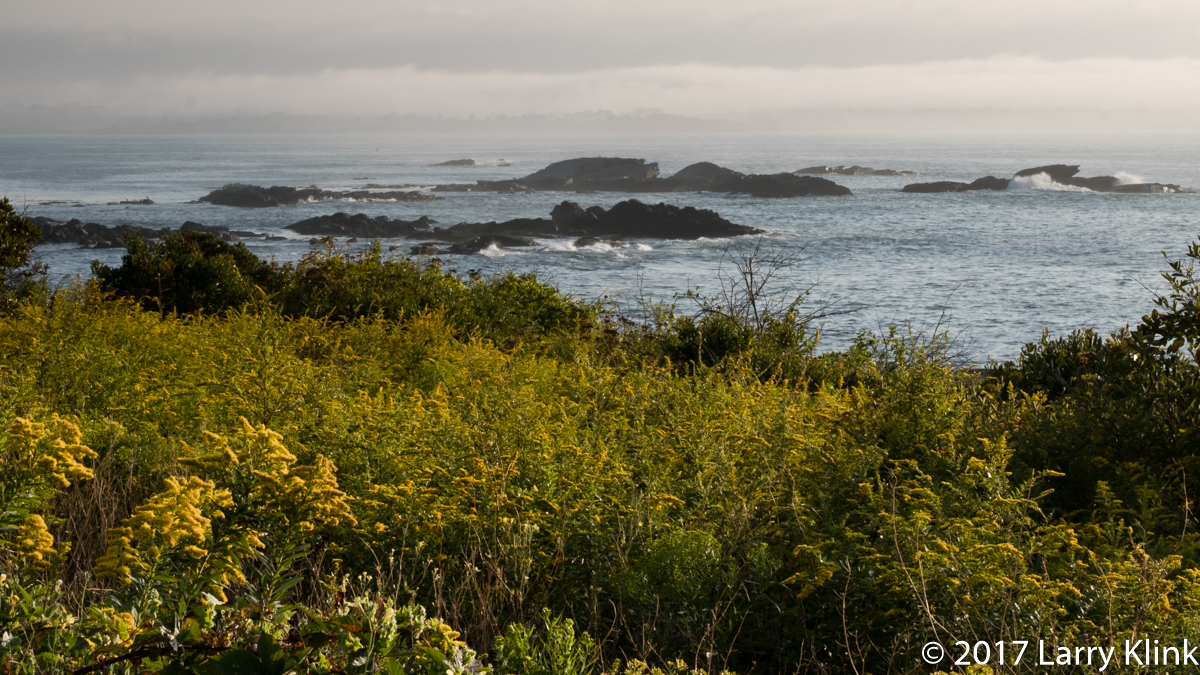
Goldenrod at Sunrise
Goldenrod at Sunrise, Sacheust NWR, Newport, RI; OCT 2017

20171126-Augusta-010-Web
Augusta Riverwalk, Savannah River, Augusta, GA; NOV 2017

Sunrise On A Foggy Morning
Lake Notomas, American River Parkway, Folsom, CA; DEC 2017

Lakeside on an Autumn Morning
Lakeside on an Autumn Morning, Twin Lakes, Bridgeport, CA; OCT 2017

These and other images are available at purchase at www.earthwatcher.us or by contacting larry@earthwatcher.us

American River Near Folsom

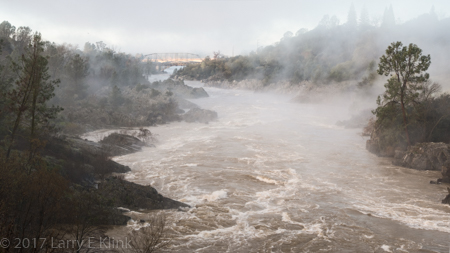
Image of American River Gorge near Folsom, CA
American River Gorge, Folsom, CA, Jan 2017

Last Friday was a cold, foggy morning and we had just come out of a long bout of heavy rain.ย  A lot of water was being released from Folsom Lake and the American River, near Folsom was running strong.ย  I decided to spend some time photographing the area of Folsom that surrounds the historic Walker Bridge / Donald W. Alden Memorial Bridge.ย  It was a great time to be out.ย  The river roared as it created whitewater through the gorge. Quite a treat.ย  In the 5 years that I have lived in the area, I never saw significant whitewater or heard the river roar.
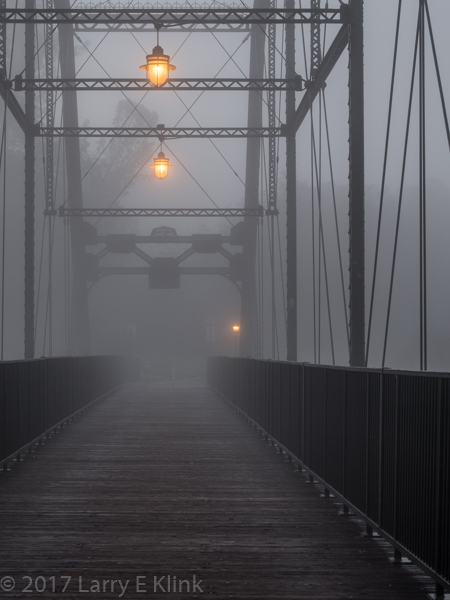
The Walker Bridge / Donald W. Alden Memorial Bridge was built in 1893.ย  It was sold 3 times: once to a man in Japan who wanted it for the steel but was never able to get it, once to the State of California who dismantled it and moved it near Walker, CA to span the Klamath River, and finally back to the City of Folsom who reinstalled it on its original abutments.ย  It now serves as a pedestrian footbridge and an access point to the American River Parkway from the City of Folsom.

I hope you enjoy these images.

Note: Click on image to see in larger size. ย I particularly recommend this for the image of the American Rive Gorge.

Image of Walker Bridge / Donald W Alden Memorial Bridge, FOlsom, CA in Fog
Walker Bridge / Donald W Alden Memorial Bridge, Folsom, CA

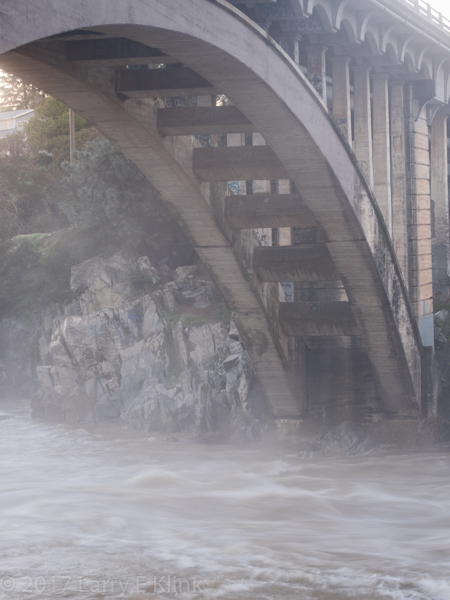
Image of Rainbow Bridge arch after heavy rains, Folsom, CA. JAN 2017
Rainbow Bridge Arch, Folsom, CA

Regards,

Larry


These and other images are available to purchase at my website: www.earthwatcher.us or by contacting larry@earthwatcher.us.