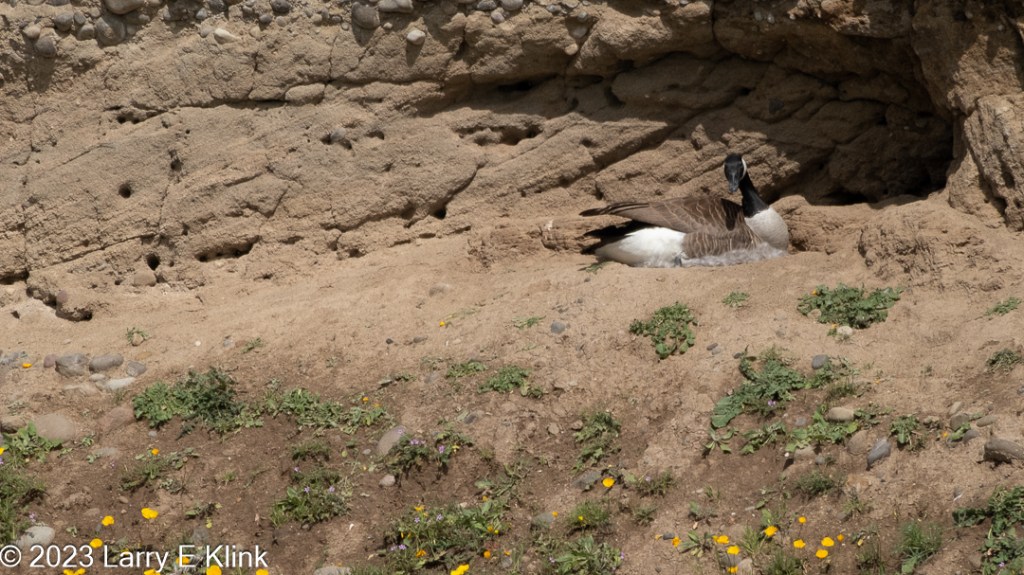
Canada Geese are quite common and often don’t make an eye-catching photo. But when seen in the right environment and living their lives, their beauty is enhanced marvelously.
If anyone would like a copy of almost any picture in my library, for educational or research use, please contact me and I will happily share a digital copy with you.
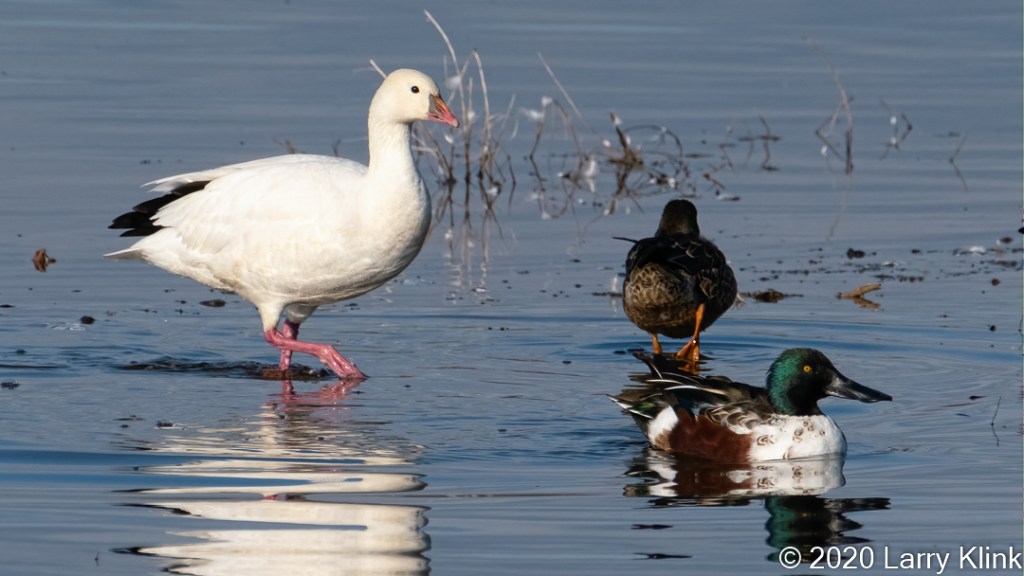
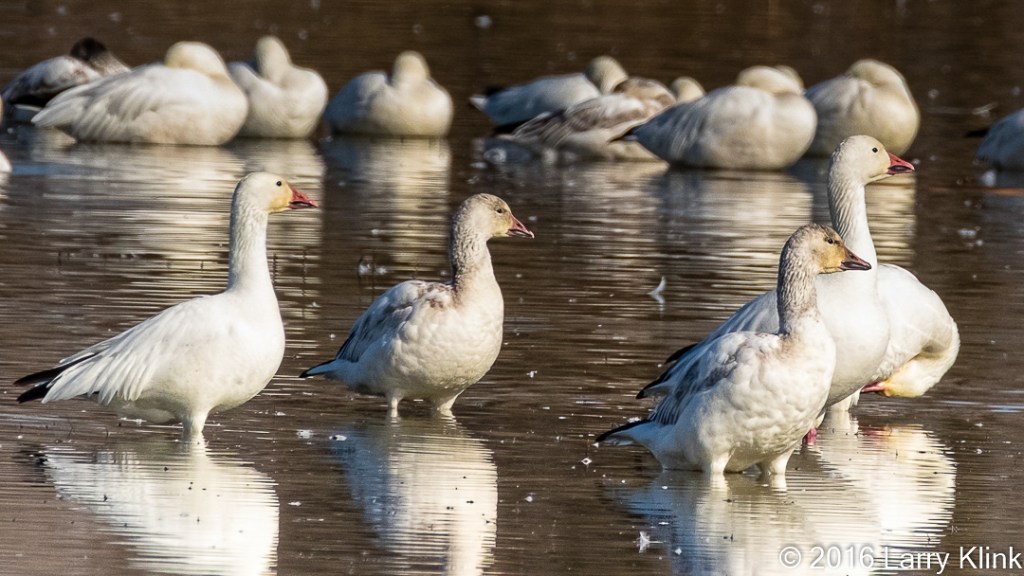
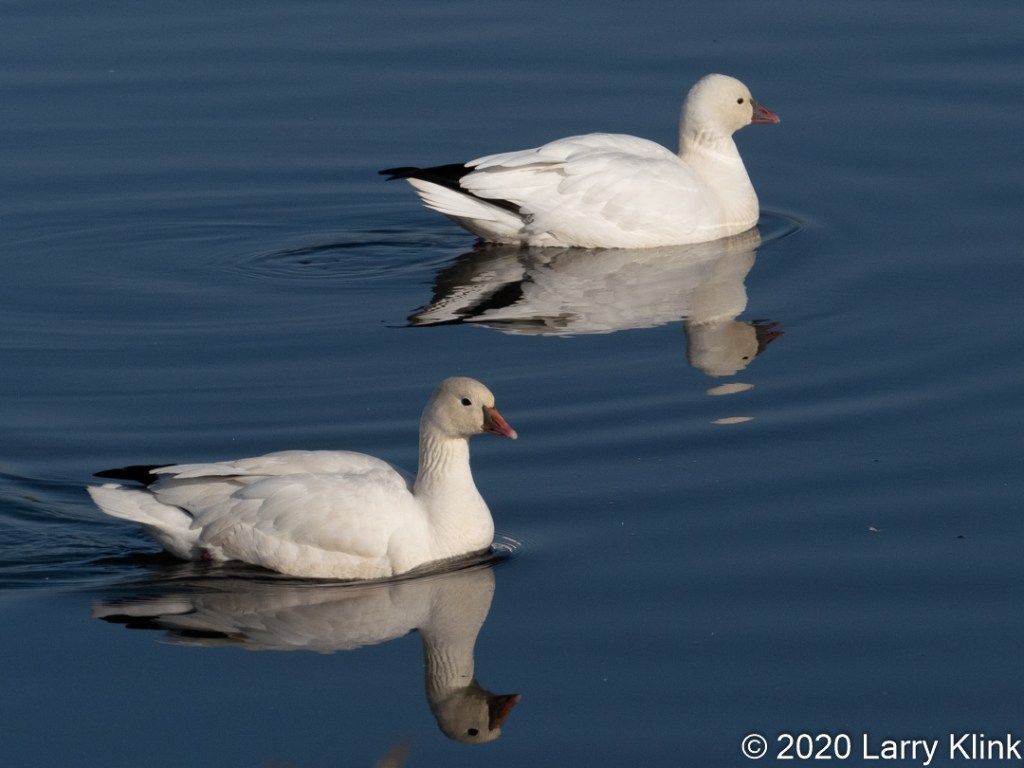
The wildlife refuges in Northern California are one of the wintering over spots for our two varieties of wild white geese: The Snow Goose (Chen caerulescens) and the Ross’s Goose (Chen rossii). They are 2 species that look almost alike and hang around together. In fact they do inter-breed so hybridized geese can be found. There is also a darker morph of both species which can sometimes be found in the flock. The darker or “blue morph” of the Snow Goose is sometimes called a Blue Goose. The head of the Ross’s Goose is smaller and more rounded than the that of the Snow Goose. The Ross’s Goose has a gray patch at the base of its bill. The Snow Goose has dark smile lines on the side of its bill that, I think, look like teeth.
It is amazing site to see these birds lift into the air. Entire fields full of geese will take off at one time making it look like a blizzard of white. On the day we observed them we were treated to an air show by many flocks. Thousands of birds were flying in large “V” formations as far as you could see in all directions. It was amazing!
Please click on caption to se images at higher resolution!
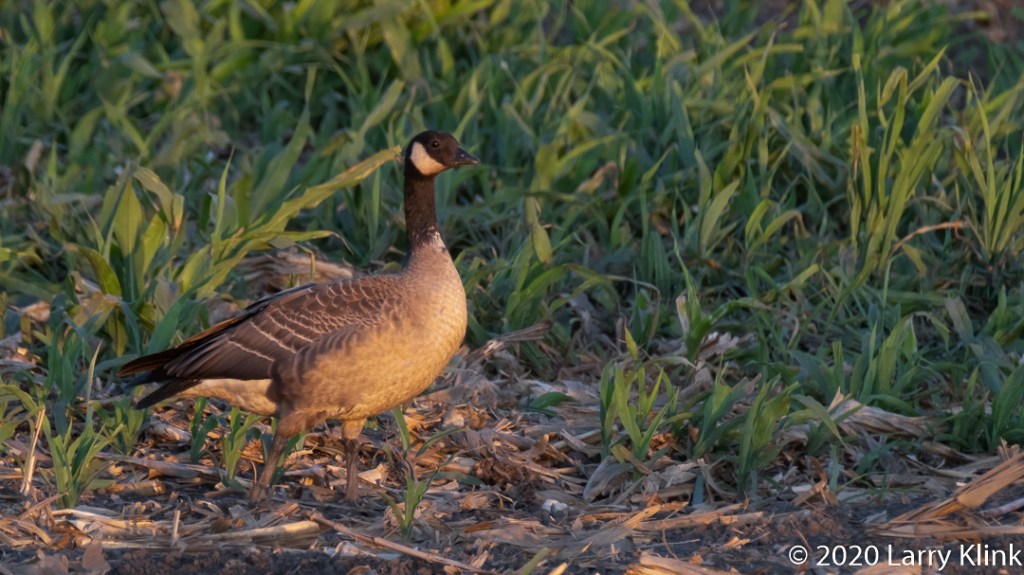
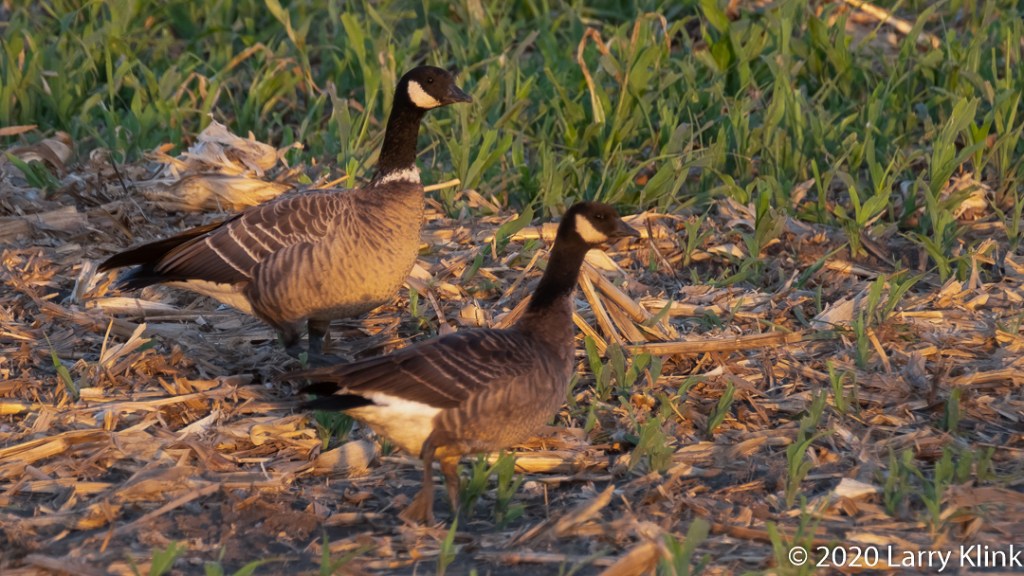
Living along the Pacific Flyway provides a treat; many birds pass through or winter over around here. Our most well known and popular of the winter visitors is the Sandhill Crane. But, in this post, I am going to present another visitor, one less known, the Cackling Goose (Branta hutchinsii).
The Cackling Goose and the Canada Goose look nearly identical and they are related. Until recently they were considered 2 subspecies of a single species. The Cackling Goose is smaller and makes a distinctive cackle instead of the Canada Goose’s honk. One of the field marks I use to identify them is a white band at the base of the black neck; its not a perfect identifier but it is very good.
While the Canada Goose is ubiquitous year around, I have only seen the Cackling Geese, reliably, in a limited area and only in Late October and November. One birder told me that we get the Aleutian Subspecies; there are several other subspecies.
Please click on caption to see imaes at higher resolution.






 Earthwatcher