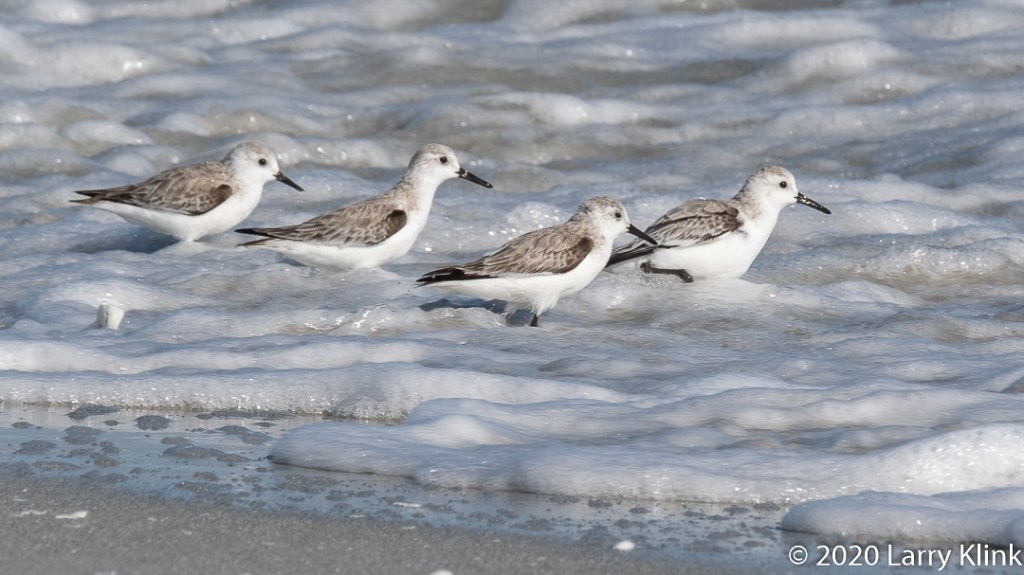
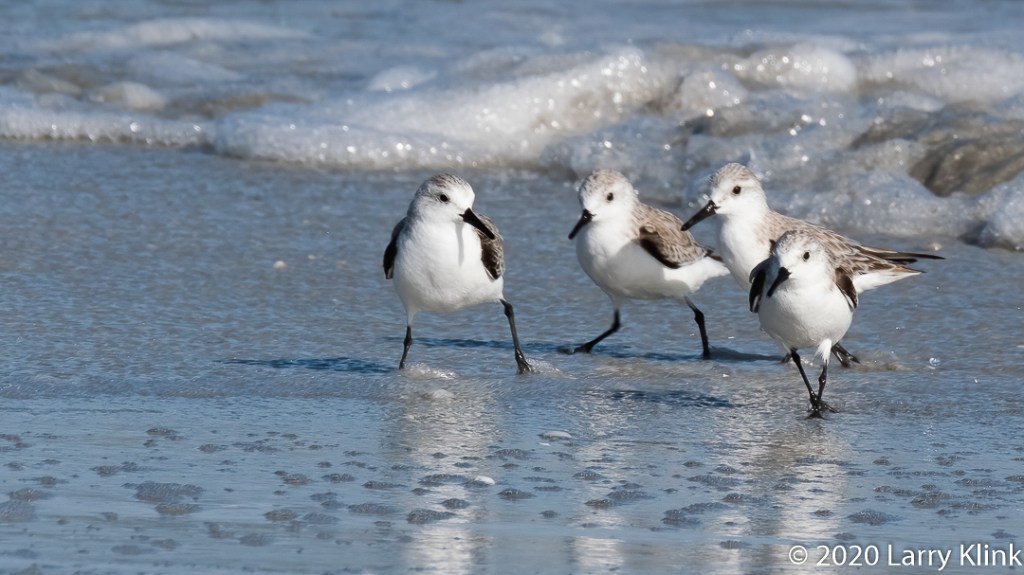
The Sanderling is the little white bird we see along the coast. It scurries after the receding surf collecting small invertebrates or probing the sand for small crabs, worms and mollusks. As the surf returns, they scurry back to dry shores. I think they are both interesting and amusing to watch.
In the US, we get to see Sanderlings along the Atlantic, Pacific and Gulf coasts outside the breeding season. They breed in far, northern Canadian islands and peninsulas. Interestingly, the use the “broken wing” behavior to lure predators from the nest similar to Kildeer.
I’ve included a Ruddy Turnstone in this post. It too is a bird that we can see along coastal waters but breeds in the far north. They hunt by flipping over rocks, shells and seaweed; they eat insects, small crustaceans and bird eggs.
This Ruddy Turnstone is perched atop an interesting feature; a large, naturally formed pile of sea shells that continually replenishes itself. Homo sapiens can often be found foraging in this pile for decorative objects.
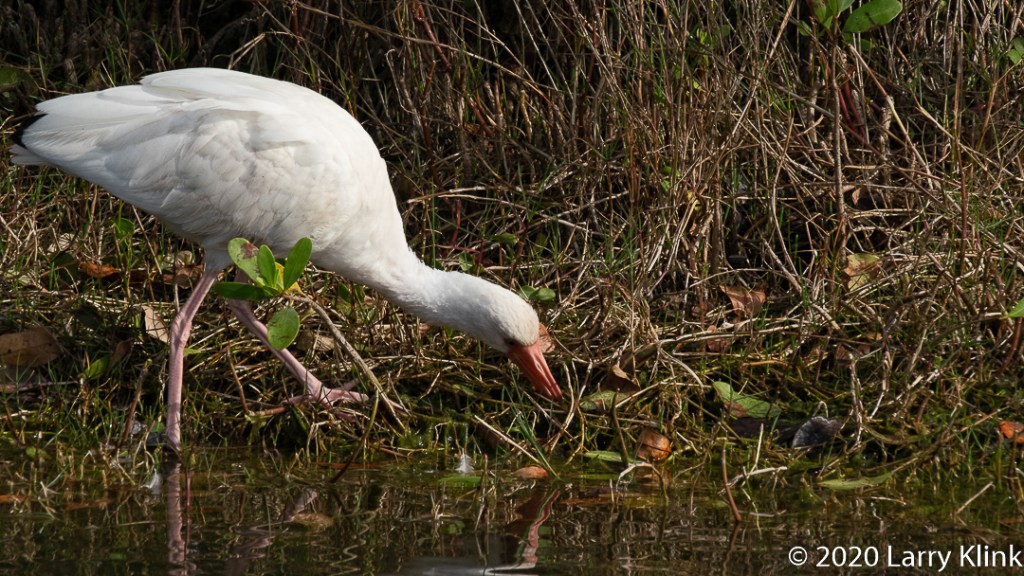
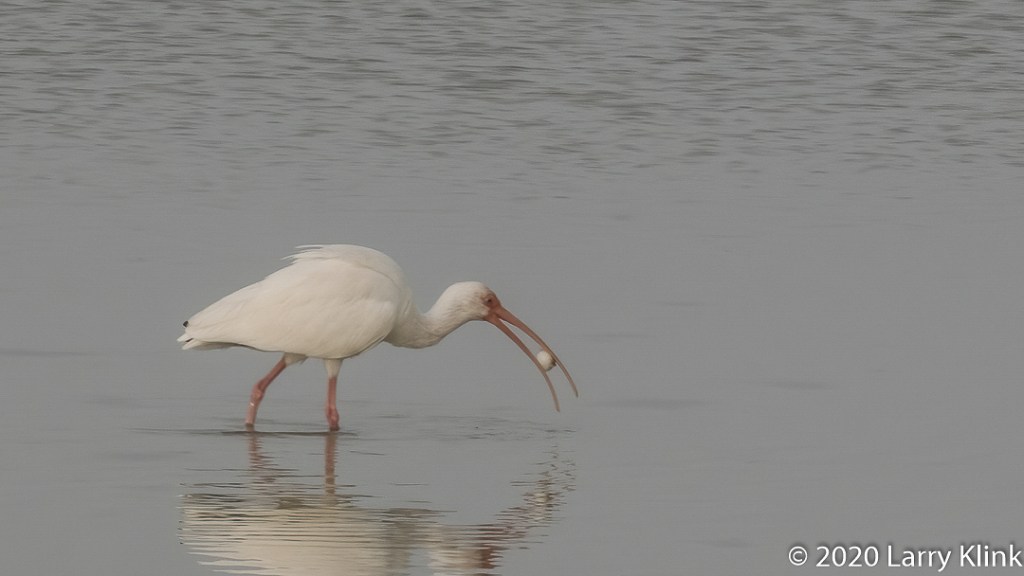
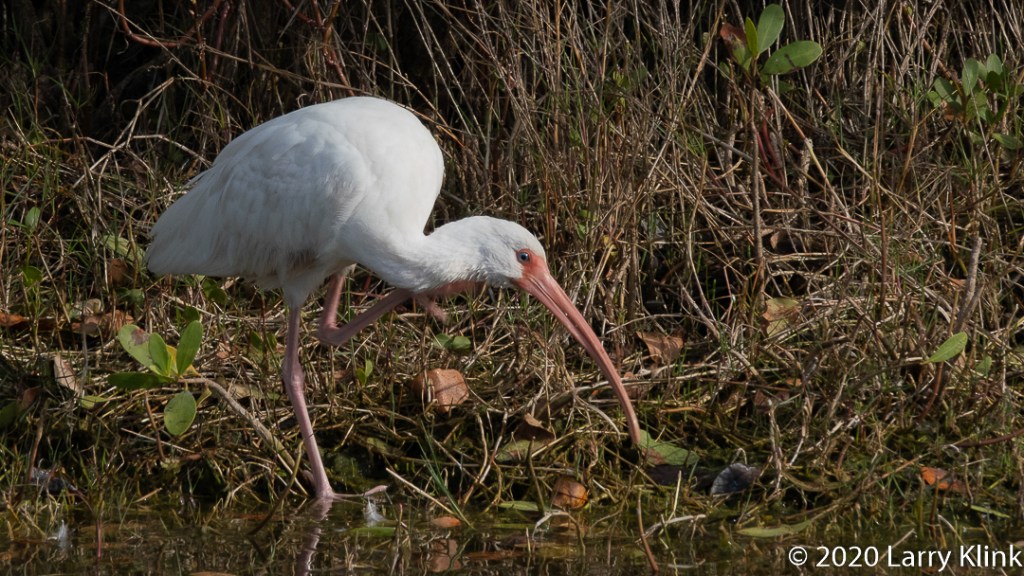
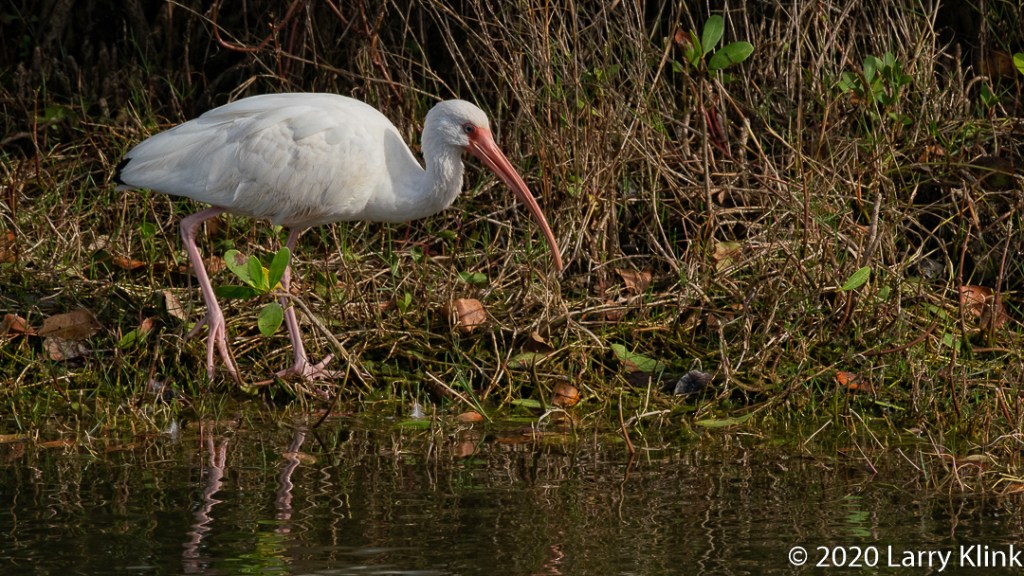
The bright pink and white colors of the White Ibis, remind me of the bright, flamboyant Cadillacs and Packards of the mid to late 1950’s. The gray, pink and white Packard Caribbean convertible comes to mind.
The White Ibis is found, year around, along the Atlantic and Gulf Coasts of the Southeastern US as well as the Bahamas, the Caribbean and parts of Central America. They nest in trees, in colonies with herons and egrets.
These birds forage by walking along the shore line, sticking their beaks in the mud and feeling around for invertebrates, worms and insects. They will also stab fish, frogs and crustaceans with their beaks. Interestingly, they remove the claws and pinchers from frogs and crabs before they eat them.
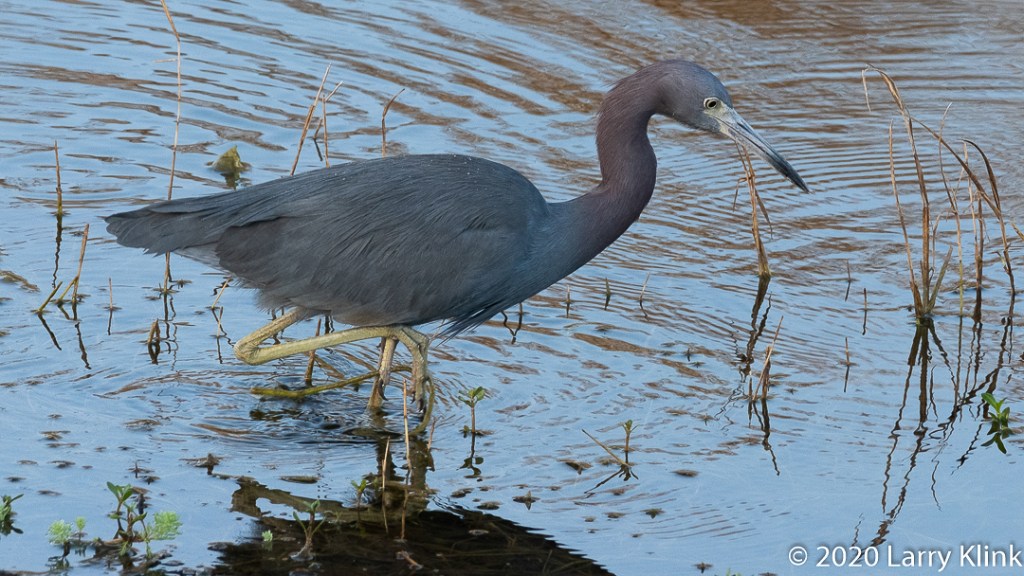
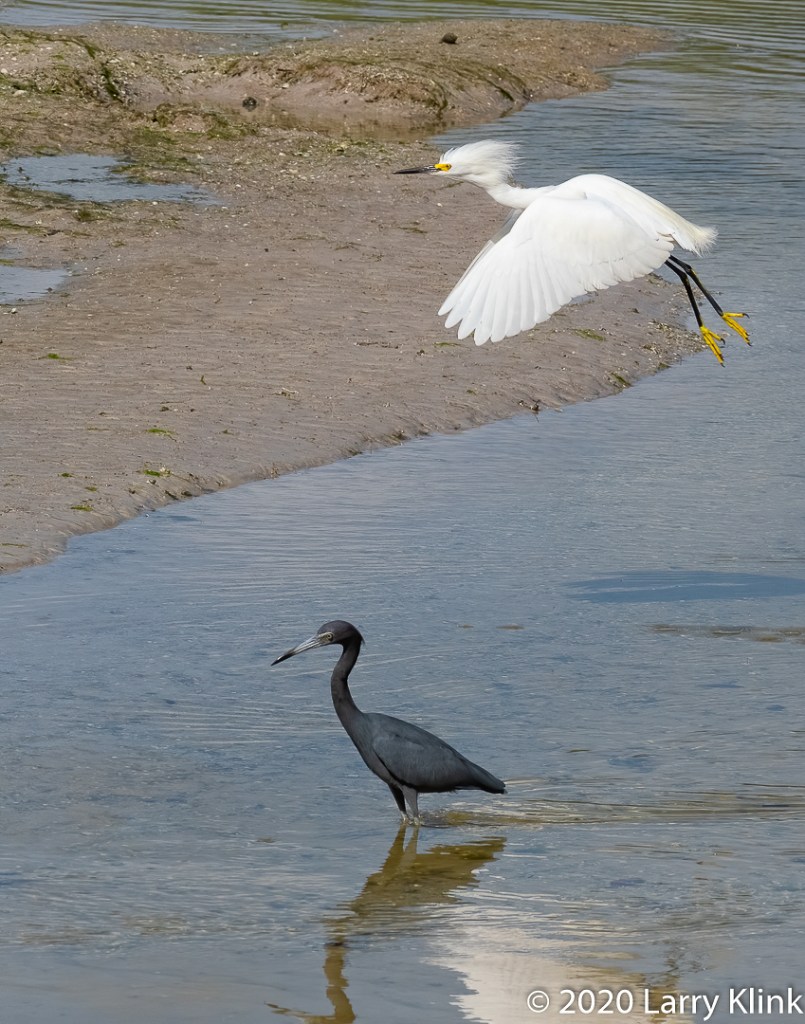
The Little Blue Heron is another small heron that, in North America, is found year-round along the Atlantic and Gulf Coasts of the Southeastern US as well as the Bahamas, the Caribbean, and parts of Mexico and Central America. There is a group of Little Blue Herons that migrate from Mexico and Central America into more interior areas of the Southeastern US when breeding.
The Little Blue Heron forages in swamps, marshes, ponds, stream and other wetlands. They like small fish, small amphibians, crustaceans, insects and invertebrates. My observation is that they stalk and attack prey much like an egret – slow movements with the neck extended then attacking in rapid jut of the neck.
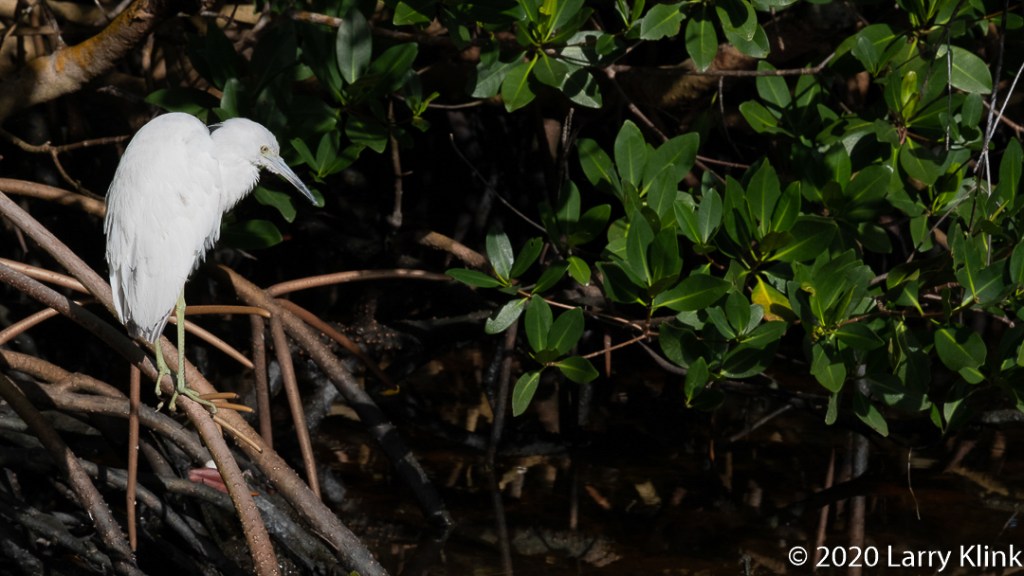
The juvenile Little Blue Heron is all white. Their legs are a gray-green color and the beak is gray. If you are in Little Blue Heron country and you see a bird that looks like an egret, take a closer look; it may be a juvenile Little Blue Heron.
The Glossy Ibis is another interesting wading bird. From a distance, it just looks like a gray bird with long legs and a long, curved bill. But as you get closer, the iridescence of its feather’s colors it in reds, bronze and greens. These birds forage in wetlands, as well as fresh and saltwater marshes for fish, insects and seeds.
The Glossy Ibis is found, year around, in Florida, the Atlantic and Gulf Coast of the US as well as the Bahamas and the Caribbean. In breeding season, they venture all along the US Atlantic Coast. They can also be found in Europe, Asia and Africa. They nest in trees, in colonies with herons and egrets.
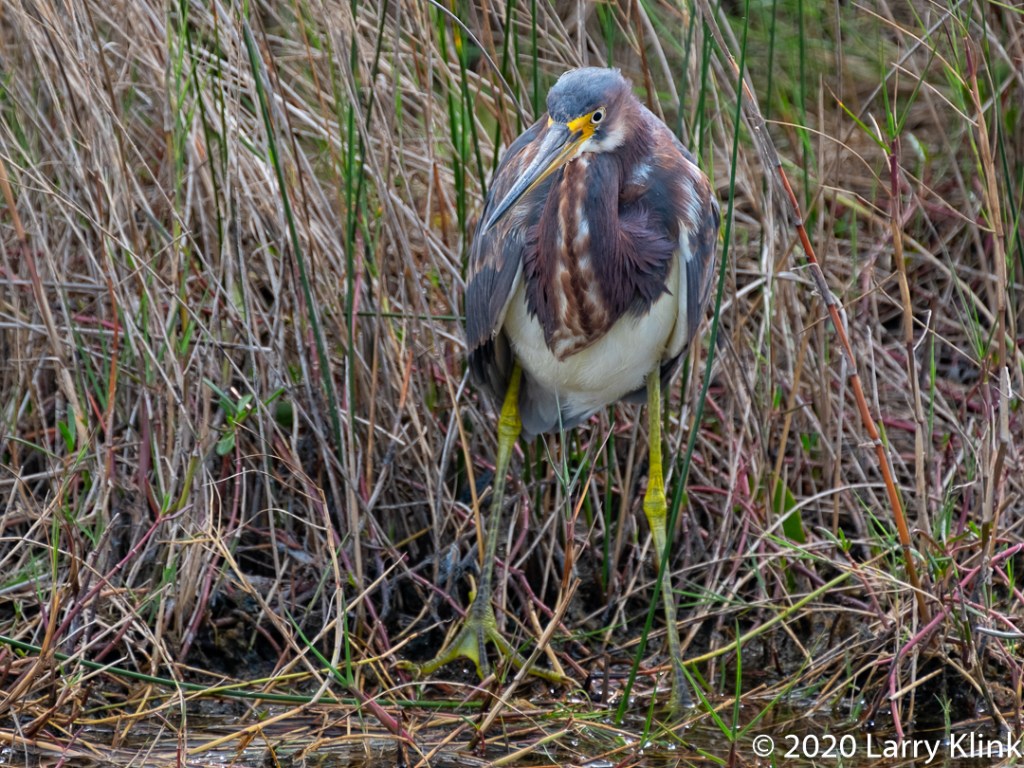
The Tricolored Heron is an amazingly beautiful, small heron – up to 30” tall. They are found, year-round in Florida and along the US Gulf Coast. During nonbreeding periods, they can also be found along the Pacific Coast of Southern California and Mexico as well as parts of Central America. They breed in areas of North Florida. They like the coastal estuaries, saltmarshes, mangrove forests and lagoons.
Tricolored Herons prefer to eat fish from brackish waters. They stalk and attack like other herons and egrets with a few minor uniqueness’s. They nest in colonies with other herons and egrets.
All About Birds from Cornell Labs posted an interesting observation about the Tricolored Heron: “Angsty teenagers aren’t just a human phenomenon. As Tricolored Herons get older they often lunge and snap at their parents when they arrive at the nest with food. To appease the youngsters, parents greet them with bows.”
I was amazed when I first saw one of these birds. I think all herons and egrets are beautiful but, for me, this one tops the list.
Note: Click on caption to see image at higher resolution.
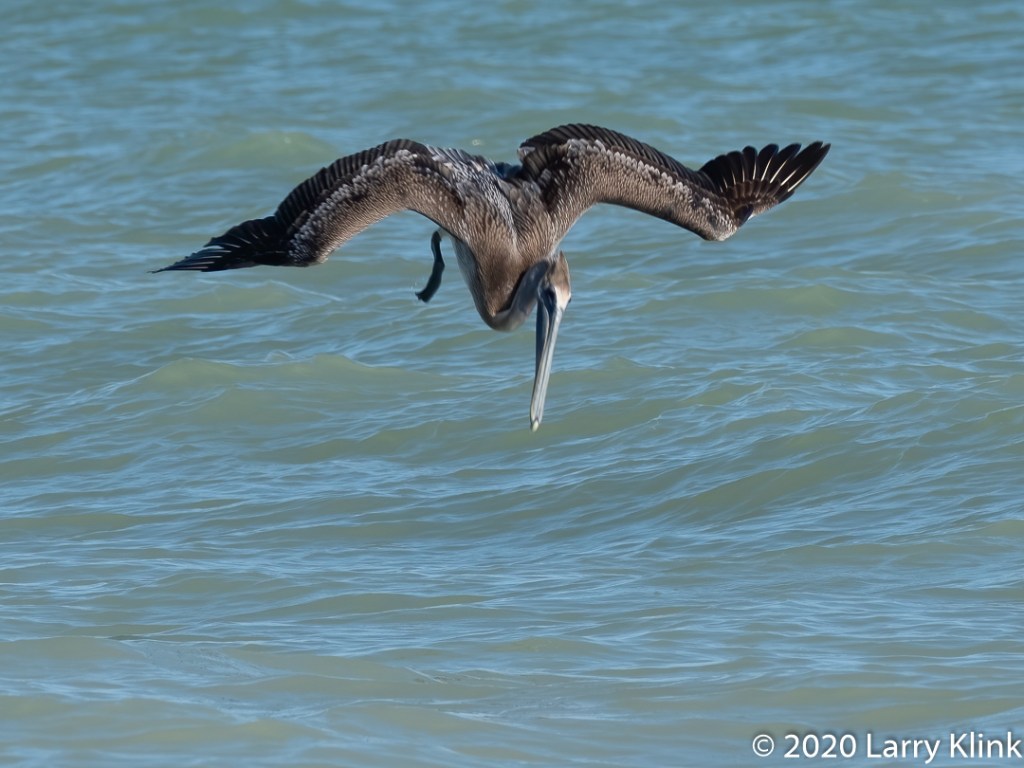
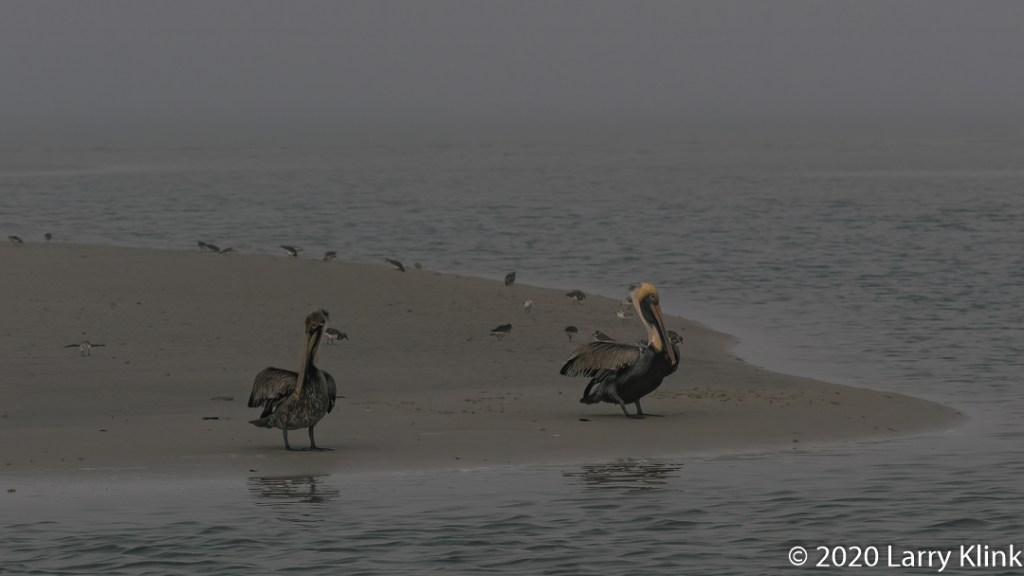
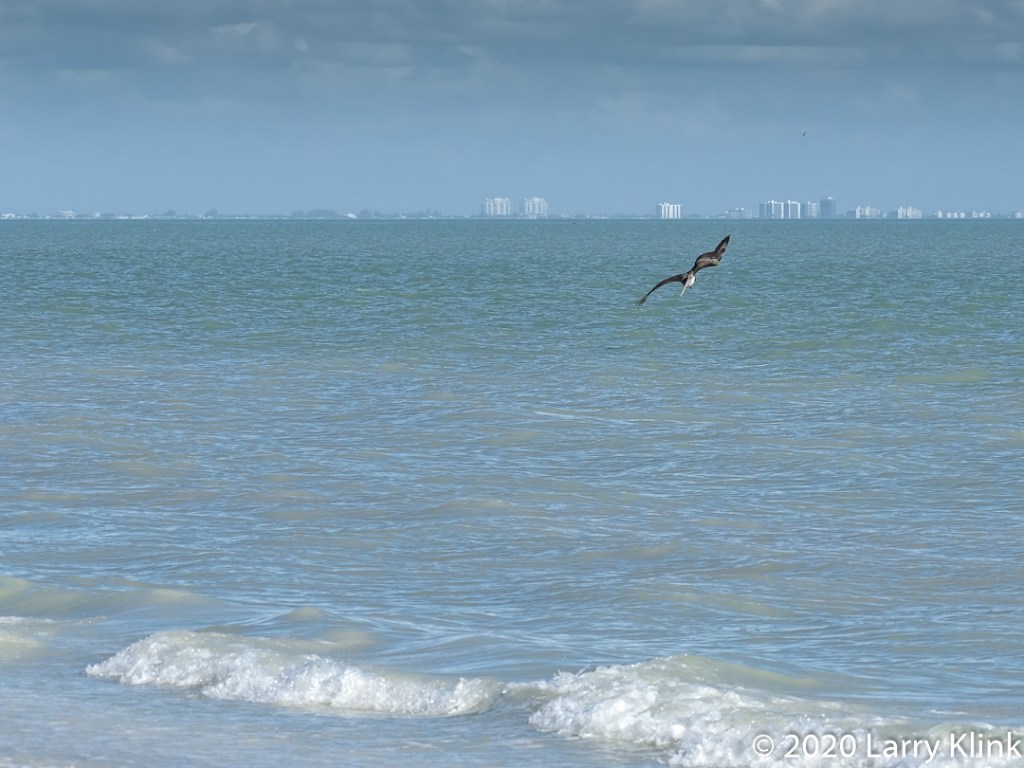
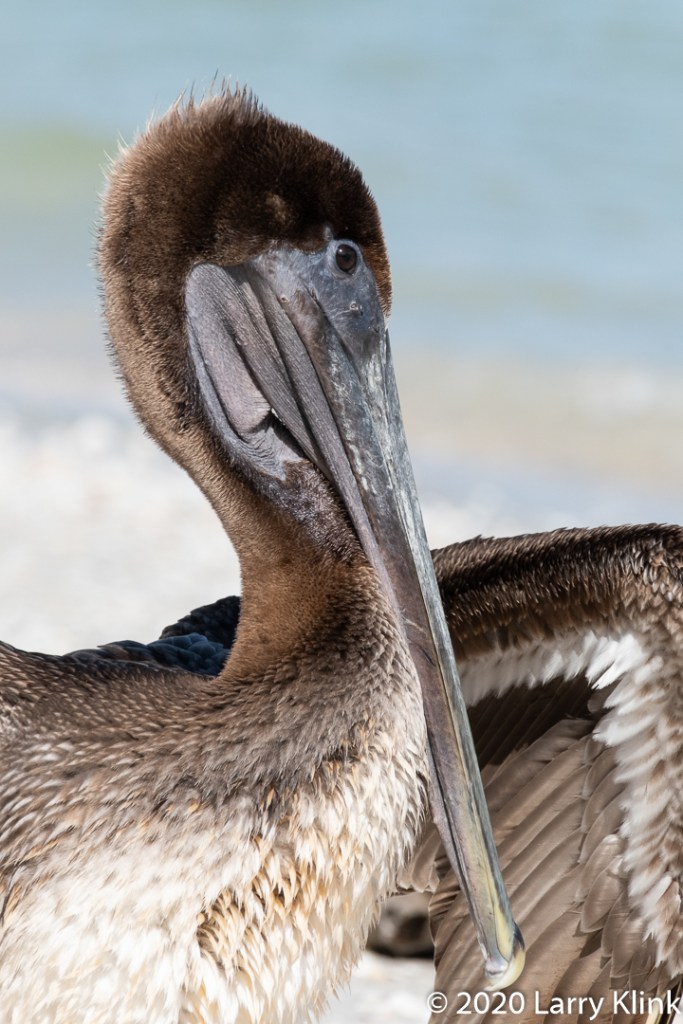
The Brown Pelican is the common pelican species we see along the east and west coast of the United States. There are 2 subspecies of the Brown Pelican – the Atlantic (Pelecanus occidentalis carolinensis) and the Pacific (Pelecanus occidentalis californicus). There are 3 other subspecies found in other parts of the Western Hemisphere. Today’s post pertains to the Atlantic subspecies birds I saw on a recent rip to Florida.
The Brown Pelican lives in flocks and are primarily year around residents of the areas where the forage. They do migrate to breeding grounds, but they are generally in close proximity to their foraging area. They prefer small fish but will eat marine invertebrates like prawns and scavange dead animals too. Thy sometimes swim in shallow water and scoop up food but they are renowned for their steep, head first, dives into the water to scoop up their prey. It’s pretty cool to watch. They can pick-up as much as 2 ½ gallons of water with their prey.
Here are a few images to enjoy.
Note: Please click on caption to see image at higher resolution.
Today I am sharing images of swans I’ve photographed over
the past several years.
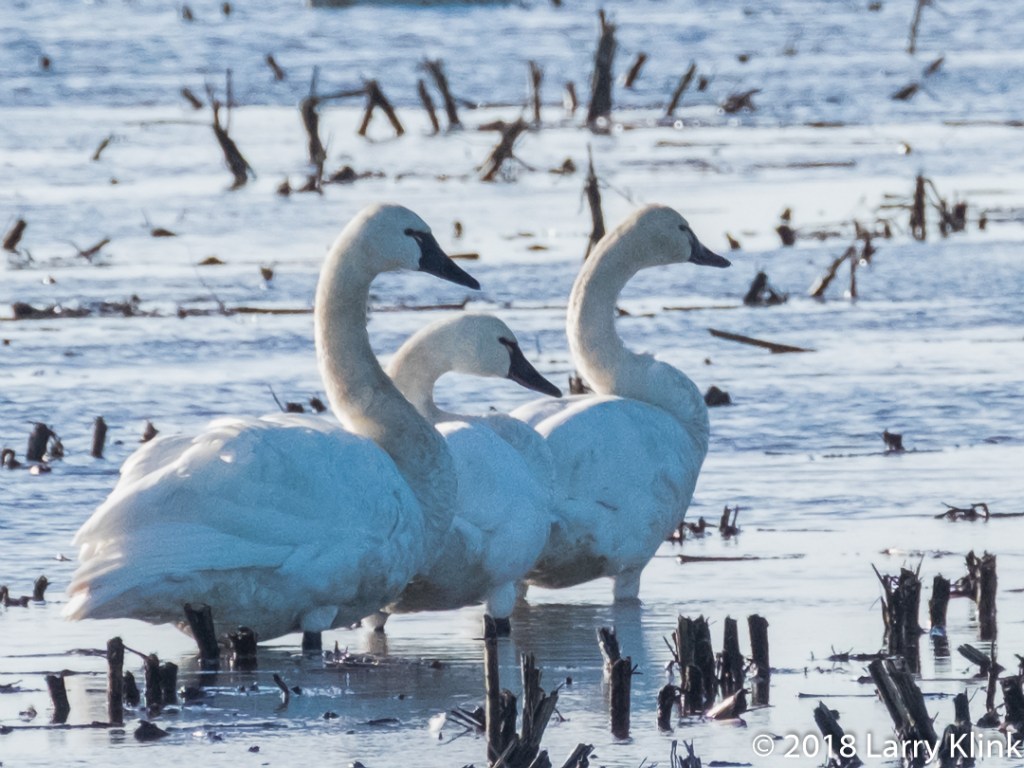
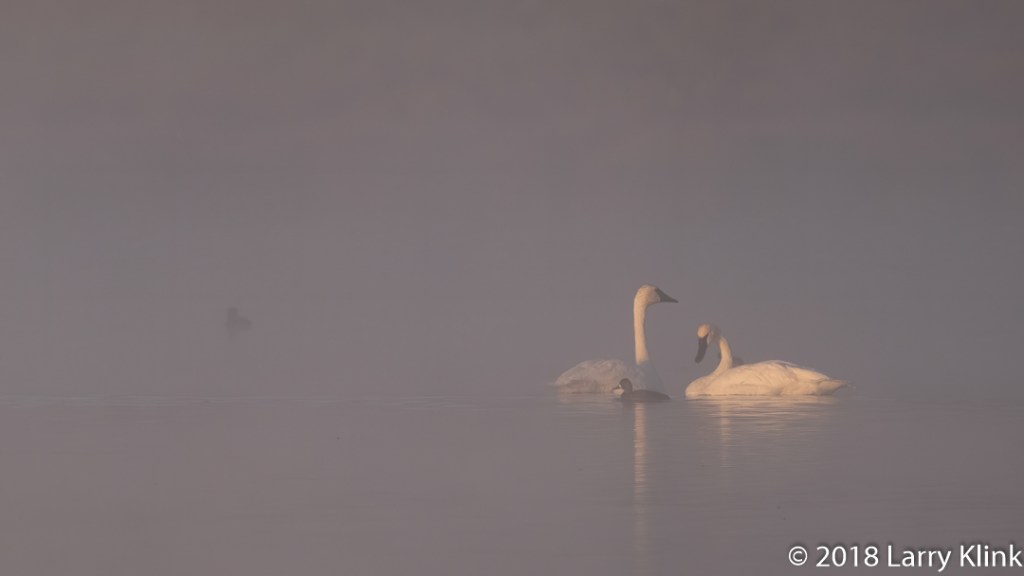
Trumpeter Swans (Cygnus Buccinator) are North America’s
largest waterfowl. Thy can have a 6 foot wingspan and weigh as much as 26
pounds. According to All About Birds, a Website from Cornell Labs: “They breed
on wetlands in remote Alaska, Canada, and the northwestern U.S., and winter on
ice-free coastal and inland waters.” The odd thing here is that I found some on
the icy Yellowstone River in February.
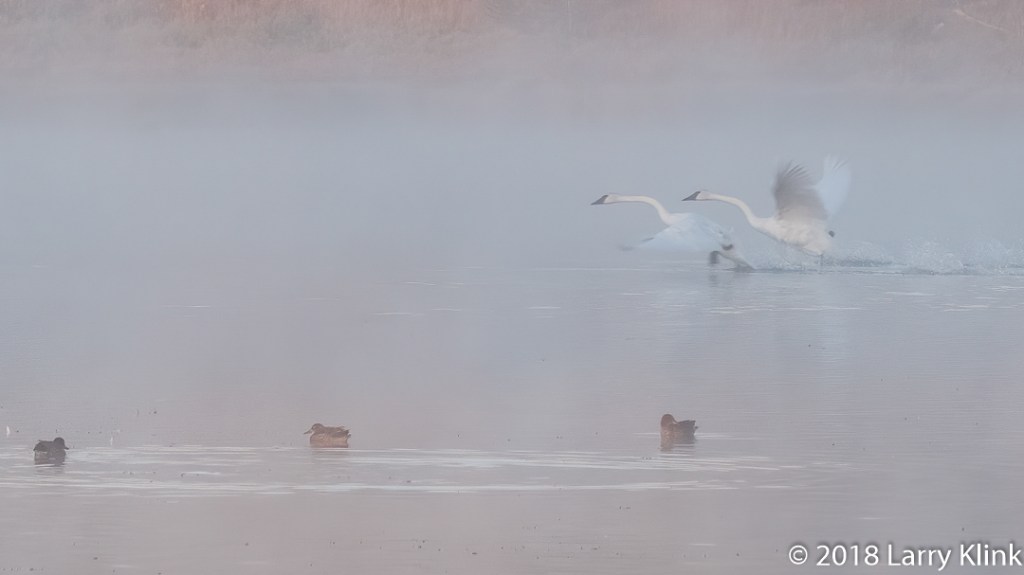
The Tundra Swan (Cygnus Columbianus) is a winter migrant to
the US. We see them winter over on the Pacific Flyway from late October through
about the end of February. They nest on arctic tundra. The Tundra Swan is
sometimes called a Whistling Swan.
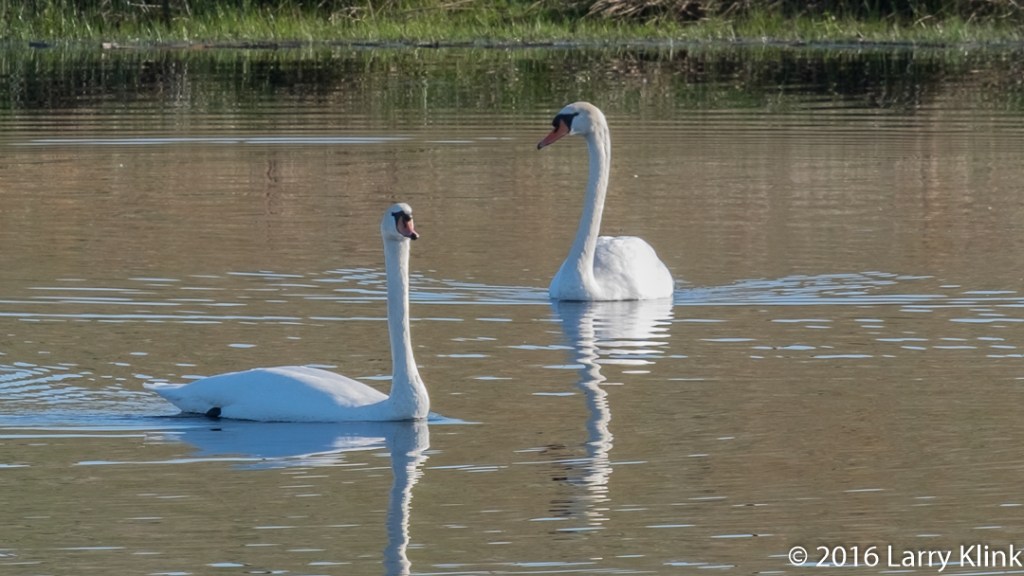
The Mute Swan (Cygnus Olor) is not native to North America; it’s
a European immigrant. It is the swan we see in ponds and lakes at parks, farms
and estates. According to All About Birds: “ All of the Mute Swans in North
America descended from swans imported from Europe from the mid 1800s through
early 1900s to adorn large estates, city parks, and zoos. Escapees established
breeding populations and are now established in the Northeast, Mid-Atlantic,
Great Lakes, and Pacific Northwest of the U.S.” The ones I am presenting may be
from a wild colony or may be feral.
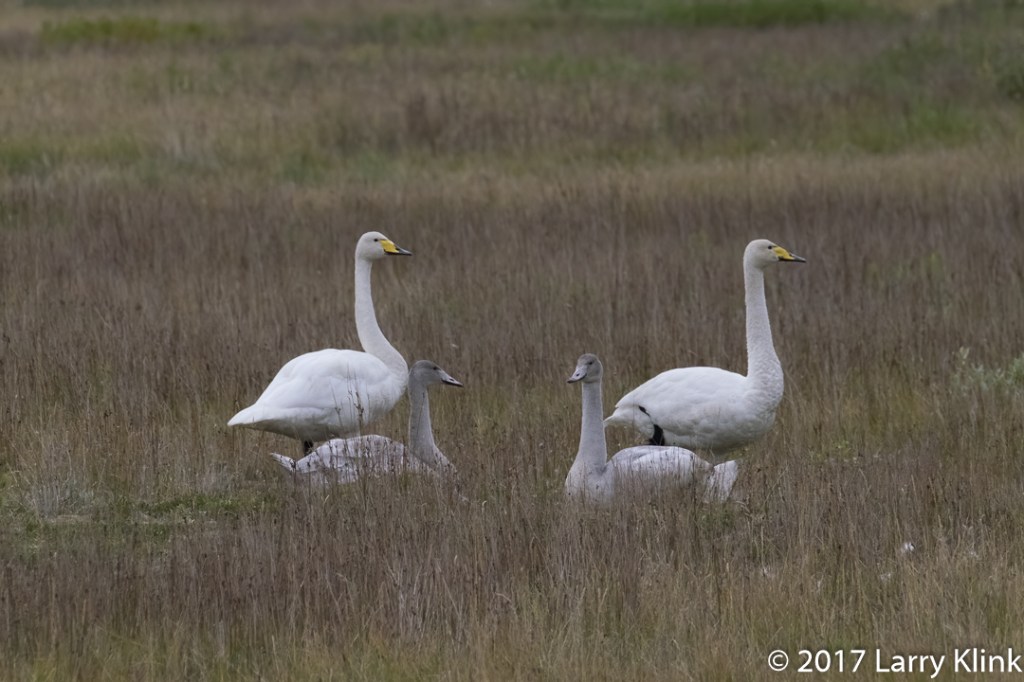
I found the Whooper Swans (Cygnus cygnus) in Iceland. According to Wikipedia, Whooper swans can migrate hundreds or even thousands of miles to their wintering sites in southern Europe and eastern Asia. They breed in subarctic Eurasia. Icelandic Whooper Swans breed and winter over in the United Kingdom and Ireland. They can have a wingspan of 9 feet and weigh over 30 pounds. Whooper Swans pair for life.
Please click on caption to see image at higher resolution.
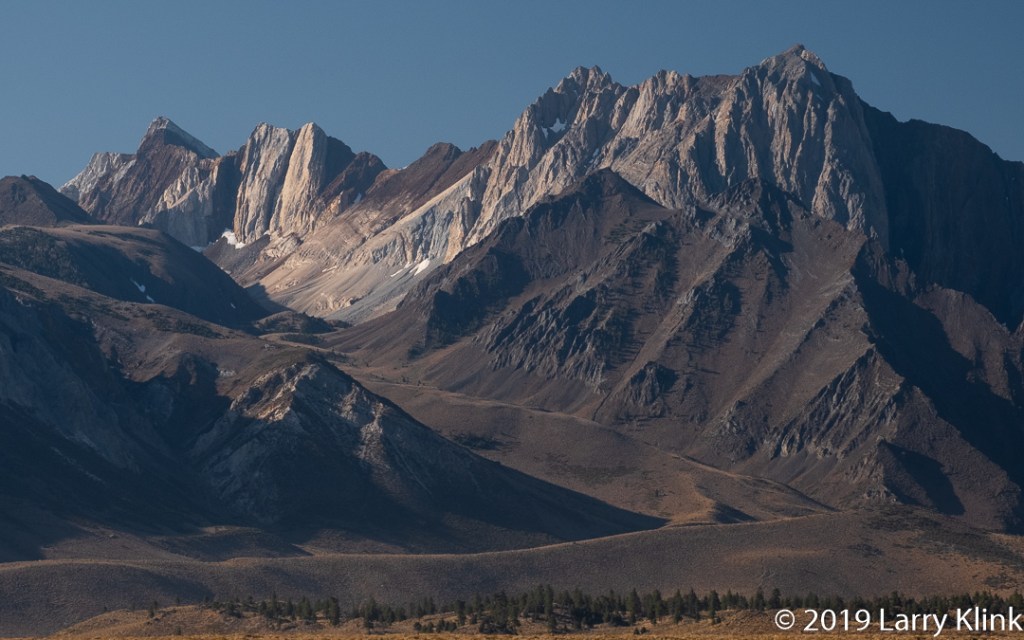
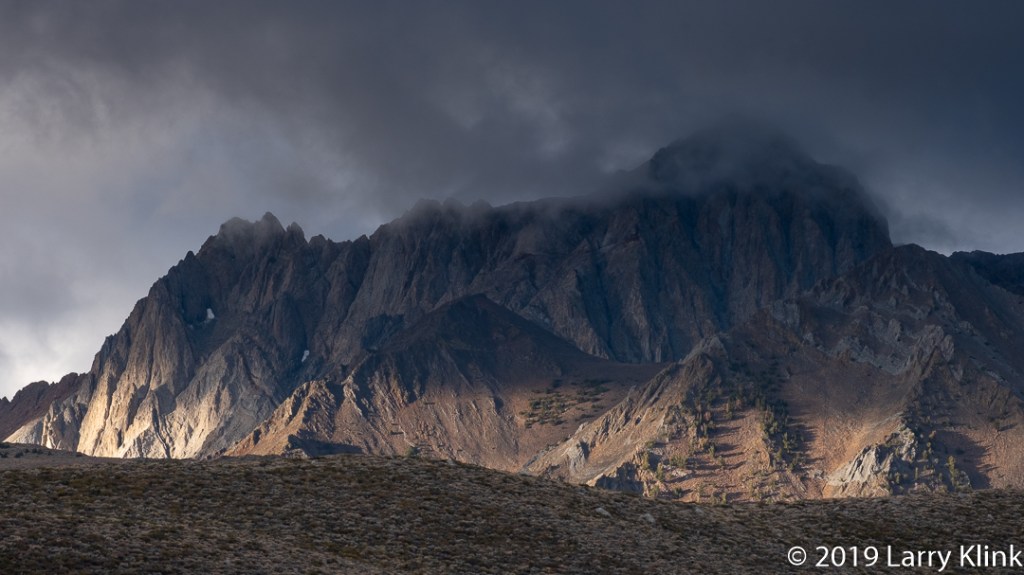
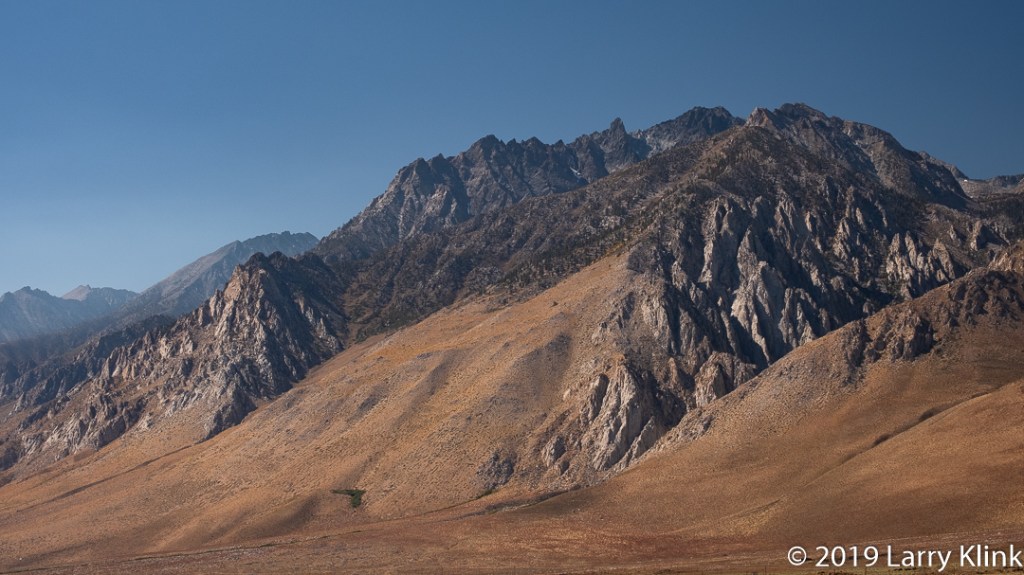
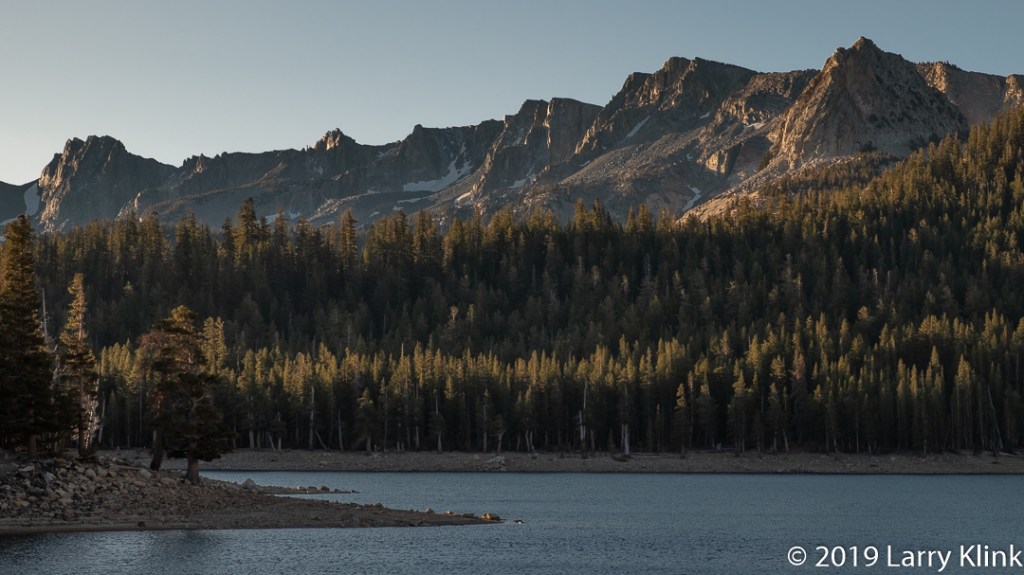
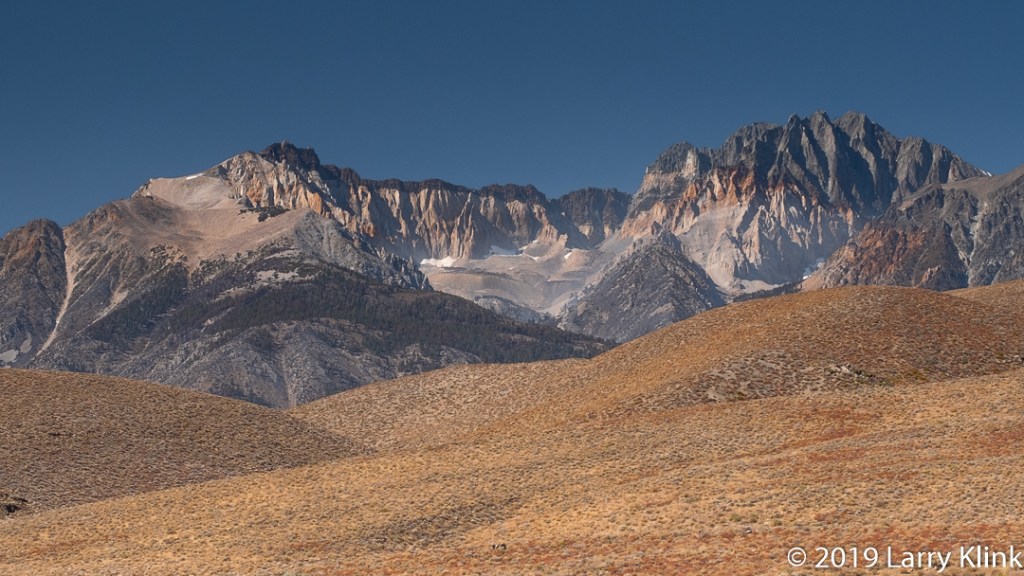
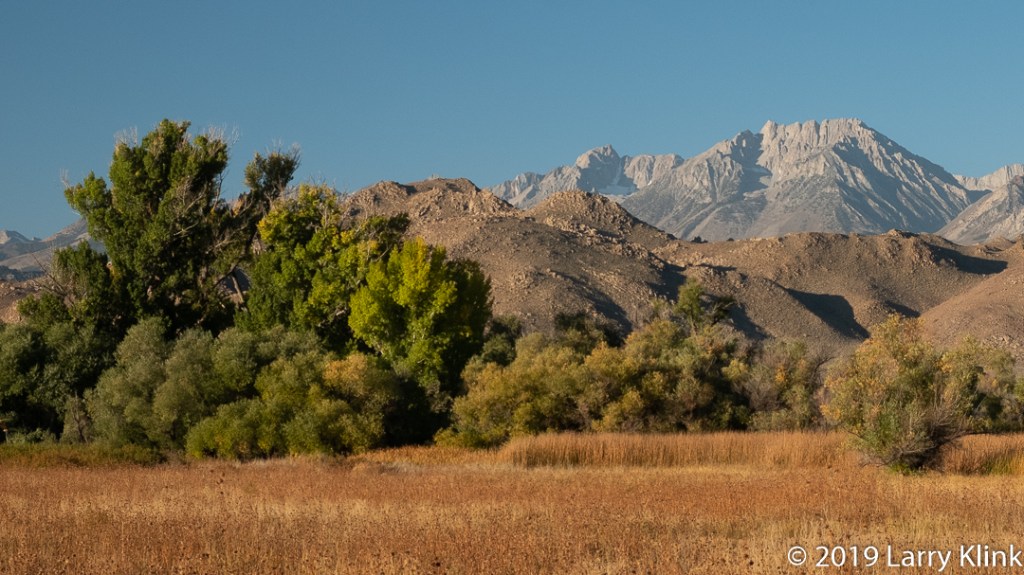
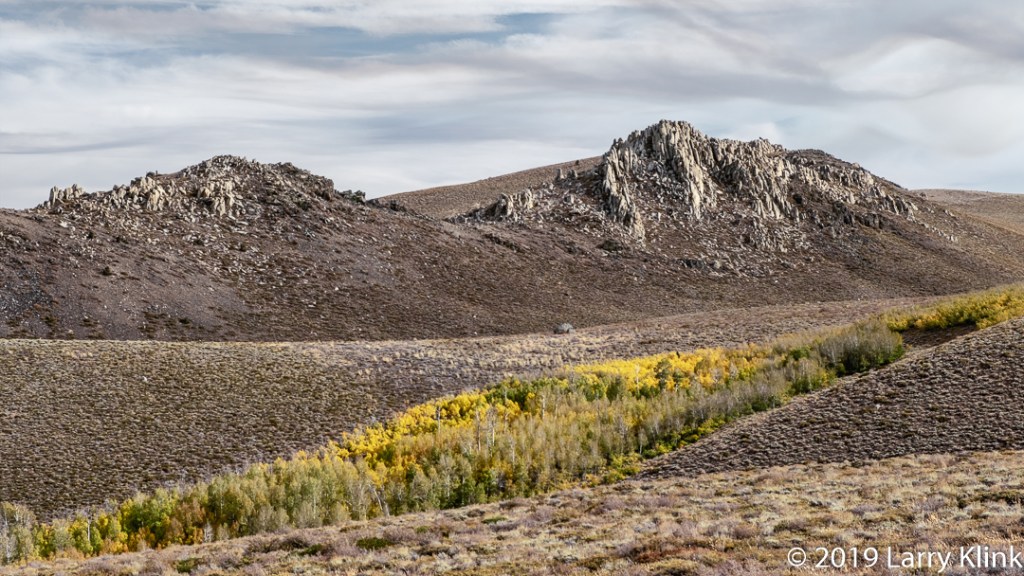
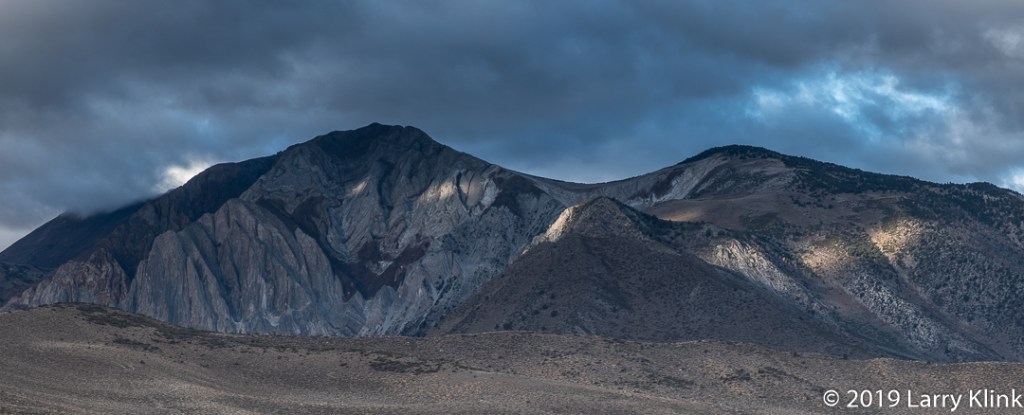
Today I am sharing images of various mountain peaks we see as we travel along US Route 395 in eastern California. Highway 395 extends from the US-Canada border to its southern terminus in the Mojave Desert at I-15 near Hiperia. Much of its way through California it traverses desert valleys sandwiched between the Sierra Nevada mountains and the White-Inyo mountains. It is absolutely stunning scenic drive. For the adventurous, there is mountain hiking and climbing and fishing. There are back road drives into the mountains to scenic lakes and great vistas. There are attractions like Mono Lake with its Tufa, the Ghost Town Bodie, The Ancient Bristle Cone Pine Forest, the museum and remains of the Manzanar Internment Center from World War 2 and the Movie Museum in Lone Pine. If you’ve never explored this area, I strongly recommend you check it out.
Note: Please click on caption to see image at higher resolution.
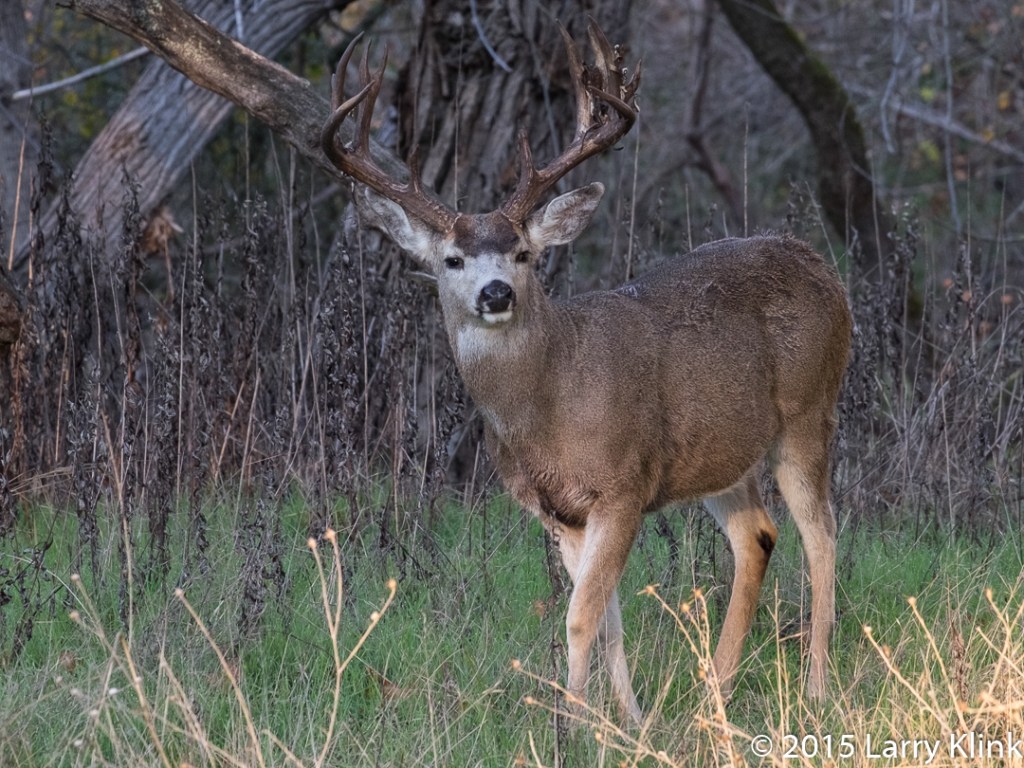
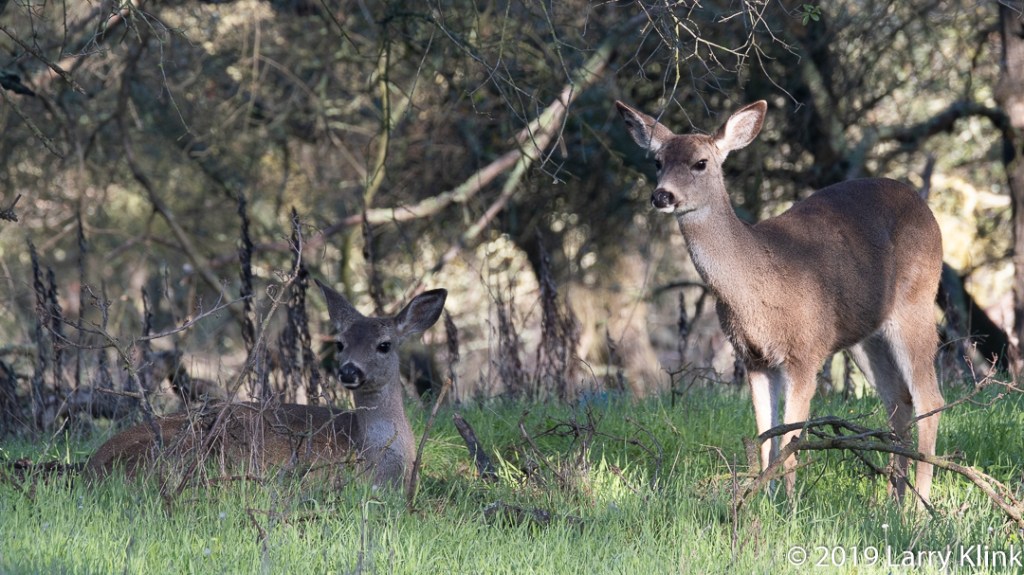
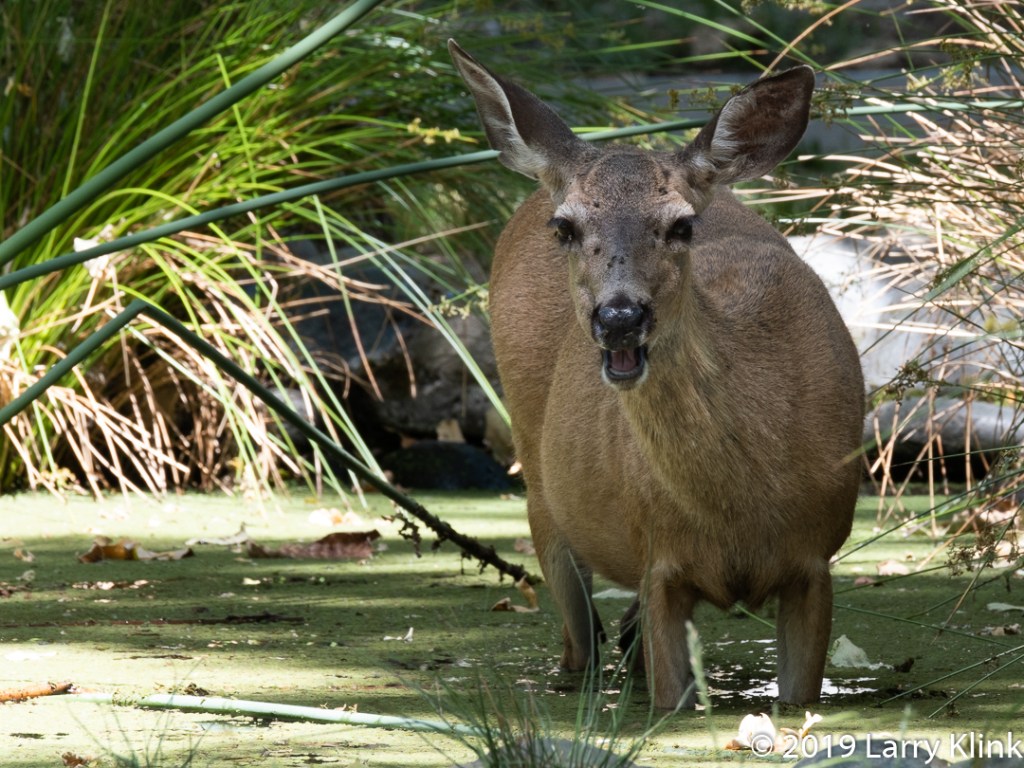
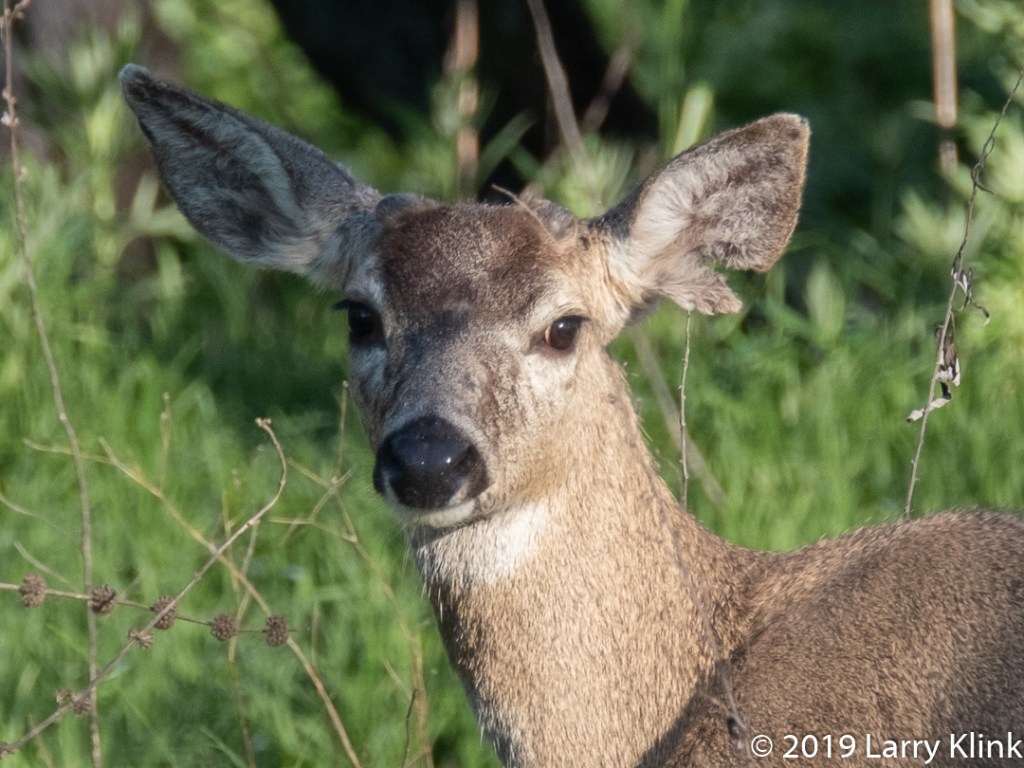
The Black-tailed Mule Deer (Odocoileus hemionus) are found on the western Great Plains, the Rocky Mountains, Southwestern United States and the West Coast of North America.
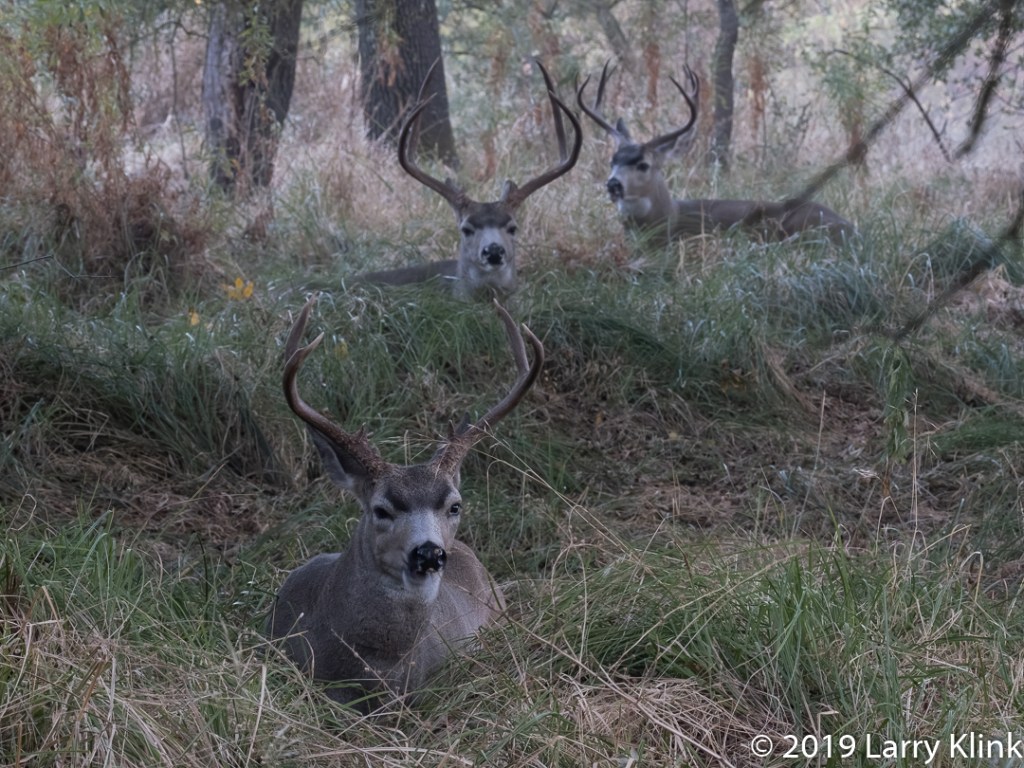
Deer are ungulates, meaning they are hooved. They are also ruminants which means they eat and send their food to the rumen; one of its stomachs. Later, it regurgitates the cud (food) from its rumen, chews it and sends it to its other stomach to digest. Male deer, like moose and elk, have antlers. Antlers are made of bone which are shed and regrown each year. (Animals like sheep, goats, cattle, and antelope have horns. Horns are made of bone covered with keratin which are permanent; not shed and regrown.) The prongs on an antler are referred to as points; a 6 point buck has 3 prongs on each antler.
Male deer are called bucks, female deer are called doe and the
babies are called fawns. During most of the year, deer segregate themselves by
sex; bucks in groups and doe, along with their young, in separate groups.
Each year, deer go through a reproductive cycle that begins
with the “rut”[i].
The rut is the time when male deer fight for the right to breed with a harem of
females and concludes with impregnated doe. As the rut commences and bucks have
regrown their antlers, the bucks attempt to form a harem. One buck may challenge
another for the right to breed with a harem. Bucks will lock antlers and push
and fight until one is pushed backwards and loses the challenge. It is a
dangerous time for bucks; they can become permanently injured. The ultimate
winner breeds with the females as they enter estrus. Gestation is about 200
days.
In mid-to-late winter, the bucks drop their antlers. When
the antlers regrow, they are covered with a furry skin commonly called velvet. When
the antlers have completed their growth, the velvet dries and causes irritation
for the bucks. The bucks rub their antlers against a tree to remove the velvet.
About the time autumn begins, when the fawns have grown and the bucks’ antlers have regrown, the rut begins again.
Note: Please click on caption to see images at higher resolution.
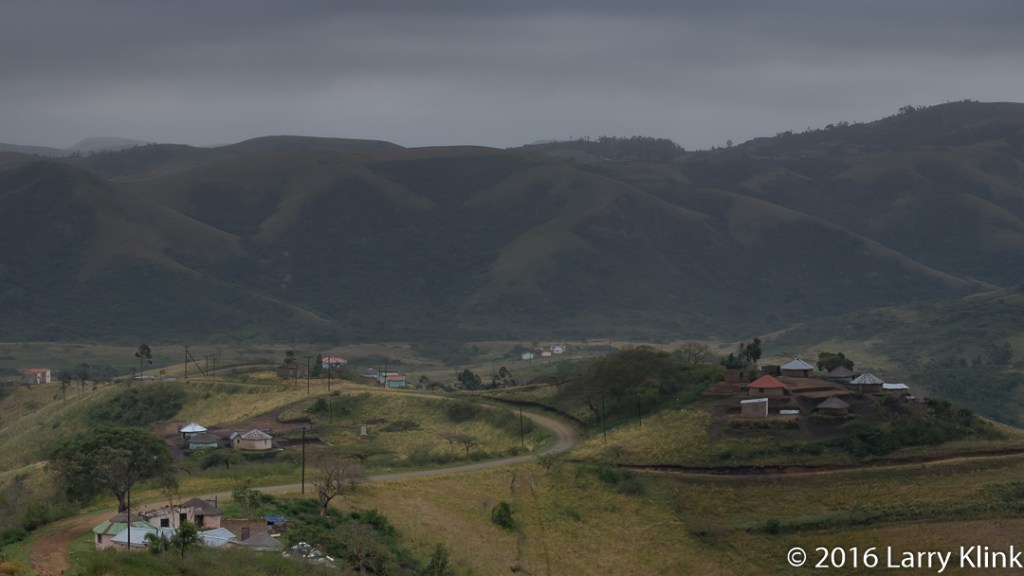
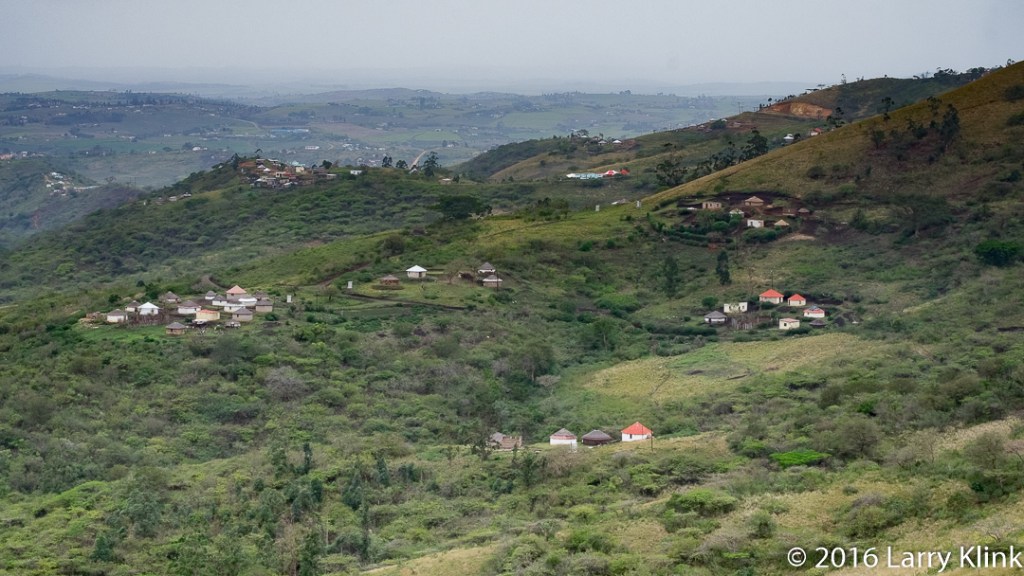
Three years ago, we visited South Africa. Afterward, I shared many images, mostly of the abundant and beautiful wildlife. Though I published some landscapes and seascapes, I have many that I didn’t publish. I thought I’d go back and share some of them now. There will be more in the future.
Note: Please click on caption to see image at higher resolution.






















 Earthwatcher