To all of my followers, I just made a new post, It Was a Dark and Stormy Day, on my new page. Please follow the link to my new page and begin following me there.
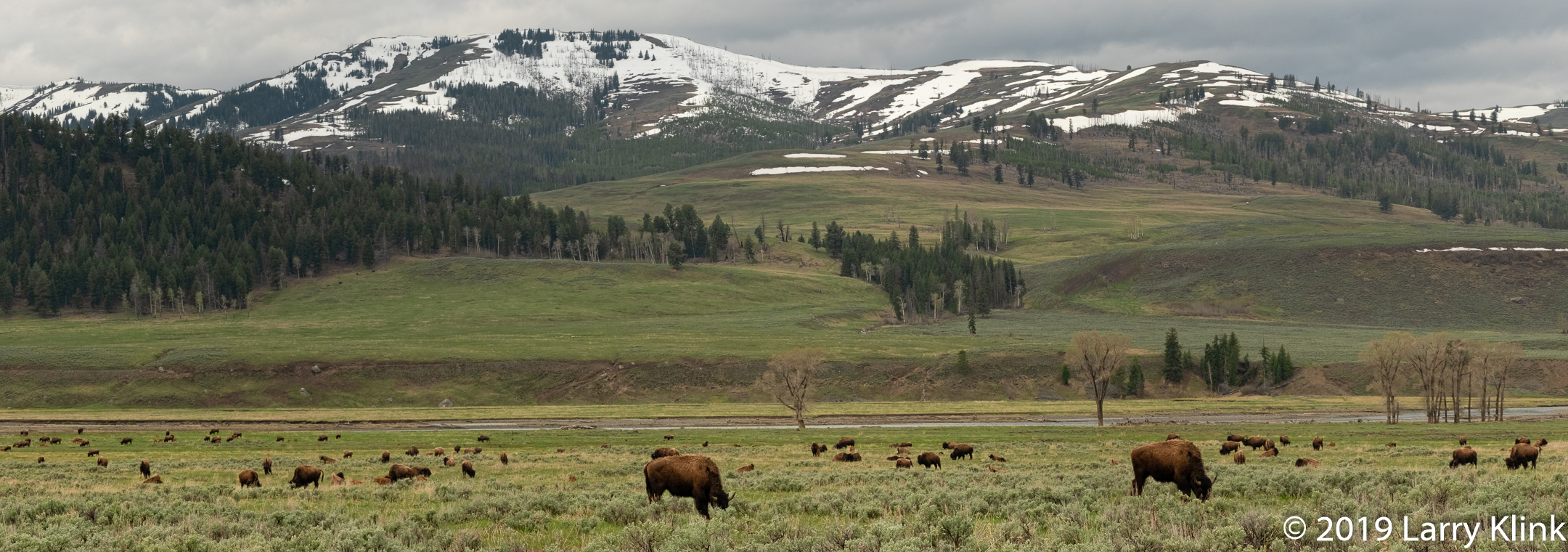
To all of my followers, I just made a new post, Bison at Yellowstone, on my new page: www.earthwatcher.photo.blog. Please follow the link to my new page and begin following me there.
Bison (Bison bison) are an iconic species at Yellowstone
National Park. As many as there are and as often as I see them, I am still in
awe of them. This trip was especially fun because of the large number of
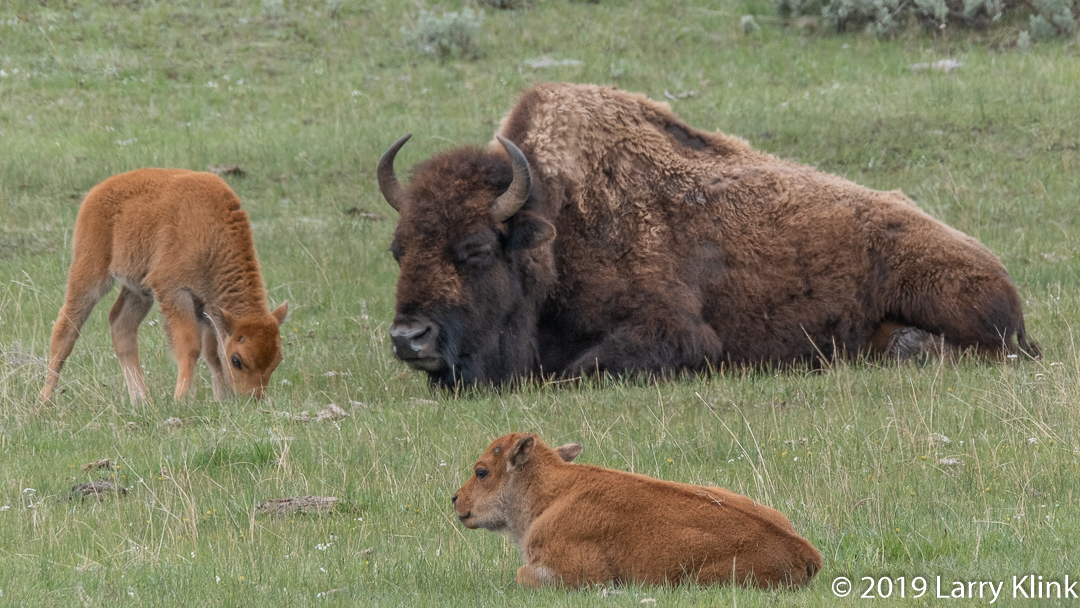
babies. They were standing, sleeping, scampering about; all the things babies do.
For the first few months of their life, the baby bison have a reddish colored coat; many people refer to them as red dogs. The adults were losing their winter coat, so patches of fur were missing or dangling on many of them. Others had a beautiful coat that appeared gold in the sun.
Please click on caption to see images at higher resolution.
Common Merganser (Mergus merganser) with Babies; Effie Yeaw Nature Center, Sacramento, CA; JUN 2019
For the past 2 weeks, I’ve been following this female Common Merganser with a large group of babies. I’ve enjoyed watching the babies lift themselves above the water and scamper , at high speed, against a strong current, from one place to another.
I was curious because this seemed like a lot of babies for one female, so I did some research. I discovered that Common Mergansers, Red-breasted Mergansers, Hooded Mergansers, Canada Geese and Common Eiders all use this form of child rearing. As what one article described as duck daycare.
I’ve seen this behavior in Canada Geese and I’ve seen a single female lion watching all of the cubs in a pride. So, this is not unusual behavior. Its just something I don’t get to see very often.
My passion is nature. I have stood in wonder and in awe,
watching the beauty of the world!
Communing
with nature brings peace and tranquility to my soul. Photography provides me the artistic platform
to share that peace and tranquility with my audience.
When I photograph landscapes, I prefer to capture
smaller, more intimate landscapes. When I
discover a scene, I study it to understand the natural and/or human forces that
act upon it. I observe the sky and think
about the forces of climate and weather and how they are impacting it. I find and
focus on an actor, animate or inanimate, so that I can depict its interaction
with that landscape. I look
for the small details like wet stones along a river, glistening vegetation, the
habitat supporting wildlife and the mix of textures and colors that that create
the patterns of nature. I try to craft a composition that will entice the
audience to linger and to find their story. I want them to imagine themselves experiencing the sights, the sounds
and the feeling as if they were there. To
give them a few moments respite from their everyday world.
When I photograph wildlife, I prefer to capture them
interacting with their natural habitat. I watch and wait, attempting to make a
composition that gives the context of their environment, while performing some
action that shows how they live. I want my audience to linger and see things
they never saw before. I want them to appreciate the subjects role in its environment.
I am inviting all of you who have followed me on earthwatcherphoto.wordpress.com, as well as all others, to begin following me at earthwatcher.photo.blog.
I was getting concerned that my free WordPress site was displaying ads that might not fit the philosophies I try to live by or the image I want for page. So, I am moving to a paid plan that will eliminate the ads.
The content of my blogs will not change, only the presentation format.
I am inviting all of you who now follow me on earthwatcherphoto.wordpress.com to begin following me at earthwatcher.photo.blog.
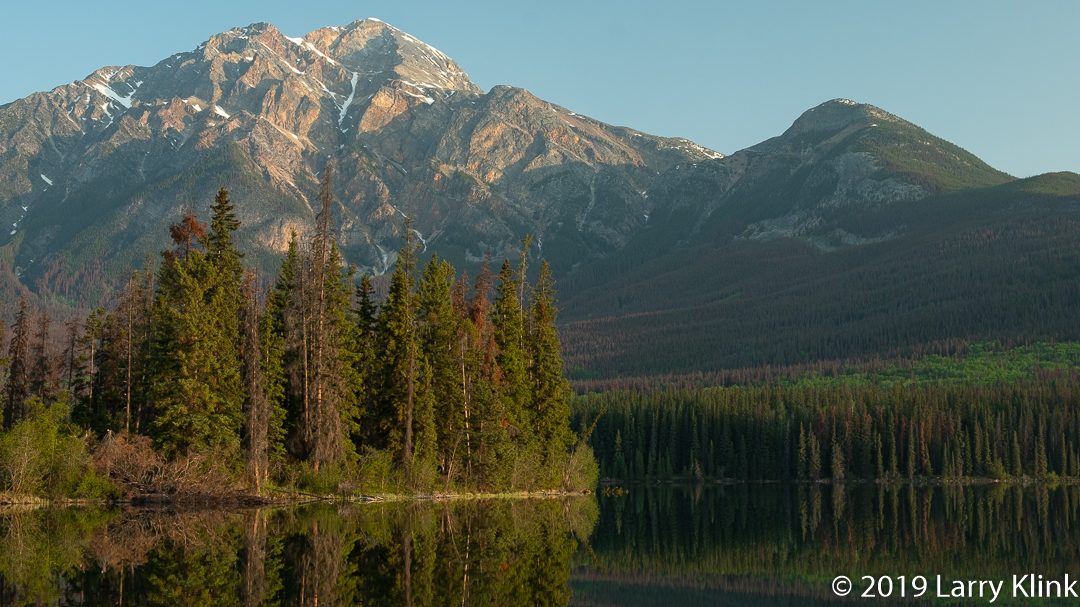
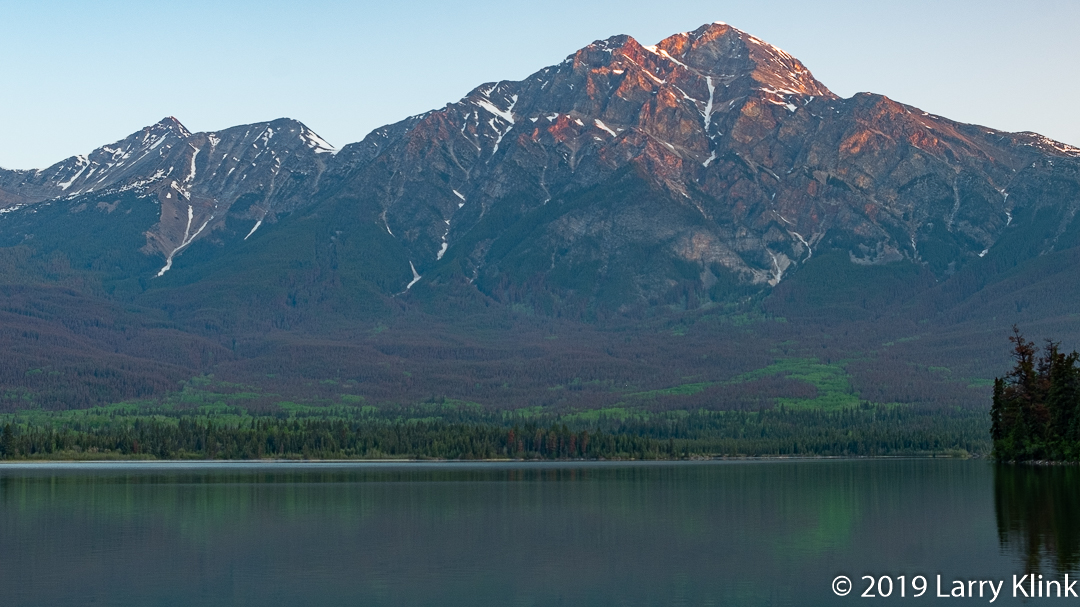
On our recent trip to Banff and Jasper National Parks in Canada,
we watched a quiet and beautiful sunrise over Pyramid Mountain and Pyramid Lake
near Jasper, Alberta, Canada.
On this morning we had an almost perfectly clear, blue sky.
The alpen glow on Pyramid Mountain made it glow in gold, orange and red. A
large portion of the evergreen forest at its base was colored a rusty red; sad
and unfortunate damage caused by the mountain pine beetle. But it added depth
and color.
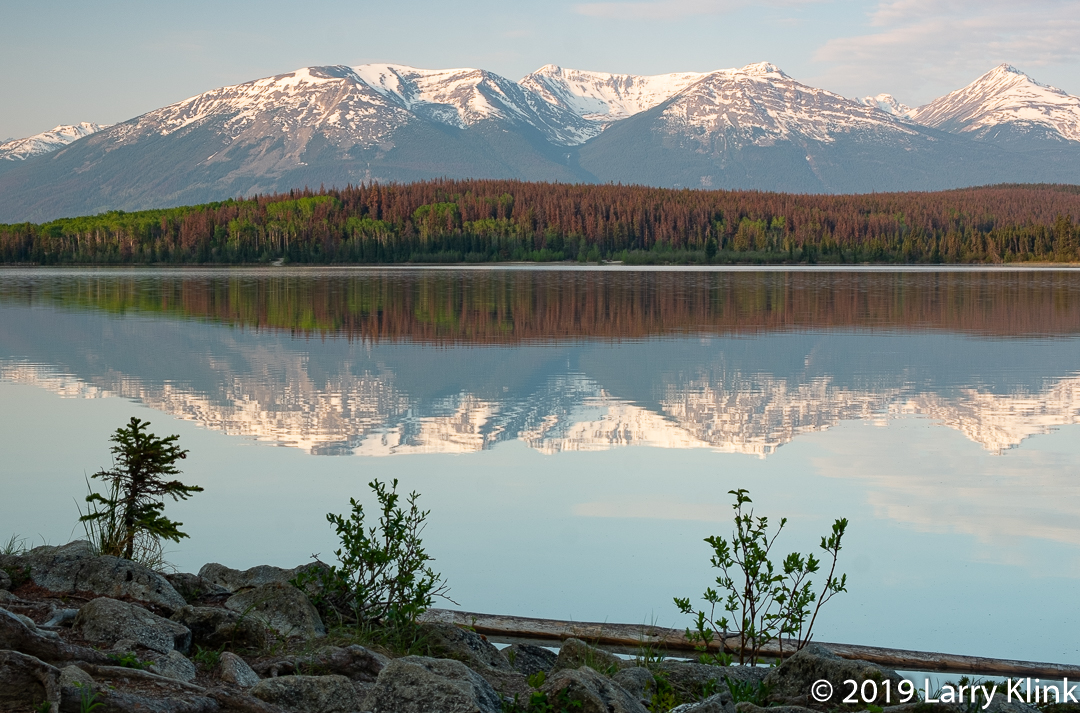
Looking across Pyramid Lake in another direction, we saw a
row of snow-capped mountains, also glowing in the sun.
The lake itself was a deep emerald green from the glacial
meltwater and the positioning of the early morning sun. The reflections off the
water were deep and mystical.
I tried my best to capture moment. Please kick back and try to imagine yourself there. Visit it sometime; it is well worth the visit.
Note: Please click on caption to see image at higher resolution:
My wife and I just completed a road trip that took us
through several national parks in the US and Canada. The trip focused on the
northern Rocky Mountains. There was a lot to see and to photograph so it will
provide many posts in the weeks ahead.
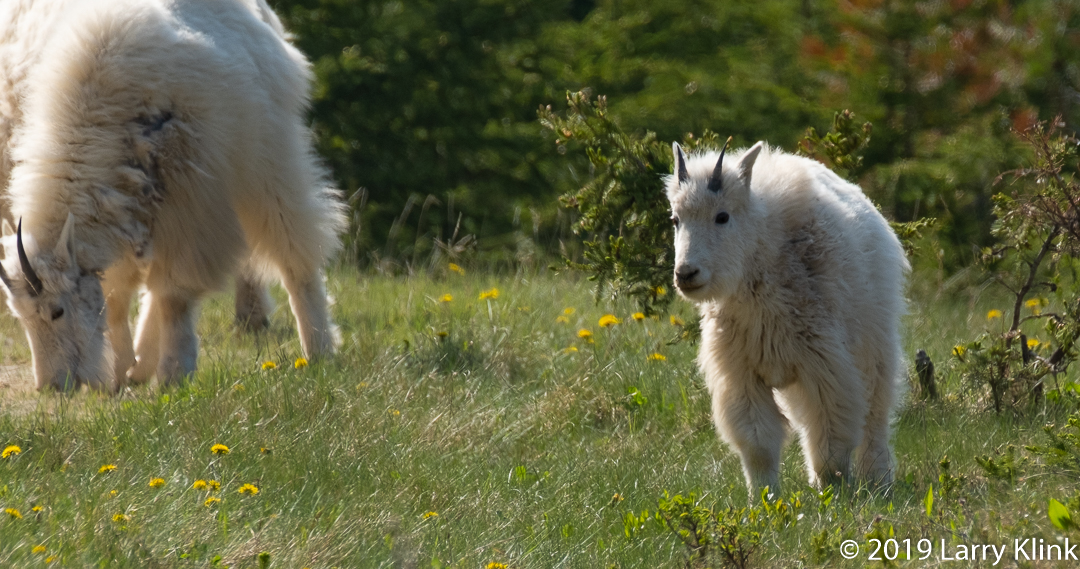
Today, I’m starting with two of my favorite animals; bighorn
sheep and mountain goats. Though we
found signs warning of bighorn sheep in many places we only found them in
Yellowstone along with a small flock in an impossible place to photograph at
Banff National Park in Alberta, Canada. We saw the mountain goats in Glacier
National Park, MT as well as Banff National Park. Interestingly, we found the mountain
goats near “goat lick” areas; areas of clay soil with high concentrations of
minerals necessary to their health.
It was a real treat for us to see them. I hope you enjoy them also.
Please click on caption to see image at higher resolution.
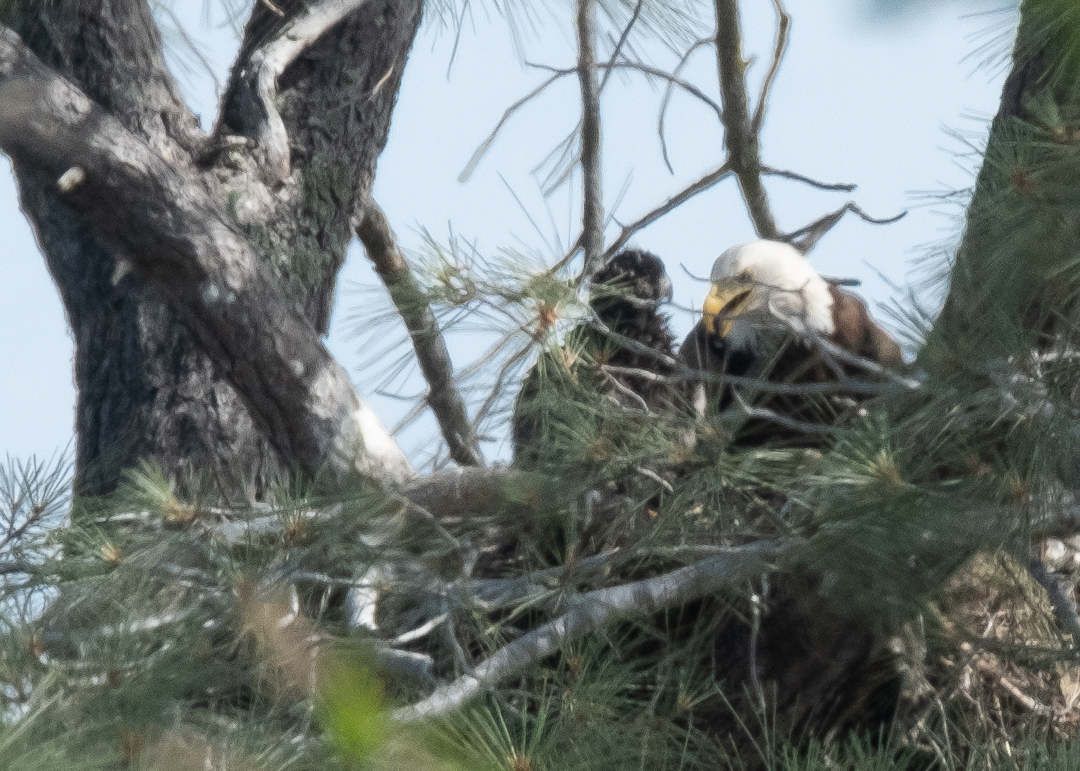
Eaglet at Week 8; Rollingwood Bluffs Park, Folsom – Orangvale, CA; May 17. 2019
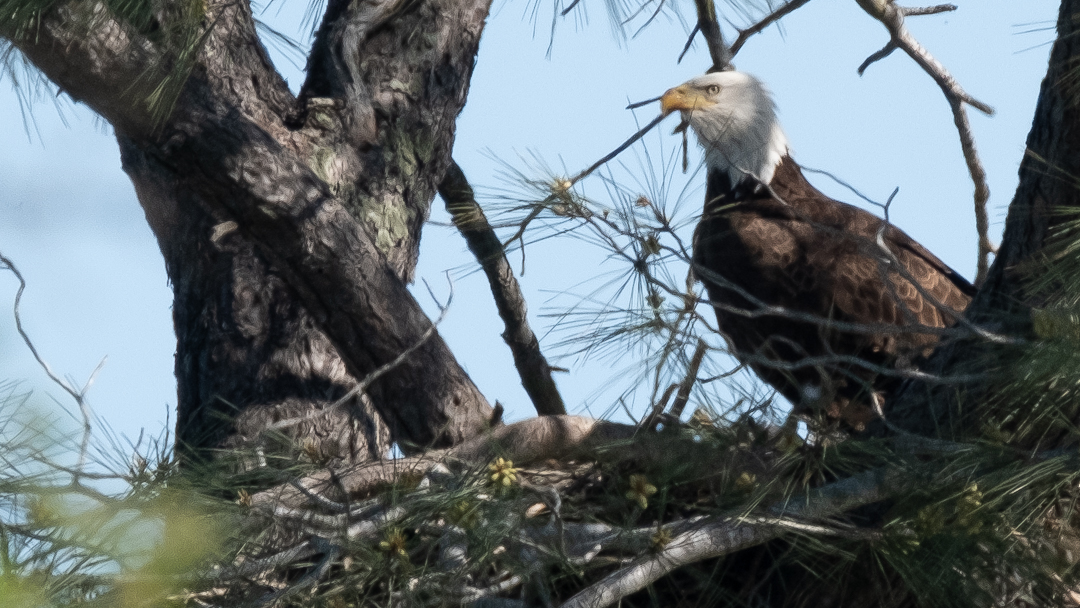
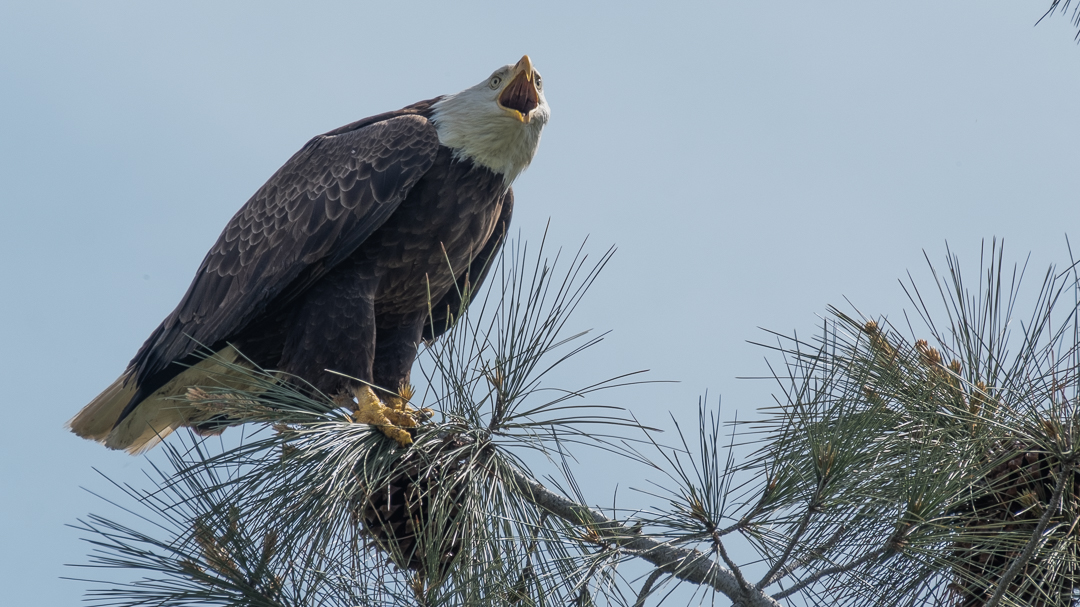
Twenty Nineteen is the third season a pair of Bald Eagles
has nested on a bluff above Lake Natomas near Orangevale, CA. This year, as
well as the last 2 years, this pair of eagles has produced 2 offspring.
According to the volunteers that monitor the nest, the eggs were laid in late
February and they hatched approximately March 26. One baby hatched 3 days
before the other. This year, I decided to visit the nest weekly and post a set
of images showing them as they grow. It’s
been a great experience because I got to know some people who have been
observing eagles for a long time. They were very happy to share their knowledge
with me.
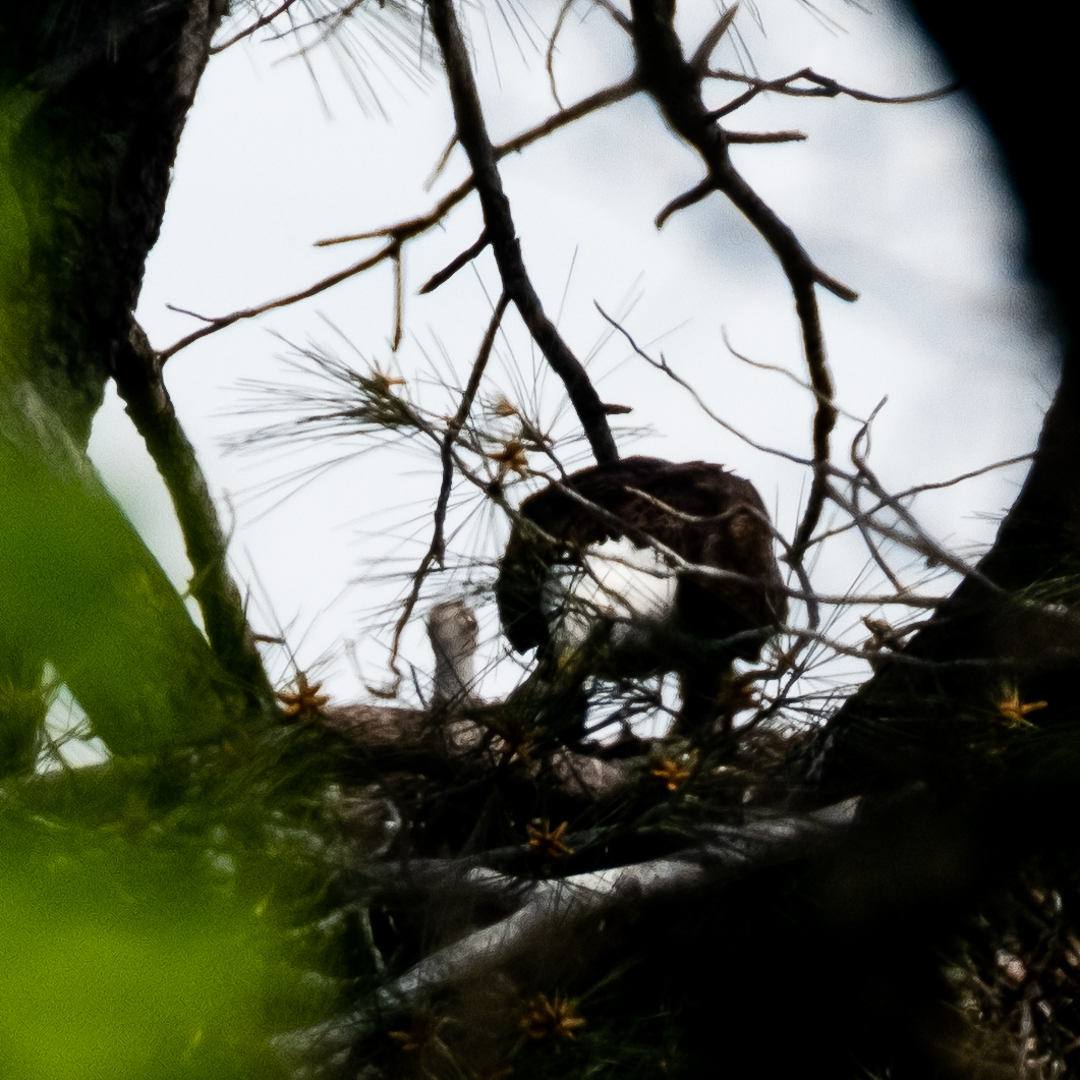
My first visit was MAR 31. On that visit, all I was able to
see was a tiny patch of down just above the nest edge. At week 2, I could see a
head. Although, it looked more like the stereotypical gray space alien with its
long head and neck. By week 3, the yellow down had been replaced by a gray down
that will remain as an underlayment for feathers throughout life. From week 3 to
week 4, the eaglets had grown substantially. One image shows some sibling
rivalry. At week 5, feathers are emerging. On the image, you can see the pin
feathers on the wing. By week 7, the feathers had filled in substantially, but
the flight feathers aren’t developed enough to support flight.
Mother and father eagle feed the oldest eaglet first and do
so until it is full because if it is not satiated, it will kill the younger
one. But, when they feed the younger one, they make sure it gets food by
preventing the older one from stealing it.
The babies will fledge by mid-June. By the end of June, the babies will reach adult size. They will not fully mature for 2 – 5 years. It takes about 3 years to get their distinctive adult plumage. Mom and dad will leave the nest about July and leave the babies to fend for themselves. They will return about November to prepare the nest for next year. When they do, the babies will be invited to leave and told never to come back.
I will try to follow-up with some more images as the summer progresses.
Two Eaglets born approximately MAR 26, 2019 are in the nest; A small patch of yellowish down can be seen below the adult to the right of a longer diagonal stick. That is one of the eaglets. March 31, 2019.Mother Eagle with one of the eaglets at Week 2. April 7, 2019.Mother Eagle with eaglet at Week 3; April 14, 2019.Eaglets at Week 4; APRIL 21, 2019 Some Sibling Rivalry. Eaglets at Week 4; APRIL 21, 2019 Mother Eagle with Eaglets at Week 5. April 28, 2019Mother Eagle and Eaglet at Week 5. Eaglet has Pin Feathers on Wings; April 28, 2019Mother Eagle with Eaglets at Week 5; May 3 2019Eaglets at Week 6; May 12, 2019Eaglet at Week 8; May 17, 2019Father Bald Eagle, April 7, 2019Mother Bald Eagle; April 7, 2019
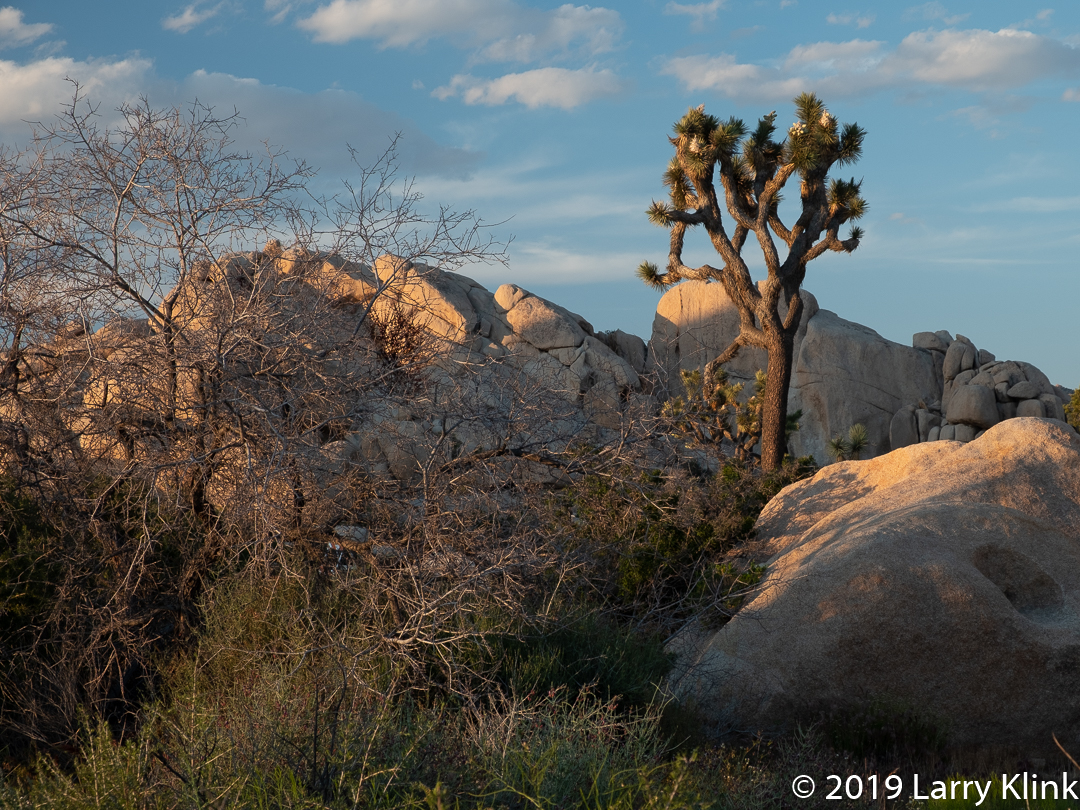
On a recent road trip, we spent a day at Joshua Tree National Park near
Twentynine Palms, CA. The trip was, in part, motivated by a chance to
photograph the Milky Way over the park. It was our first trip to Joshua Tree NP
and we really did not know what to expect other than it was a desert landscape
with Joshua Trees. It was indeed a desert landscape typical of the American
Southwest. It has beautiful eroding, rolling hills covered by talus – piles of
rocks eroded from the hillside. There were large, weathered boulders throughout
the park that people used for climbing. We learned that it is a very popular rock-climbing
location.
The desert was in bloom with ocotillo, cholla, desert senna,
Mojave mound cactus and many other plants. But, the signature plant of the park
is the Joshua Tree. The Joshua tree is a large tree like plant with hard spiky
leaves. Despite looking like both a tree and a cactus, it is neither. It is a
plant in the Yucca family (Yucca brevifolia). The oldest one in the park is
about 350 years old. Because it is not a tree, it doesn’t have the woody structure
to bear all of its weight, so, when branches get to big, they bend and fall to
the ground. We missed seeing them in bloom on this trip, but they were
developing their seed pods. I like them so much; I’d like to have one in my
backyard but they only grow in the Mojave Desert between 4,000 and 5,000 feet
in altitude.
Our night sky photo shoot was spectacular. The Milky Way
didn’t rise until after midnight. It was a pleasantly warm evening and we had
to scramble over some boulders, in the dark, to get to a ledge on another large
boulder. That location was picked because The Arch was directly in front of us
and our goal was to shoot the Milky Way over The Arch. I hadn’t done a night
sky shoot in a very long time, so it was great to knock the rust off my skills.
The only disappointment in the shoot was light pollution. When you look at the
Milky Way image, you’ll see the sky has a greenish cast along the horizon. That
cast is the light rom the Palm Springs and Indio areas of Southern California.
Indio is 25 miles from the park.
I want to give a shout out to Casey Kiernan of Joshua Tree Workshops for guiding us in a great night sky workshop and fun time.
Please click on caption to see image at higher resolution.

















 Earthwatcher