Aging & Rain: Rain falling on the decaying remains of the McDonald House, Bodie, CA. (Click to see larger image))Aging Door: Aging Door Highlighted by Rain. Cain residence, Bodie, CA. (Click to see larger image)
The California drought has garnered a lot of attention and it is bad. But, over the past few weeks, storms have driven some rain along the White-Inyo Mountains and the valleys east of the Sierra. So, Donna and I wanted to get a rare glimpse of a green desert landscape in July. Bodie did not disappoint. The desert vegetation was a beautiful spring green. The skies were overcast, covered with rain clouds. We were treated to light hail, cold, light rain and a few claps of thunder. I had hoped for some golden light to peer through breaks in the clouds, highlighting the landscape, but that did not materialize. The rain dampened the wood, saturating the colors and highlighting details of the decaying structures. Here are 2 examples. I hope you enjoy them.
On our recent trip back east, we made a stop in Savannah, GA. It was short, an evening and a morning. Savannah is an old city by US standards. Its historic district follows the borders laid out in 1733 by James Oglethorp. It is laid out in a grid with numerous small squares. Each square is like a little park with stately old trees, draped with Spanish Moss, giving shade to the sidewalks and park benches. Many of the buildings date back into the 18th and 19th century. There are so many photo opportunities, I could spend months, if not years trying to document it, if I chose. The buildings and statuary are beautiful in and of themselves. But, when you take the time to study them in detail, there are beautiful intricate features, many weathered to a fine patina. It is a great place. I recommend a visit. Enjoy the images below. Please share.
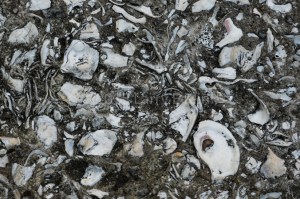
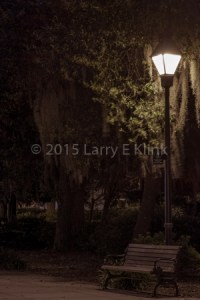
There is beautiful fountain in Lafayette Square. I don’t know its age, but it has the patina of weathered copper. The evening sun was kissing the sea horse, giving a warm glow to ts crusty, weathered body.You build with what you have. When you have sea shells, you don’t need rock in your concrete. The sea shells thrown in an apparently random fashion, worn smooth by years of footsteps, create an abstract scene worthy of a Gothic romance.As evening approached, a column of sunlight highlighted a series of high, steep, weathered stairs.The fountain in Forsythe Square was lit by the streetlights along the pathways in the square making the features glisten.A streetlight casts its light over Spanish moss and a lonely park bench in Forsythe Square.
I am hopelessly left-brained; analytic to the core. I understand that to truly appreciate a piece of art, one must make an emotional connection to it. I understand that art is often collected for its historical value or as an investment, but that doesn’t seem to be enough to allow love for it to grow. I’ve sought to understand how I, personally, create an emotional connection to a scene, how I identify the story I want to tell. I rarely feel the tug on my heart that I feel when I think of my wife, my children or my grandchildren. A mountain sunrise doesn’t bring tears to my eyes. Yet, I love the mountains, the desert, the clouds, how light plays with the texture of a scene. But my reaction is a different reaction; it’s that of an analytic. I look at a scene and marvel at the geologic and/or human forces that formed it. I see clouds and think about the uplift, downdrafts and other meteorological forces that shape them. Some may ask how that can evoke awe; doesn’t analysis ruin the mystery and sense of wonder. Piecing the puzzle together helps me see the processes that shaped the scene and are influencing it now. Understanding the complexity, how processes interact to create systems, how interacting systems create a scene, creates the sense of wonder in me. It provides my emotional link and evokes awe in me. It may not tug at my heart but it tugs at my intellect and helps to create the story I want to tell.
Rainbow Bridge, American River Parkway, Folsom, CA, JUN 2015 (Click to See Image Enlarged)
I regularly walk along various stretches of the American River Parkway trail system. It is a great place to get exercise and enjoy the beauty of an urban forest and riparian habitat. I rarely have my camera because, if I did, I’d never get exercise. But, I always have my phone.
On several of my blogs, I remind readers that it is the composition and lighting that make the image and not the camera. Especially with today’s smartphone cameras and their incredible software. But, I have a problem using my phone. I can’t hold it steady enough to lock in the composition and get the focus right. So, I invested in a walking stick/monopod/tripod by Manfroto and a bracket to hold my phone. Now, I can overcome my shakiness. I also carry a microfiber cloth to clean the lens – it can get grimy being carried around in purse, pocket or holster. Grimy lenses impact the clarity of the image.
I have the Samsung Galaxy S6 with its 16MP rear camera. It does a great job. You can use it as a point and shoot by using auto mode or you can put it in pro mode which allows you to manually control functions just like on a DSLR. I find manual selection of the focus point to be the most useful but wish it wasn’t tied to the auto exposure so I could control them separately.
The attached image was shot with my phone last week. I am very pleased with it. Enjoy and make the best of your photography.
Landscape photographers are taught that you should always try to shoot during the golden hours; roughly the 3 hours after sunrise and the three hours before sunset. Indeed, the warm saturated colors make very dramatic and beautiful vistas. But does that mean you pack away your camera the rest of the day? Not really. You can get great shots any time of day if you work with the compositional elements and lighting you have to craft a great composition. It is the composition that makes the image.
I took the image in Figure 2 on a clear day, at mid-day, when the sun was high. The composition is decent and interesting. You can see some texture in the canyon and the canyon itself leads your eye
Figure 2: Image Taken Under Uninteresting Light
through the image. So, it is a good image to show friends that have never been to Yosemite, what they would see; a travel photograph. But it’s not a great image. Contrast that with the image in Figure 3, taken from a similar perspective but with strong, dramatic lighting. The difference is obvious. Besides making the picture pop with color, the light leads your eye through the image to interesting features. It provides shadows that add texture. It makes the image much more interesting.
Figure 3: Image With Strong , Dramatic Light
So, its obvious: If you have great light, you can make better image. But, what if you can’t just run off and chase the light? You have to work with what you have when you are there.
Look again at figure 3 to see the enhancements the light is providing. It provides color, texture and controls the movement of the eye through the image. When you have light that is diffuse, you need to find other compositional elements to compensate for the missing light.
Figure 4: Image Taken Under Diffuse Light
Look at Figure 4. It was taken under cloudy skies, in the evening. It is, to me, a very interesting image. I like the composition. While the light is not available to provide the interest, look at how the grass and leaves provide texture that contrasts with the granite and the stream. The colors in the leaves add color that subtly pops the image. Even without strong light, there are shadows and highlights. The stream and the line of rocks lead the eye.
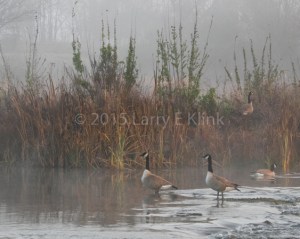
Figure 5 is an image taken under foggy conditions that also diffuse the light. In this case there is some subtle early morning rim light highlighting the edges. The color and texture in the reeds and bushes provide texture to offset the fog shrouded background and the stream.
Figure 5: Image Taken Under Low, Diffuse Light
The key is to look around; to see what is happening; to see what you can use; then craft your image from what you have.
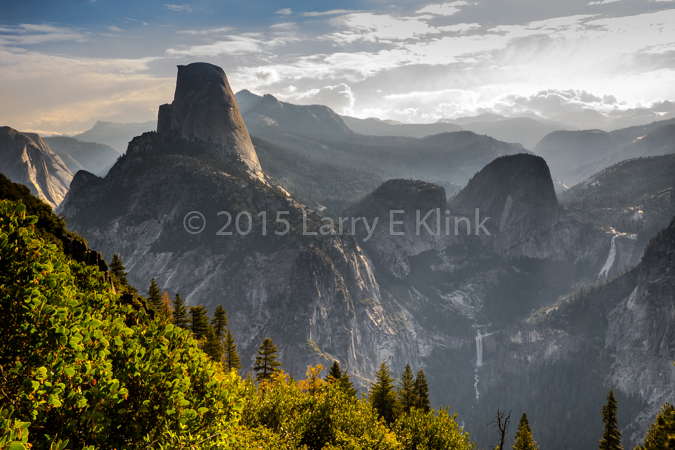
Warm Light Breaking Through Storm Clouds, Trail to Inspiration Point, Yosemite National Park, MAY 2015
This past week, it rained and snowed in the Sierra. Not nearly enough to have any real impact on our drought. But, as evening comes and the storm breaks up, golden sunlight streams through the breaks in the clouds, dappling the mountainsides with gold hued color. I took advantage of the weather conditions this week and visited Yosemite for a quick overnight trip. My goal was to do some exploring and to study how light can add depth to an image. I did some research and learned that sun would be setting in a line that would illuminate half dome, clouds rest and the canyons below. A perfect setting for what I wanted to do. To satisfy the explorer in my blood, I went off the beaten path to get different perspectives with Half Dome as my anchor.
Early Evening Light Breaking Through Rain Clouds Over Yosemite Valley. Glacier Point, Yosemite National Park, MAY 2015
I hiked the trail toward Inspiration Point looking for a different perspective from the traditional view of Yosemite Valley from Tunnel View. The trail is 2.6 miles, round trip, with a 1,000 foot elevation gain. Aside from being steep, it is full of rocks, many of which are loose, and many tree roots. It’s not for the casual walker. But, for those that are willing to endure, the view of the valley, especially Bridalveil Falls, is spectacular.
I also hiked a small section of the Panorama Trail; the portion from Glacier Point to the top of Illilouette Falls and back. This piece is 4 miles round trip with a 1,470 foot elevation change. Fortunately, most of trail is very well groomed.
Morning Light Awakening Half Dome and Little Yosemite Valley, the Valley of the Merced River, Panorama Trail near Glacier Point, Yosemite National Park, CA MAY 2015
This portion of the Panorama trail provides a perspective of Half Dome from the back leading down to Little Yosemite Valley and Vernal and Nevada Falls. Illilouette falls is a 370’ waterfall that is quite beautiful as seen from the Mist Trail. But, you really cannot see the fall itself from the portion of the trail that I hiked; perhaps crossing the bridge may lead you to a spot where the falls are visible. There is one spot where you can see the top of falls through the trees and another spot where it may be more visible if you stand right on the cliff edge. Though you cannot see the fall itself, there is a beautiful cascade where the trail bridge crosses the river. That, in and of itself, is worth the effort to go there.
Nice weather, nice light, spectacular scenery. It was a great time. I hope you enjoy the images.
Over the past 6 months, I have been experimenting with social media marketing. Some people do phenomenally well. My experience hasn’t been so good. I have had my website (www.earthwatcher.us) and my business page on Facebook (Earthwatcher) for several years. I have 317 followers on Facebook but my posts reach only 100 – 150 viewers. Over the past month, I’ve had over 400 visits to my website. But that number is misleading – mostly phishing by web crawlers that drop off after opening the home page. I have an email mailing list of 60+ recipients. I’ve opened sites on Twitter (@EarthwatcherPho), Pinterest (Earthwatcher), Instagram (Earthwatcherphoto) and a blog site on WordPress (EarthwatcherPhoto).
Like traditional marketing, social media marketing is a tool to spread information about the product you have to sell and to spread it to as large an audience as possible. All with the hope that some of them will like and buy your product. Traditional marketing, TV and Radio Ads, Newspaper Ads, flyers in the mail, etc. pushes your ad to prospective buyers with the hope they will respond by purchasing and also will tell their friends who, in turn will do the same. I.e. it is a means of networking. Social media marketing is exactly the same approach but with a different means of delivery. Unlike traditional delivery methods, the internet gives us the ability to reach unprecedented numbers of potential buyers.
We’ve all heard of YouTube videos or Twitter Tweets that ”go viral”. Going viral is the internet version of a fast moving gossip chain. People share the news with friends who share with other friends and so on. The key to successful social media marketing is to create that gossip chain; have followers who will share your posts and encourage others to do so. That is the point where I struggle. I get views but few shares. I also find that most of my followers are friends, family and other photographers. I appreciate them all but they aren’t buyers.
I know that the answer is both deceptively simple and incredibly hard. You need a product that people want to buy and you have to find the people who want to buy it. Having good keywords, words that people will use when searching for a product, in your product description, is a very important ingredient. That helps you with search engines. But search engines also use the amount of activity, i.e. the number of searches, to position you in the results list. So, without activity, i.e. shares, you most likely end up hundreds of pages down the list. Following others, sharing their work, is important also. Helping others link to potential buyers by sharing encourages them to help you.
I certainly haven’t solved this problem. But, I keep trying.
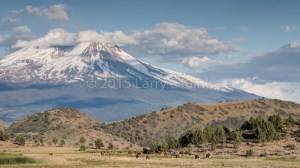
Mt Shasta, topping off at 14,167 feet, appears as a huge monolith rising out of the countryside as you travel through far North Central California. It is a stratovolcano; a large cone made of layers of different material ejected during its eruptions. Should Mt Shasta erupt, it will create severe natural as well as economic impact. According to Stephen L. Harris, in Fire Mountains of the West, during the last 10,000 years, Mt Shasta has erupted, on average, once every 600-800 years. But, its pace has accelerated to once every 200-300 years in recent centuries. Its last significant eruption was 200 years ago. There are no signs of imminent activity.
Mt Shasta, MAY 2015
Volcanoes can be quite disruptive. When we think of volcanoes, we see images of ash plumes, mudslides, lahars and other natural impacts. If you happen to be there when in erupts, it will change your life. But, their periods of activity represent only a very small fraction of their life. During periods of inactivity, the water from their snow melt brings moisture to the lands below. Additionally, water and wind erode the mountain side, spreading nourishing minerals to the land below. If you travel through Eastern Washington, Oregon and California, you see the benefits in places where the rich land has been put to use for agricultural purposes.
I hope you enjoy these images of Mt Shasta. As you do, pause to think about all we derive from this gentle giant who, only infrequently, explodes and creates havoc.
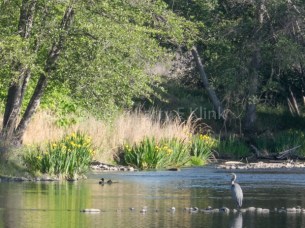
Peaceful Morning on the American River. Wm Pond Park, American River Parkway, Sacramento, CA, APR 2015 (Click on image to enlarge)Irises on the Bank. Wm Pond Park, American River Parkway, Sacramento, CA, APR 2015 (Click on image to enlarge)
As often as I have walked along the banks of the American River, at William Pond Park, I never realized that much of the vegetation I saw was wild irises. But, imagine if you will, clumps of the brilliant yellow blossoms outlining both sides of the shore for perhaps a half mile or so, complimenting the lupine and other wildflowers. Though there are some wild irises that are native to northern California, I haven’t been able to find if this particular species is or is not and even if it is, whether they are native to the banks of the American River. Regardless, they provide a real treat.











 Earthwatcher