Five Days Rafting on the Grand Canyon

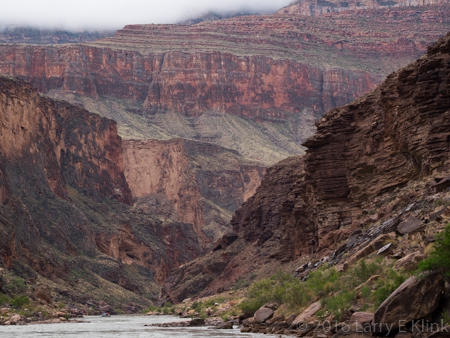
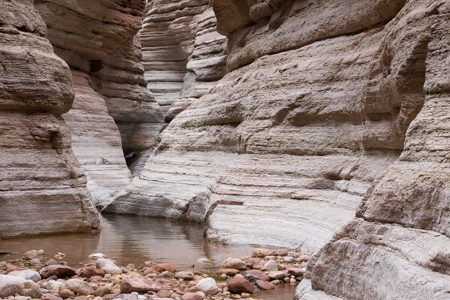
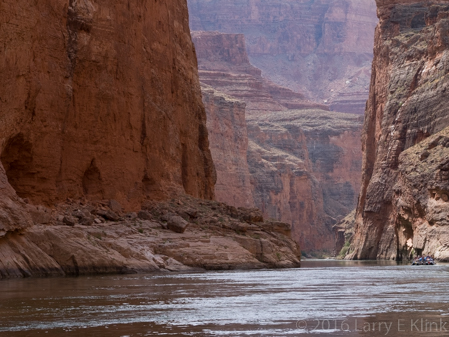
Ancient Walls - Perspective 1
I had an amazing experience; five days rafting through the Grand Canyon on the Colorado River. Many thanks to Gary Hart (http://www.garyhartphotography.com/), who organized the trip, and to Western River Outfitters (http://www.westernriver.com/), who conducted it.  Their professionalism, efficiency, and energy made the trip great fun, great adventure, and an unforgettable experience. 

The trip began with a flight over the Colorado Plateau to Marble Canyon, AZ where we packed up and entered the river at a spot called Lee’s Ferry.  We traveled 180 miles through Marble Canyon and the Grand Canyon.  At Whitmore Wash we were helicoptered out to Bar 10 ranch then back to Las Vegas by small plane.  After spending time on the river, the return flight gave me an opportunity to connect some dots: I could see the relief of the canyon and view the beds of the feeder rivers as they travelled to the slot canyons and into the Colorado.   We travelled on motorized rafts that were 5 heavy duty vinyl pontoons lashed together with ropes.  Each of the pontoons was about 25 feet long and 3 feet in diameter.  Our food, camping gear, and personal items were piled on, covered, and tied down on 2 platforms lashed to the pontoons.   We camped on sandbars along the river; some under the stars, others in tents.   

My first impression took me back to adventure stories where a team of intrepid explorers entered an unknown and unexplored area looking for the fabled lost city and its people.  The narrow gorge through weathered, high walled canyons, felt imposing.  The patterns on the rock reminded me of ancient statuary that weathered away.  It left me wondering where the door to the ancient city, the one that is only revealed at sunset on the summer solstice, is located. 

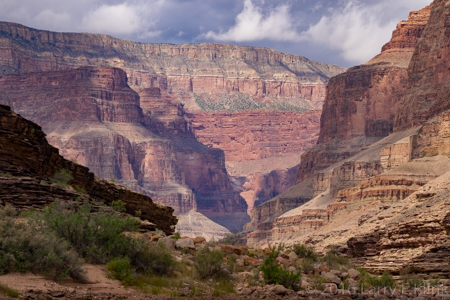
The geology was fascinating.  Over the course of our trip, our elevation changed by 1,700 feet.  When we entered Marble Canyon, we were between walls of the red-orange limestone layer that forms the roof top of the canyons.  As we travelled through the canyon, progressively deeper layers were exposed until we came to the basement layer of granite which underlies the canyon.  At places, nearly 2 billion years of earth’s history lay exposed for us to see.   

To top off all of this beauty we even got to have fun running the rapids.  There were many rapids.  Most of them were small ripples.  Two of them were really wild rides.  Several more were big enough to be exciting.  As we approached the rapids, you could see choppy white water ahead.  The swells that had already broken smoothed out to a jello-like surface and reflected gold on top of the green river.  As the driver turned the raft into the swells the swells would lift the raft and drop it down or the raft would nose dive and dig into the swell.  Sometimes a wave would hit from the side.  Regardless, water sprayed up, soaking us.  As we held on, braving the bucking and twisting, we laughed like little kids.  I was anxious about this part of the trip, not really knowing what to expect.  Having done it, I wouldn’t trade the experience. 

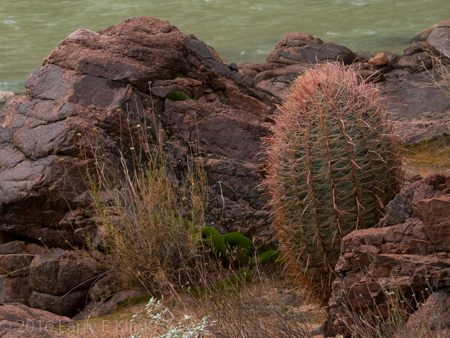
Visiting the rim or flying over the canyon will give you an appreciation of its magnificence.   But running the river brings it up close and personal.  Look up and see cliff walls rising thousands of feet or see the layers set back, one upon the other, rising into the sky.  Look at the walls and see swirls of fossilized sand dunes or rock walls that look like layers of stacked stone; some horizontal, some tilted at an angle.  Vegetation invaded the weathered red-orange limestone giving the appearance of terraced gardens.  In other places cacti and brush dotted hillsides of black and brown in no particular pattern.  Still other areas were painted in earth tones of tan, brown, pink and green.  We hiked back slot canyons to see running streams and waterfalls that have carved the sidewalls and brought debris to the canyon floor.  We were even lucky enough to see some of the wildlife that inhabits the canyon: condors flying high above, big horn sheep climbing canyon walls, swallows swooping over the rapids to catch bugs and even a heron.  I have difficulty finding words to describe how it felt to be among those ancient walls.  Walls that were created by the deposition of silt and the remains of creatures at the bottom of a great sea, uplifted when plates of the earth’s crust crashed into each other and finally sculpted by the forces of wind and rain into the natural wonder that was presented to me each day of the trip.  Wonder and awe aren’t expressive enough.   

I hope the images I’ve included give you sense of what I felt as I traveled through the natural wonder that is the Grand Canyon. 

Regards,

Larry

(Note: Click on images to see enlarged)


Ancient Walls - Perspective 2

CaveThrough the CanyonGrand Canyon National Park, MAY 2016Grand Canyon - Perspective 3

Grand Canyon - Perspective 1

Grand Canyon - Perspective 2

Deer Creek Falls - Perspective 1
Deer Creek Falls – Perspective 1

Deer Creek Falls - Perspective 2

Barrel Cactus Dotting the Hillside

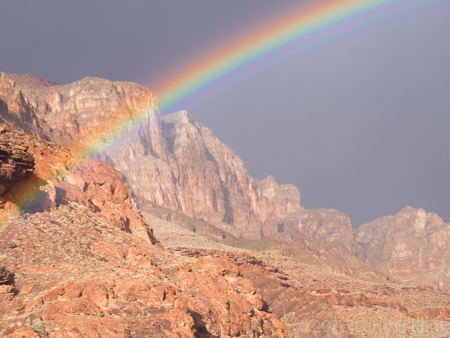
A Special Treat

Kanab Creek

Havasu Canyon


An Early Spring Day in Yosemite

We are fortunate this year that El Niño gave us a respite from the drought; a good snow pack in the Sierra!  I moved to northern California 4 ½ years ago.  My wife told me many times that the ephemeral waterfalls, those that dry up and go away quickly, make Yosemite especially beautiful in early spring. But years of drought gave us little snow, leaving those falls dormant or very short lived. I never had a chance to experience them.

Last weekend, we took an overnight visit to Yosemite.  My wife was right, everywhere I looked there was a waterfall that I had never seen before.  Even Horsetail falls, the one that lights up like fire at sunset in February, was still running.  The Merced River was running strongly.  We hiked along the Merced River on the trail to the bridge at Vernal Falls.

Roiling & Thundering

At the juncture of Illouette Creek and the Merced River, the waters roiled over the cascades making whitewater that looked like a giant head of cauliflower and sounded like thunder.  It was amazing.


For me, the real treat was Yosemite Falls.

Base of Lower Yosemite Falls

Base of Lower Yosemite Falls, Yosemite National Park, APR 2016

It, too, thundered from the water crashing over the cliff.  Yosemite Creek was rushing harder and was fuller than I have ever seen it.

Rivulet on Yosemite Creek

This little cascade is normally dry. But the snow melt left Yellowstone Creek running high, fast and loud creating a channel bringing this cascade alive. Yosemite National Park, APR 2016


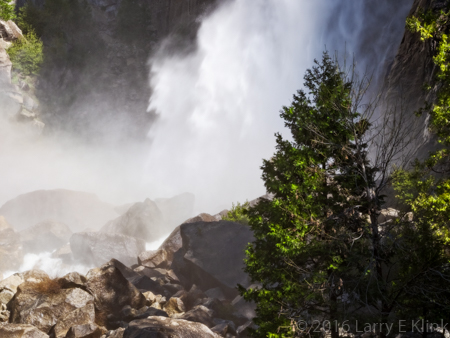
But the real treat was a brilliant rainbow in the mist at the base of the lower falls.

20160416-Yosemite-028-WEB

The sun cast a brilliant rainbow in the mist at the base of the Lower Yellowstone Falls. Though other colors could be seen, the sun highlighted the red-orange spectrum casting a golden glow over the rugged landscape. Yosemite National Park, APR 2016

Though other colors could be seen, the sun highlighted the red-orange spectrum casting a golden glow over parts of the landscape.

20160416-Yosemite-033-WEB

Yosemite Falls thundered strongly from the early spring runoff creating a cool breezy mist. The sun played upon the mist, painting a brilliant rainbow that cast the landscape in a golden glow. Yosemite National Park, APR 2016


Yet, as I traveled through Yosemite, another thought struck me.  As humans, ephemeral describes things that come and go quickly; in the span of short periods within our lifetime.  But, solid rock in places like Yosemite last for time frames impossible for humans to comprehend but do eventually wash away.  To the earth is really ephemeral?

A Deceiving Role
A contrast, the juxtaposition of the ephemeral with the lasting. But, which is really ephemeral? That which appears lasting is eroded, one grain at a time, by that which appears ephemeral, until it is eventually washed away. Meanwhile, that which appears epemeral rushes to sea, evaporates and returns to erode again. Yosemite National Park, APR 2016


Regards,

Larry

These and other images are available for purchase at my website, http://www.earthwatcher.us or by contacting me at larry@earthwatcher.us.

A Spring Morning on the Cosumnes River

Cosumnes RIver, North Fork
A Spring Morning on the Cosumnes River – Perspective 1 Bucks Bar Road, Somerset, CA

My wife, my mother and I decided to visit Daffodil Hill, a beautiful spring attraction in Amador County, CA.  After the visit, we decided to wander some of the lesser traveled roads in rural El Dorado and Placer counties; an area where my wife spent a lot of time during her childhood.  As we wandered, we crossed a small bridge spanning the North Fork of the Cosumnes River.  The Cosumnes is a 52 mile long river starting as 3 forks in the Sierra Nevada, eventually merging with other rivers and flowing into the San Francisco Bay by way of the Sacramento/San Juaquin delta.  We were somewhere along the North Fork near Somerset, CA.  The recent rain and snow, brought on by the El Nino, has given us a brief respite from the years of drought.   The river was flowing rapidly through this shallow gorge.  The morning sun filtered through the forest, highlighting the bright spring green of life reawakening.

I hope you enjoy these 2 perspectives of this beautiful canyon.

Cosumnes RIver, North Fork
A Spring Morning on the Cosumnes River – Perspective 2

These and other imageas are available to purchase on my website: http://www.earthwatcher.us or by contacting larry.klink@earthwatcher.us.

Regards,

Larry


A Visit to San Diego Zoo Safari Park

With an impending trip to Kruger National Park in South Africa, this year is shaping up to be a year where I concentrate on wildlife.  My love has always been more intimate landscapes, so I truly enjoy the opportunities to shoot wildlife in the context of a landscape.  Last weekend, I had the opportunity to visit the San Diego Zoo Safari Park, an 1,800 acre wildlife sanctuary that displays animals in large open enclosures where they can roam and exercise.  Though the animals are the highlight, it is landscaped beautifully and is well worth a visit.  I hope to get back sometime and spend more time photographing both the landscapes and the wildlife.

On this visit, it was overcast and rainy.  Even so, the wildlife was out and active.  I hope you enjoy these images from my visit.

Larger images of these and other wildlife can be seen at my Birds, Wildlife and Insects gallery on my website: http://www.earthwatcher.us.


Wildlife in Carson Valley, NV

Long Eared Owl
Long Eared Owl, Washoe Lake State Park, NV, FEB 2016

This past weekend, a few of my friends and I did a wildlife shoot in Carson Valley, near Minden, NV.  Our guide was John Humphrey, a local wildlife photographer (www.akawolf.com).  He provided us with access to private lands that we would not have had access to ourselves.  It was a beautiful morning and we got plenty of interesting opportunities to shoot.  Hope you enjoy these images.

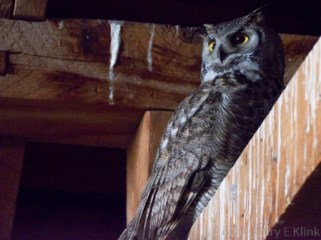
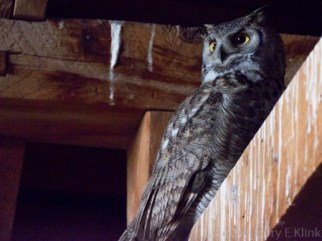
Great Horned Owl


Bald Eagles in Nesting Tree
Bald Eagles and Nest, Minden, MV FEB 2016
Great Horned Owl
Great Horned Owl, Minden, NV FEB 2016
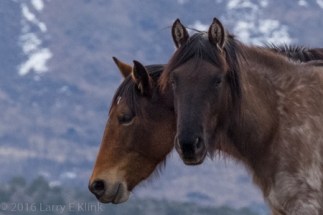
WIld Horse
Part of a Band of Wild Horses, Minden, NV FEB 2016
Great Horned Owl Chasing a Magpie
Great Horned Owl Chasing Magpie, Minden, MV FEB 2016
WIld Horses
Part of a Band of Wild Horses, Minden, NV FEB 2016
WIld Horses
Part of a Band of Wild Horses, Minden, NV FEB 2016
Wild Colt Nursing
Nursing Colt, Part of a Band of Wild Horses, Minden, NV FEB 2016


Birds

I am not typically a bird photographer.  When I do shoot birds, I try to take them in the context of their environment, trying to answer the questions: this is who I am and this is how I survive.  Living in the Sacramento, CA area affords me the opportunity to shoot migrating winter birds but, I find I really like to go back to the usual suspects – herons, egrets, Canada geese and mallards, hawks.  Learning about them, observing their behavior gives me a lot of pleasure.

The last week or so, I’ve had the added pleasure of trying out my new Fujinon 100-400mm F4.5-5.6 lens and 1.4X Tele-converter.  Its a great lens but its been more than a year since I shot with a long lens so, I made a few depth of field mistakes.  Oh well, I guess I just need to go out and shoot more.

Anyway, here are a few images I shot.  I hope you enjoy them.

20160209-Wm-Pond-Park-047-WEB
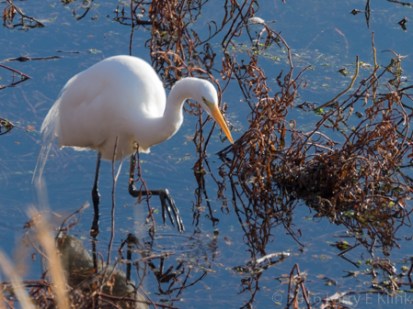
Great Egret
20160209-Wm-Pond-Park-027-WEB
Canada Goose
20160209-Wm-Pond-Park-030-Edit-WEB
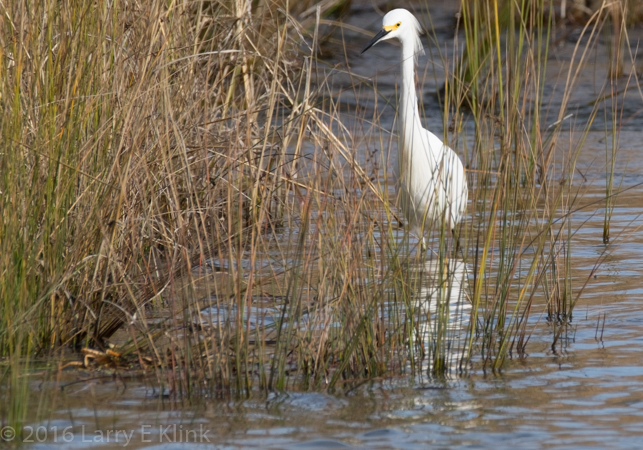
Snowy Egret
Mountain Plover - Winter Plummage
Mountain Plover
20160209-Wm-Pond-Park-043-WEB
Red Shouldered Hawk
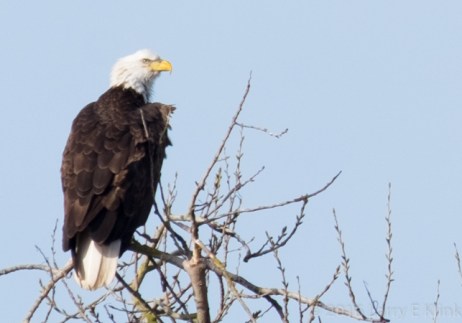
Bald Eagle
Bald Eagle
Snowy Egret
Snowy Egret


Cataract Falls

On Jan 26, 2016, I visited the Mt Tamalpias watershed area near Fairfax, in Marin County, CA. Imagine climbing up a hillside, along a stream that was running fast and loud due to recent rain.  Now, imagine the trail to be 2 1/2 miles in and out with a 1,300 foot elevation gain, 750 feet over the first mile.  That combination meant the stream was full of waterfalls and cataracts.   The banks of the stream were hard rock surfaces covered with coastal redwoods, moss and ferns.  It was absolutely spectacular. The trek was difficult but, was well worth the effort. 

For my fellow photographers, the stream ran along an east-west access.  The January sun rose behind the waterfalls casting some strong light in a few areas but the sun mostly was obscured by the canopy.  The light, though bright, was diffuse. Still, the ferns, moss and rocks glistened.  Perhaps, as the sun set, more light would have fallen directly on the waterfalls but I didn’t have time to stay and find out.  If I make another trip, I will plan it for afternoon.

I hope you enjoy the images.  Enlarged copies of the images can be found in my online gallery:  Cataract Falls


Regards,


Larry

Follow Where the Light Leads

As photographers, we are admonished to wait for the perfect light or, as a studio photographer, to set up the perfect light.  It’s good advice, but not always practical.  Sometimes you find yourself at a location you’d like to shoot and walk away disappointed because there are interesting subjects but bad lighting.  I have been working on turning that admonishment around and searching where the light leads me; finding subjects where the light presents them.  Those opportunities even avail themselves in very diffuse light.   We just have to open our mind to creativity when thinking about light.

Untitled
Untitled, California State Rail Museum, Sacramento, CA, JAN 2016
Untitled
Untitled, California State Rail Museum, Sacramento, CA, JAN 2016

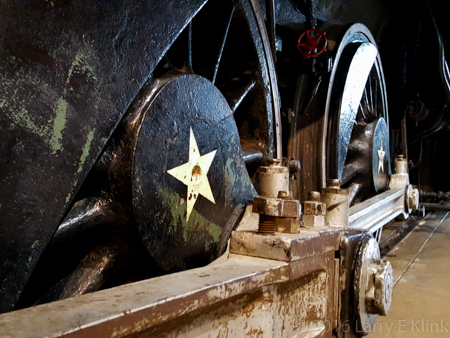
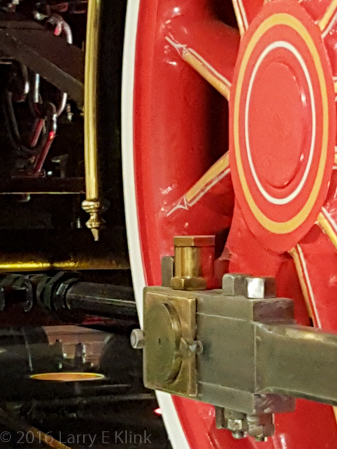
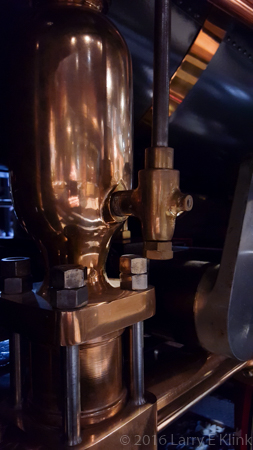
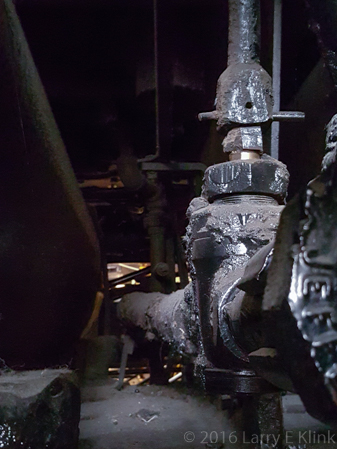
Last weekend, I visited the California State Rail Museum.  If you are a railroad buff, there are a lot of great things to see.  While there, I set 2 objectives: learn to use my cell phone camera more effectively and to look for subjects made interesting by the museum lighting.  I did OK with the first objective but didn’t advance my skill as much as I’d have liked.  I did learn that I have a little control over depth of field though not a lot.  I did find interesting subjects to shoot.  The museum lighting was very good and the light painted details in interesting ways.  I’ve included a few examples for you to enjoy.

A Brass Valve
A Brass Valve, California State Rail Museum, Sacramento, CA, JAN 2016
A View of the Underbelly
A View of the Underbelly, California State Rail Museum, Sacramento, CA, JAN 2016

Some New Images from Old Shoots

I spent a winter afternoon cleaning up and organizing my photo library.  While going through the library, I found a few gems that I had overlooked before; always a pleasant surprise. 

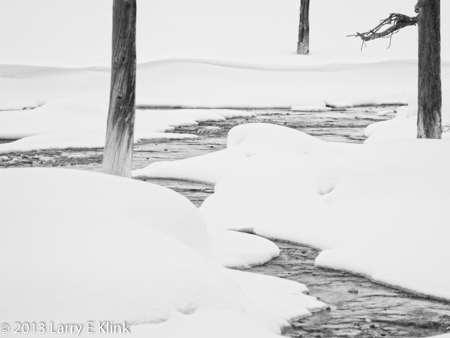
Rivulet
Rivulet, Lower Geyser Basin, Yellowstone, FEB 2013
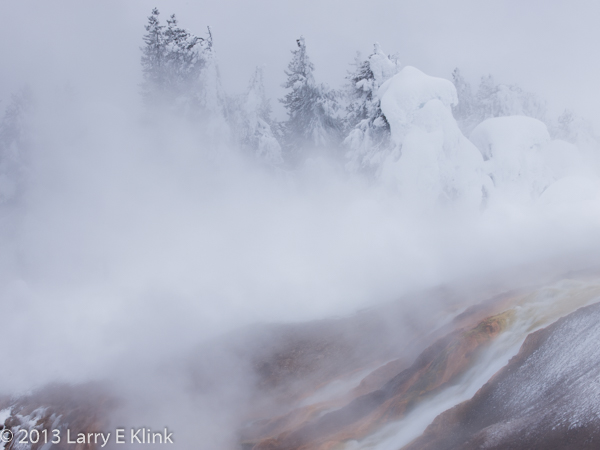
Hot Waterfall in Winter
Hot Waterfall in Winter, Midway Geyser Basin, Yellowstone National Park, FEB 2013


Rivulet and Hot Waterfall in Winter were taken at Yellowstone 3 years ago when I attended Cindy Goeddel’s Yellowstone Yurt Tour.   It was an amazing photo adventure that allowed me to see Yellowstone in the dead of winter.  Rivulet was taken near the Lower Geyser Basin.  Hot Waterfall is runoff from hot springs near Midway Geyser Basin. 


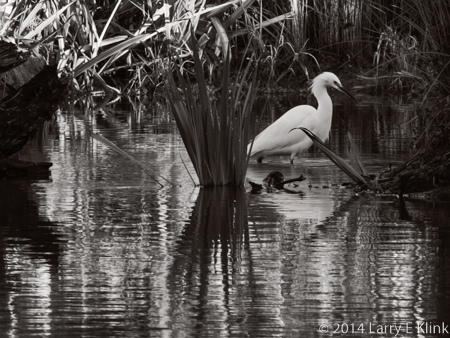
Snowy Egret
Snowy Egret, William Pond Park, Sacramento, CA, NOV 2015

Snowy Egret was taken at William Pond Park, near Sacramento, last November.

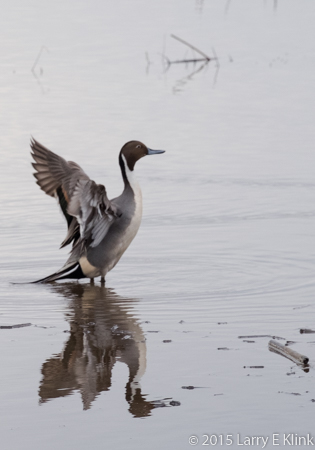
Pintail Duck

Pintail Duck
Pintail Duck, Cosumnes River Preserve, Sacramento, CA DEC 2015

We are very lucky to be near the delta that flows into San Francisco Bay because it attracts many beautiful migrating birds in the winter. One of the birds that makes California’s Pacific Flyway their home is the Pintail Duck. I shot this image of a beautiful pintail Sunday morning, DEC 27, 2015.