Agapantha

Image of blue Agapantha in bloom
Agapantha

It’s a gray day here in Sacramento but spring is just around the corner. With spring comes flowers. I can’t wait for the poppies and the lupin to bloom. But, that is for a future time. Today, I’ll share a summer flower; the agapantha. I hope it brightens you day.

Please click on caption to see a larger, higher resolution copy of this image.

This and other images are available for purchase at www.earthwatcher.us or by contacting larry@earthwatcher.us.

Sad Elephant

I took this image of an elephant at Addo Elephant National Park in South Africa. This beautiful but sad face tugged at my heart strings a bit.

Sad Elephant
Sad Elephant

Note: These and other images are available for purchase on my website: http://www.earthwatcher.us or by contacting larry@earthwatcher.us

Giant Sequoia – Their Sculptural Beauty

Image of the trunk and roots of a giant sequoia tree.
Untitled, Calaveras Big Trees State Park, JUL 2011

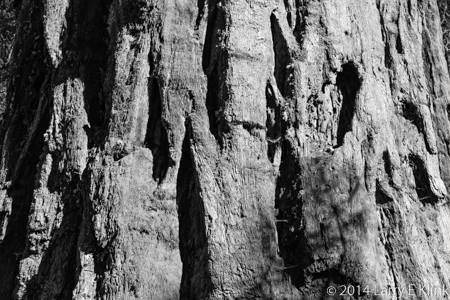
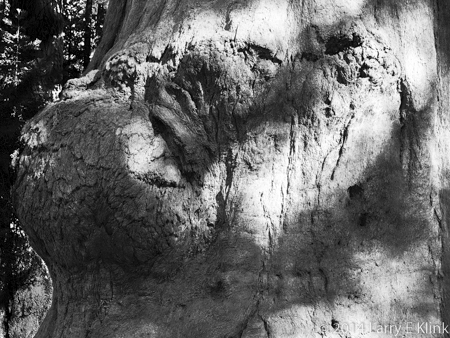
Five years ago, I saw the giant sequoia for the first time. Like most people, I was in awe of these giant trees.  Their imposing size and their presence in the forest really impressed me.  My images Among the Elders and Sequoia Giganteum attempt to capture the scale of these trees.  However, I also found that the furrows and ridges of their bark create a sculptural beauty that is striking.  Over the ensuing years, I’ve taken images of a few trees whose patterns really struck me.  Here is a sample of what I found.

I hope you enjoy them as much as I do.

Regards,

Larry

Note: Click on image caption to see image in larger size.

Image of part of the trunk of a Giant Sequoia
Giant Sequoia, Yosemite National Park, OCT 2014
Image of a burl on the trunk of a giant sequoia tree.
Untitled, Sequoia National Park, OCT 2014
Image of a portion of a giant sequoia that had fallen to the ground.
Fallen Sequoia, Calaveras Big Trees State Park, Arnold, CA, JUL 2011

Note: These and images are available for purchase on my website: http://www.earthwatcher.us or by contacting larry@earthwatcher.us

American River Near Folsom

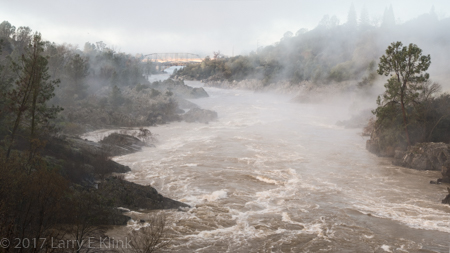
Image of American River Gorge near Folsom, CA
American River Gorge, Folsom, CA, Jan 2017

Last Friday was a cold, foggy morning and we had just come out of a long bout of heavy rain.  A lot of water was being released from Folsom Lake and the American River, near Folsom was running strong.  I decided to spend some time photographing the area of Folsom that surrounds the historic Walker Bridge / Donald W. Alden Memorial Bridge.  It was a great time to be out.  The river roared as it created whitewater through the gorge. Quite a treat.  In the 5 years that I have lived in the area, I never saw significant whitewater or heard the river roar.

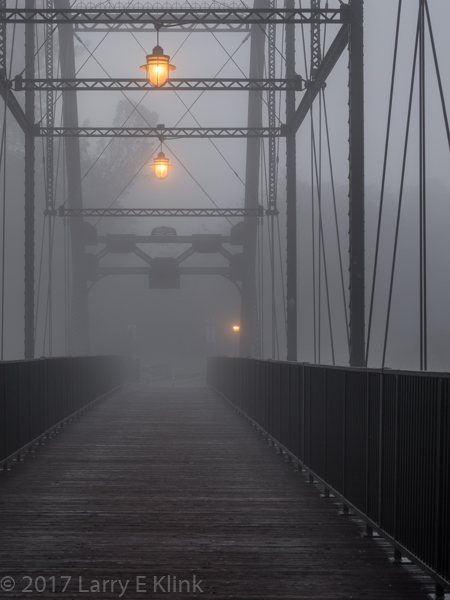
The Walker Bridge / Donald W. Alden Memorial Bridge was built in 1893.  It was sold 3 times: once to a man in Japan who wanted it for the steel but was never able to get it, once to the State of California who dismantled it and moved it near Walker, CA to span the Klamath River, and finally back to the City of Folsom who reinstalled it on its original abutments.  It now serves as a pedestrian footbridge and an access point to the American River Parkway from the City of Folsom.

I hope you enjoy these images.

Note: Click on image to see in larger size.  I particularly recommend this for the image of the American Rive Gorge.

Image of Walker Bridge / Donald W Alden Memorial Bridge, FOlsom, CA in Fog
Walker Bridge / Donald W Alden Memorial Bridge, Folsom, CA
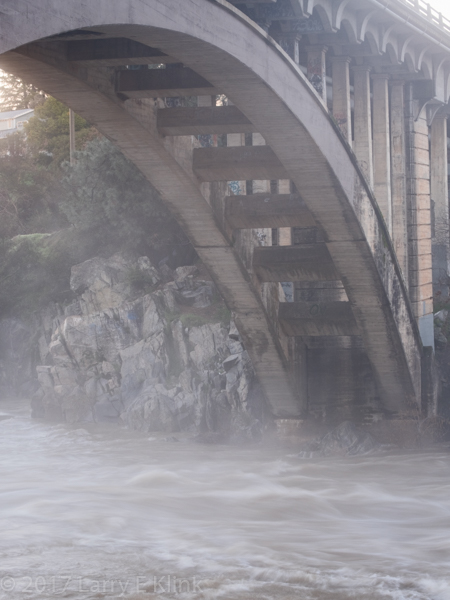
Image of Rainbow Bridge arch after heavy rains, Folsom, CA. JAN 2017
Rainbow Bridge Arch, Folsom, CA

Regards,

Larry


These and other images are available to purchase at my website: www.earthwatcher.us or by contacting larry@earthwatcher.us.
Winter Wildlife

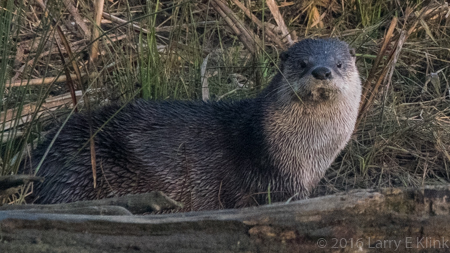
RIver Otter - Perspective 4
River Otter – Perspective 4

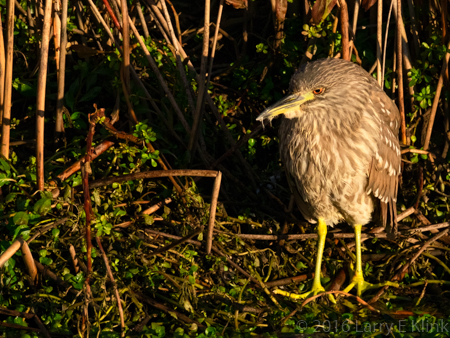
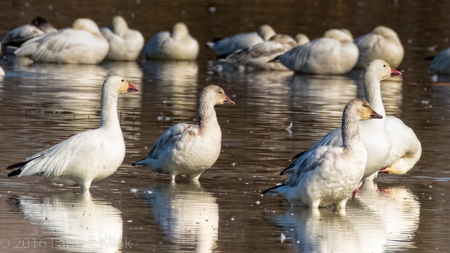
It’s fun to be in Northern California in the winter.  We are part of the Pacific Flyway, so we get many birds, primarily waterfowl, who winter over.  But even in my backyard I see Oregon Juncos and a species of Goldfinch that spends its summers in the Sierra foothills.  Though my passion is landscapes, photographing this wildlife is fun because watching them go about their business of living is fun.

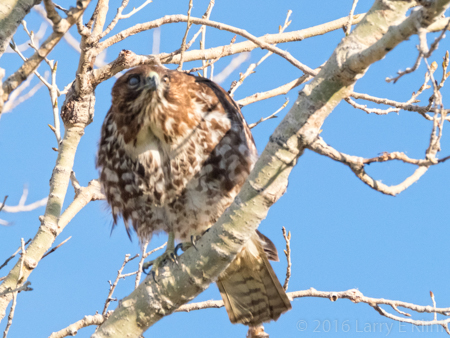
I’ve been out twice in the last two weeks photographing and enjoying the wildlife.  On one trip, I went to 2 of the wildlife refuges that have been built along the flyway.  Some years ago, land was set aside as a safe haven for migrating waterfowl.  Levees were built and fields flooded so they could live and eat.  This helped farmers by keeping the birds off their cropland.  A win-win situation, enjoyed by birders, photographers and duck hunters.  On the day I visited the refuges, raptors became my focus.  They benefit from the migrating waterfowl as well.

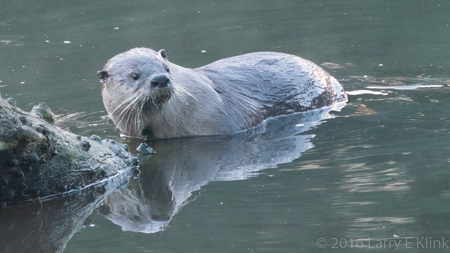
This past week, I got to spend an hour watching a River Otter and an Egret.  They appeared to be helping each other feed.  Otters always seem to be playing even as they feed.

I hope you enjoy these images.

Regards

Larry

Note: Click on image to view at larger size

Image of Juvenille Black Crowned Night Heron
Juvenile Black Crowned Night Heron
Image of Red Shouldered Hawk
Red Shouldered Hawk
Image of River Otter - Perspective 1
River Otter – Perspective 1
Snow Geese
Snow Geese
Image of River Otter and Egret
River Otter and Egret
Image of Peregrine Falcon
Peregrine Falcon

These and other images are available to view and purchase at my website: www.earthwatcher.us or by contacting larry@earthwatcher.us.

Great Basin Images

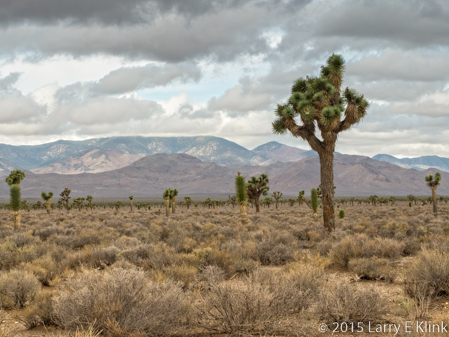
Image of Joshua Tree Forest in Nevada
Joshua Tree Forest

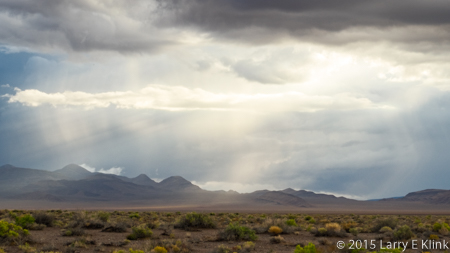
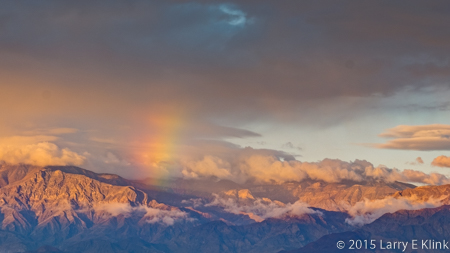
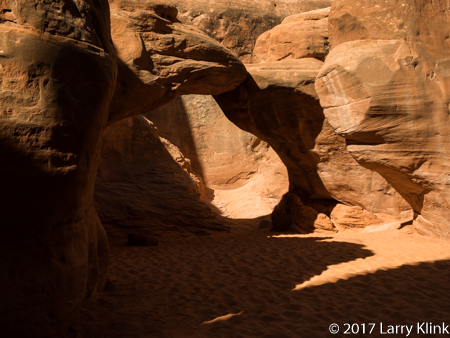
In October, 2015, Donna and I made a tour of the Great Basin area in Nevada.  I recently revisited the images I took during that trip and decided to get them ready to publish.  The first image is of a special Joshua Tree forest.  It is special because, over the mountains,behind the forest, lies Groom Lake, the fabled Area 51.  I wonder what you’d see if you were a bug on one of the trees.  The second image is of a rainstorm over the desert.  It is raining in the distance as crepuscular rays cast their beams over the desert landscape.  The third image is a rainbow over Death Valley.  I’ve published a version of this image before but wasn’t happy with it.  Now it’s back and will be one of the images featured in my show at ACAI Gallery and Studios beginning December 17.  The fourth image is one of Mesquite Dunes in Death Valley.  It too will be displayed in my show.
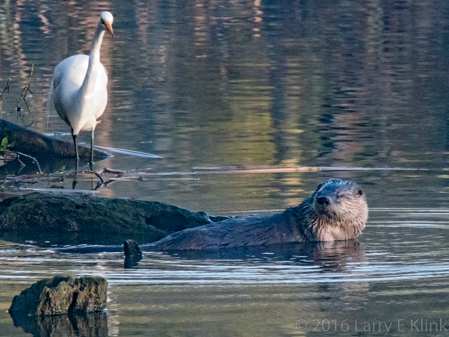
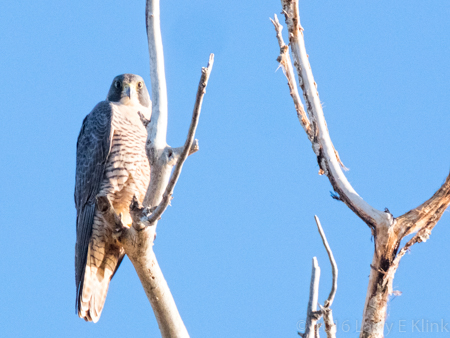
Image of rain and crepuscular rays over Nevada desert
Clouds, Sun and Rain
Image of a rainbow at sunrise over Death Valley
Wondrous Morning
Image of Sun Set Over Mesquite Dunes - Death Valley
Sun Setting Over Mesquite Dunes – Perspective 1

Birds of South Africa

Baglafecht Weaver
Baglafecht Weaver

Here is a sample of the birds we saw while in South Africa. There were many interesting, colorful birds. I was especially captivated by the Lilac Breasted Roller,the Purple Crested Turaco and the varieties of sunbirds and kingfishers. There are many more examples on my website (www.earthwatcher.us). I hope you enjoy the images. I encourage you to look at the others that are on my website because I know you will enjoy them also.

Regards

Larry

These images can been seen at a larger size by clicking on the image

Lilac Breasted Roller
Kori Bustard
Kori Bustard
Saddle Beaked Stork
Saddle Billed Stork
Purple Roller
Purple Roller
Koorhan
Red Crested Koorhan
African Spoonbill
African Spoonbill
Gray Heron
Gray Heron
Purple Crested Turaco (Lourie) - Perspective 2
Purple Crested Turaco
Malachite Kingfisher
Orange Breasted Sunbird
Greater Double Collared Sunbird
Blue Crane
Blue Crane

Hornbills

Image of Southern Ground Hornbill - Perspective 2
Southern Ground Hornbill

One of the many species of birds we saw while in South Africa were hornbills.  They are beautiful birds that cast a striking pose even when flying.  I hope you enjoy these images I am sharing.

Regards,

Larry

Click on image to view in larger size.

Image of Yellow Billed Hornbill - Perspective 2
Pair of Yellow Billed Hornbills
Image of Red Billed Hornbill
Red Billed Hornbill
Image of Southern Ground Hornbill - Perspective 1
Pair of Southern Ground Hornbills


Image of Yellow Billed Hornbill - Perspective 1
Yellow Billed Hornbill

These and other images are available to purchase on my website: www.earthwatcher.us or by contacting larry@earthwatcher.us

South African Countryside

Homestead Dotted Hillside
Homestead Dotted Hillside – Near Eshowe, South Africa, AUG 2016

We spent a lot of time in a car travelling through South Africa.  I was fascinated by the sights and sounds of daily life as we traveled.   We moved through farmland and towns, both large and small.  The main roads were very good. Parts reminded me of western Pennsylvania where I grew up, parts reminded me of the foothills of the Sierra Nevada while others reminded me of the deserts just east of the Sierra Nevada.  The Garden Route along the Indian Ocean was reminiscent of Big Sur.  It was a very interesting experience.

We spent much our time in the province of KwaZulu-Natal.  It is a governmental jurisdiction made from 2 former provinces: KwaZulu or Zulu homeland and Natal, an area inhabited mostly, by descendants of European settlers and Indian immigrants brought to South Africa generations ago as indentured labourers for the sugar plantations.  One part of the former Natal, which we drove through, reminded me of Pennsylvania with its rolling hills, farms with silos, cattle grazing and some towns with very German sounding names.  I was most fascinated by the rural areas of the former KwaZulu homeland.

The Zulu are one of the subgroups of the Nguni people who migrated from central Africa some say as early as the 12th century, others the 15th century.  The Nguni were pastoralists; subsistence farmers who primarily herded cattle along with some sheep and goats. Some subgroups of the Nguni live in villages but the Zulu live in isolated homesteads – small family farms.  Traditionally, the area is communally owned and males who would be the head of the household must get permission from the king to establish a homestead – this still holds good in some rural areas today.  Each homestead is a cluster of huts for various family members surrounding a cattle byre or ‘kraal’ (corral).  Huts were traditionally a beehive shaped structure made of thatch with a floor paved with cattle dung.  As society modernizes, the thatch huts have been replaced by rondavels; round huts made of mud and stone, cement block or other, more modern material.  The roofs can be thatch, or corrugated metal.  The rondavels are increasingly being replaced by conventionally shaped homes with more modern building and roofing material.  Cattle graze the land communally but are brought to the corral overnight.  In older times, the corral served another surprising purpose – it was the burial place for family members.  The Zulu have great reverence for their ancestors and having them buried in the corral keeps their spirit close to look after them.  When travelling through the KwaZulu area, one sees hillsides dotted with these homesteads.

The Zulu and other Nguni people were traditionally herders; keeping mainly cattle and goats.  Their prize cattle are recognized today as the unique Nguni breed.  From what I have read the Nguni cattle are descended from Zebu (Indian) cattle and were further hybridized as European stock was introduced to Africa.    To these herders, livestock meant wealth. It takes 11 cows to buy a bride and a wealthy man may have several wives. The fascinating thing about these cattle is that they are classified by color. In the Zulu language are several very distinctive, almost poetic names for the different skin patterns, and there can be much debate around what type a particular animal may be.

We noted that the strip mall phenomenon common in the US is not prevalent in South Africa.  The smaller towns we traveled through all had busy main streets with markets.  On Saturdays the markets were packed with people buying and selling goods.  Another interesting feature are the rural taxis.  They appear to be 15- 20 seater ‘minibuses’, owned by small independent companies as well as individuals.  Those who live in rural areas rely largely on these taxis to commute to towns and cities for work and shopping, but ‘conventional’ bus services also run. Relatively few rural people have cars.

In other rural communities we passed through, we noted that the settlements were more village-like.  These ‘villages’ appear to be laid out in in a haphazard fashion with dirt roads and paths between the lots.  Much of this land is owned communally and, where this is the case, a person must ask the local inkosi (king) for permission to build a home.

South Africans of western origin tend to live in the more conventional structures on streets laid out in grids like we are used to seeing in the US and have access to most modern amenities, (though I don’t believe the McMansion craze which has hit the US has hit there).  In today’s South Africa, suburbs are much more integrated than during the Apartheid era, but there are still clusters of communities of similar ethnic origin found throughout the country.  Unfortunately, with a wide dichotomy between rich and poor still very prevalent, crime remains an issue and I was troubled by the many homes in more affluent neighborhoods which are fenced and gated, often with razor wire topping the fence.

It was a fascinating journey.  Observing the culture was as interesting to me as observing the wildlife.

Regards,

Larry

Note: Click on image to see in larger size

Kraal
Corral (Kraal) – Near Eshowe, South Africa, AUG 2016
Roundavel
Rondavel – Near Eshowe, South Africa, AUG 2016
Local Convenience Store
Local Convenience Store – Near Eshowe, South Africa, AUG 2016
Homestead in Transition to Modernity
Homestead in Transition to Modernity – Near Eshowe, South Africa, AUG 2016
Nguni Cattle - Perspective 2
Nguni Cow – South Africa, AUG 2016
Main Street Business District
Butterworth, South Africa, AUG 2016; Note mini buses used as taxis

These and other images are available for purchase on my website: http://www.earthwatcher.us or by contacting me.

African Penguin

African Penguin - Perspective 2
African Penguin – Perspective 2, Boulder Beach Penguin Sanctuary, Table Mountain National Park, Simon’s Town, South Africa, August 2016

The African Penguin is a species of penguin found in the waters surrounding southern Africa.  It is also known as the jackass penguin because of its donkey like bray.  Its numbers are declining and it is considered endangered.

South Africa has created a reserve for these penguins on Boulder Beach near Simon’s Town.  There is a nice boardwalk down to the beach and an observation platform for viewing.  The penguins meander around and come very close to you.  They were a lot of fun to watch.

I hope you enjoy these images.

Regards,

Larry

Note: Click on individual images to see in larger size.

African Penguin - Perspective 6
African Penguin – Perspective 6
African Penguin - Perspective 5
African Penguin – Perspective 3
African Penguin - Perspective 1
African Penguin – Perspective 1
African Penguin - Perspective 4
African Penguin – Perspective 4
African Penguin - Perspective 3
African Penguin – Perspective 3

These and other images are available for purchase at my website: www.earthwatcher.us or by contacting me.